Key Takeaways
- Strava dominates for outdoor activity tracking and social competition, though it struggles with indoor workouts
- AI-driven personalization is now standard, with Google Health offering custom fitness plans and PUSH providing predictive analytics
- Prices range from free to $19.99/month, with Strong offering the best value for serious lifters at $4.99/month
The fitness app market hit $13.9 billion in 2026, and the average user now has three health apps installed. Finding the right one means wading through AI coaches, social leaderboards, and subscription tiers that range from free to $20 a month. After testing 25 apps across treadmill runs and weightlifting sessions, here are nine that actually deliver.
The evaluation focused on four criteria: ease of logging workouts, accuracy of tracked metrics (tested against calibrated treadmill data), appropriate measurement for each activity type, and value relative to cost. Apps that primarily sell content, like Peloton, were excluded since they serve a different purpose than pure tracking.
What separates good fitness apps from the rest?
The best fitness apps share four traits regardless of their specialty. First, logging activity has to be frictionless. Stopping a run to fumble with your phone defeats the purpose. Second, the metrics need to match the workout. Heart rate and splits matter for runners; plates and personal records matter for lifters. Third, accuracy counts. If the app claims you ran 3.2 miles when you ran 3.0, the data becomes useless for tracking progress. Fourth, the pricing has to make sense. You're already paying for equipment or a gym membership.
Strava: best for competitive athletes
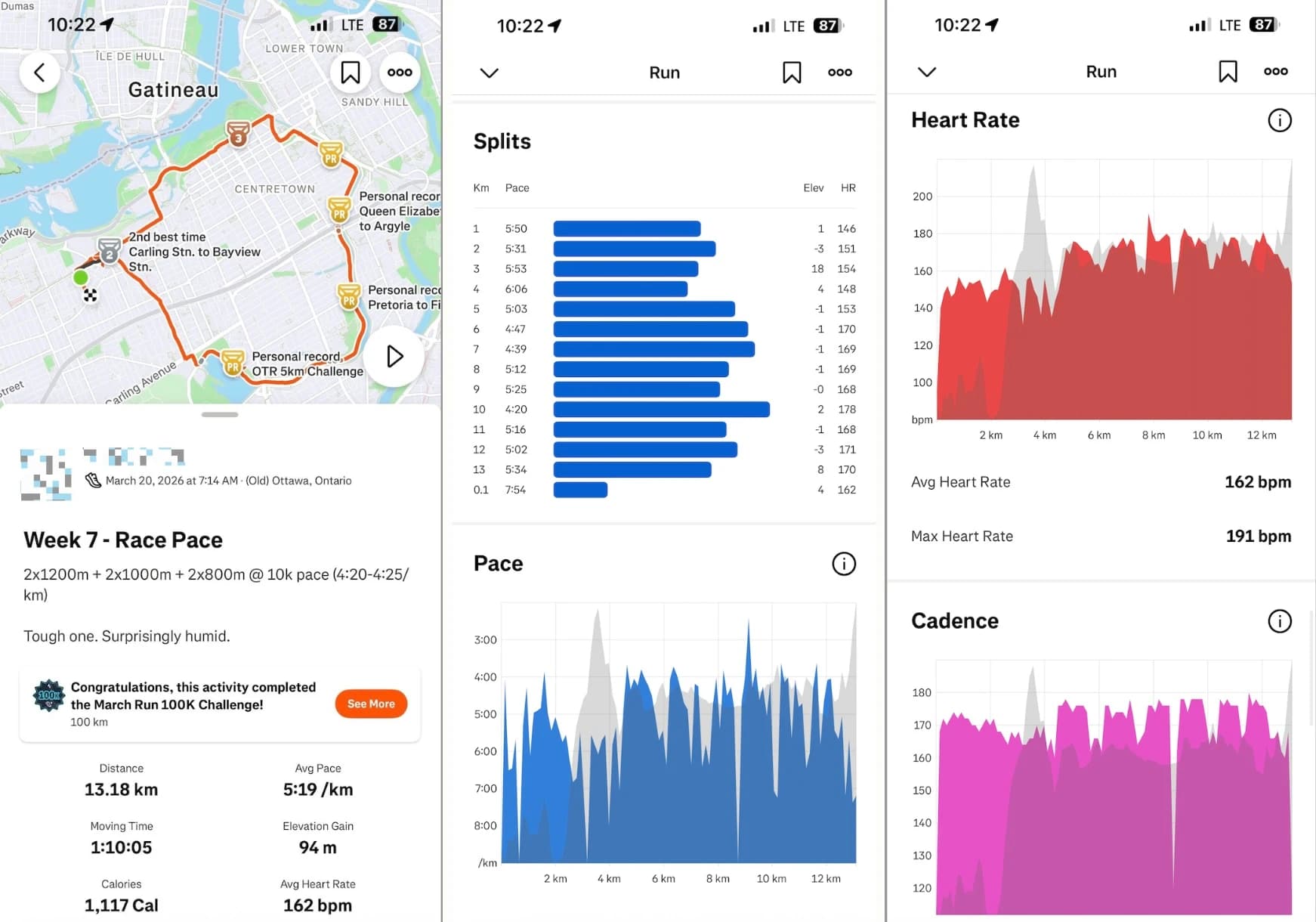
Strava has become synonymous with outdoor fitness tracking. The cultural hold is real. As one runner put it: "If you didn't log it on Strava, did it even happen?" The app excels at mapping outdoor activities with GPS accuracy that consistently matched treadmill calibration tests. Its live beacon feature adds a safety layer, letting contacts track your location during solo runs or rides.
The social features are the real draw. Segment leaderboards, kudos from friends, and community challenges create accountability that pure tracking apps lack. The downside: Strava stumbles with indoor workouts, and wearable connectivity remains mediocre compared to platform-native options.
✅ Pros
- • Accurate GPS mapping for outdoor activities
- • Live beacon tracking for safety
- • Strong social and community features
❌ Cons
- • Poor indoor workout support
- • Mediocre wearable connectivity
- • Best features locked behind $11.99/month subscription
Apple Fitness and Google Health: platform-native picks
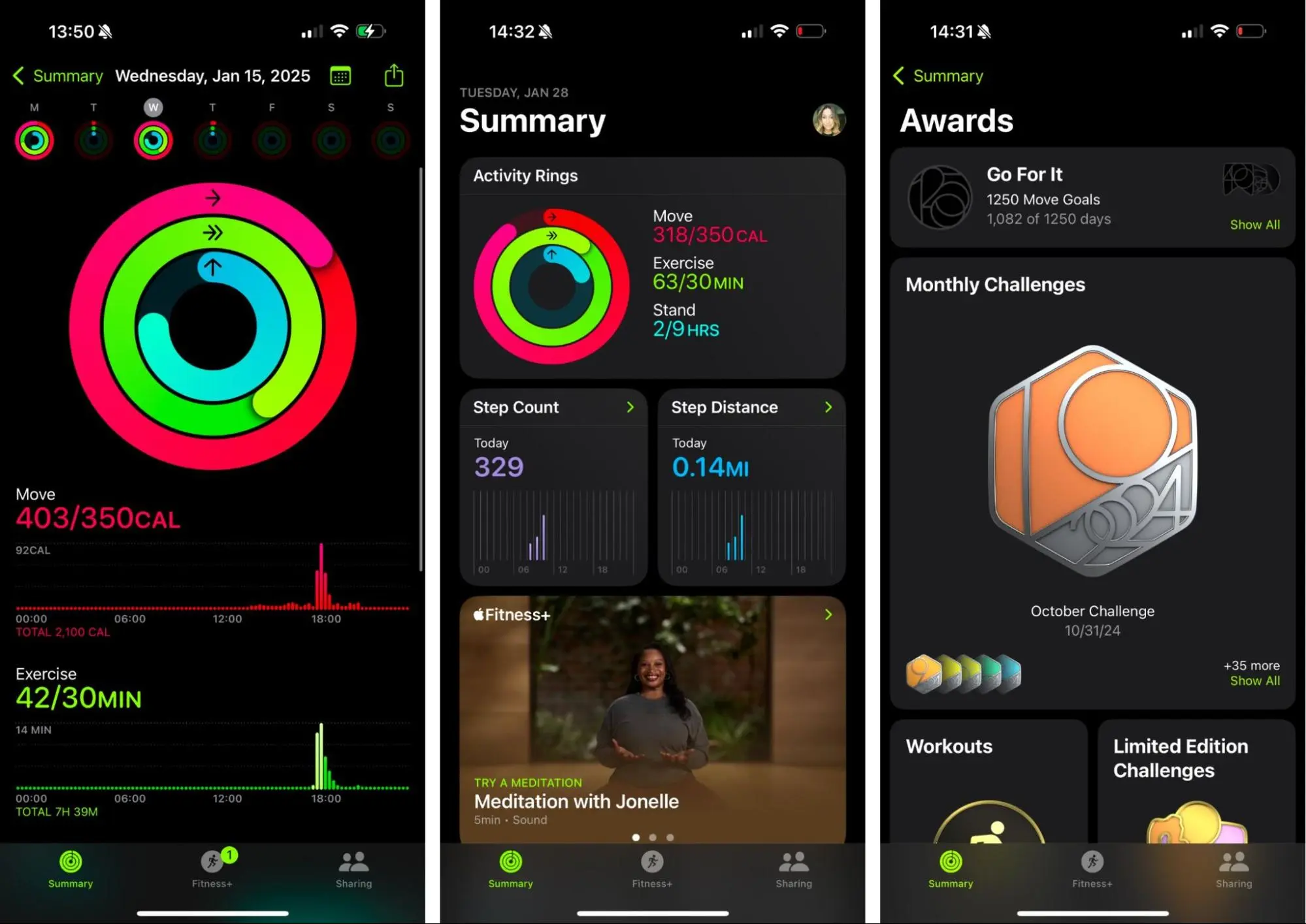
If you're locked into Apple's ecosystem, Apple Fitness is the obvious choice. The seamless wearable connectivity with Apple Watch means heart rate, calories, and movement data sync without friction. The accuracy advantage is measurable. Watch-connected sessions consistently outperform phone-only tracking on metrics like elevation and calorie burn.
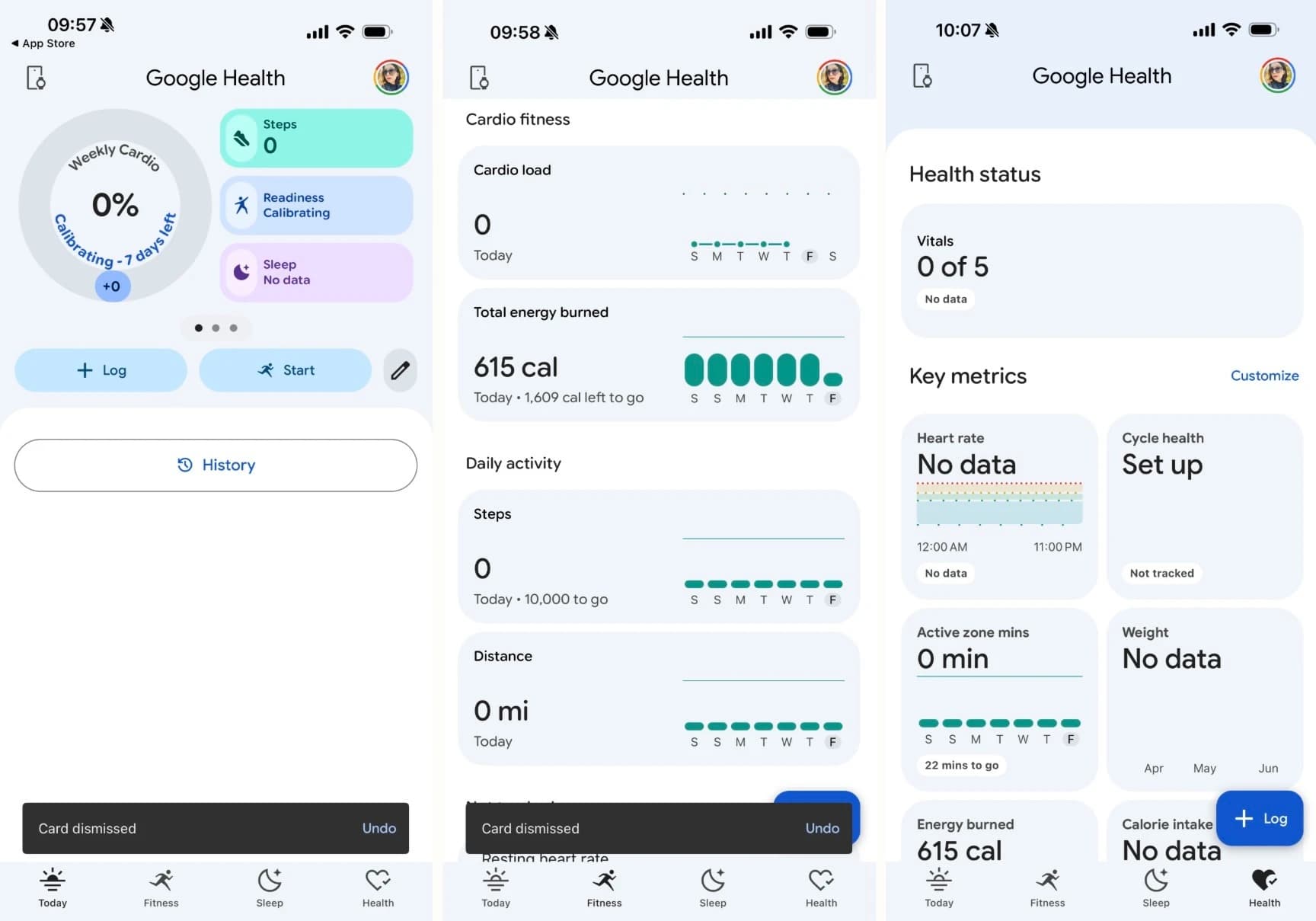
Google Health offers the Android equivalent with one notable addition: AI-generated custom fitness plans. The app analyzes your activity history, recovery patterns, and stated goals to build personalized workout schedules. Both platforms price their premium tiers at $9.99/month, making them mid-range options for general fitness tracking.
PUSH: best for data-driven lifters
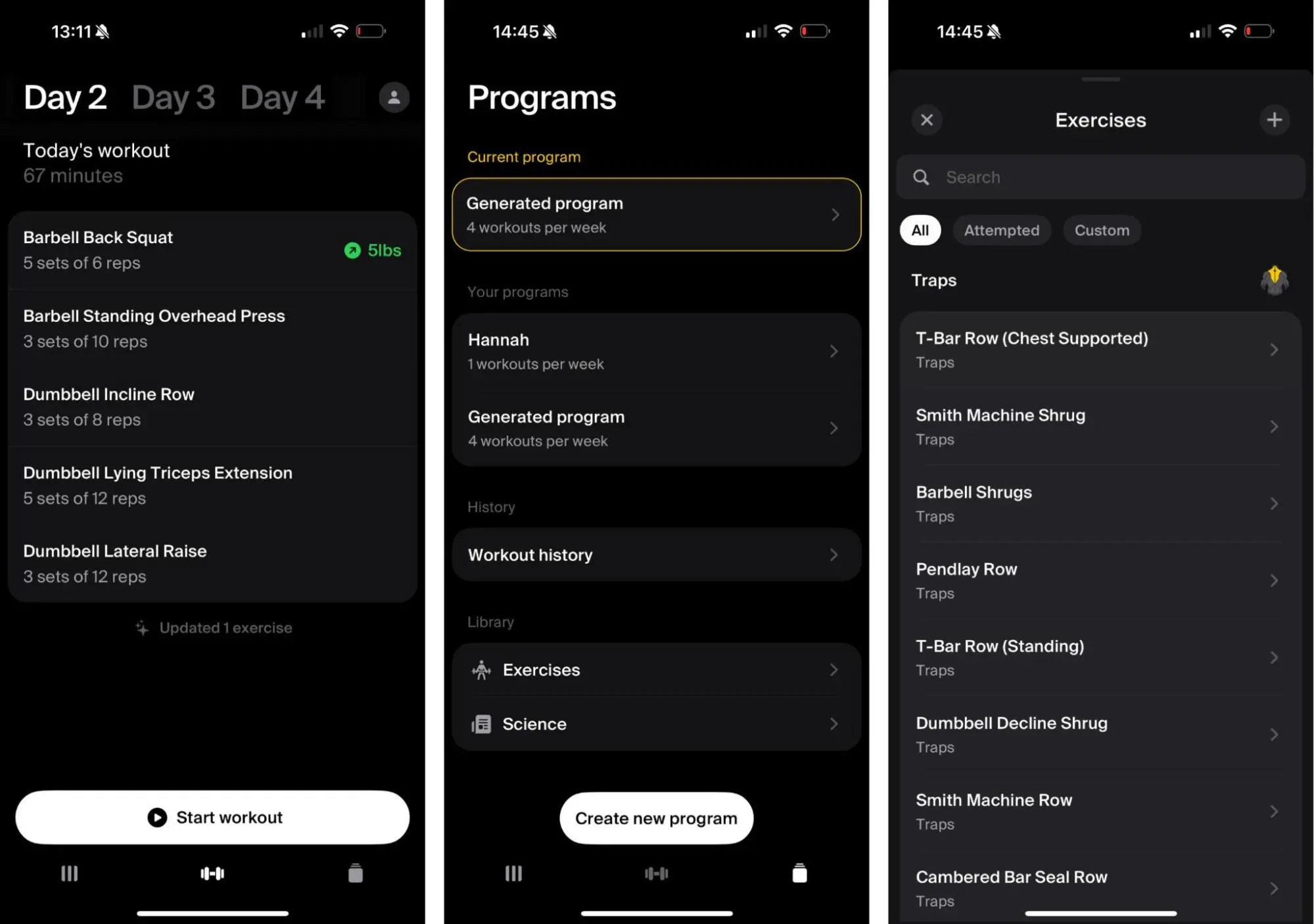
PUSH targets serious lifters who want more than a workout log. The app's predictive analytics forecast future progress based on your training history, recovery data, and rate of adaptation. If you're chasing a 300-pound squat, PUSH estimates when you'll hit it based on current trajectory.
The science-backed approach appeals to a specific user. PUSH pulls from exercise physiology research to recommend rep schemes, rest periods, and periodization cycles. At $15.49/month, it's priced for committed athletes rather than casual gym-goers.
Running apps: Runna vs. Runkeeper
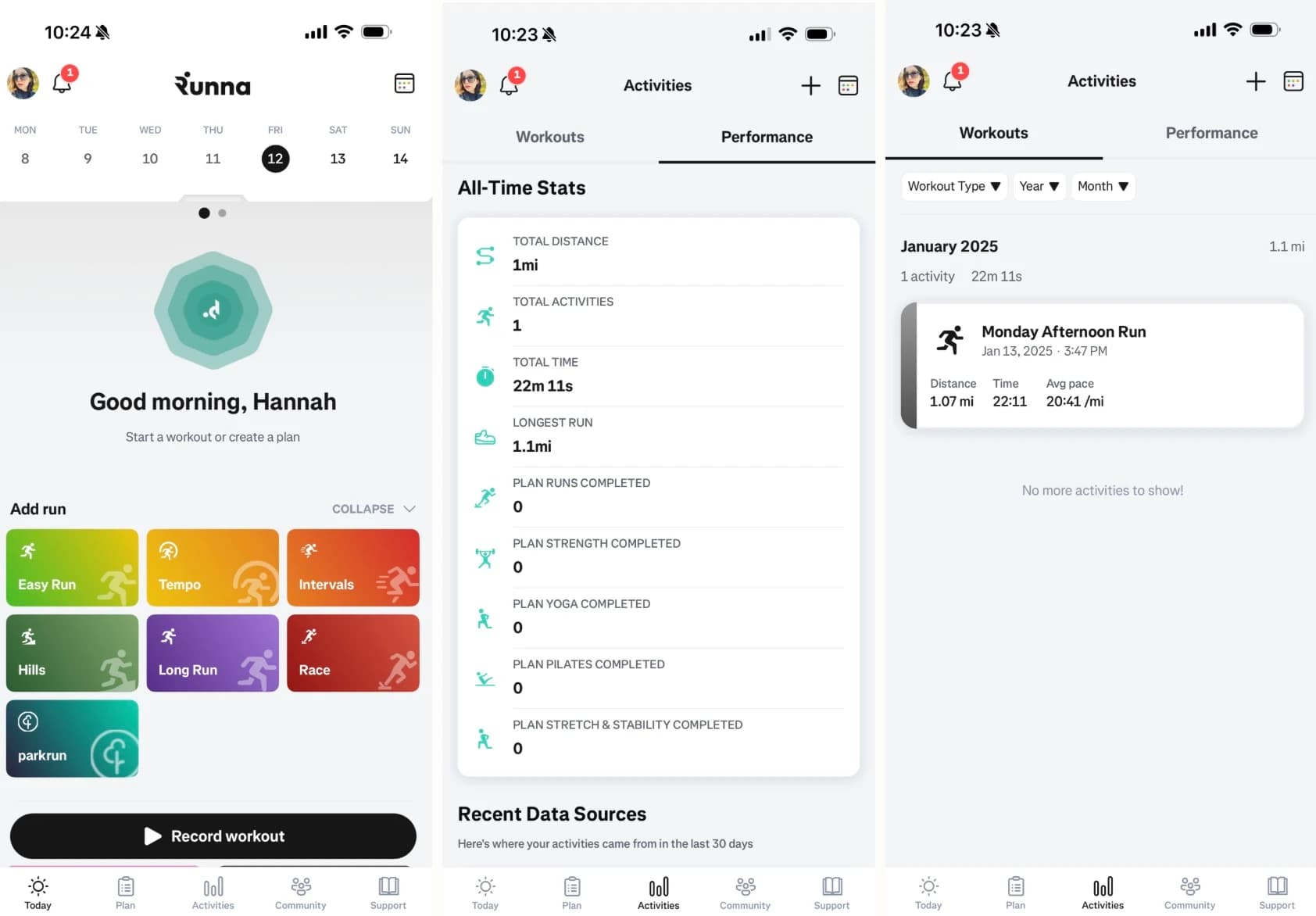
Runna specializes in race training. The app creates structured plans for specific events, from 5Ks to marathons, and groups users into communities based on upcoming races. If you're training for the Chicago Marathon, you'll find others on the same timeline. That social accountability matters for the long training blocks before race day.
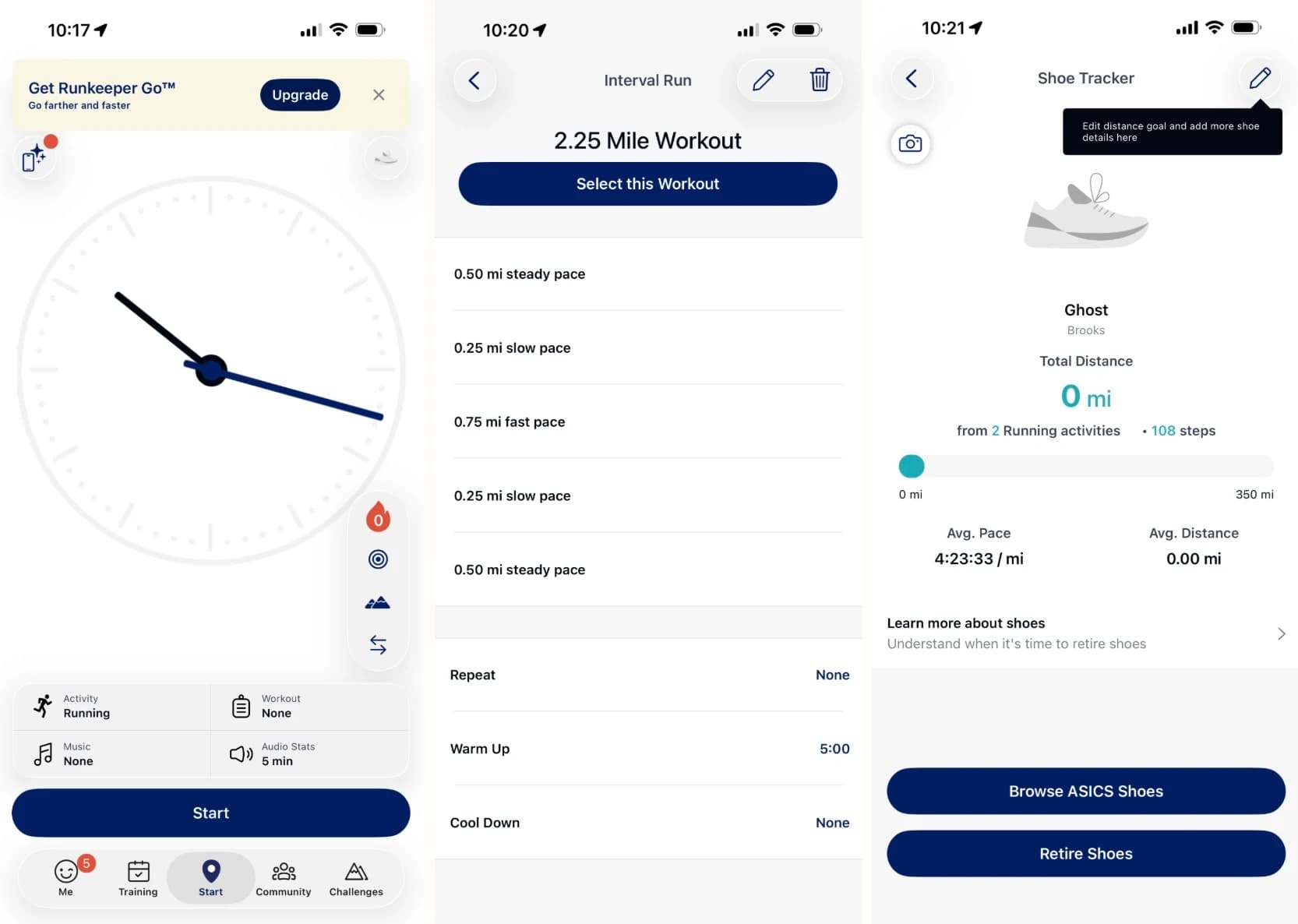
Runkeeper takes the opposite approach, targeting beginners with flexible goal setting. No rigid plans. Just set a distance or time target and the app adapts to your pace. At $11.99/month for premium, it's a lower commitment than Runna's $19.99 race-focused tier.
Strength training: Strong, Hevy, and Gymverse compared
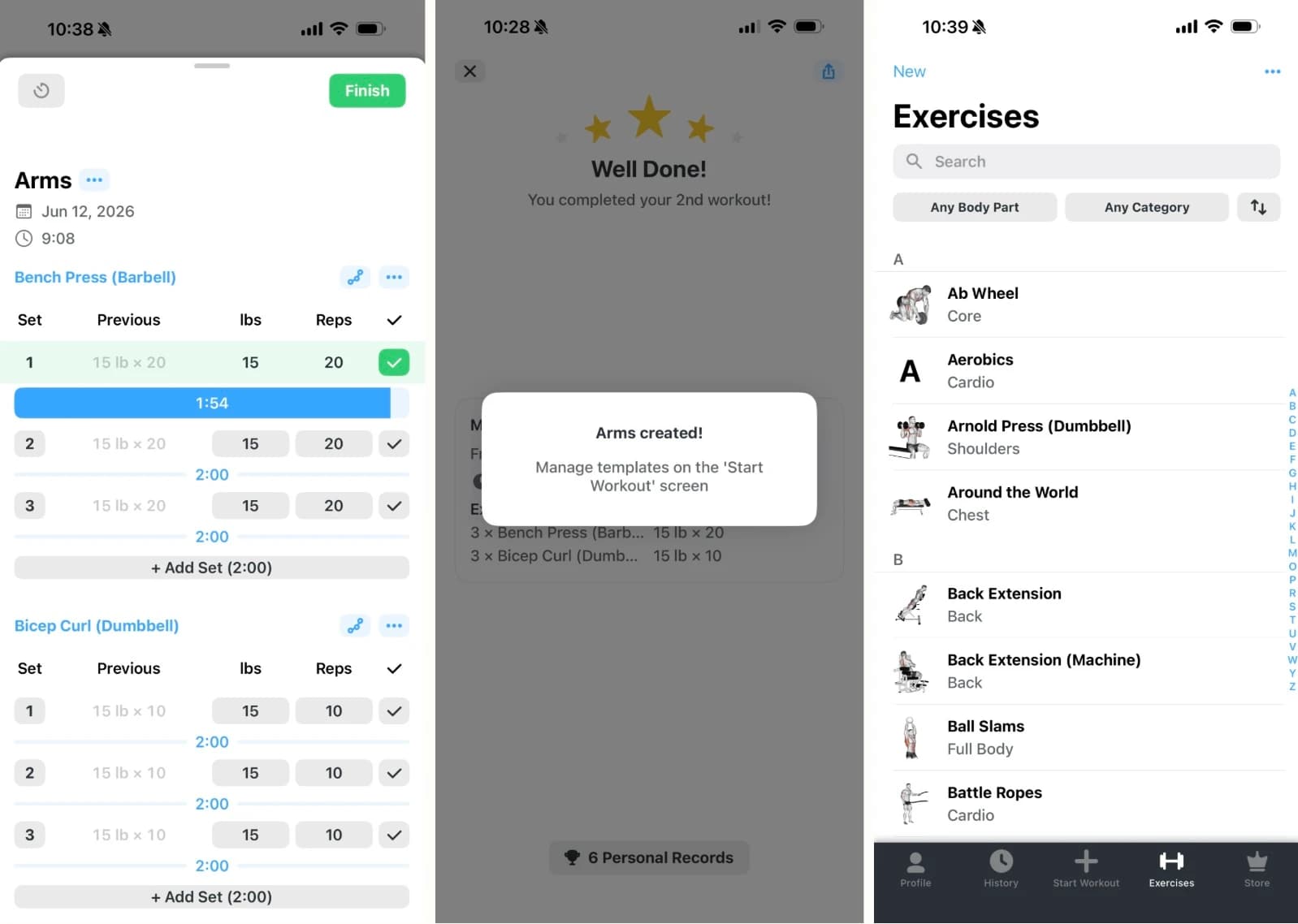
Strong stands out for its exercise library. Over 900 movements with video demonstrations cover everything from barbell compounds to cable isolation work. The logging interface is fast: tap the exercise, enter weight and reps, done. Premium unlocks unlimited workout history for $4.99/month, making it the best value for serious lifters.
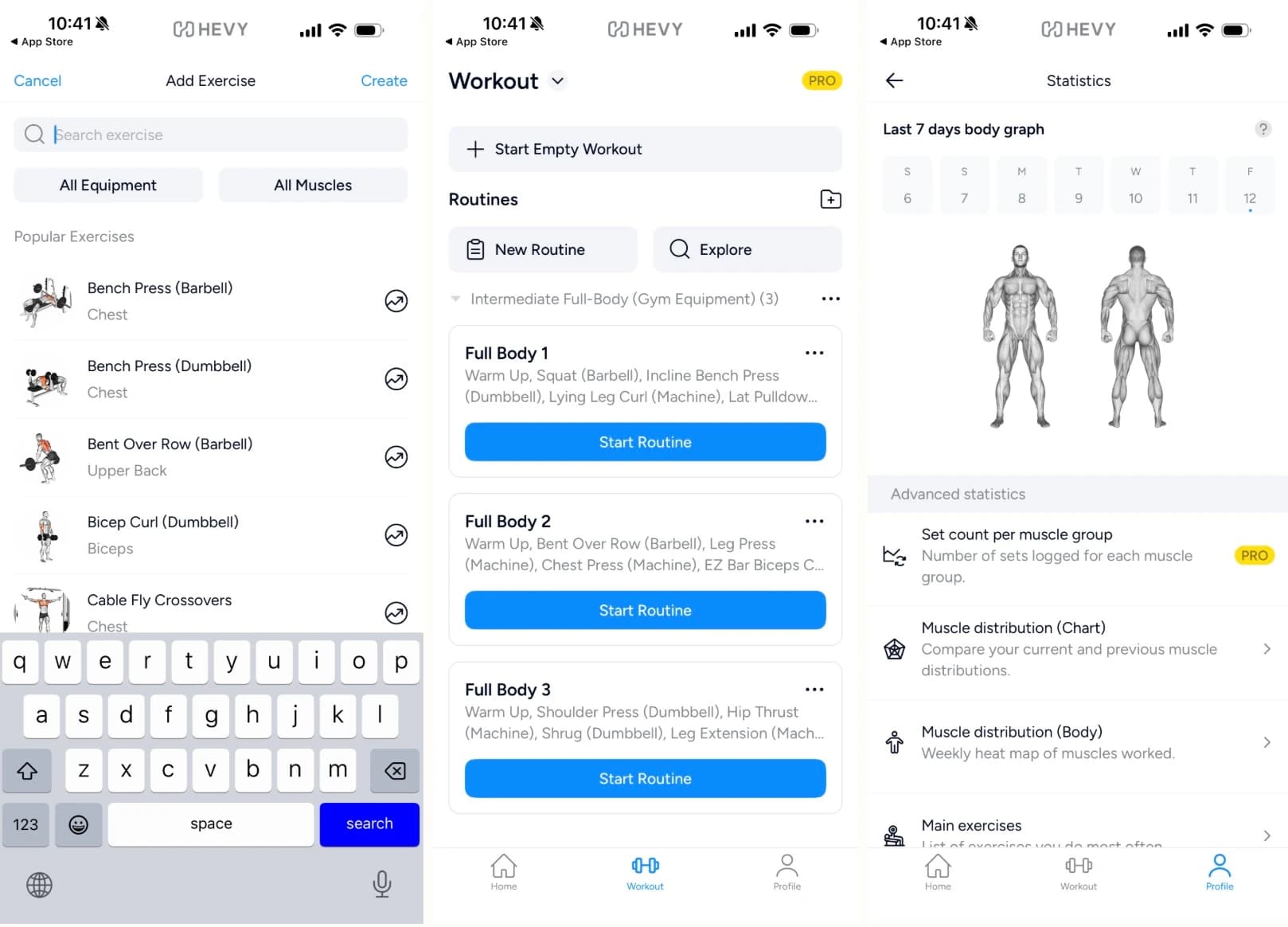
Hevy targets people who train in multiple locations. The app lets you sort workouts by available equipment, so you can build separate routines for your home gym, commercial gym, or hotel fitness center. At $2.99/month, it's the cheapest premium option in this category.
Gymverse rounds out the strength apps with a beginner focus. Integrated video tutorials walk new lifters through proper form, and the suggested routines start with basics rather than assuming prior experience. The $19.99/month price reflects the instructional content, though beginners might outgrow it within a year.
| App | Best For | Standout Feature | Price |
|---|---|---|---|
| Strava | Competitive athletes | Live beacon tracking | Free / $11.99/mo |
| Apple Fitness | Apple users | Seamless Watch connectivity | Free / $9.99/mo |
| Google Health | Android users | AI fitness plans | Free / $9.99/mo |
| PUSH | Data-driven lifters | Predictive analytics | $15.49/mo |
| Strong | Strength training | 900+ exercise library | Free / $4.99/mo |
| Hevy | Multi-location training | Equipment-based sorting | Free / $2.99/mo |
Privacy trade-offs with AI fitness tracking
The personalization in these apps comes with a cost. Reddit communities have been debating the privacy-first movement, weighing the value of AI coaching against the biometric data required to power it. Heart rate variability, sleep patterns, stress markers, and location history create a detailed health profile that lives on company servers.
The industry is projected to grow at a 26.2% compound annual rate through 2030. That growth depends on users accepting ever-deeper data collection. The apps that win long-term will likely be those that deliver measurable results without making users uncomfortable about what they're surrendering.
Logicity's Take
The real story here isn't which app tracks your run most accurately. It's that fitness apps have become the front door for health data that insurers, employers, and advertisers would pay handsomely to access. The apps winning market share in 2026 are the ones that cracked personalization, but the privacy reckoning is still coming. Users should ask: does my $10/month subscription cover the company's costs, or am I the product?
Frequently Asked Questions
What is the most accurate fitness app for outdoor running?
Strava consistently delivered the most accurate GPS mapping in outdoor tests, matching calibrated treadmill distances within 0.1 miles on a 3-mile run.
Which fitness app is best for beginners?
Runkeeper for cardio beginners (flexible goal setting, no rigid plans) and Gymverse for strength beginners (integrated video tutorials and form guidance).
Are free fitness apps good enough?
Free tiers work for basic tracking. Premium features like predictive analytics (PUSH), unlimited history (Strong), and AI plans (Google Health) require paid subscriptions ranging from $2.99 to $19.99/month.
Do fitness apps work without a smartwatch?
Yes, but accuracy drops significantly. Phone-only tracking relies on GPS and accelerometer data, missing heart rate, elevation precision, and calorie accuracy that wearables provide.
Which fitness app has the best social features?
Strava dominates social fitness with segment leaderboards, kudos systems, and community challenges. Runna offers race-specific community groups for marathon and event training.
Another example of mobile apps enabling sophisticated AI-powered workflows
Need Help Implementing This?
Building fitness tracking into your product or exploring health data integrations? Logicity covers the intersection of AI, automation, and product development. Subscribe for weekly analysis on the tools shaping how software teams build.
Source: The Zapier Blog
Huma Shazia
Senior AI & Tech Writer
Produced with AI assistance and reviewed by the Logicity editorial team. Learn more in our Editorial Policy.