
Key Takeaways
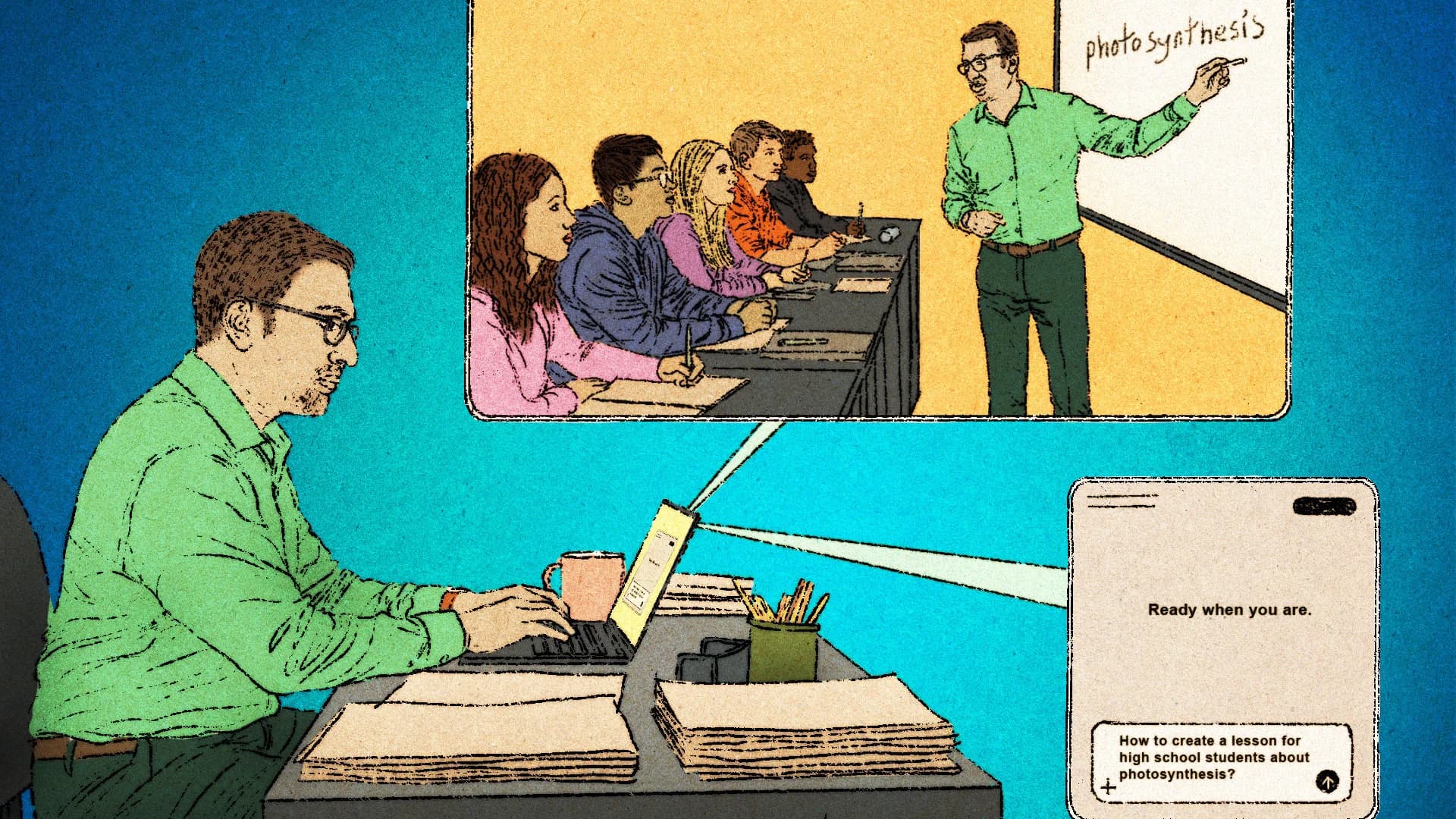
- A teacher reduced paper grading from one week to 30 minutes using AI agents
- Product managers use Claude to translate technical jargon from recorded meetings
- Marketing teams build AI dashboards to analyze social media trends and website traffic
The practical AI shift
Artificial intelligence has moved past the experimental phase for many workers. Teachers, product managers, and marketing professionals now use AI tools daily to handle tasks that once consumed hours of their week.
A Fast Company report documents specific examples of how people in different roles have integrated AI assistants like Claude into their workflows. The common thread: these aren't futuristic applications. They're mundane time-savers for grading, reading, summarizing, and analyzing.
But the report also notes concerns. Some workers worry that widespread AI use could erode critical thinking skills, particularly among children. Others emphasize that AI-assisted work needs careful review because these tools hallucinate and make mistakes.
1. Decoding engineering jargon
Kristin Moore, a technical product manager at PERQ (a digital marketing platform for property management companies), uses Claude to translate conversations she doesn't fully grasp. When engineers discuss topics in terminology she doesn't understand, she uploads the recorded meeting to Claude and asks for a summary of what she needs to do next.
“It picks up on all of that terminology that I don't understand, and it can simplify it into something that I can consume.”
— Kristin Moore, Technical Product Manager at PERQ
Moore also uses the AI tool to read through emails, support tickets, recorded meetings, and conversations. The goal: determine what her clients want the company to build.
“It's definitely freed up hours and hours of my week.”
— Kristin Moore
Compare two popular AI assistants for research and meeting summarization
2. Grading 100 papers in 30 minutes
Kyle Weimar, an elementary school teacher for Charter Schools USA, coordinates his Florida school's multi-tiered support system. This role involves creating plans for children performing in the bottom 20% of the student population.
Weimar uploads test scores, report cards, and health information into his school district's AI tool. Before meetings, he asks it to brainstorm what the district can do to help each child.
For grading, Weimar uploads 100 papers to an AI agent with a scoring guide. The AI grades them and provides students instant feedback. What took a week before now takes 30 minutes.
"Teachers are really overwhelmed with work, so any tools that we can use to make that a little bit more viable, we're really excited about using." — Kyle Weimar, Elementary School Teacher, Charter Schools USA
3. Building marketing dashboards
Ashley Smith, head of marketing at HireQuest (a staffing and recruiting company with about 400 franchises), used Claude to build a dashboard. It analyzes website traffic data and social media trends, reporting what HireQuest's followers react to or ignore.
Smith uses this information to help franchisees understand how to win more business. When her sales team attended a large manufacturing trade show, she asked them to gather intelligence that the AI could then analyze for patterns and opportunities.
4. Lesson plan creation
Teachers are using AI to generate lesson plans. Rather than starting from scratch, they provide the AI with curriculum standards and learning objectives. The tool drafts plans that teachers then review and modify.
This application addresses a chronic problem in education: teachers spending evenings and weekends on planning rather than rest or family time.
5. Meeting interpretation
Product managers frequently sit in meetings where technical discussions go over their heads. Rather than interrupting or pretending to understand, they now record conversations and upload them to AI tools afterward.
The AI extracts action items, clarifies technical concepts, and identifies what the product manager needs to follow up on. This helps non-technical team members stay aligned with engineering without slowing down discussions.
6. Client needs analysis
Product managers also use AI to synthesize client feedback from multiple sources. Instead of manually reading through emails, support tickets, and meeting transcripts, they feed everything into an AI tool.
The AI identifies patterns in what clients request. This helps product teams prioritize features based on actual demand rather than the loudest voices.
Learn how to balance AI assistance with human oversight
7. Trade show intelligence
Marketing teams collect information at trade shows: business cards, conversation notes, competitor observations. AI tools can process this raw intelligence and extract actionable insights.
Smith's team at HireQuest uses this approach to understand what potential clients need and how competitors position themselves. The AI summarizes trends that might take days to identify manually.
The hallucination problem
Workers interviewed for the report emphasized that AI-assisted work requires verification. These tools sometimes hallucinate, generating confident but incorrect information.
For teachers grading papers, this means spot-checking AI grades against their own judgment. For product managers summarizing meetings, it means confirming action items with colleagues who were present.
The efficiency gains are real. But so is the need for human oversight. AI tools work best as first drafts, not final answers.
Logicity's Take
Frequently Asked Questions
Which AI tool do professionals use most for work tasks?
Claude, built by Anthropic, appears frequently in the Fast Company report. Workers use it for meeting summarization, jargon translation, and building analysis dashboards.
How much time can AI save on grading papers?
Teacher Kyle Weimar reports grading 100 papers in 30 minutes with AI, compared to one week manually. The AI applies a scoring guide and provides instant student feedback.
What are the risks of using AI at work?
AI tools can hallucinate and produce confident but incorrect information. Workers need to verify AI-generated content, especially for high-stakes applications like grading or client recommendations.
Can non-technical workers use AI effectively?
Yes. Product managers without engineering backgrounds use AI to translate technical jargon from meetings. The tools simplify complex terminology into actionable summaries.
How do marketers use AI for trade shows?
Marketing teams collect notes, business cards, and observations at trade shows, then use AI to identify patterns in potential client needs and competitor positioning.
Need Help Implementing This?
Source: Fast Company / Associated Press
Manaal Khan
Tech & Innovation Writer
Produced with AI assistance and reviewed by the Logicity editorial team. Learn more in our Editorial Policy.