Key Takeaways
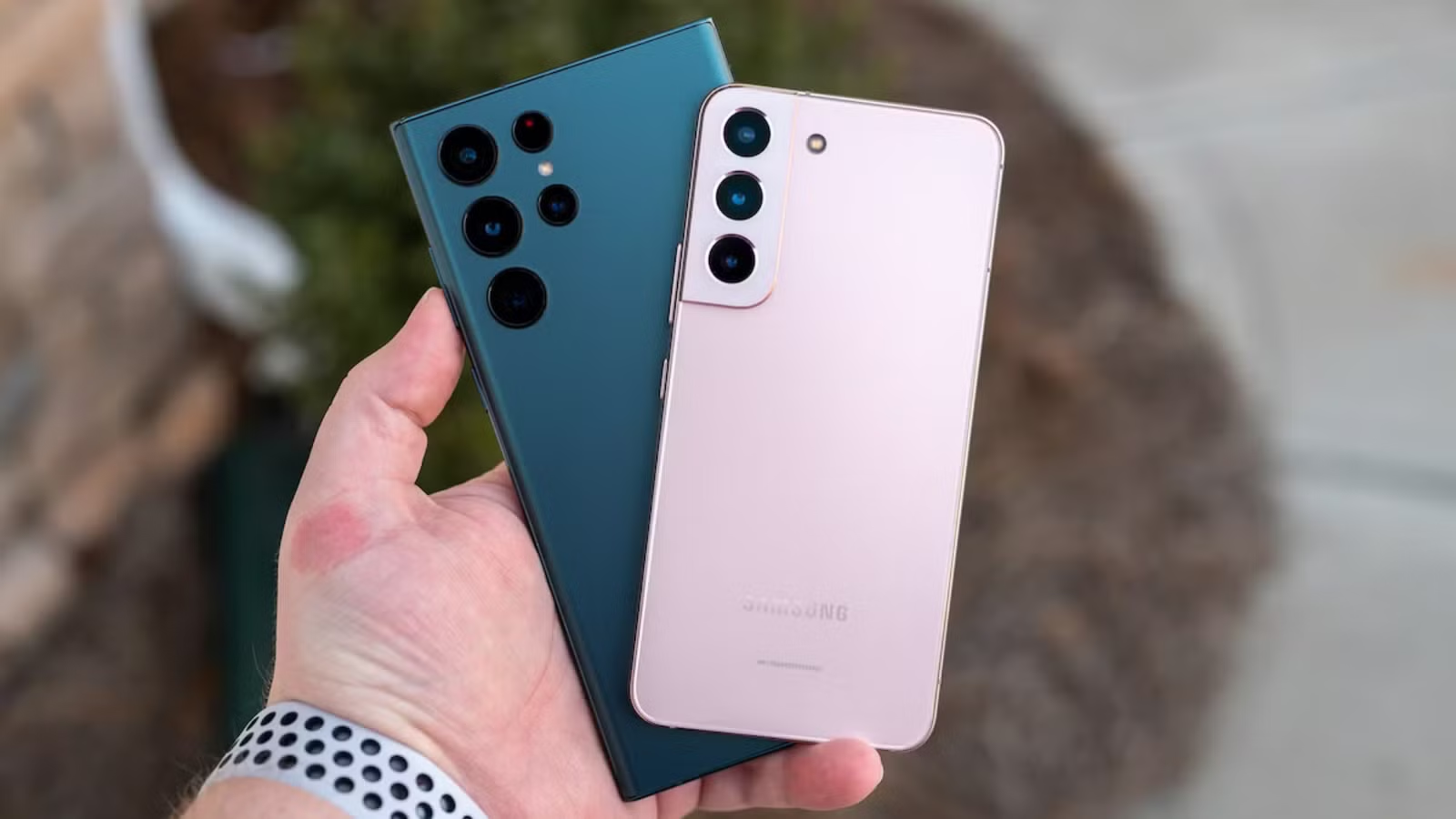
- The Galaxy S7 Edge marked Samsung's design maturity with curved displays and restored MicroSD support
- The Galaxy S25+ proves you don't need the Ultra model to get a flagship experience
- Samsung's willingness to reverse bad decisions, like removing expandable storage, shaped its long-term success
A tech journalist who has owned and reviewed Galaxy devices for 14 years has published his ranking of the best Samsung Galaxy phones ever made. The list, from How-To Geek's Cory Gunther, spans a decade of Android flagships and reveals which models actually earned their place in smartphone history.
What makes this ranking interesting isn't just nostalgia. It tracks Samsung's evolution from a company chasing Apple to one that defined what premium Android should look like. Some of these phones introduced features we now take for granted. Others corrected mistakes Samsung was smart enough to fix.
Why the Galaxy Note 5 still holds up
The Galaxy Note 5 from 2015 earned sixth place on the list, but Gunther still keeps his in the office. This phone combined everything Samsung learned from the Note 4 and Galaxy S6 into a device that felt refined in a way earlier models didn't.
At the time, a 5.7-inch QHD display was massive. The phone packed 4GB of RAM, an improved fingerprint scanner, and the S-Pen that made the Note line famous. It was thin and durable. The only major complaint: Samsung briefly killed the MicroSD slot, a decision the company reversed after customers pushed back.
That reversal matters. Samsung listened. Every flagship after the Note 5 included expandable storage until the Galaxy S21 series dropped it for good several years later.
The S25+ beats the Ultra for daily use
Fifth place went to the Galaxy S25+, a 2025 phone that Gunther still uses after a year and a half. His reasoning: the Ultra models have become too big, too heavy, and too boxy.
The S25+ packs nearly everything from the Ultra. The screen is slightly smaller. Battery life is actually better. The design fits a hand more naturally. For someone who typically swaps phones every six to eight months, keeping the same device for 18 months says something.
Gunther even bought and reviewed the Galaxy S26 Ultra, then returned it to keep using the S25+. When a tech reviewer voluntarily downgrades from the newest flagship, that's a signal worth noting.
The Galaxy S7 Edge: Samsung's design breakthrough
The Galaxy S7 and S7 Edge from 2016 took fourth place. These phones arrived with curved displays, rounded edges, and a premium feel that set the template Samsung would follow for years.
More importantly, Samsung fixed its mistakes. The MicroSD slot returned. The company started paying real attention to software and camera quality, not just hardware specs. For many users, the S7 series marked the moment Samsung stopped copying and started leading.
Gunther regrets giving away his S7 Edge. A phone that inspires that kind of attachment a decade later earned its spot on this list.
What the S10 series got right
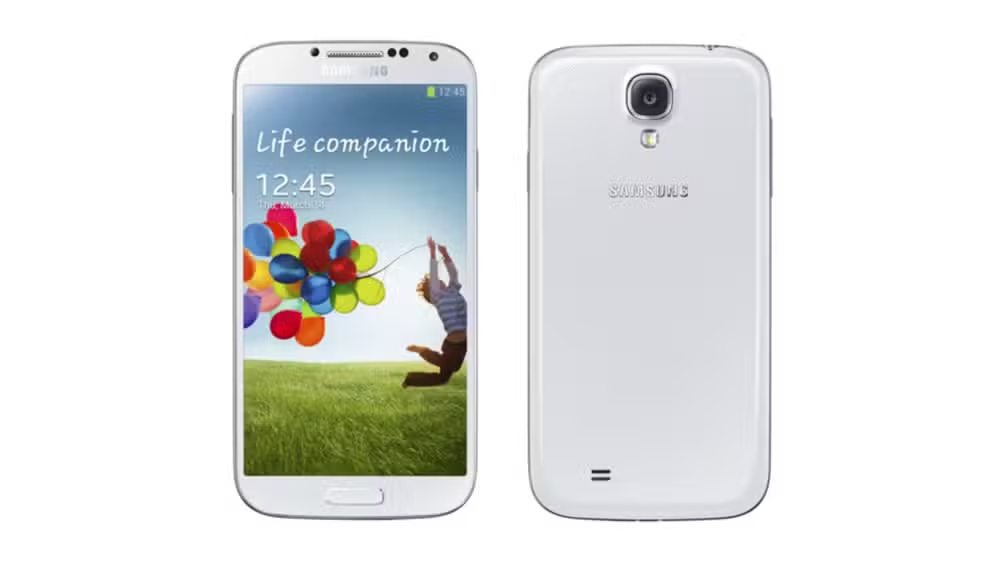
The Galaxy S10+ from 2019 claimed third place. The entire S10 series could have made the list, but the Plus model stood out for bringing upgrades that users actually wanted. The source notes this was a phone that delivered "upgrades everywhere that people loved," though the full details weren't included in the published excerpt.
By 2019, Samsung had refined its formula: big displays, capable cameras, premium materials, and software that no longer felt like an afterthought. The S10 series represented Samsung at its most confident.
Patterns worth noticing
Look at what connects these phones. Each one either introduced something new or corrected a previous mistake. The Note 5 refined the phablet concept. The S7 Edge brought back expandable storage. The S25+ proved bigger isn't always better.
Samsung has held the number one Android manufacturer position for over a decade, shipping more than 300 million Galaxy S series units globally since the original launched in 2010. That dominance didn't come from playing it safe. It came from iterating faster than competitors and admitting when features didn't work.
The Galaxy S series now spans 14 generations. Not every phone was a winner. But the ones that mattered shaped how we think about Android flagships today.
Samsung's latest mid-range phone shows how the company is extending flagship features to budget devices
Logicity's Take
This ranking reveals something the spec sheets don't capture: the best phones aren't always the most powerful ones. Samsung's willingness to course-correct, whether bringing back MicroSD slots or letting the Plus model outshine the Ultra, explains its longevity better than any benchmark score. The company that listens to complaints tends to outlast the one that ignores them.
Frequently Asked Questions
Which Samsung Galaxy phone is considered the best of all time?
Rankings vary by reviewer, but the Galaxy S7 Edge, Note 5, and S10+ consistently appear on best-ever lists for their design refinement and feature sets that defined their eras.
Is the Galaxy S25 Ultra worth buying over the S25+?
Not necessarily. The S25+ offers nearly identical features with better battery life and a more comfortable design. Some reviewers prefer it over the larger, heavier Ultra model.
Why did Samsung remove the MicroSD slot from Galaxy phones?
Samsung briefly removed expandable storage from the Galaxy S6 and Note 5, but reversed course after customer backlash. The feature returned until the S21 series dropped it permanently.
How many Galaxy S phones has Samsung released?
The Galaxy S series spans 14 generations since the original launched in June 2010, with Samsung shipping over 300 million units globally across the lineup.
Need Help Implementing This?
Looking to optimize your mobile device strategy or evaluate enterprise smartphone options? Logicity's team can help you assess which devices fit your organization's needs. Contact us for vendor-neutral guidance on mobile hardware decisions.
Source: How-To Geek
Huma Shazia
Senior AI & Tech Writer
Produced with AI assistance and reviewed by the Logicity editorial team. Learn more in our Editorial Policy.