Key Takeaways
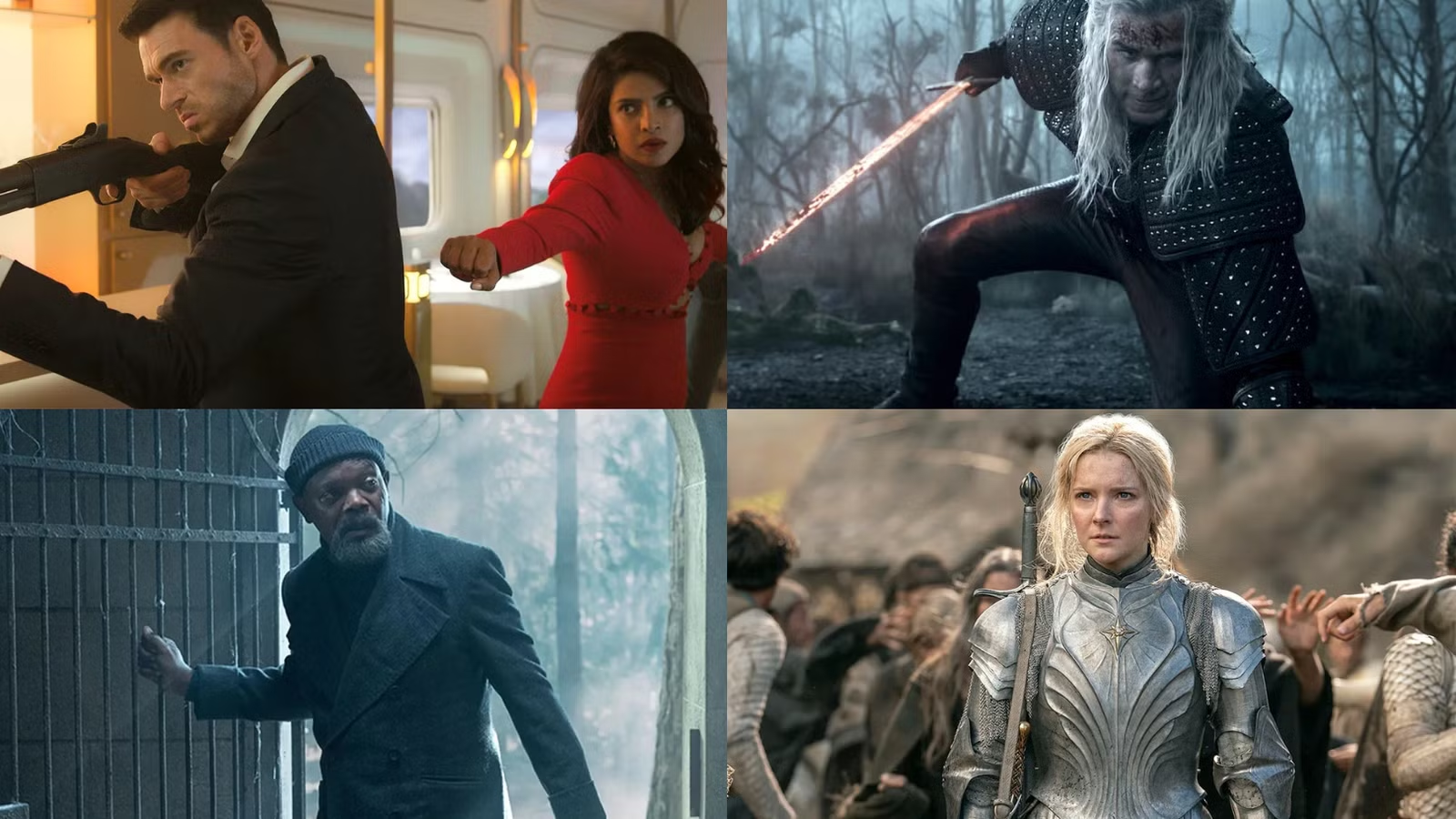
- Amazon spent $300 million on Citadel's six-episode first season, which failed to catch on with audiences
- Spin-offs Citadel: Diana and Citadel: Honey Bunny were both canceled after one season each
- The streaming wars pushed networks to spend record budgets without guaranteeing audience interest
The Post-Game of Thrones Spending Spree
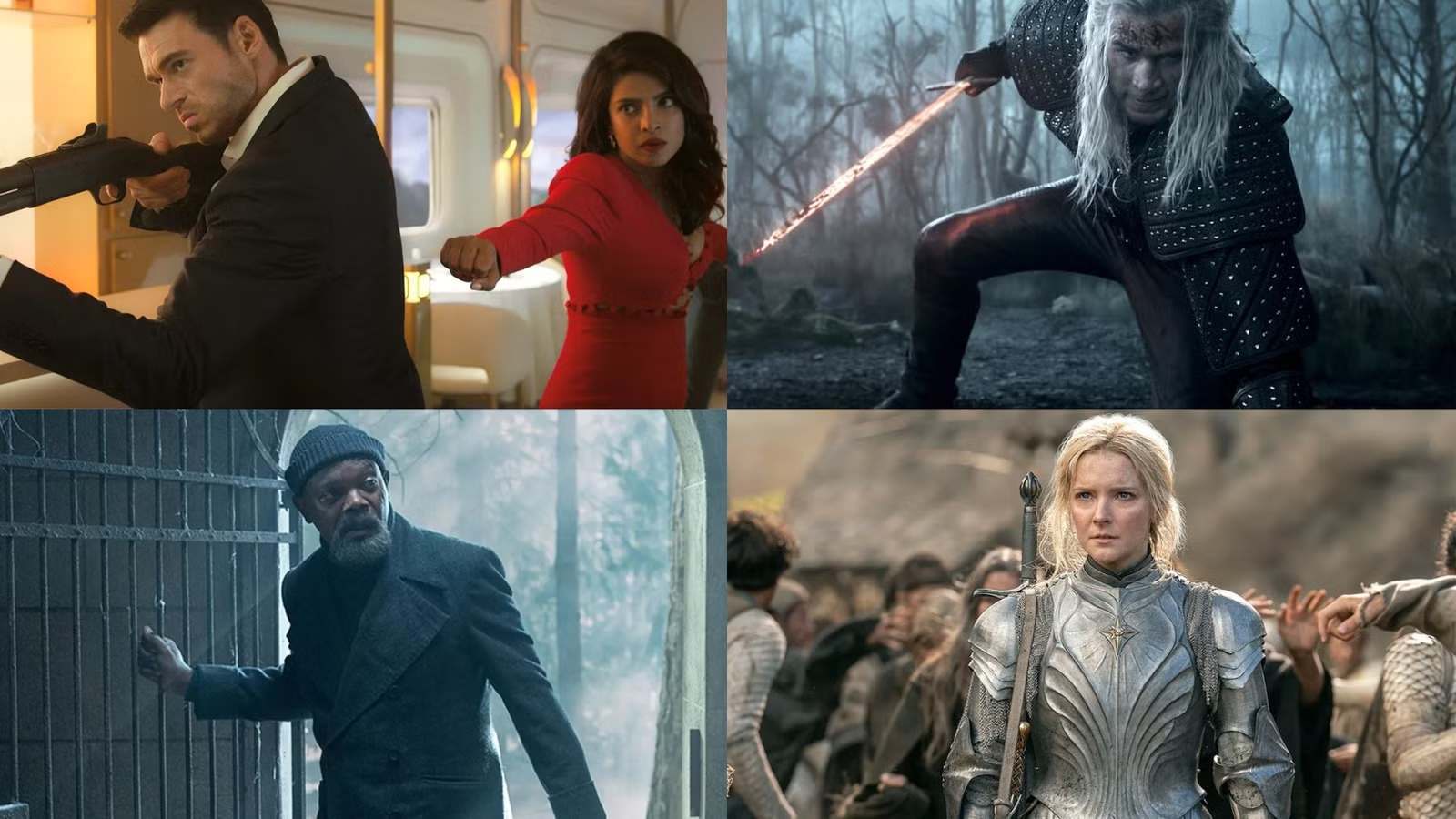
Game of Thrones changed what television could look like. HBO's fantasy epic matched Hollywood blockbusters in scale and spectacle, and it required a budget to match. The show's success convinced every streaming service and network that they needed their own prestige tentpole, no matter the cost.
The result was an arms race. Budgets climbed. Records broke repeatedly. But there was a problem: spending like Game of Thrones doesn't guarantee an audience like Game of Thrones. Some of these expensive bets paid off. Many did not.
These failures share a common pattern. Studios assumed they could manufacture a franchise by throwing money at it. They announced spin-offs before the first season aired. They built cinematic universes before anyone watched a single episode. The audience had other ideas.
Citadel: $300 Million for Six Episodes
Citadel is a spy drama from Joe and Anthony Russo, the directors behind Avengers: Endgame and Avengers: Infinity War. Amazon hoped the Russo brothers could replicate their Marvel magic for Prime Video. The streamer gave them $300 million for the first season.
That works out to $50 million per episode. For context, late-season Game of Thrones episodes cost around $15 million each. Citadel's per-episode budget exceeded many theatrical film budgets.
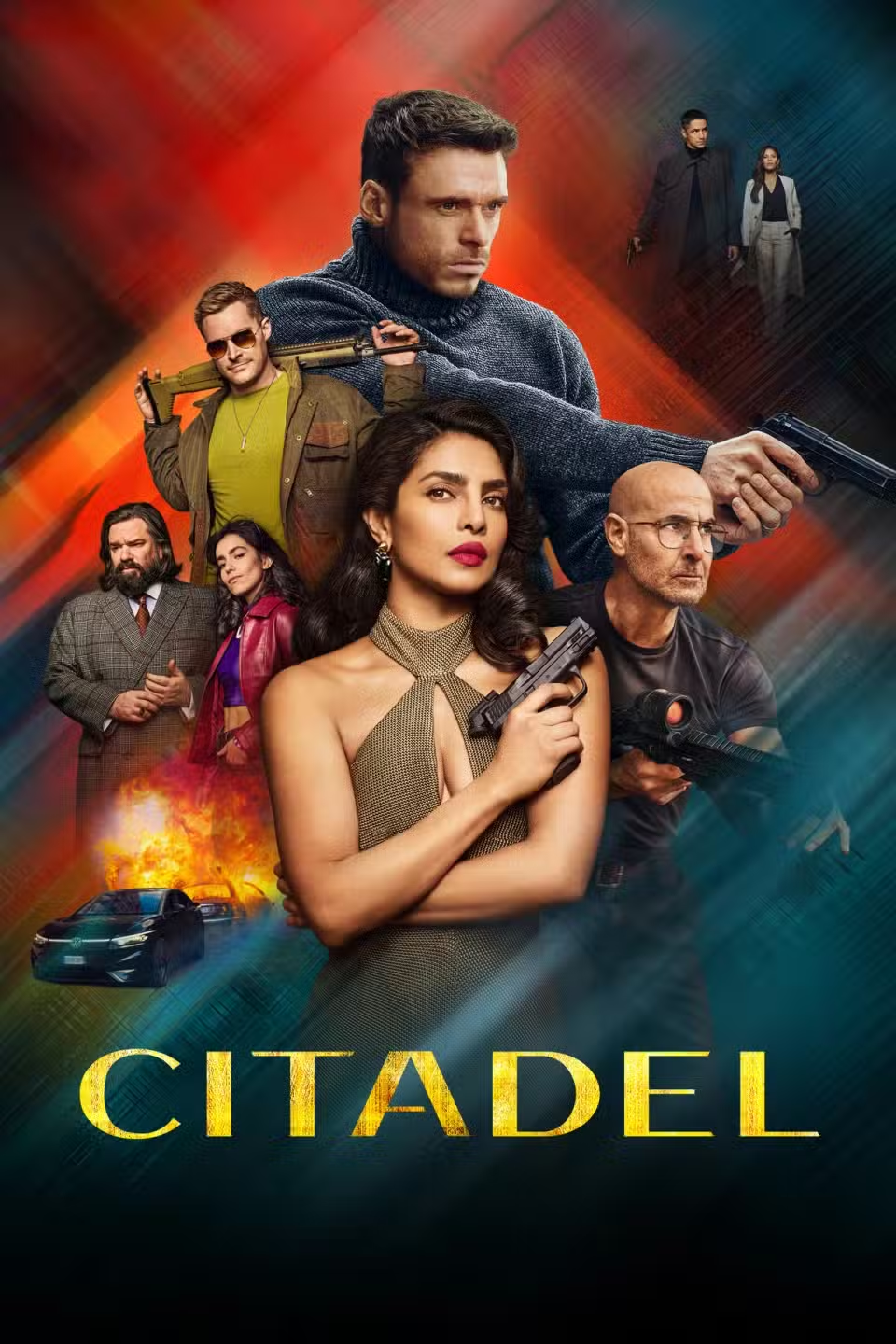
The result was generic. Critics found the show unremarkable. Audiences didn't show up. Amazon had already greenlit two spin-offs, Citadel: Diana and Citadel: Honey Bunny. Both were canceled after one season each.
Citadel's second season drops all seven episodes on May 6. The trailer looks more entertaining than season one. But with the franchise already collapsing around it, and reportedly made at a fraction of the original budget, it may be too late to matter.
The Franchise-First Problem
Citadel represents a specific failure mode: building a franchise before proving the concept works. Amazon didn't wait to see if audiences connected with the first season. They assumed the Russo name would guarantee success. It didn't.
This approach puts the cart before the horse. Game of Thrones earned its spin-offs. House of the Dragon exists because millions of viewers demanded more content from that world. No one demanded more Citadel.
The streaming wars created perverse incentives. Services needed exclusive content to justify subscriptions. They competed for marquee names. They announced ambitious slates. The actual viewing numbers became almost secondary to the announcement itself.
What Big Budgets Can and Cannot Buy
Money can buy spectacle. It can buy A-list directors and movie stars. It can buy elaborate sets, expensive VFX, and international shooting locations. What it cannot buy is a reason for viewers to care.
Game of Thrones worked because of its characters and its willingness to break storytelling rules. The Red Wedding wasn't expensive to film. It was shocking because the show killed characters viewers had invested in for years. That investment cost time, not dollars.
These expensive failures often look impressive. They have production values that rival theatrical releases. But production value is table stakes now. Every streaming service can produce glossy content. The differentiator is whether anyone wants to watch it.
Logicity's Take
The Citadel saga is a $300 million lesson in product-market fit. Amazon treated a TV show like an enterprise software launch. They built the entire platform before validating demand. For tech leaders watching this unfold, the parallel is obvious: no amount of engineering excellence compensates for building something nobody asked for.
The Streaming Correction
The era of unlimited streaming budgets is ending. Services are cutting costs. They're canceling shows faster. They're being more selective about what gets greenlit in the first place.
This correction was inevitable. The math never worked. Spending $300 million on a single season requires either massive subscriber growth or a sustainable franchise that runs for years. When shows flop in their first season, that investment evaporates.
The survivors of this era will be shows that earned their budgets incrementally. Start smaller. Prove the audience exists. Scale up production value as viewership justifies the expense. That's how Game of Thrones itself operated. Its first season cost a fraction of its final seasons.
Another look at how entertainment companies are pulling back on expensive productions
Frequently Asked Questions
How much did Amazon spend on Citadel season 1?
Amazon spent $300 million on Citadel's first season, which consisted of only six episodes. That's approximately $50 million per episode.
Were Citadel's spin-off shows canceled?
Yes. Both Citadel: Diana and Citadel: Honey Bunny were canceled after one season each, despite being greenlit before the main show proved its audience.
Why are streaming services spending so much on TV shows?
After Game of Thrones demonstrated that TV could match movie-scale spectacle, streaming services competed to create their own prestige tentpoles. They hoped expensive productions would drive subscriber growth.
Is Citadel getting a second season?
Yes. Citadel season 2 releases all seven episodes on May 6, though reportedly at a much smaller budget than the first season.
What made Game of Thrones successful compared to other expensive shows?
Game of Thrones built audience investment over time through compelling characters and shocking narrative choices. It earned its large budgets in later seasons after proving viewership in earlier, cheaper seasons.
Need Help Implementing This?
Building products or services that find their audience before scaling costs? We cover the strategies that work and the expensive failures to avoid. Reach out to the Logicity team to discuss how we can help you navigate content strategy and market validation.
Source: MakeUseOf
Manaal Khan
Tech & Innovation Writer
Produced with AI assistance and reviewed by the Logicity editorial team. Learn more in our Editorial Policy.