Key Takeaways
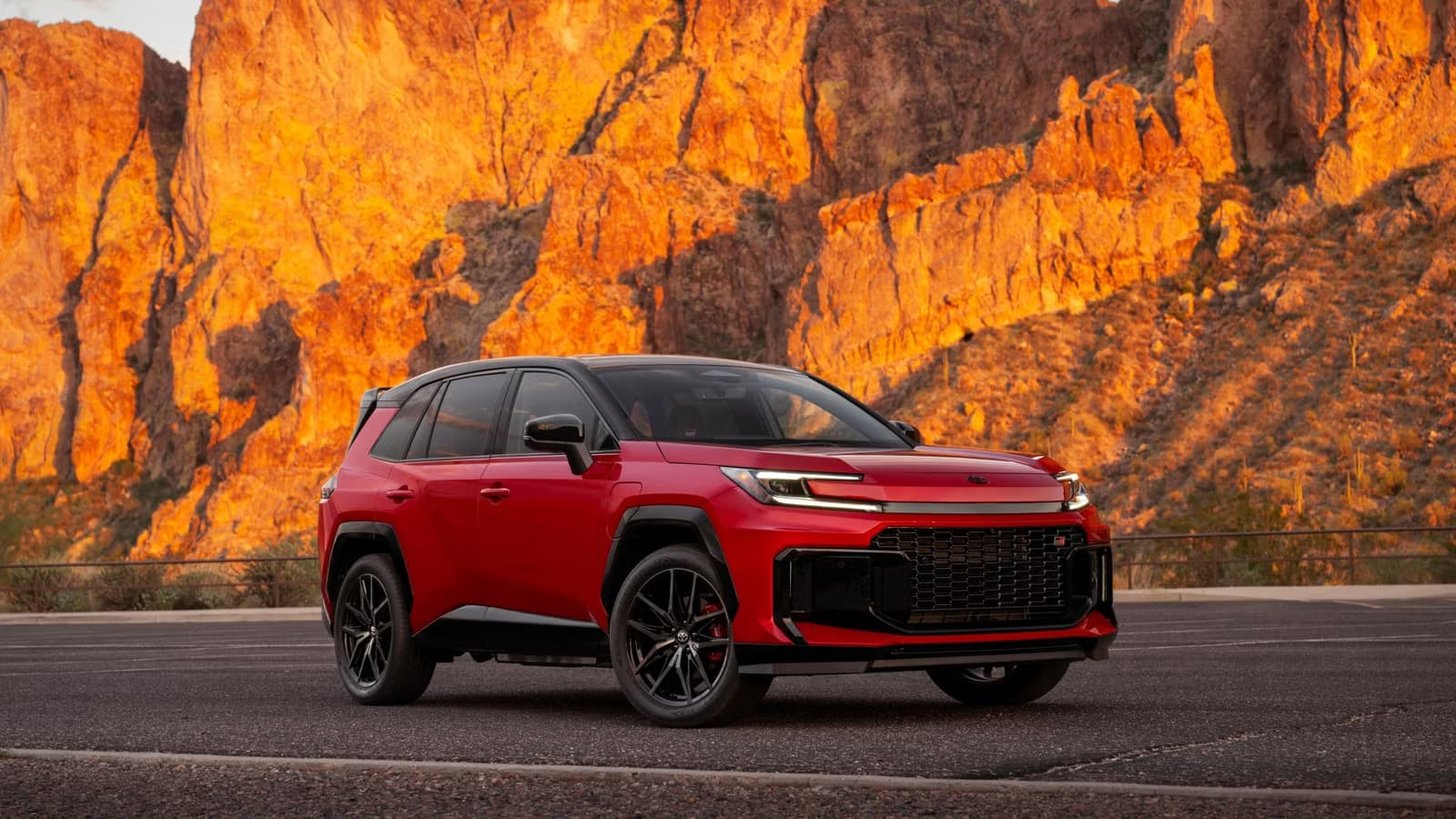
- Production challenges have limited RAV4 availability, opening the door for competitors in Q1 2026
- The Hyundai Tucson undercuts the RAV4 by over $750 at base price while offering a more premium interior
- The Ford Explorer sold 61,387 units in Q1 2026, proving demand for larger three-row SUVs remains strong
The Toyota RAV4's grip on the SUV sales throne is slipping. Production constraints have throttled availability just as rivals have sharpened their offerings, and Q1 2026 sales data shows competitors seizing the moment. For buyers who once defaulted to Toyota's compact crossover, the alternatives now look genuinely compelling.
The RAV4 has dominated this segment for years by delivering what families want: reliability, efficiency, and resale value that competitors struggled to match. That formula still works. But the current-generation RAV4 is now seven years old, and rivals have closed the gap on nearly every front. When supply issues compound an aging design, buyers start shopping around.
Which SUVs are gaining on the RAV4?
Five models have capitalized most on Toyota's stumble, each attacking from a different angle. Some compete on price, others on features, and a few simply offer more space. Together they illustrate how fragmented buyer preferences have become in the compact and mid-size crossover segments.
Hyundai Tucson: value that feels premium
The Tucson sold 55,426 units in Q1 2026. At $29,450 to start, it undercuts the RAV4 by a meaningful margin while delivering an interior that punches above its price. Sleek styling, a generous standard tech package, and a cabin that's actually roomier than the RAV4's give it real appeal.
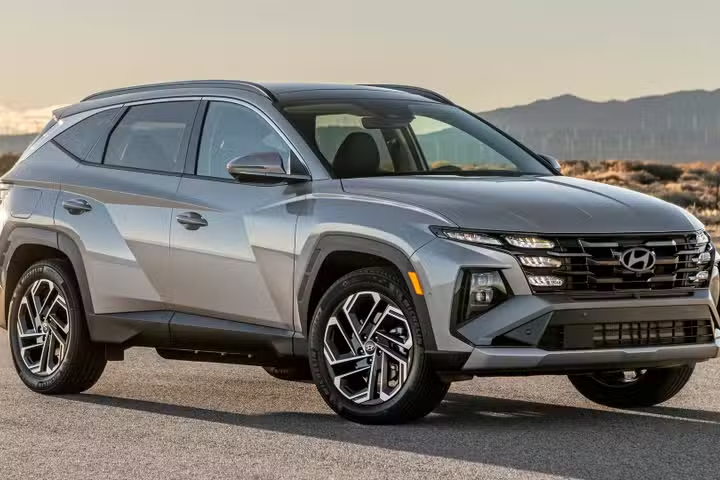
Hyundai offers gas, hybrid, and plug-in hybrid powertrains. None of them will excite driving enthusiasts. Acceleration is mediocre, handling merely adequate. But the Tucson rides quietly and absorbs road imperfections well, giving it an almost-luxury feel that surprises first-time drivers. If comfort matters more than engagement, it delivers.
| Spec | Hyundai Tucson | Toyota RAV4 |
|---|---|---|
| Base Price | $29,450 | $30,200 |
| Base Engine | 2.5L I4 (187 HP) | 2.5L I4 (203 HP) |
| Combined MPG (Base) | 28 MPG | 30 MPG |
| Transmission | 8-speed automatic | 8-speed automatic |
The trade-off: the RAV4 remains slightly more efficient and a bit quicker. For buyers who prioritize fuel economy above all else, Toyota still wins on paper. But the Tucson's interior quality and lower sticker price make it a tough value proposition to ignore.
Ford Explorer: bigger, bolder, American
The Explorer plays in a different league. It's a mid-size, three-row SUV starting at $38,330. It sold 61,387 units in Q1 2026, reinforcing that American buyers still gravitate toward larger vehicles when budgets allow.
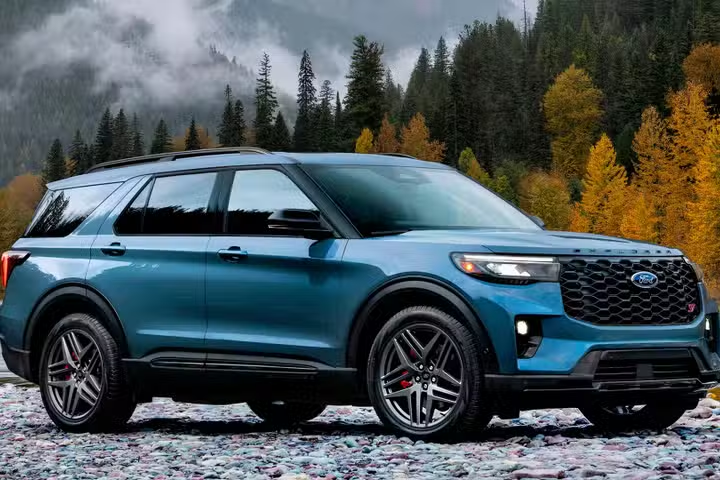
Ford updated the Explorer's screens for 2025, fitting every trim with a 13.2-inch touchscreen and 12.3-inch digital gauge cluster. The interior still lags behind some competitors in material quality, but the tech upgrade keeps it current. Under the hood, a 2.3-liter EcoBoost four-cylinder produces 300 horsepower and 310 lb-ft of torque, routed through a 10-speed automatic.
The Explorer doesn't directly compete with the RAV4. It costs more, drinks more fuel, and takes up more garage space. But for families who've outgrown compact crossovers, it represents a logical next step, and Ford has positioned it well.
Honda CR-V and Nissan Rogue: the perennial rivals
Honda's CR-V has shadowed the RAV4 for decades. The 2023 redesign gave it fresh styling and improved interior quality that finally matches Toyota's. The CR-V hybrid variant delivers competitive fuel economy, and Honda's reputation for reliability makes it an easy recommendation for buyers wary of risk.
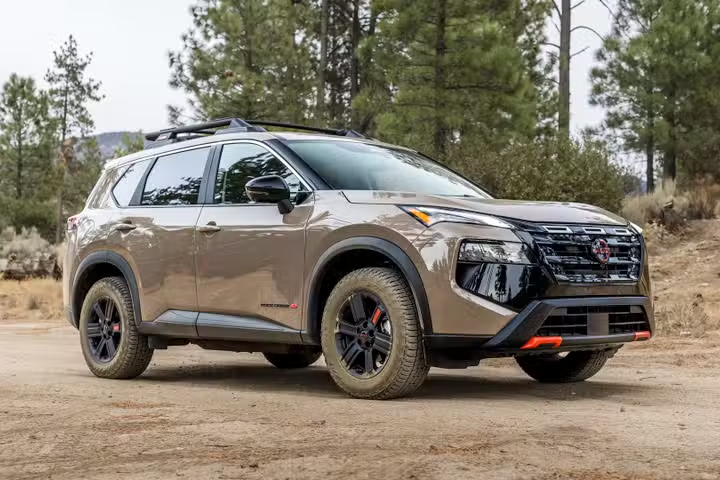
Nissan's Rogue takes a different approach. The Rock Creek edition leans into outdoor-adventure aesthetics with rugged styling cues. It's not a true off-roader, but it signals a lifestyle that appeals to buyers who want their SUV to look capable even if it mostly sees paved roads.
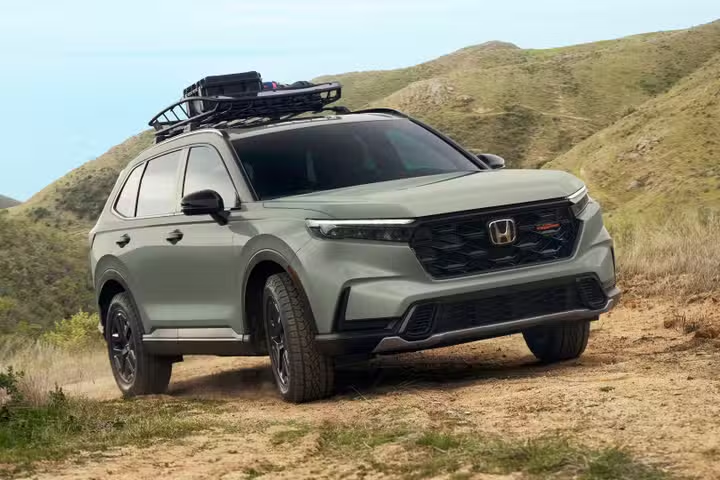
Honda's TrailSport trim plays the same game. These variants won't conquer Moab, but they give suburban families permission to dream. That emotional appeal matters in a segment where practical specs have converged.
Why is the RAV4 vulnerable now?
Two factors explain the shift. First, production challenges have limited RAV4 inventory. When dealers can't stock a vehicle, even loyal buyers consider alternatives. Second, the current RAV4 generation debuted in 2019. Seven years is a long time in automotive terms. Competitors have launched fresh designs with newer technology, and that novelty attracts attention.
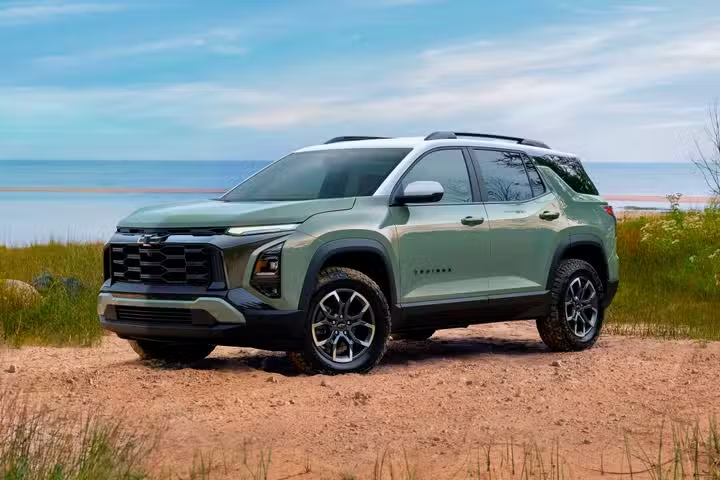
Toyota's strengths remain real. The RAV4's hybrid variants deliver excellent fuel economy. Resale values stay high. Reliability data still favors the brand. But none of that matters if buyers can't find one on the lot, or if a test drive in a newer competitor leaves a stronger impression.
What should buyers consider?
Price sensitivity pushes toward the Tucson. Space requirements push toward the Explorer. Brand loyalty and resale concerns still favor Toyota, but that advantage has narrowed. The honest advice: test drive at least three competitors before deciding. The compact SUV segment has never offered so many competent options.
Hybrid efficiency matters most for high-mileage drivers. If you commute 50 miles daily, the RAV4 Hybrid's fuel economy still justifies a price premium. For suburban families driving 10,000 miles per year, the Tucson's lower entry price might save more money overall than a few extra MPG.
Logicity's Take
Toyota's real problem isn't the competitors. It's timing. A RAV4 redesign is overdue, and production constraints hit at exactly the wrong moment. Expect Toyota to respond aggressively once supply stabilizes, likely with refreshed styling and updated tech. For buyers who can wait, 2027 may bring better options from all sides of this fight.
Frequently Asked Questions
Is the Hyundai Tucson more reliable than the Toyota RAV4?
Toyota historically leads in long-term reliability data, but Hyundai has improved significantly. Both models now perform well in initial quality surveys. The gap has narrowed, though Toyota maintains an edge in resale value.
Why are RAV4s hard to find at dealerships in 2026?
Production challenges have constrained supply. Toyota has faced component shortages and manufacturing delays that limit how many RAV4 units reach dealer lots, creating opportunity for competitors with better availability.
Which compact SUV has the best fuel economy in 2026?
The Toyota RAV4 Hybrid remains the efficiency leader among non-plug-in compact SUVs, with combined ratings around 40 MPG. The Honda CR-V Hybrid and Hyundai Tucson Hybrid follow closely.
Should I wait for a new RAV4 redesign?
If you can wait, yes. The current generation launched in 2019, making a refresh likely within the next 12-18 months. A redesigned model would bring updated tech, styling, and potentially improved efficiency.
Need Help Implementing This?
Evaluating fleet vehicles or planning a corporate purchase? Our team can help analyze total cost of ownership across these SUV competitors. Contact Logicity for customized recommendations based on your organization's driving patterns and budget constraints.
Source: How-To Geek
Manaal Khan
Tech & Innovation Writer
Produced with AI assistance and reviewed by the Logicity editorial team. Learn more in our Editorial Policy.