Key Takeaways
- Yggdrasil Linux was the first distro to boot from CD-ROM, pioneering the live Linux concept in the early 1990s
- Softlanding Linux System's bugs directly inspired the creation of Debian and Slackware, both still active today
- CentOS's termination in favor of CentOS Stream sparked the creation of Rocky Linux and AlmaLinux as replacements
The Linux distributions running on millions of servers and desktops today owe their existence to projects that no longer exist. Yggdrasil, SLS, CentOS, and MkLinux introduced features we now take for granted. Some died from neglect. Others from corporate decisions. All left marks on the operating systems that survived them.
Yggdrasil: the first live Linux CD
Live Linux distros are everywhere now. Pop in a USB drive, boot up, test your hardware compatibility before committing to an install. Yggdrasil Linux/GNU/X invented this concept in the early 1990s, when CD-ROM drives were still exotic PC hardware.
The context matters. DOS dominated. Windows was climbing toward relevance. Unix systems like Xenix existed but cost a fortune. Yggdrasil offered a complete, bootable Linux system for $99. If your software was included, you could get it free.
This was far more complete than the "root-boot" images circulating at the time. For many users, Yggdrasil provided their first real taste of Unix-like computing without a massive financial commitment.
Softlanding Linux System: the distro whose bugs built empires
Peter MacDonald founded Softlanding Linux System in 1992, less than a year after Linus Torvalds announced the Linux kernel on Usenet. Its slogan captured the moment perfectly: "Gentle touchdowns for DOS bailouts."
SLS bundled the Linux kernel, GNU utilities, an X Window System server, and other tools. Standard fare today. Revolutionary then. You could buy it on CD-ROM, tape, or download floppy images. A complete installation required over 30 floppy disks.
The problem: bugs. Lots of them. MacDonald was essentially building an operating system solo, and it showed. YouTuber NCommander documented just how painful getting SLS working could be.
SLS's real legacy is the frustration it generated. Ian Murdock created Debian as a direct response to SLS's instability. Patrick Volkerding founded Slackware for the same reason. Both remain the oldest actively maintained Linux distributions in wide use. The final SLS release appeared in 1994. Its descendants are still getting updates 30 years later.
CentOS: free RHEL until Red Hat pulled the plug
CentOS, the Community Enterprise Operating System, launched in 2004 as an open-source clone of Red Hat Enterprise Linux. Red Hat had just shifted its business toward enterprise servers. Fedora took Red Hat Linux's place on hobbyist desktops. CentOS filled the gap for web servers.
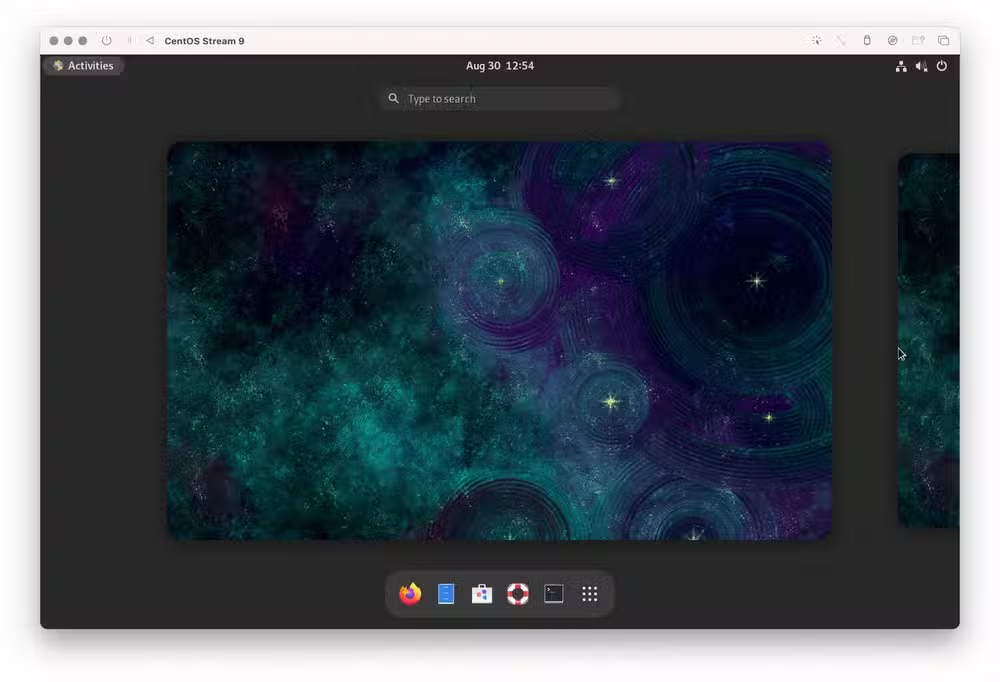
The appeal was obvious. Red Hat's source code was open, stripped of branding. You could compile fully free and open source RHEL versions. CentOS tracked RHEL releases closely, meaning smaller companies could skip license fees while running software identical to enterprise deployments. Students and developers could learn RHEL without paying Red Hat prices.
Red Hat eventually joined CentOS development while keeping official distance. Then came the twist: Red Hat terminated classic CentOS in favor of CentOS Stream, a rolling release positioned as upstream of RHEL. Users would get newer code, Red Hat said.
The real rationale? Probably to push free-riding users toward actual service contracts. The decision sparked immediate forks. Rocky Linux launched, targeting CentOS's popularity in scientific computing. AlmaLinux followed. Oracle pitched its existing RHEL-derived Oracle Linux to disgruntled users.
CentOS Stream still exists. Classic CentOS does not.
MkLinux: Linux on PowerPC Macs before macOS
Apple's Unix history predates macOS by over a decade. A/UX ran on Macs from the late 1980s through the mid-1990s, based on System V. By the mid-90s, Apple's Copland project was mired in delays, and classic Mac OS was showing its age.
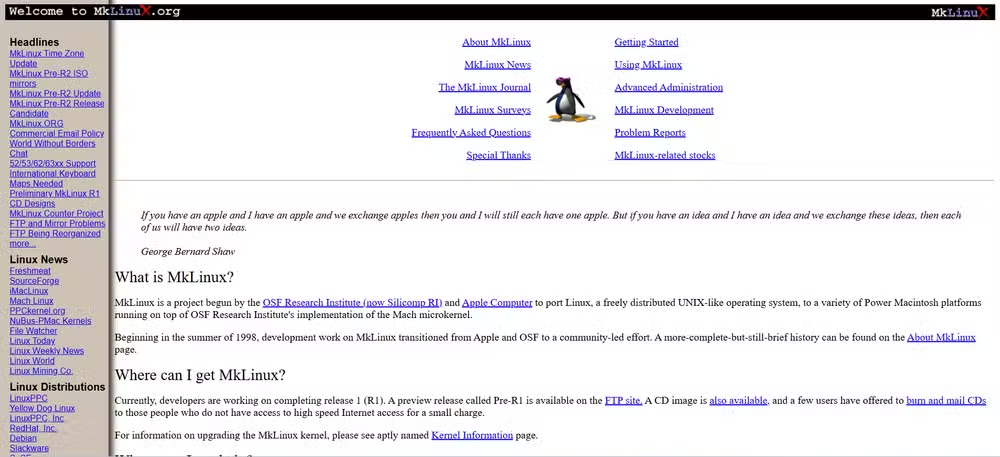
MkLinux emerged during this period, bringing Linux to Apple's PowerPC hardware. It offered Mac users a path to Unix that didn't require expensive proprietary systems. The project demonstrated Linux's portability beyond the x86 world that dominated PC computing.
Apple's eventual acquisition of NeXT and development of Mac OS X rendered MkLinux largely irrelevant. Why run Linux on a Mac when the Mac itself ran a Unix-based operating system? MkLinux faded, but it proved that Linux could run on diverse hardware platforms during a critical period in the operating system's development.
Why distros die, and why it matters
The pattern repeats. A distribution solves a real problem. Users adopt it. Then either the maintainers burn out, a corporation changes strategy, or the problem gets solved better elsewhere.
SLS died because one person couldn't maintain an operating system alone. CentOS died because Red Hat decided free RHEL clones undercut its business. Yggdrasil and MkLinux died because the innovations they pioneered became standard features everywhere else.
Each death, though, created something. Debian and Slackware rose from SLS's ashes. Rocky Linux and AlmaLinux emerged from CentOS's termination. Live boot became universal. PowerPC Linux proved the kernel's flexibility. The distributions died. Their contributions didn't.
Logicity's Take
The Linux distro graveyard tells a consistent story: innovation without sustainable maintenance dies, but the ideas persist. For CTOs evaluating Linux deployments today, the CentOS saga offers a specific lesson. Never build infrastructure on a free derivative of a commercial product unless you have a contingency plan for when the upstream vendor decides to close the loophole. Rocky Linux and AlmaLinux exist precisely because thousands of organizations learned this the hard way.
Frequently Asked Questions
What was the first Linux distribution that could boot from CD?
Yggdrasil Linux/GNU/X was the first to offer a complete bootable system from CD-ROM in the early 1990s, pioneering the live Linux concept that's now standard across most distributions.
Why did Red Hat discontinue CentOS?
Red Hat replaced classic CentOS with CentOS Stream, positioning it as an upstream development branch of RHEL. Critics suggest the move aimed to convert free users into paying customers, since CentOS Stream no longer provides a stable, free RHEL clone.
What replaced CentOS after it was discontinued?
Rocky Linux and AlmaLinux emerged as direct CentOS replacements, offering free RHEL-compatible distributions. Oracle also marketed its existing Oracle Linux to former CentOS users.
Which modern Linux distros descended from Softlanding Linux System?
Debian and Slackware were both created in direct response to SLS's buggy releases. Both remain actively maintained today, making them the oldest continuously developed Linux distributions in wide use.
Need Help Implementing This?
Evaluating Linux distributions for your infrastructure or considering migration from CentOS to Rocky Linux or AlmaLinux? Contact Logicity's technical advisory team for guidance on selecting and deploying enterprise Linux solutions that won't leave you stranded when corporate priorities shift.
Source: How-To Geek
Huma Shazia
Senior AI & Tech Writer
Produced with AI assistance and reviewed by the Logicity editorial team. Learn more in our Editorial Policy.