Key Takeaways
- Sublime Text offers enterprise-grade code editing with only occasional reminder prompts after every 30 saves
- VLC, KeePassXC, and LibreOffice provide fully featured alternatives without any payment tiers
- Tenacity offers professional audio editing capabilities as a completely free fork of Audacity
WinRAR has a $29 paid plan. Almost nobody buys it. The compression tool became an internet meme for its infinite free trial that simply never expires. But WinRAR was not trying to invent a business model. It just never said no to users who kept clicking past the payment reminder.
Other software developers noticed. Some copied the approach with even less friction. Others abandoned paid tiers entirely on tools that deliver more value than WinRAR's modest price tag. Here are five apps that took the endless free model and did it better.
Sublime Text: The Code Editor That Normalized Not Paying
Visit Sublime Text's website and you'll find a curious contradiction. The official copy states: "Sublime Text may be downloaded and evaluated for free, however a license must be purchased for continued use. There is currently no enforced time limit for the evaluation."
Translation: use it forever, feel slightly guilty about it. The license costs $99, but the only enforcement mechanism is a gentle reminder popup that appears roughly every 30 saves. These nag screens rank among the least disruptive in any trial software.
Sublime Text's feature set justifies a higher price than WinRAR. Multi-cursor editing lets you place independent cursors anywhere in a file. A related feature selects every instance of a word or variable for simultaneous editing. Visual Studio Code later implemented this and popularized it.
The command palette lets you access any editor function by typing a few characters instead of hunting through menus. Distraction-free mode hides everything except your code, centered on screen. Some editors charge for that feature. Sublime Text includes it in the "trial."
VLC Media Player: No Trial, No Payment, No Problem
VLC took a different approach. There is no trial because there is nothing to buy. The media player handles virtually every audio and video format without codec packs, subscription fees, or upgrade prompts.
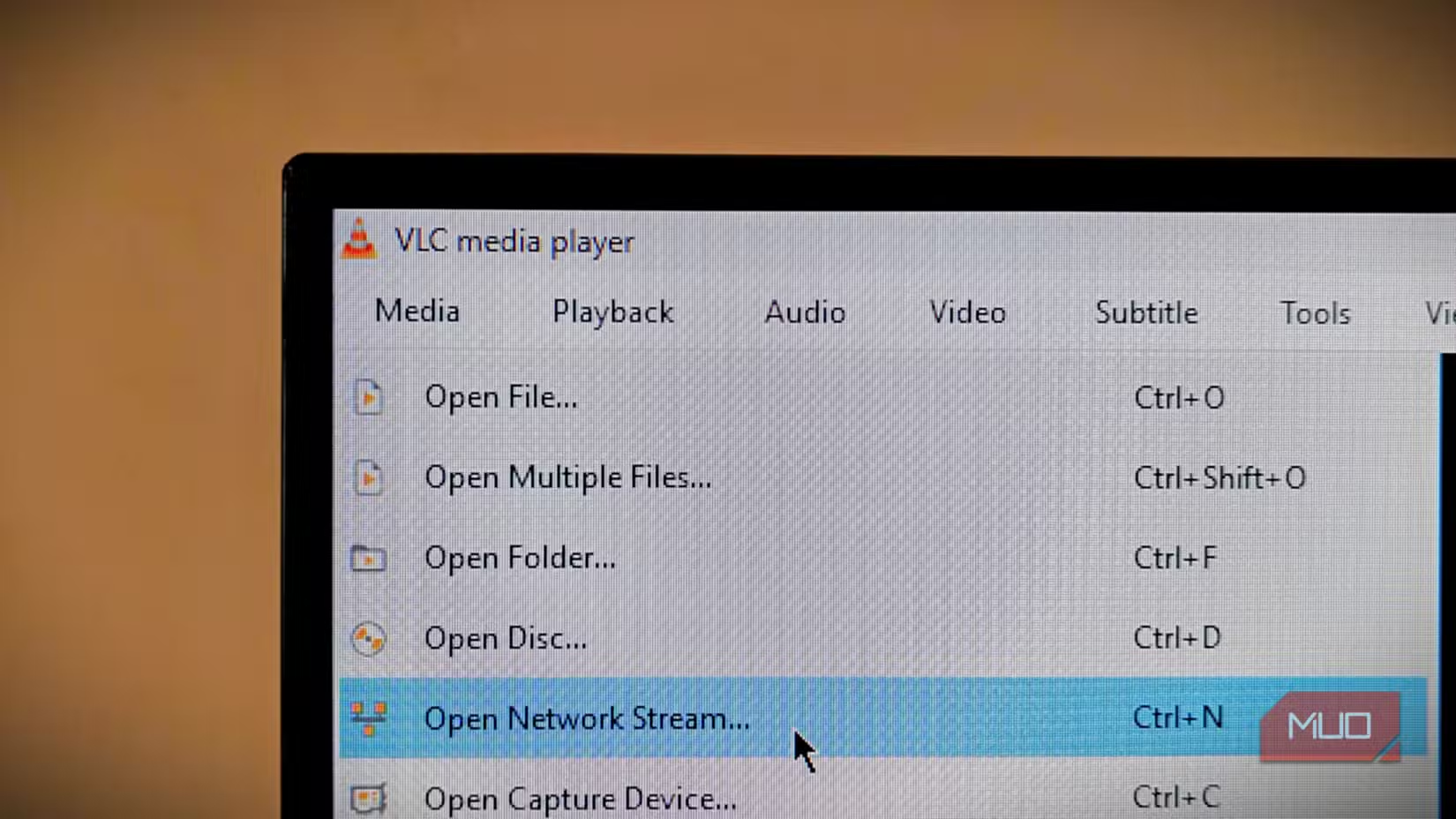
Maintained by the VideoLAN nonprofit, VLC ships features that commercial players charge for. It streams network media, converts file formats, and plays incomplete downloads. The interface has not changed much since 2001, and that is a feature. It just works.
KeePassXC: Enterprise Password Management at Zero Cost
Password managers typically run $3 to $6 per month for premium features. KeePassXC offers comparable functionality for nothing. The open source tool stores credentials in an encrypted local database, syncs across devices via your own cloud storage, and supports hardware security keys.
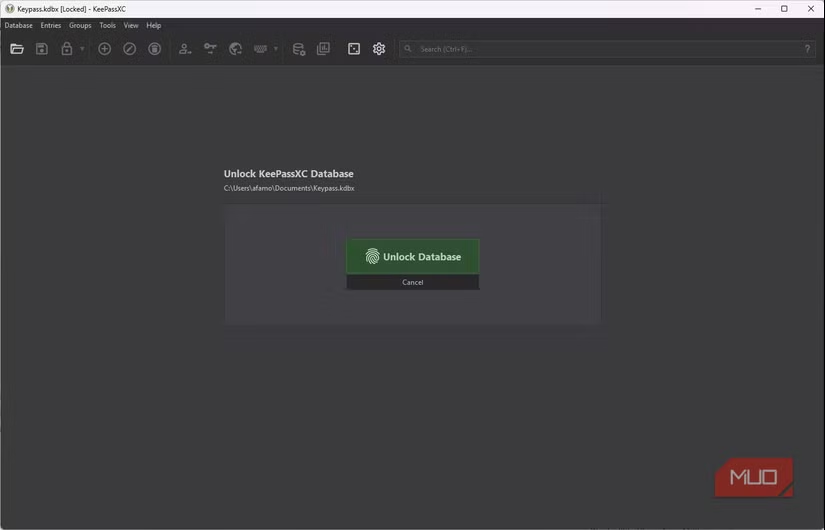
Unlike commercial alternatives, KeePassXC does not route your passwords through third-party servers. Your data stays on hardware you control. For organizations concerned about supply chain attacks on password managers, this matters.
LibreOffice: The Full Office Suite Without Microsoft's Pricing
Microsoft 365 costs $99 per year for a personal license. LibreOffice delivers word processing, spreadsheets, presentations, and PDF editing for free. The Document Foundation maintains it as open source software with no commercial tier.
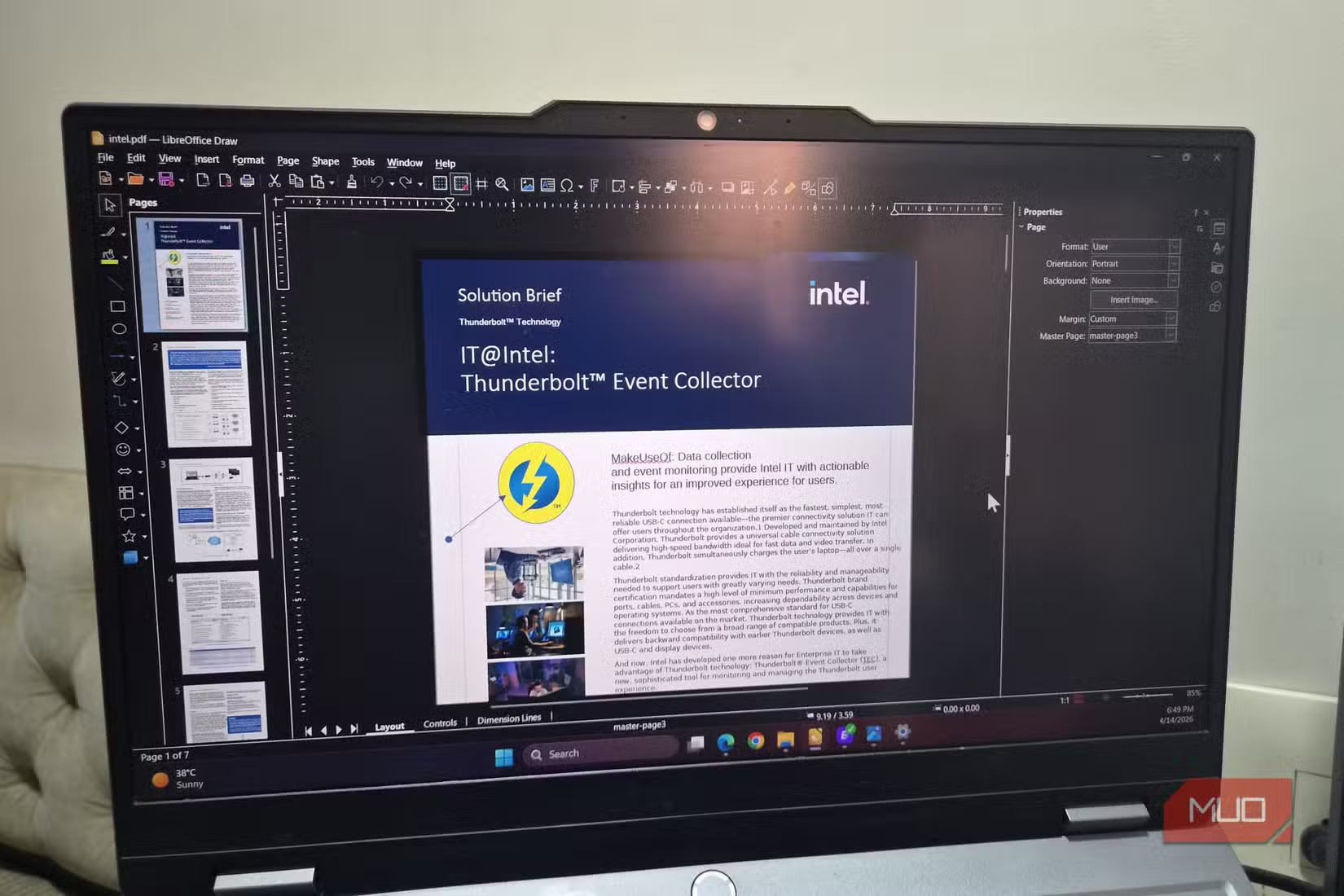
LibreOffice Draw deserves specific mention. It edits PDFs without the subscription fees that Adobe Acrobat demands. For basic annotation and text editing, it handles what most users need.
Tenacity: Professional Audio Editing Without the Audacity Drama
Audacity was the go-to free audio editor for two decades. Then its acquisition in 2021 introduced telemetry and privacy concerns that split the community. Tenacity forked the codebase and removed the controversial additions.
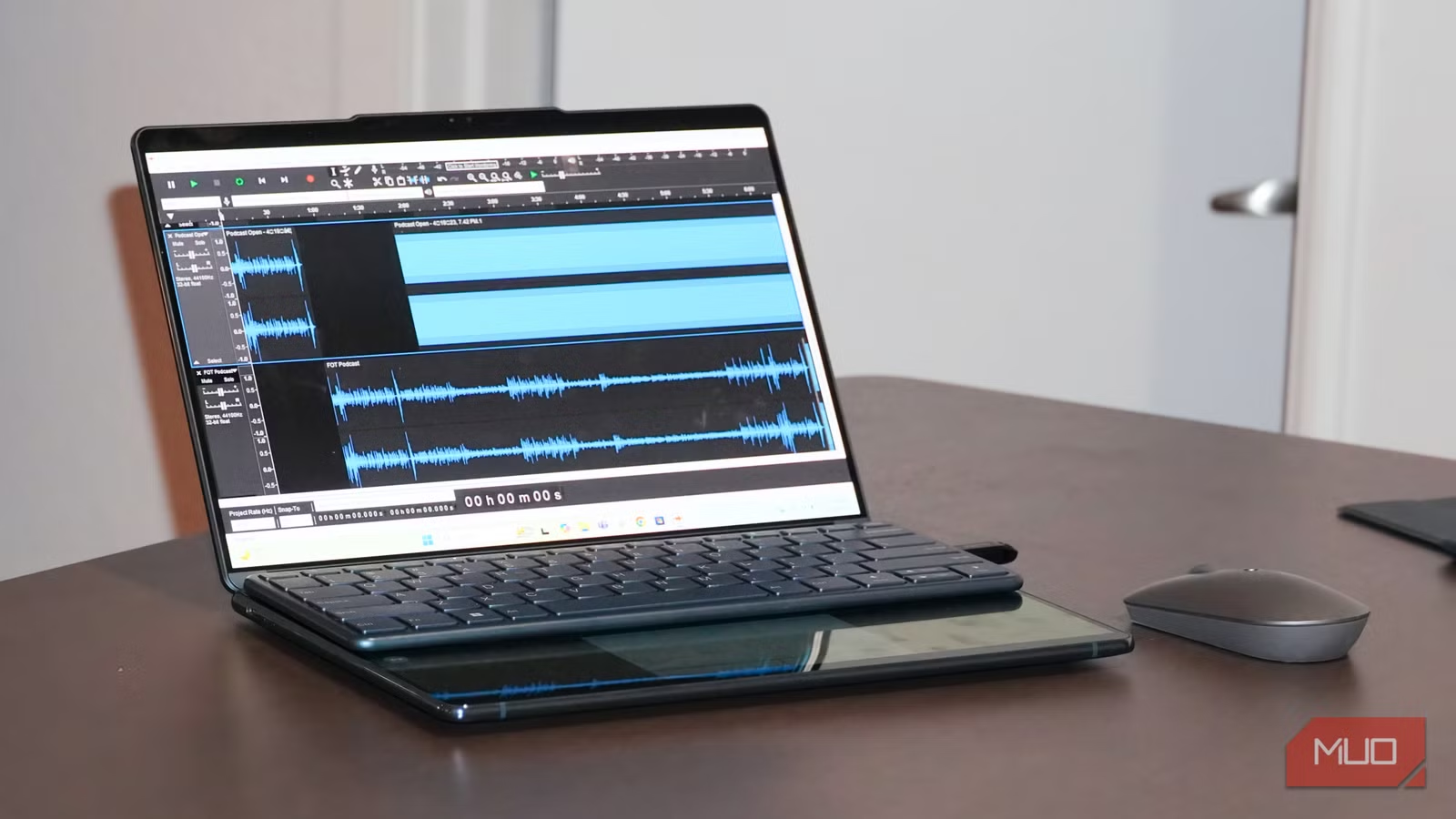
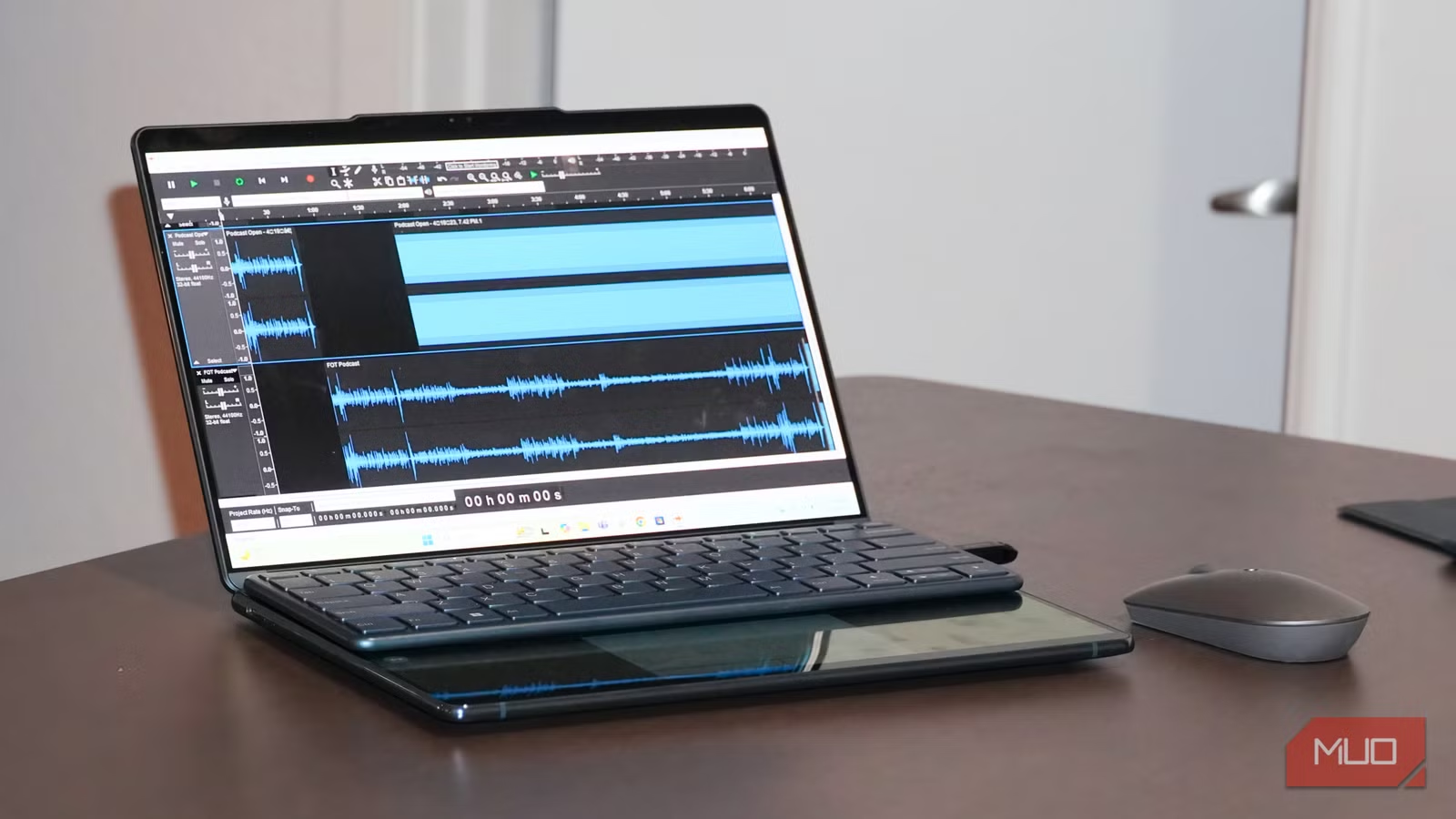
The result is a clean audio editor with multi-track recording, noise reduction, and effects processing. Professional DAWs charge hundreds of dollars for similar capabilities. Tenacity asks for nothing.
Why These Models Work
WinRAR survives on corporate licenses. Large companies buy site licenses because their procurement departments require receipts. Individual users ride free. The math works out.
VLC, KeePassXC, LibreOffice, and Tenacity run on donations and volunteer development. They exist because developers wanted tools that work without commercial pressure. Sublime Text operates closer to WinRAR's model but with an even lighter touch.
For users, these apps deliver professional capabilities without subscription fatigue. For developers choosing their tools, they reduce infrastructure costs. The endless trial is not a bug in these business models. It is the feature.
Logicity's Take
Frequently Asked Questions
Is Sublime Text actually free to use forever?
Yes. Sublime Text has no enforced time limit on its evaluation period. You'll see occasional reminder popups, but the software never stops working.
How does VLC make money if it's completely free?
VLC is maintained by VideoLAN, a French nonprofit funded by donations and occasional grants. It has no revenue from the software itself.
Is KeePassXC safe compared to paid password managers?
KeePassXC stores data locally in encrypted files rather than on third-party servers. This reduces attack surface but requires you to manage your own backups and sync.
Can LibreOffice fully replace Microsoft Office?
For most document tasks, yes. Complex Excel macros and PowerPoint animations may not translate perfectly, but basic productivity works well.
What is the difference between Tenacity and Audacity?
Tenacity is a fork of Audacity that removes telemetry and privacy-concerning features added after Audacity's 2021 acquisition. Core audio editing functionality is nearly identical.
Need Help Implementing This?
Source: MakeUseOf
Manaal Khan
Tech & Innovation Writer
Produced with AI assistance and reviewed by the Logicity editorial team. Learn more in our Editorial Policy.