Key Takeaways
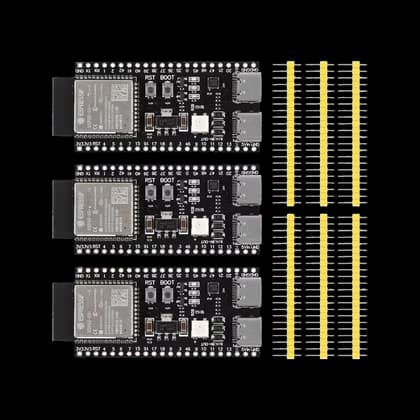
- ESP32-S3 N16R8 boards cost around $6 each and support MicroPython for easier coding
- An air quality monitor can detect VOCs that cause brain fog in enclosed offices
- The Seeed Studio XIAO ESP32-C6 includes Zigbee, Matter, and Thread support for $5
If you have a few ESP32 boards sitting in a drawer, you're not alone. These cheap microcontrollers are easy to buy but often end up collecting dust because we never get around to building anything with them. The good news: you don't need a weekend to make something useful. Several practical projects take under an hour from start to finish.
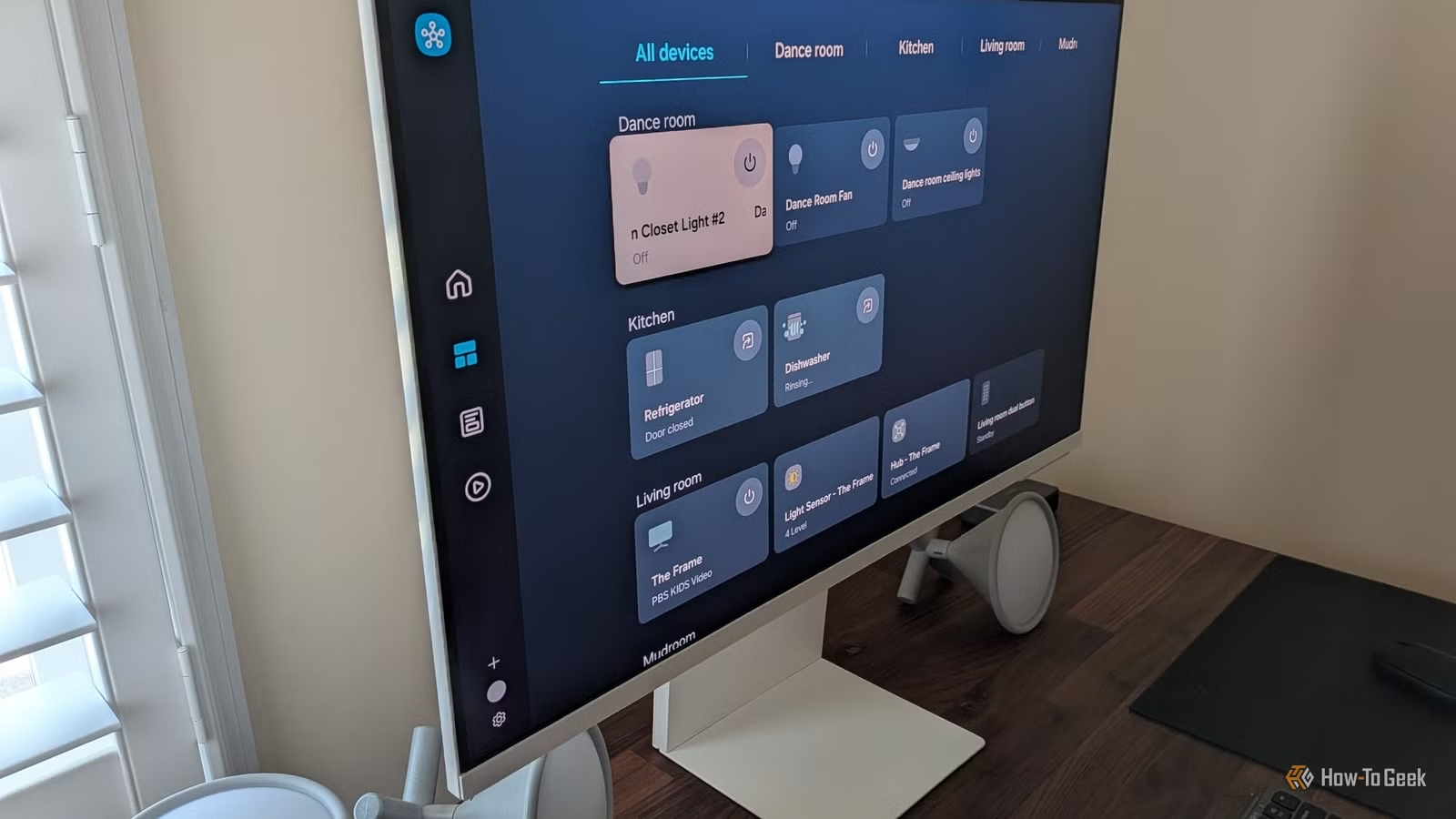
The ESP32 has become the go-to board for hobbyists and engineers alike. Built-in WiFi and Bluetooth, plenty of GPIO pins, and prices starting around $5 make it hard to beat. Newer variants like the ESP32-S3 and ESP32-C6 add even more features, including support for Matter and Thread smart home protocols.
What You Need to Get Started
Two boards stand out for quick projects. The ESP32-S3 N16R8 comes in a 3-pack for $18 on Amazon, working out to $6 per board. The N16R8 designation means it has enough memory and storage to run MicroPython, so you don't have to write C code if you'd rather use Python. The boards come with breadboard pins in the package, though you'll need to solder them on yourself.
For smart home projects specifically, the Seeed Studio XIAO ESP32-C6 is worth a look. At $5 from Seeed Studio or $12 on Amazon, it packs Zigbee, Z-Wave, Matter, and Thread support into a tiny form factor. WiFi 6 support means it connects to modern routers without compatibility headaches.
Project 1: Air Quality and Temperature Monitor
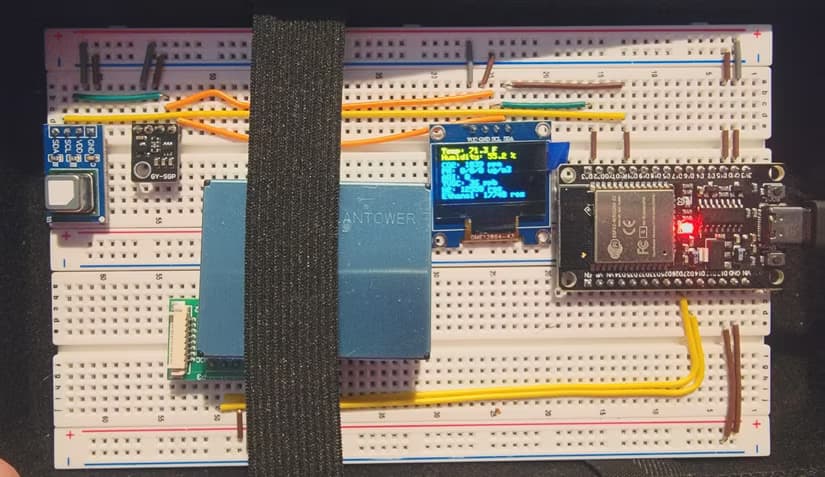
Ever noticed brain fog creeping in during a long afternoon in an enclosed office? Open a window and suddenly you can think again. That's what Germans call "lüften," sometimes translated as "house burping." The culprit is usually VOCs, volatile organic compounds that build up in rooms without fresh air circulation.
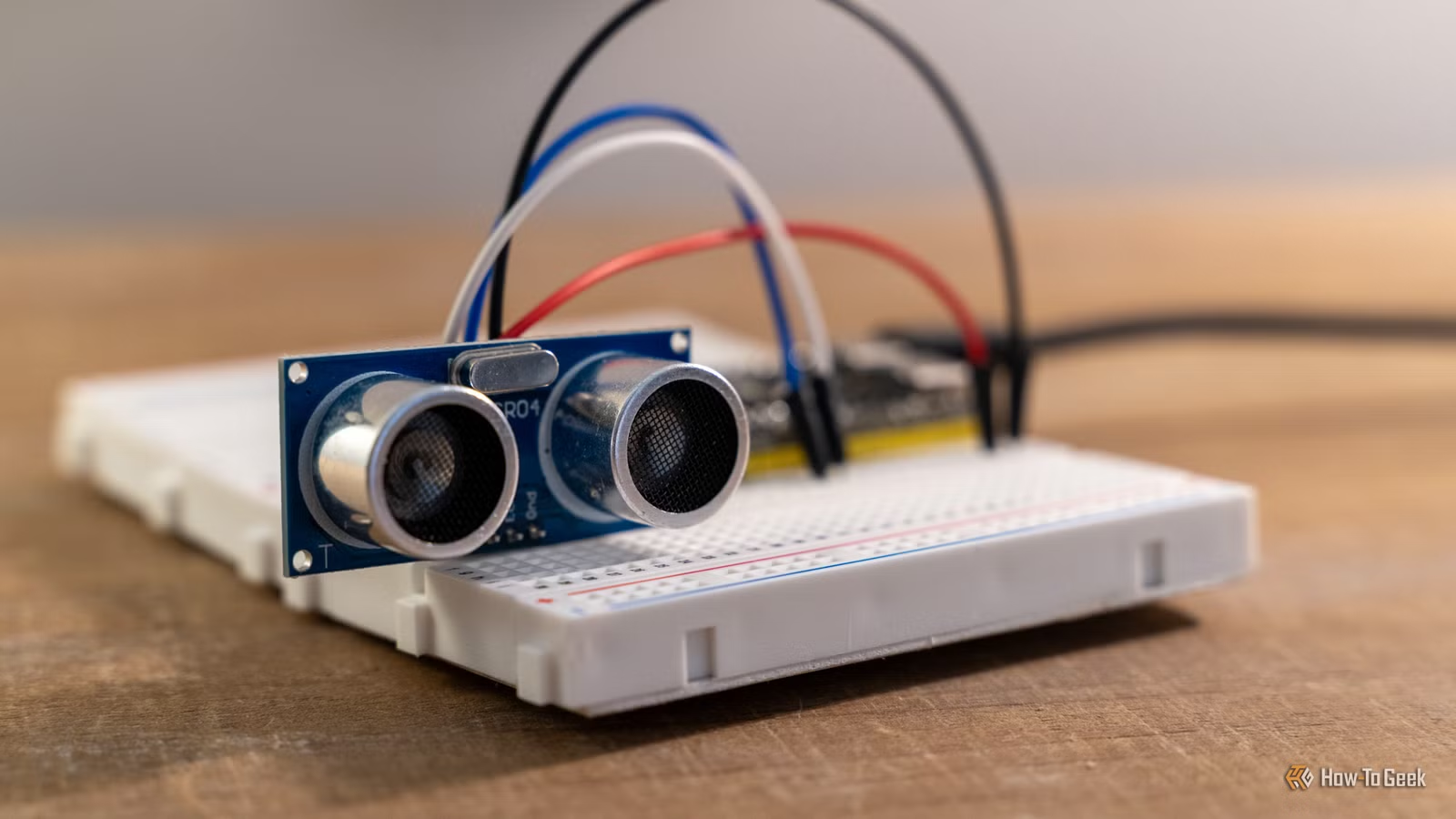
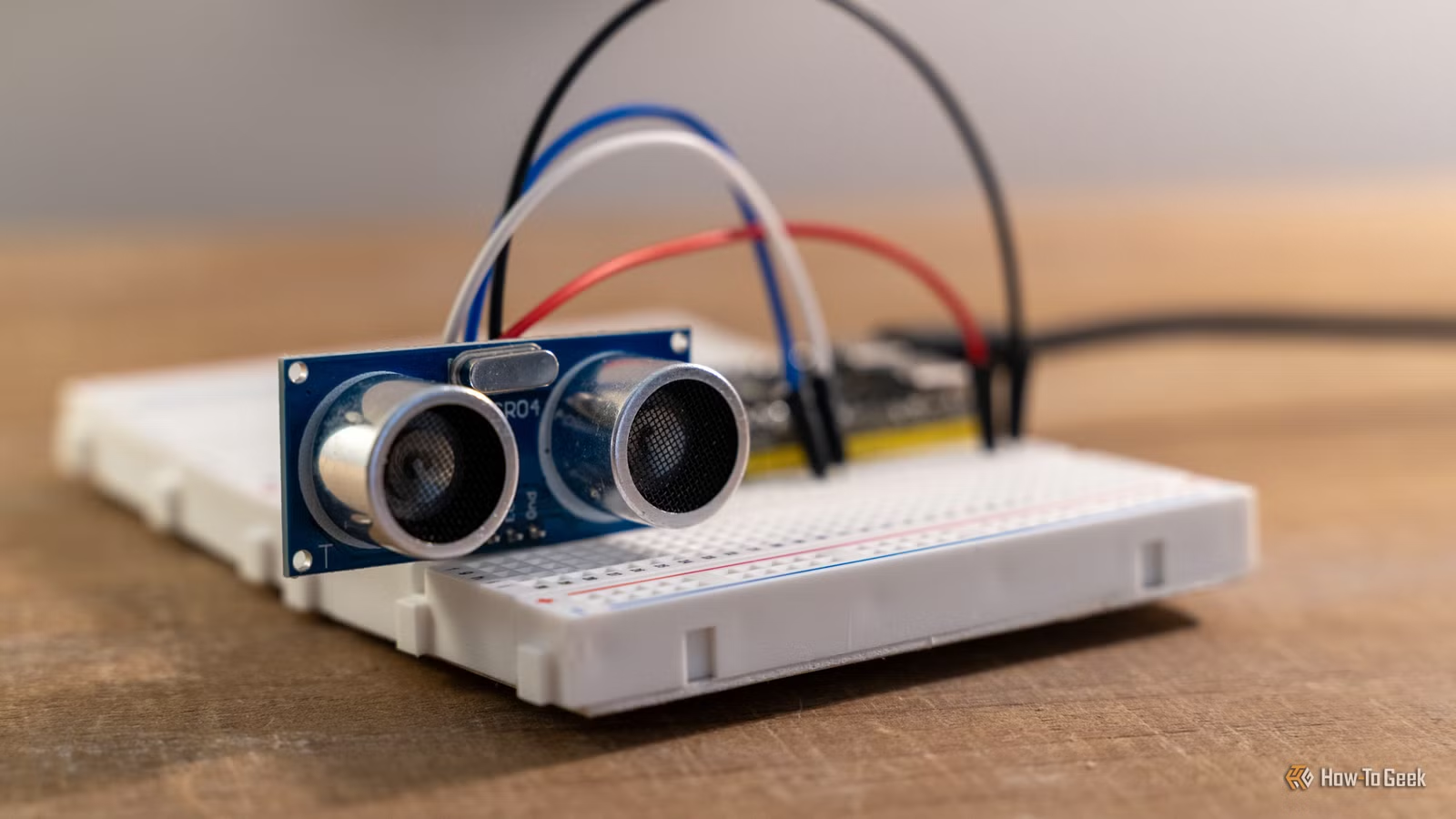
An ESP32 paired with a few sensors can measure your office's air quality in real time. You'll need a VOC sensor like the BME680 or SGP30, plus a small display to show readings. The entire build takes about 45 minutes if your breadboard pins are already soldered.
The sensor tells you when CO2 levels or VOC concentrations get high enough to affect your focus. A simple threshold alert can remind you to crack a window before the brain fog sets in.
More Quick Builds
The air quality monitor is just one option. Other sub-hour projects include temperature and humidity loggers, motion-triggered alerts, plant watering monitors, and basic home automation switches. Each requires minimal components beyond the ESP32 itself.
MicroPython makes these projects accessible even if you haven't touched code in years. The syntax is cleaner than C, and plenty of libraries exist for common sensors. Flash MicroPython onto your ESP32, connect via USB, and you can have a working prototype running in minutes.
Why This Matters for Your Workspace
Commercial air quality monitors cost $100 to $300. Building your own with an ESP32 runs about $25 in parts and gives you full control over what gets measured and how data gets logged. You can push readings to a dashboard, trigger smart home automations, or just have a simple display on your desk.
The same logic applies to other monitoring needs. Temperature sensors for server closets, motion detectors for offices, or humidity monitors for storage rooms. The ESP32 handles all of these at a fraction of commercial device costs.
Logicity's Take
Frequently Asked Questions
Do I need to know how to code to build ESP32 projects?
Basic coding helps, but MicroPython makes it much easier than traditional C programming. Many projects have copy-paste code examples available.
What's the difference between ESP32-S3 and ESP32-C6?
The ESP32-C6 adds Zigbee, Matter, Thread, and WiFi 6 support, making it better for smart home integration. The S3 has more processing power for complex applications.
How much do ESP32 projects typically cost to build?
The board itself costs $5-12. Complete projects including sensors and displays usually run $20-40 depending on components.
Can ESP32 air quality monitors integrate with smart home systems?
Yes. The ESP32-C6 supports Matter and Thread protocols, which work with Apple HomeKit, Google Home, and Amazon Alexa ecosystems.
More DIY tech projects for your home setup
Another maker project you can tackle this weekend
Need Help Implementing This?
Source: How-To Geek
Manaal Khan
Tech & Innovation Writer
Produced with AI assistance and reviewed by the Logicity editorial team. Learn more in our Editorial Policy.