Key Takeaways
- ADW Launcher was bundled with CyanogenMod and let users hide carrier bloatware in the Gingerbread era
- Nova Launcher has accumulated over 50 million installs and remains the dominant third-party launcher
- About 90% of Android users now stick with stock interfaces, reflecting how OEM skins have improved
When Stock Android Wasn't Good Enough
Android's early years were rough. Screens were small, animations were choppy, and carrier bloatware clogged every device. Worse, you couldn't even disable most pre-installed apps, let alone remove them. The stock experience on Android Éclair, Froyo, and Gingerbread was functional but bare.
Custom launchers filled the gap. These apps replaced the default home screen with something faster, more configurable, and free of carrier junk. For a generation of Android enthusiasts, installing a launcher was the first thing you did with a new phone.
“The beauty of Android isn't just that it's open, but that it invited users to be architects of their own digital lives.”
— Bertel King, Tech Journalist
This customization culture created what some call the "Launcher Wars." Nova vs. Apex vs. LauncherPro debates dominated Android forums. Each launcher promised better performance, more features, or a cleaner aesthetic. For power users, the choice of launcher was as personal as the choice of phone.
ADW: The Open Source Pioneer
ADW Launcher arrived during the Gingerbread era and quickly became essential for Android diehards. It shipped inside CyanogenMod, one of the original custom ROMs, which gave it instant credibility among the enthusiast crowd.
The killer feature was simple: you could hide apps. In an era when carriers stuffed phones with unremovable bloatware, this alone justified the install. ADW also let users configure the number of home screens, adjust animation speeds, and add multiple docks at the bottom of the screen.
The launcher even supported the 3D cube effect, a visual flourish borrowed from Linux desktop environments that was popular in this period. It looked impressive in demos, even if most users turned it off after a week.
ADW started as open source but eventually went proprietary. The shift disappointed some users, but it reflected the reality that maintaining a quality launcher required sustained development resources.
The Golden Age of Launcher Competition
As Android matured through Ice Cream Sandwich and Jelly Bean, launcher development exploded. LauncherPro, Apex Launcher, and Action Launcher each carved out dedicated user bases. Competition drove innovation. Features like gesture shortcuts, icon packs, and folder customization became standard.
This period also saw OEMs shipping increasingly heavy skins. Samsung's TouchWiz and Motorola's Motoblur added features but often slowed devices to a crawl. Custom launchers offered an escape hatch. Install Nova or Apex, and your phone felt faster.
Samsung's Good Lock continues the customization tradition that launchers pioneered
The community aspect was crucial. Reddit's r/Android became a hub for launcher discussions, with users sharing home screen setups and debating the merits of different icon packs. Customization wasn't just functional. It was a hobby.
Nova Launcher: The Last One Standing
If one launcher survived the transition from enthusiast necessity to modern option, it's Nova. The app has accumulated over 50 million installs on the Google Play Store, making it the most successful third-party launcher in Android history.
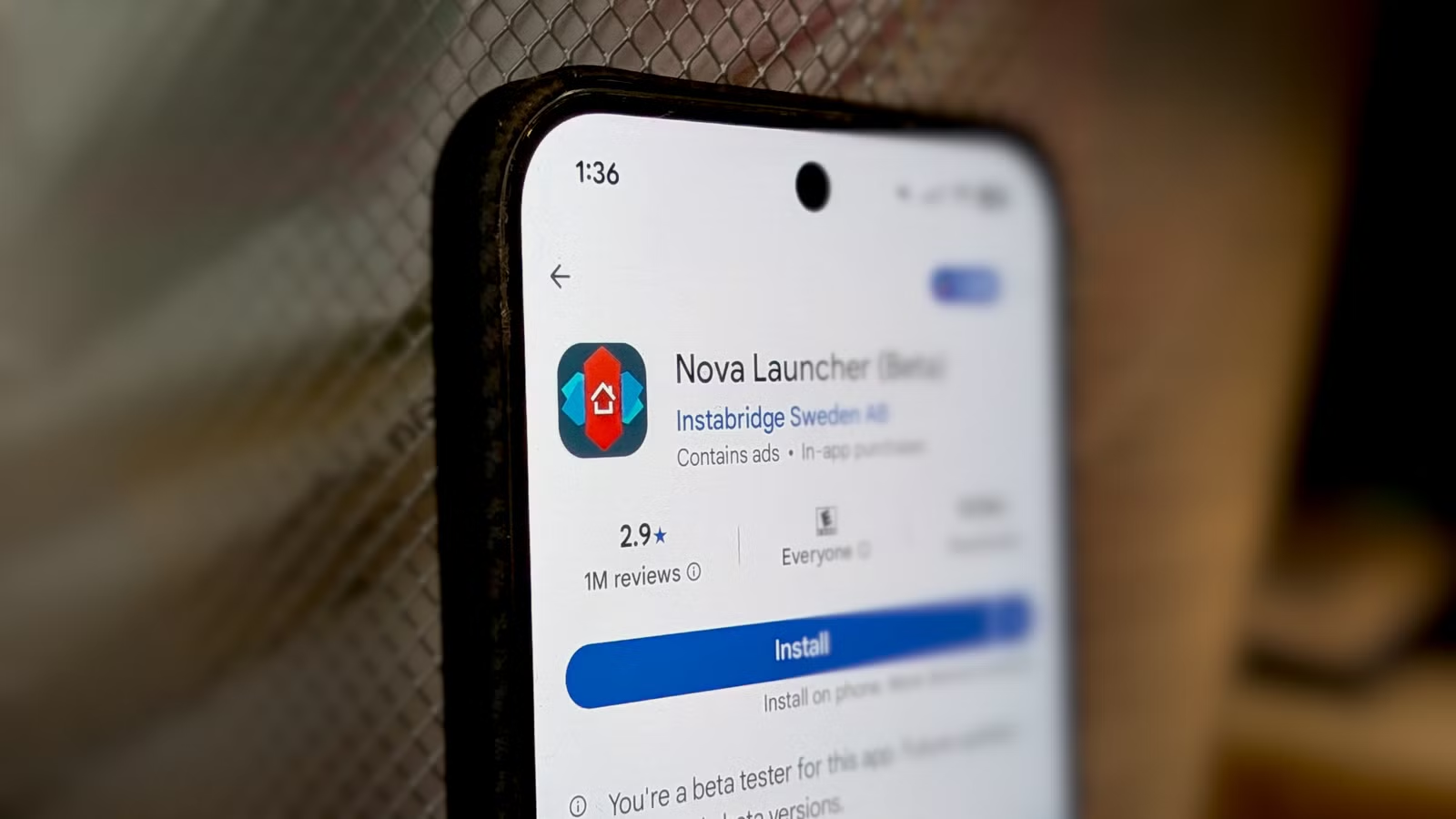
Nova succeeded by being relentlessly consistent. Updates came regularly. Performance stayed smooth. The feature set expanded without becoming bloated. While competitors faded or were abandoned, Nova kept shipping.
The launcher's modern incarnation, Nova 8, focuses on features that stock Android still lacks: icon normalization across different apps, advanced gesture support, and granular home screen control. For users who want their phone to work exactly as they imagine, Nova remains the answer.
Why 90% of Users Stopped Caring
Here's the uncomfortable truth for launcher enthusiasts: approximately 90% of Android users now stick with their phone's stock interface. The "Launcher Wars" are over, and most people didn't notice they ended.
The reason is straightforward. Stock Android got better. OEM skins got lighter. Carrier bloatware can now be disabled. The problems that drove users to custom launchers in 2011 largely don't exist in 2026.
Android 10 and later versions also made launcher development harder. Gesture navigation, introduced as Android's answer to iPhone swipes, requires tight integration between the launcher and the system. Third-party launchers often struggle with gesture animations that feel janky compared to stock.
Smooth animations, whether in games or launchers, depend on refresh rate
The Legacy That Remains
Custom launchers may no longer be essential, but they shaped Android's identity. The idea that users should control their experience, that the phone should adapt to the person rather than the reverse, came from this community.
“Launchers were the first real expression of Android's identity; they turned a phone into a personal computing canvas.”
— Former Android Developer
Many features that launcher developers pioneered eventually made it into stock Android. App drawer customization, home screen grids, and gesture shortcuts all started in third-party launchers before Google adopted them.
For power users who want features that stock still doesn't offer, launchers remain valuable. Icon pack support, hiding apps, and advanced gesture configuration are still launcher territory. The audience is smaller, but it's dedicated.
Logicity's Take
Frequently Asked Questions
Frequently Asked Questions
Are custom Android launchers safe to use?
Established launchers like Nova are safe and have been trusted by millions of users for over a decade. Stick to launchers with a long track record and avoid obscure options that request excessive permissions.
Do custom launchers slow down your phone?
Modern launchers like Nova are often lighter than OEM skins and can actually improve performance on some devices. However, heavily customized setups with complex widgets may use more resources.
Why do gesture animations feel worse on third-party launchers?
Android's gesture navigation system requires deep system integration that third-party launchers can't fully access. This creates animation inconsistencies, especially when swiping to go home or switching apps.
What happened to LauncherPro and Apex Launcher?
LauncherPro was abandoned by its developer years ago. Apex Launcher still exists but receives infrequent updates and has lost most of its user base to Nova.
Can I still install ADW Launcher today?
ADW Launcher 2 is available on the Play Store, though it receives infrequent updates. Many users report that it hasn't kept pace with modern Android versions.
Need Help Implementing This?
Source: How-To Geek
Huma Shazia
Senior AI & Tech Writer
Produced with AI assistance and reviewed by the Logicity editorial team. Learn more in our Editorial Policy.