Key Takeaways
- Zigbee and Thread sensors can last 2-5 years on a single battery, compared to under 6 months for Wi-Fi equivalents
- Mesh protocols like Zigbee don't congest your home network the way Wi-Fi devices do
- The upfront cost of a hub pays off in reliability and fewer 'device unavailable' errors
Every smart home device you add to Wi-Fi is another client competing for bandwidth on your router. Add enough sensors, plugs, and switches, and your 2.4GHz band starts to choke. Commands arrive late. Sensors miss events. You see the dreaded 'device unavailable' message in your app.
Protocols like Zigbee and Thread solve this by creating a separate mesh network. Your smart devices talk to each other directly, extending their own range and leaving your Wi-Fi free for phones, laptops, and streaming. The tradeoff: you need a hub or border router. But for certain device types, the reliability and battery gains make that hub well worth it.
Here are four smart home device categories that perform significantly better when you skip Wi-Fi.
1. Door and Window Sensors
Contact sensors are the workhorses of smart home security. A two-piece magnet system detects when a door or window opens and sends an alert. Simple enough. But these devices run on small batteries, usually CR2032 coin cells or AAA, and they need to stay connected constantly to report events.
Wi-Fi is power-hungry. A contact sensor that maintains a Wi-Fi connection can drain its battery in a few months. Zigbee and Thread sensors, by contrast, use low-power mesh networking that can stretch battery life to 2-5 years. That's the difference between replacing batteries twice a year and forgetting they exist.
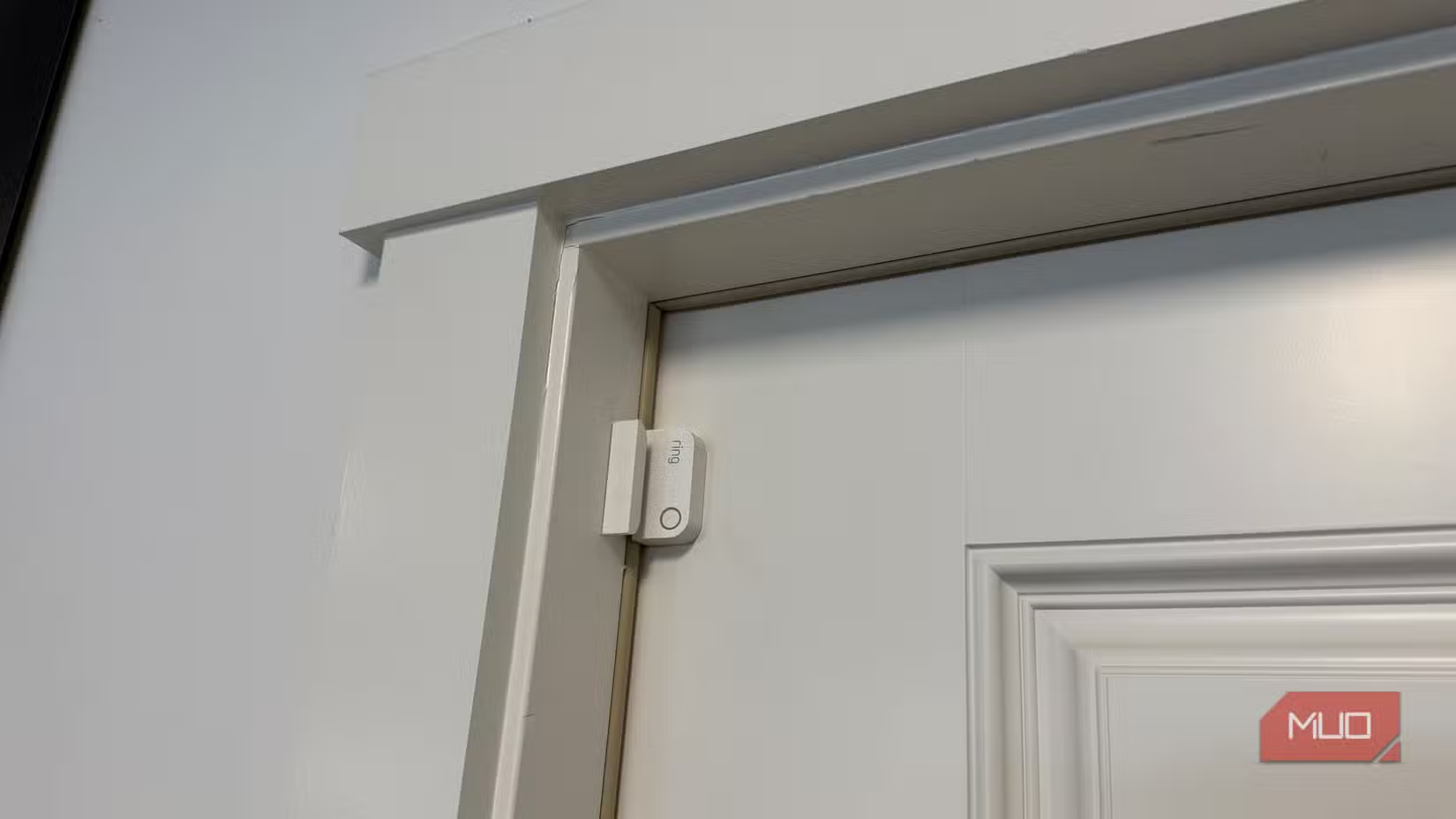
Brands like Aqara, Ring (Thread-compatible models), and Third Reality offer Zigbee or Thread contact sensors that integrate with SmartThings, Apple HomeKit, and other ecosystems through a compatible hub.
2. Smart Bulbs
Smart bulbs don't have battery concerns since they're plugged into mains power. So why does the protocol matter? Network congestion.
A house with 15 Wi-Fi bulbs has 15 devices competing for router attention. Group commands, like turning off all lights at bedtime, can stagger awkwardly as each bulb waits its turn. Zigbee bulbs respond nearly simultaneously because they communicate through the mesh, not through your router.

Philips Hue, IKEA Trådfri, and Sengled all use Zigbee. If you've ever noticed a Wi-Fi bulb take a beat to respond while your Hue bulbs snap on instantly, the protocol is the reason.
3. Motion Sensors
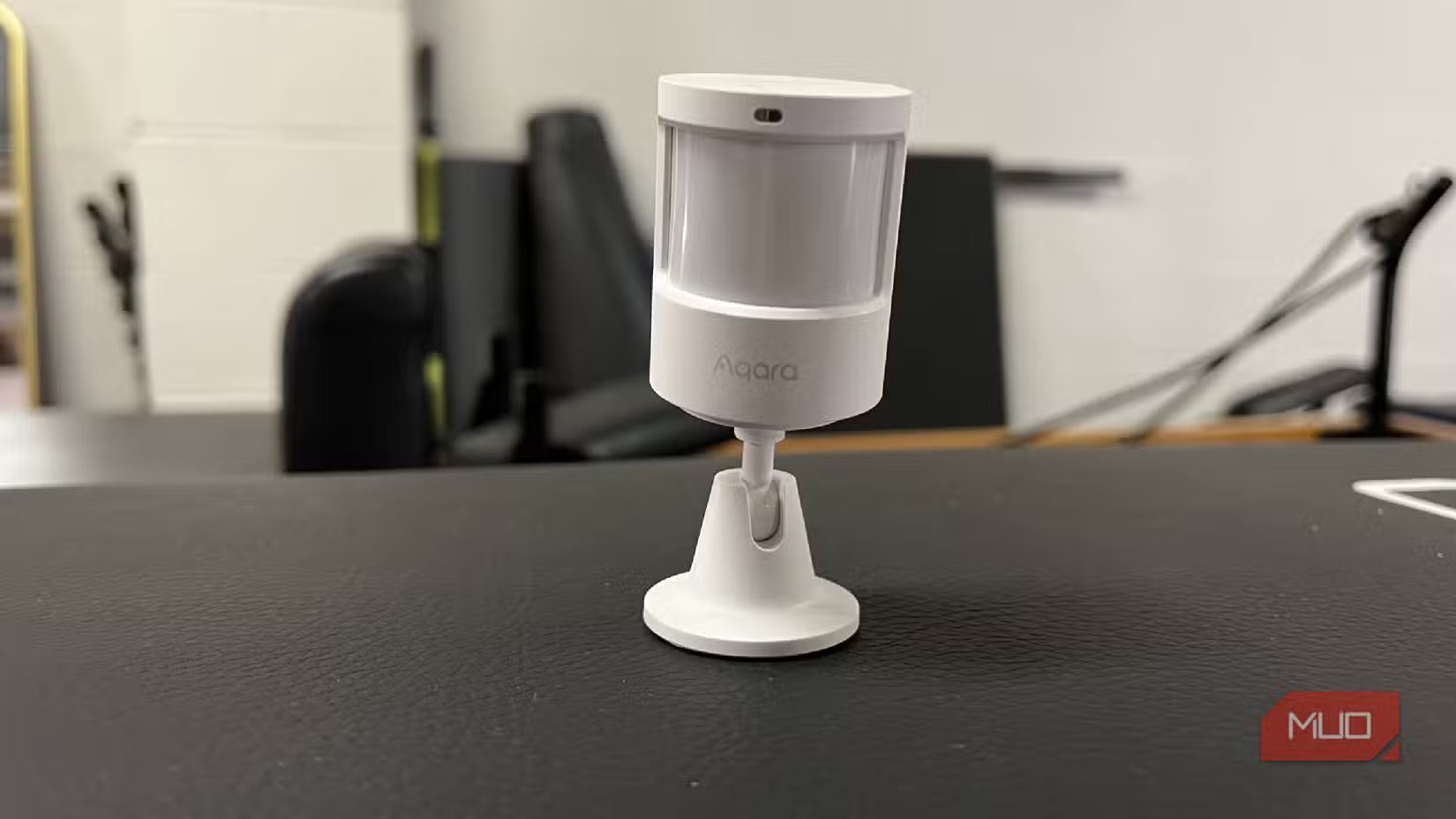
Motion sensors face the same battery problem as contact sensors, often worse. They need to stay in a low-power sleep state and wake instantly when triggered. Wi-Fi's handshake process adds latency and drains batteries. Zigbee and Thread sensors wake, report, and sleep again with minimal power draw.
This matters for automations. A motion sensor that triggers a light needs to act in milliseconds, not seconds. Zigbee motion sensors from Aqara and Philips Hue are popular choices. Thread options are growing as more Matter-compatible devices hit the market.
4. Smart Locks
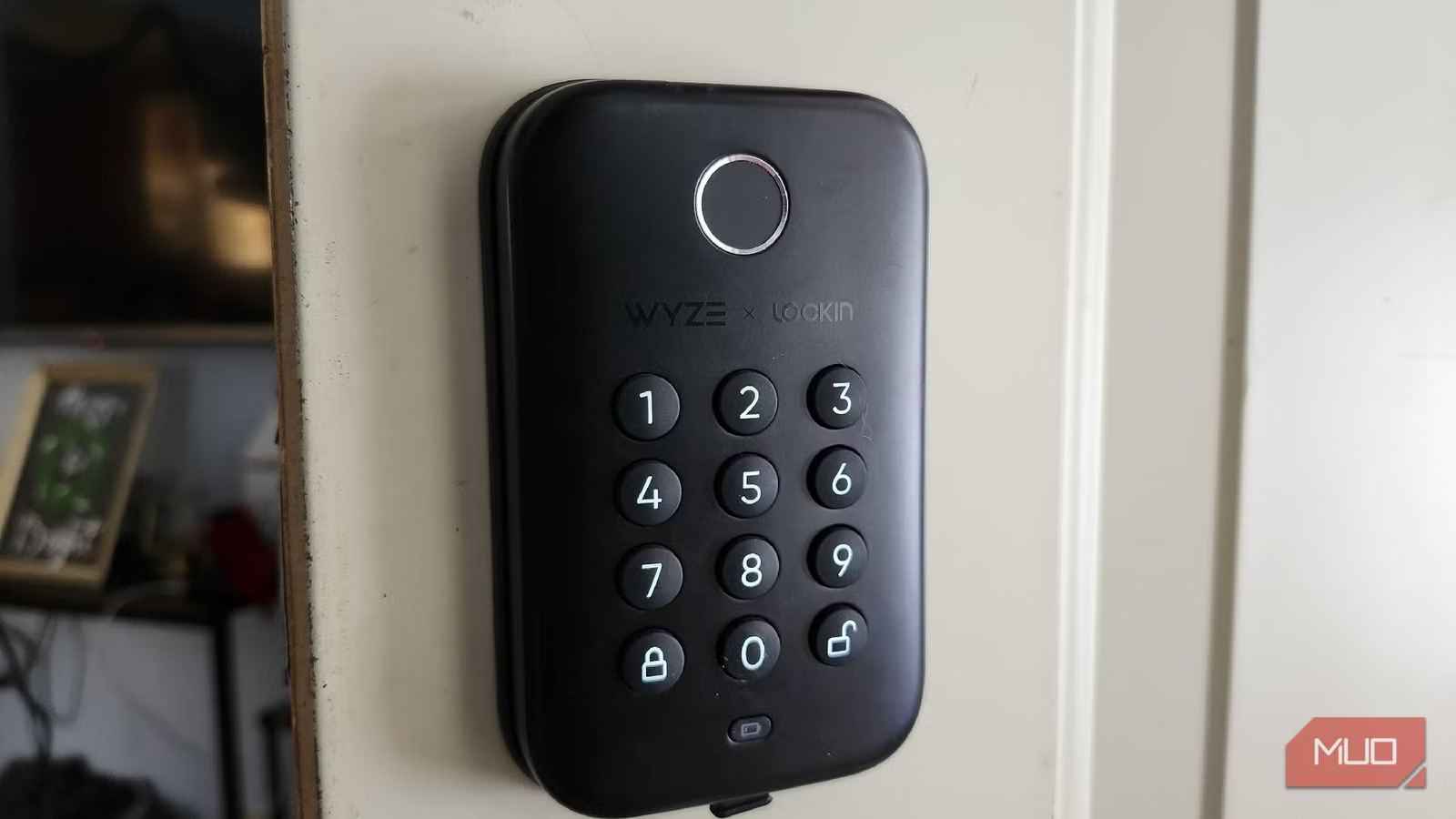
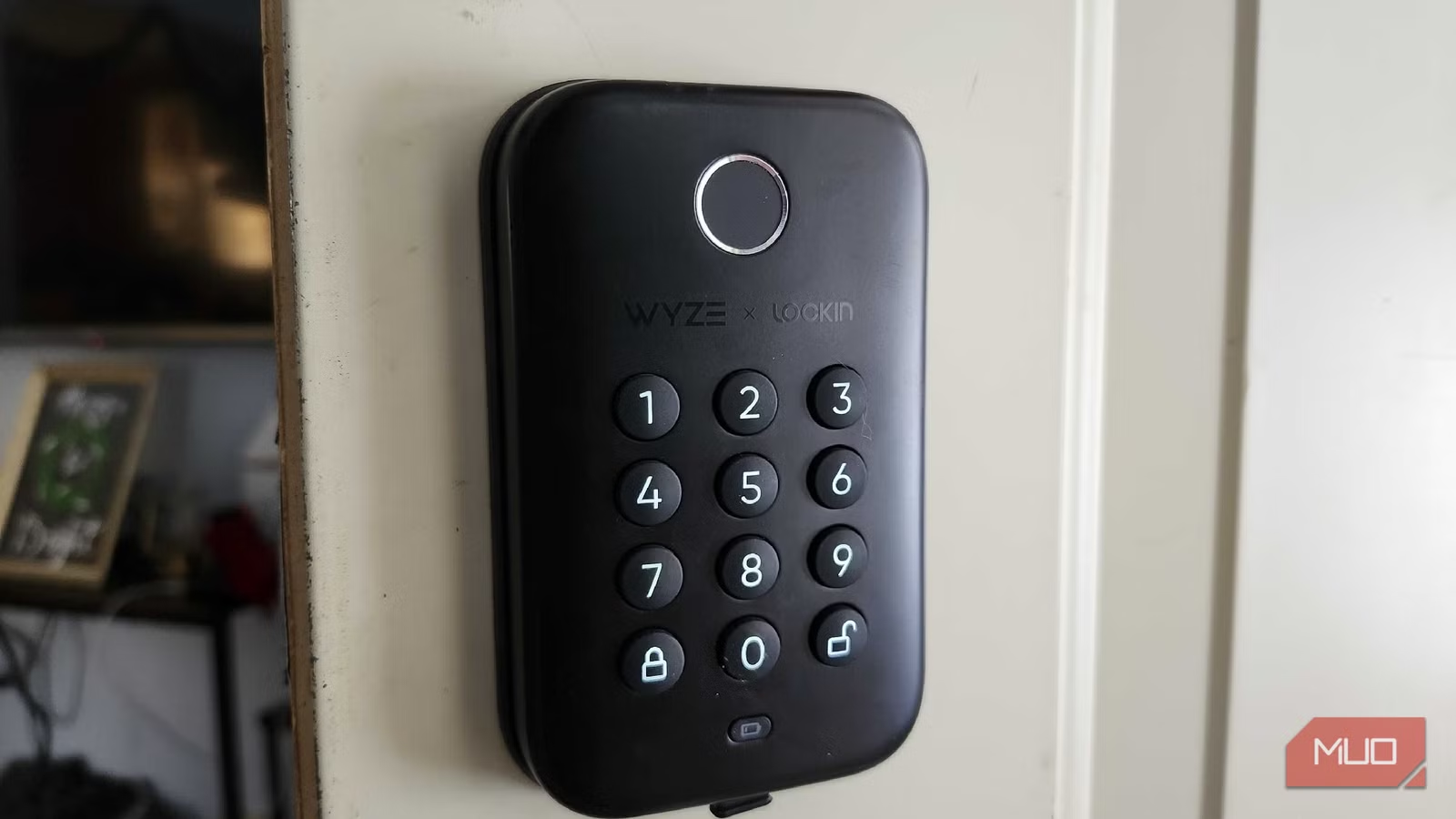
A dead battery on a smart lock means you're locked out. Wi-Fi locks can drain four AA batteries in a few months, especially with frequent use. Zigbee and Thread locks extend that to a year or more.
The Yale Assure 2 offers Thread connectivity and works with Apple Home Key. August and Schlage also offer Zigbee variants. If you want remote access without the battery penalty, pairing a Zigbee lock with a hub that bridges to the internet gives you both.
The Hub Question
The obvious downside: Zigbee and Thread devices require a hub or border router. Wi-Fi devices connect directly to your existing network. That's a real upfront cost and another piece of hardware.
But the reliability payoff is substantial. Reddit communities like r/HomeAutomation call it the 'hub tax,' but users consistently report that the stability, especially avoiding the constant 'device unavailable' errors common with too many Wi-Fi plugs, makes the investment worthwhile.
“Wi-Fi is ubiquitous, but every smart device is a client on your network. Too many can congest your 2.4GHz band, causing sensors to miss commands or report late.”
— Silicon Labs
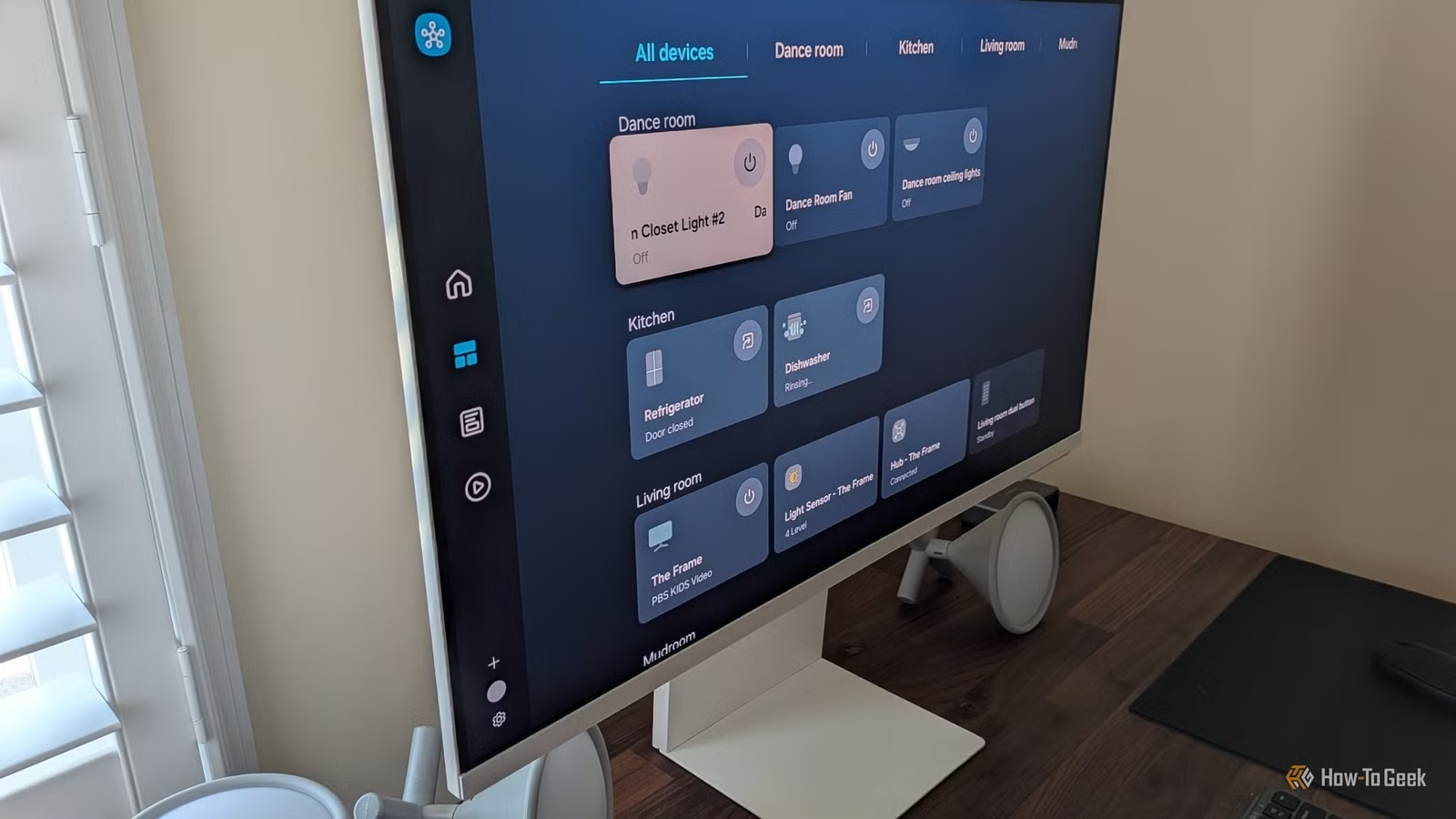
Popular hub options include the SmartThings Station, Aqara Hub M2, and Apple TV 4K (which acts as a Thread border router). Many of these support both Zigbee and Thread, letting you mix devices.
Zigbee vs Thread: Which to Choose?
Zigbee is the mature option. Over 500 million Zigbee-enabled chips have shipped globally, and device selection is vast. Thread is newer and is the underlying protocol for Matter, Apple's and Google's preferred standard going forward.
“Zigbee remains the mature workhorse... it offers the best combination of device selection, price, and battery life for most homes today.”
— VeaLive / Datawire Solutions
For most buyers in 2026, Zigbee offers more device choices at lower prices. Thread devices are catching up fast, and if you're starting fresh with Apple Home or Google Home, Thread's native Matter support makes it the cleaner long-term bet.
Logicity's Take
Frequently Asked Questions
Do I need a separate hub for Zigbee and Thread devices?
It depends on the hub. Many modern hubs like the SmartThings Station and Aqara Hub M2 support both protocols. Apple TV 4K and HomePod Mini act as Thread border routers but don't support Zigbee.
Will Zigbee devices work with Matter?
Not directly. Matter runs over Thread, Wi-Fi, or Ethernet. However, some hubs can bridge Zigbee devices into a Matter ecosystem, making them appear as Matter-compatible.
How many devices can a Zigbee or Thread network support?
A Thread network supports up to 250 nodes. Zigbee networks can scale even larger with proper repeaters. Both far exceed what most home Wi-Fi routers handle gracefully.
Are Zigbee and Thread devices more expensive than Wi-Fi versions?
Prices are comparable for most device types. The extra cost comes from the hub, which typically runs $30-$100 but supports dozens of devices.
More ways to extend consumer tech beyond default capabilities
Need Help Implementing This?
Source: MakeUseOf
Manaal Khan
Tech & Innovation Writer
Produced with AI assistance and reviewed by the Logicity editorial team. Learn more in our Editorial Policy.