Key Takeaways
- Integration SDKs eliminate manual OAuth flows, token storage, and credential management when connecting to external APIs
- Zapier offers 9,000+ app connections and handles both embedded and autonomous agent patterns, while competitors specialize in one or the other
- Choosing the wrong SDK model creates friction at scale: embedded integrations serve user-facing products, autonomous agent patterns serve internal workflows
Building an AI agent that pulls deals from Salesforce, drafts follow-up emails in Gmail, and posts summaries to Slack is the straightforward part. The soul-crushing work comes after: setting up OAuth flows for three separate APIs, figuring out token storage, handling refresh cycles, and ensuring credentials never leak where they shouldn't. That's integration plumbing. And in 2026, you shouldn't be writing it from scratch.
Every integration SDK on the market gives you authenticated access to external APIs without managing OAuth yourself. But they're built around different assumptions about who's doing what. Pick the wrong one, and you'll feel the friction the moment you try to scale.
Two models: embedded integrations vs. autonomous agents
Integration SDKs split into two camps, and understanding which you need matters more than catalog size or pricing.
The embedded integration model serves user-facing products. Your users connect their own Salesforce or Slack accounts, authorize your app, and your code acts on their behalf without touching their credentials. The OAuth flow is user-facing; the SDK handles token storage, refresh, and scoping. SaaS teams building products that integrate with customer tools need this model.
The autonomous agent model works differently. You're both the developer and the user. Your agent calls tools from a registry to work across apps you control, reading from a CRM, writing to a spreadsheet, sending Slack messages. No end-user OAuth flow exists because your credentials are already in the system. The SDK's job is giving your agent a clean, consistent interface without per-app integration code.
Most teams eventually need both. A SaaS product needs embedded integrations for customer-facing features but may want autonomous agent capabilities for internal workflows. Getting the model right matters more than catalog size, self-hosting options, or language support.
How Zapier, Nango, Composio, and Pipedream compare
| SDK | Best for | App catalog | Deployment | Pricing |
|---|---|---|---|---|
| Zapier | Building safely with AI | 9,000+ | Managed | Free (open beta) |
| Nango | Self-hosted infrastructure | 800+ | Managed or self-hosted | Free plan; paid from $50/mo |
| Composio | Framework-native agent builders | ~1,000 | Managed | Free plan; paid from $29/mo |
| Pipedream | Embedded-only integrations | 3,000+ | Managed | Free plan; paid from $29/mo |
Zapier: the only SDK that handles both patterns well
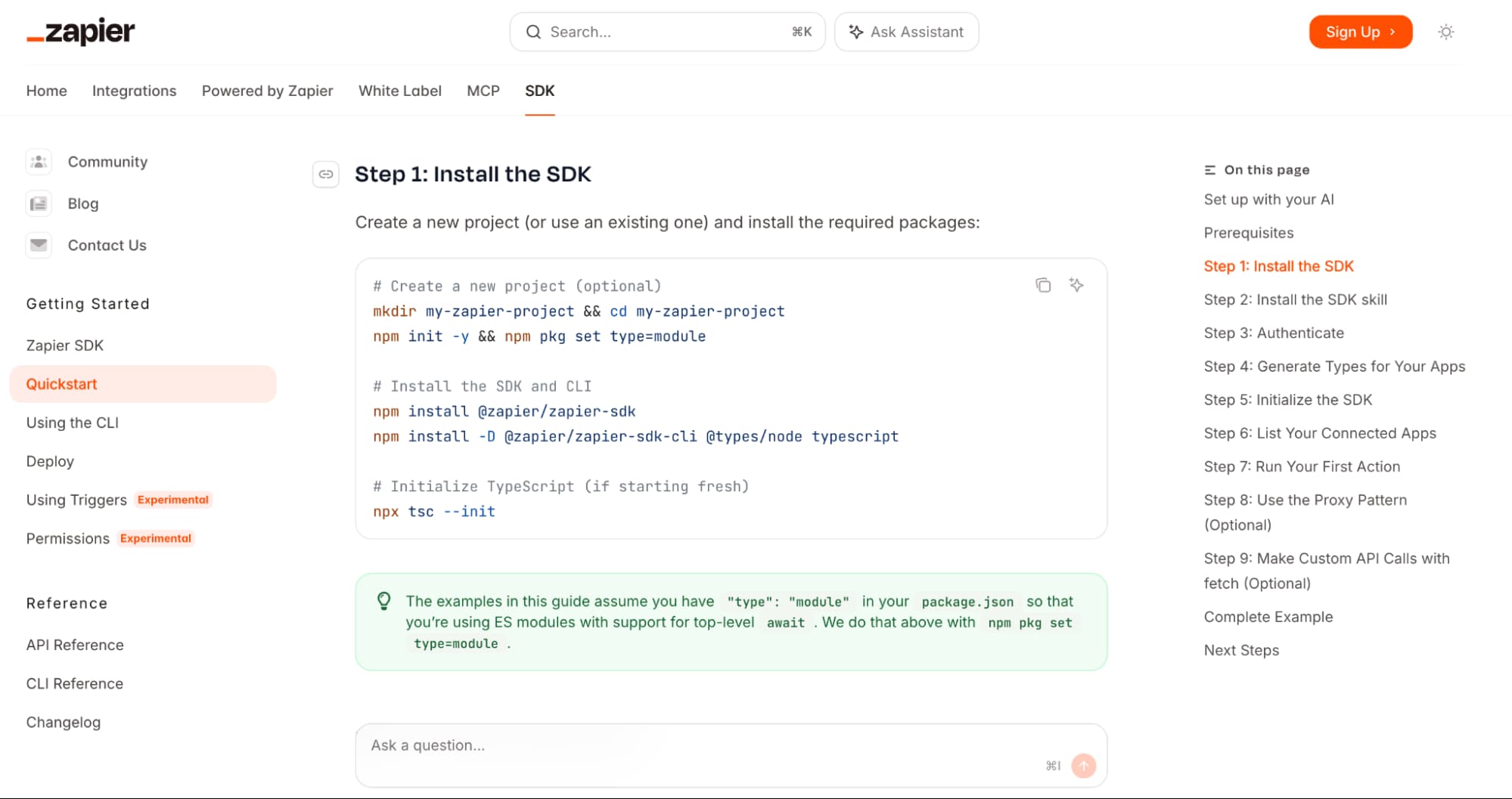
Zapier's SDK stands out because it doesn't force you to choose between embedded and autonomous agent patterns. Like Pipedream Connect and Nango, it handles the embedded case where users connect their own accounts. But unlike those tools, it also works in the autonomous agent pattern that Composio targets, where your agent calls actions on accounts you control.
The TypeScript package provides governed access to 9,000+ pre-built app connections. Zapier handles OAuth flows, token refresh, retries, and rate limiting on every upstream API. When you add a new app to your agent's capabilities, you skip the usual ritual of setting up a new OAuth flow, token store, or error handlers. You install the Zapier package, configure the app, and start making calls.
The SDK also supports raw authenticated HTTP calls to 3,000+ app APIs for cases where pre-built actions don't cover your needs. It pairs with Zapier MCP for chat-native agent access using the same auth layer.
The catch: Zapier's SDK is in open beta. Core infrastructure is stable, but the surface area is expanding with new actions, auth patterns, and type improvements. There's no self-host option.
Nango: for teams that need self-hosted control
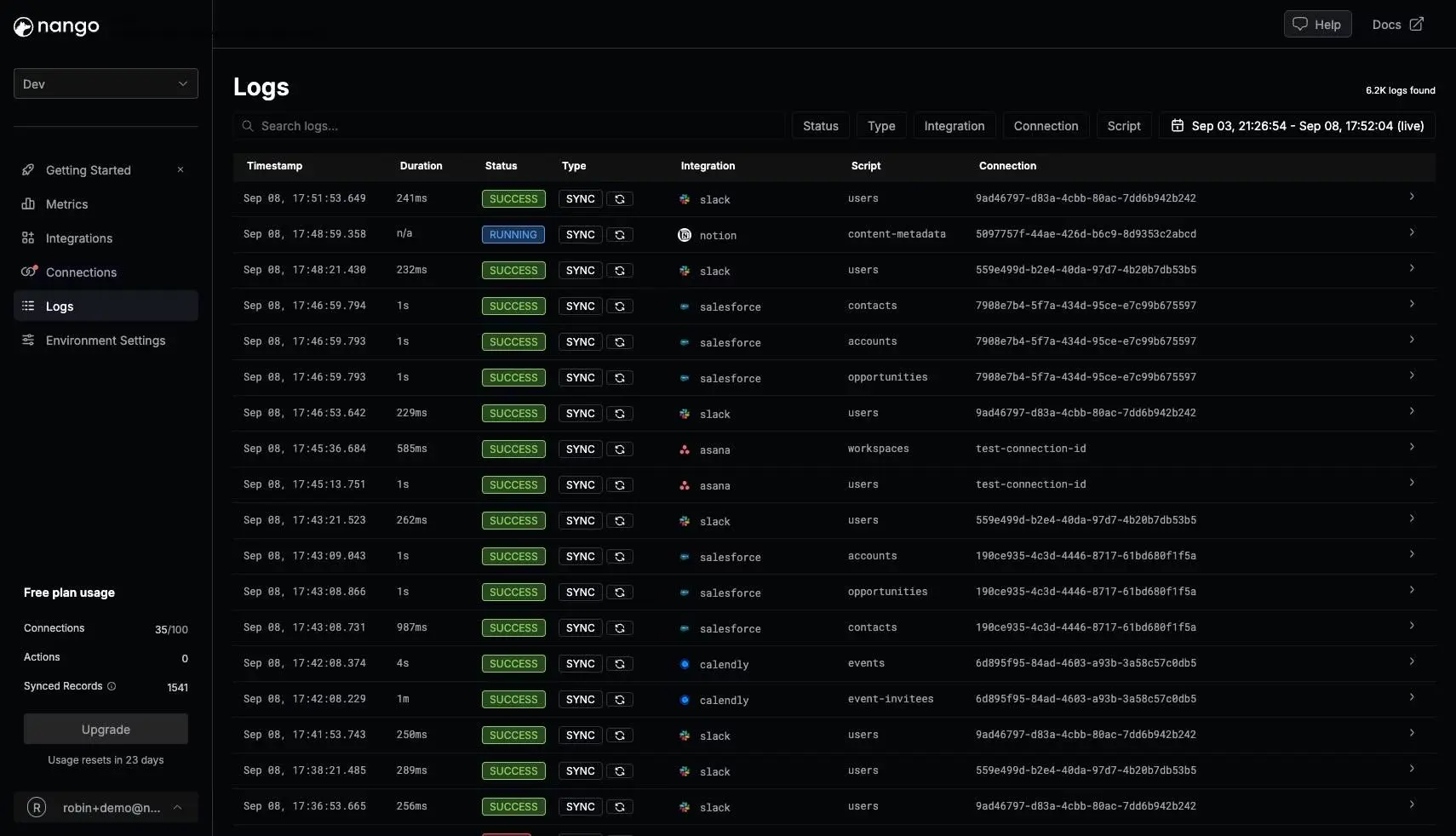
Nango offers something the others don't: self-hosted deployment. For teams with strict compliance requirements or those who can't send credentials through third-party infrastructure, this matters. You write your own functions; Nango hosts them. The tradeoff is a smaller app catalog at 800+ connections and more hands-on configuration.
Composio: framework-native for agent builders
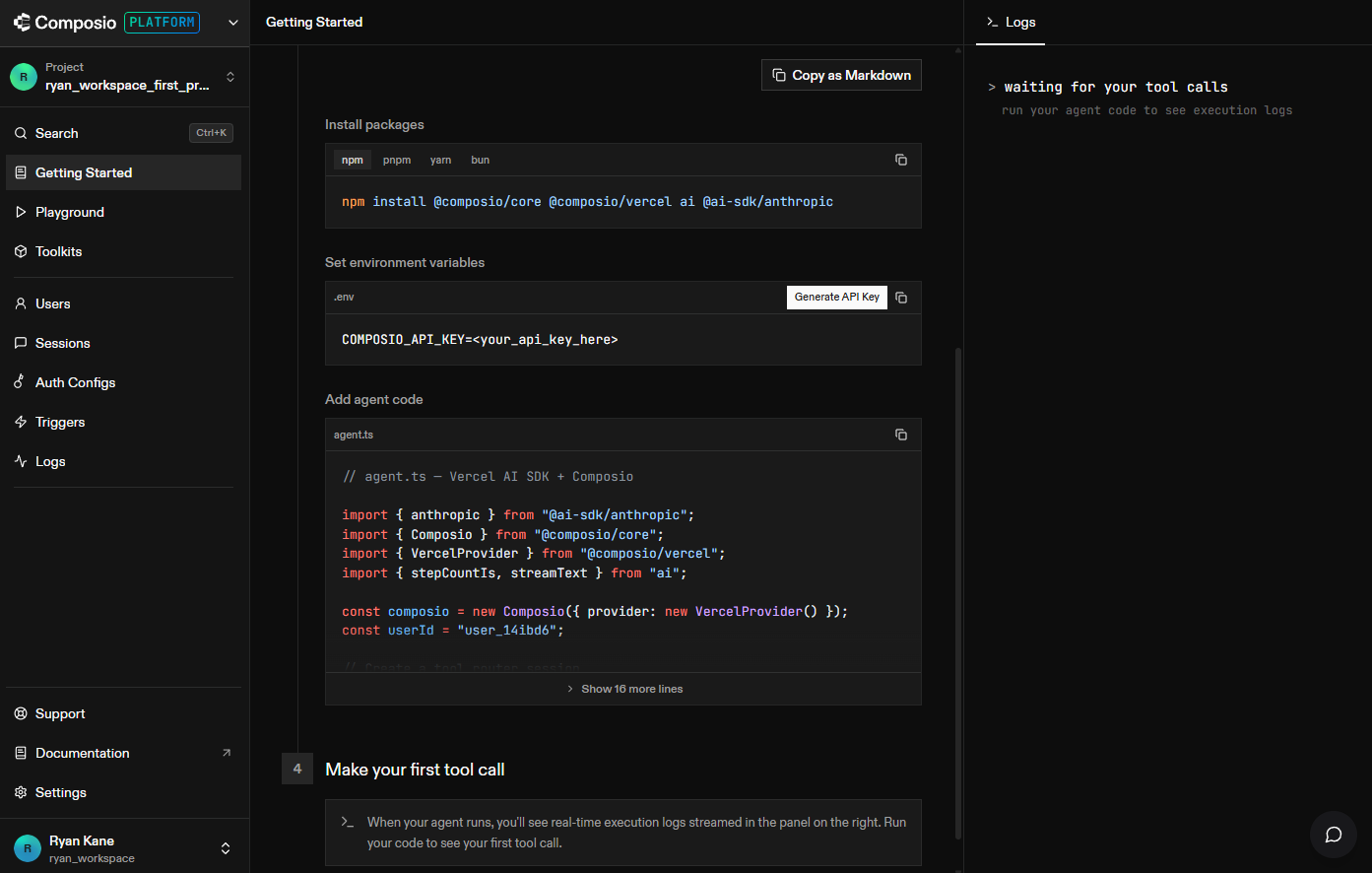
Composio targets developers building agents with specific AI frameworks. It's code-first and framework-integrated, designed for the autonomous agent pattern rather than embedded user-facing integrations. The catalog sits around 1,000 apps. If you're building internal AI workflows rather than customer-facing SaaS integrations, Composio's architecture fits that use case directly.
Pipedream: embedded-only, but deep
Pipedream Connect focuses purely on embedded integrations. Your users connect their accounts; your app acts on their behalf. The 3,000+ app catalog is solid, and every workflow step can include custom code. If you only need the embedded model and want code access at every step, Pipedream delivers. But for autonomous agent patterns, you'll need to look elsewhere.
What should drive your choice?
Start with the integration model you need. Catalog size, language support, and pricing are secondary. If you're building a SaaS product that connects to customer tools, you need embedded integrations. If you're building internal AI workflows acting on accounts you control, you need the autonomous agent pattern. If you need both, Zapier is currently the only option that handles both cleanly.
Self-hosting requirements narrow the field to Nango. Framework-specific agent development points toward Composio. Embedded-only use cases with deep code access fit Pipedream.
Logicity's Take
The integration SDK market is consolidating around a clear pattern: OAuth and credential management are now commoditized infrastructure, not competitive differentiators. The real question for 2026 is whether these SDKs can keep pace as AI agents grow more autonomous and need to chain together dozens of API calls in a single workflow. Zapier's dual-model approach positions it well, but Composio's framework-native architecture could prove more important as agent frameworks mature and standardize.
Frequently Asked Questions
What is an integration SDK?
An integration SDK is a software development kit that handles OAuth flows, token storage, credential management, and API authentication so developers can connect their applications to external services like Salesforce, Slack, or Gmail without writing this infrastructure code from scratch.
What's the difference between embedded and autonomous agent integrations?
Embedded integrations let your users connect their own accounts (like a customer authorizing their Salesforce), with your app acting on their behalf. Autonomous agent integrations let your AI agent call APIs on accounts you control, without user-facing OAuth flows.
Which integration SDK has the largest app catalog?
Zapier offers the largest catalog with 9,000+ app connections, followed by Pipedream at 3,000+, Composio at approximately 1,000, and Nango at 800+.
Can I self-host an integration SDK?
Nango is the only SDK among the four that offers a self-hosted deployment option. Zapier, Composio, and Pipedream are managed-only services.
Is Zapier's integration SDK free?
Zapier's SDK is currently free during its open beta period. Nango, Composio, and Pipedream offer free tiers with paid plans starting at $29 to $50 per month.
Need Help Implementing This?
Choosing the right integration SDK depends on your specific architecture and use case. If you're evaluating options for your product or need help implementing AI agent workflows, reach out to the Logicity team for guidance on integration infrastructure decisions.
Source: The Zapier Blog
Huma Shazia
Senior AI & Tech Writer
Produced with AI assistance and reviewed by the Logicity editorial team. Learn more in our Editorial Policy.