Key Takeaways
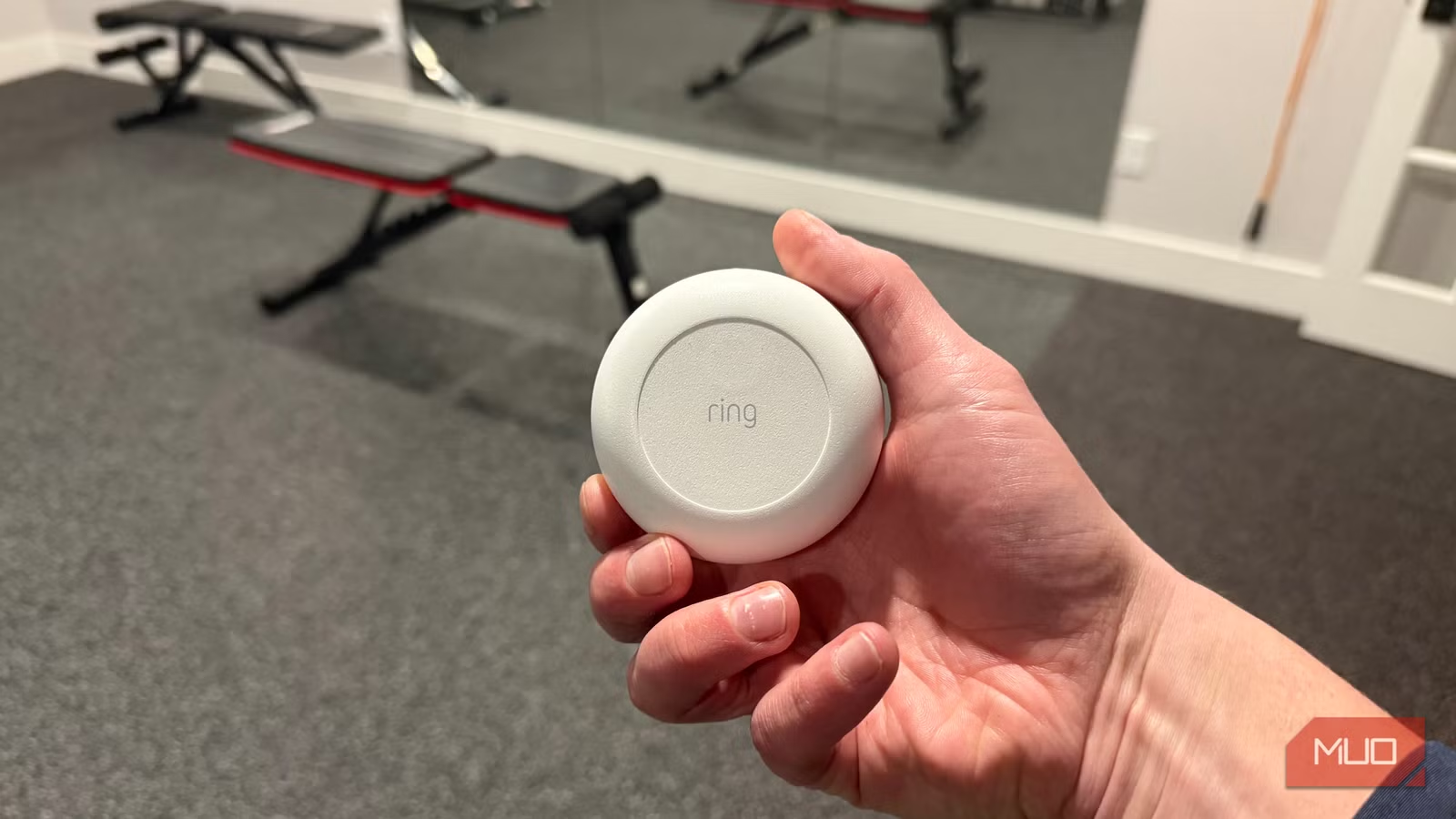
- A $30 Ring Flood & Freeze Sensor detected a clogged humidifier drain before water reached finished walls
- Finished basements with drywall and flooring face exponentially higher repair costs from undetected leaks
- Key sensor placement spots: HVAC drain pan, water heater, sump pit, and ejector pump closet
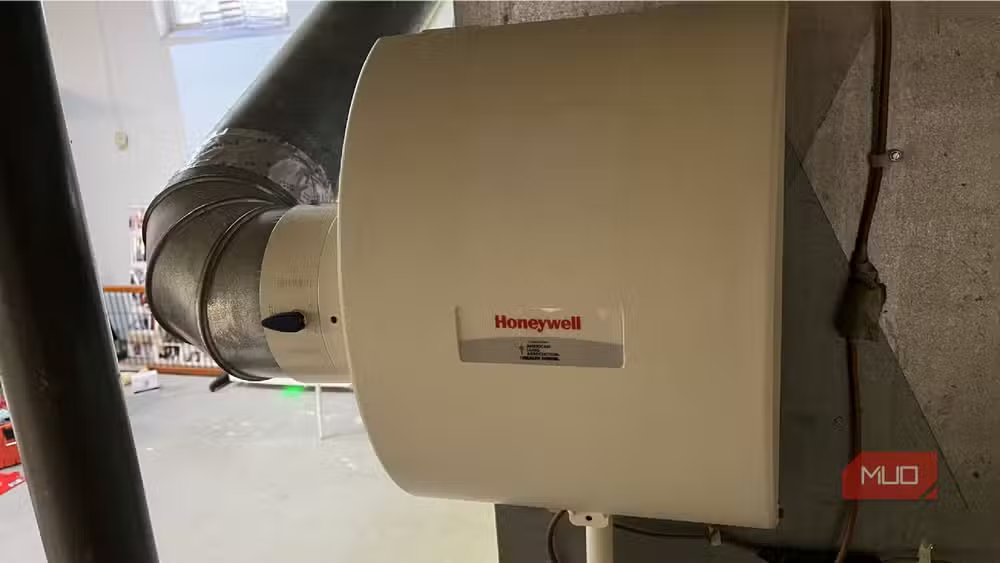
A $30 basement water sensor woke Jonathon Jachura at 2:12am with a notification that likely saved him thousands in water damage repairs. The Ring Alarm Flood & Freeze Sensor, placed near his HVAC drain pan, caught a slow leak from a clogged whole-house humidifier before it reached the drywall and flooring in his finished basement office.
Twenty minutes later, he was back in bed. A wet/dry vac fixed the immediate problem. His M4 Mac mini, carpet, and LVP flooring remained dry.
Why a 2am notification hits different than noon
The condensate drain line on the whole-house humidifier had clogged. Water was backing up and overflowing the drain pan quietly, in the dark. By the time Jachura got downstairs, maybe a cup or two of water sat on the concrete floor. Not a crisis. But that same drain pan sits six feet from the framed wall of his finished home office.
Six feet and a few more hours without detection, and he's pulling up flooring.
The sensor cost between $20 and $35 depending on retailer. The flooring alone in that office would run several hundred dollars to replace, before factoring in drywall and baseboards. According to Insurance Institute data, average water damage claims exceed $11,000. The math isn't complicated.
Why finished basements need water sensors more than unfinished ones
An unfinished basement can absorb punishment. Concrete floors, exposed joists, block walls. None of it gets ruined by a few inches of water the way finished space does.
Finished basements are different. Carpet in the guest room. LVP flooring in the office. Rockwool insulation packed into walls. Drywall throughout. Water doesn't respect drywall. It finds the gap at the bottom of the baseboard, gets under the flooring, and sits in the wall cavity until the damage is done.
You don't find out about the mold until you smell it. That's weeks after the fact, and weeks too late. Finishing a basement costs real money. Protecting it shouldn't.
Where to place basement water sensors
The pipe-bursting scenario isn't what you're guarding against. Those are obvious fast. What gets expensive is the stuff that drips for days before anyone notices.
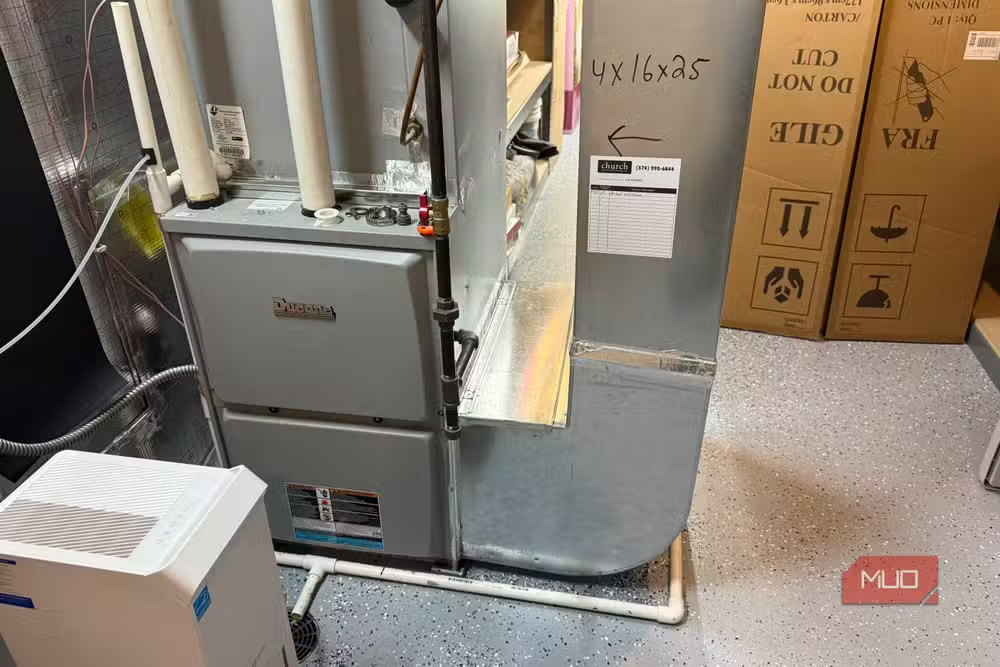
Jachura's basement bathroom runs off a sewage ejector pump. That pit was the first spot he covered, because a failed ejector pump isn't just water. It's water you really don't want on your floor. From there: the HVAC condensate drain pan (where his actual incident happened), the water heater drain pan, and the sump pit. Any spot where water collects before it has somewhere to go is a candidate.
- HVAC condensate drain pan (most common culprit)
- Water heater drain pan
- Sump pit
- Ejector pump closet
- Under washing machine if in basement
Set sensors flat on the floor at the lowest point where water would naturally flow. The metal contact pads on the underside need direct floor contact to register moisture. Don't elevate them. Don't tuck them into corners where water won't reach first. Don't place them where foot traffic might knock them around.
A sensor three feet from the actual risk zone might as well not be there. Placement strategy matters as much as the sensor itself.
Do you need a Ring hub?
The Ring Alarm Flood & Freeze Sensor runs on Z-Wave rather than Wi-Fi, which means it requires a Ring Alarm base station or Ring Alarm Pro to function. If you're already running Ring or Alexa devices, adding leak sensors to your existing setup takes maybe ten minutes and doesn't require any new hardware beyond the sensors themselves.
If you don't have Ring ecosystem hardware, alternatives exist. Govee, YoLink, and Moen Flo make standalone sensors that work over Wi-Fi or their own hubs. The principle remains the same: early detection beats expensive remediation.
The ROI calculation
Four sensors cover Jachura's entire basement. Each one took about 30 seconds to place. Total investment: around $120 at retail prices. Average basement flood remediation for finished spaces runs $10,000 to $50,000 according to the Insurance Institute for Business & Home Safety.
That's a potential ROI somewhere between 80x and 400x. Most home improvements don't come close to those numbers.
Logicity's Take
Water sensors represent one of the rare tech purchases where the value proposition is almost embarrassingly obvious. The insurance industry's own data suggests most homeowners will experience basement water damage at some point. A $30 sensor that pays for itself by preventing a single incident is the kind of asymmetric bet engineers love. The only real question is why smart home platforms don't bundle these with every hub sold.
Frequently Asked Questions
Do water leak sensors work without internet?
Most smart water sensors require internet for phone notifications, but some (like Ring's Z-Wave sensors) will still trigger local alarms through the hub during outages.
How long do water sensor batteries last?
Ring Flood & Freeze Sensors use CR123A batteries that typically last 3-5 years depending on temperature and how often alerts trigger.
Can water sensors detect slow leaks?
Yes. The metal contact pads on most sensors detect any moisture contact, whether from a sudden flood or gradual seepage.
Where should I place water sensors in my basement?
Priority locations include HVAC drain pans, water heaters, sump pits, ejector pump closets, and under any basement appliances like washing machines.
Another practical tech workaround that saves money with minimal effort
Need Help Implementing This?
If you're setting up smart home water sensors or building out basement monitoring, drop us a line at Logicity. We cover the gear that actually works and skip the stuff that doesn't.
Source: MakeUseOf
Manaal Khan
Tech & Innovation Writer
Produced with AI assistance and reviewed by the Logicity editorial team. Learn more in our Editorial Policy.