Key Takeaways
- July 2026 saw Indian startups raise over $800 Mn, with Emergent becoming the third AI unicorn at $130 Mn
- Aktoria Robotics is building remote-control infrastructure for autonomous robots, not robots themselves
- Alchemic compresses market research from weeks to days using AI-conducted customer interviews
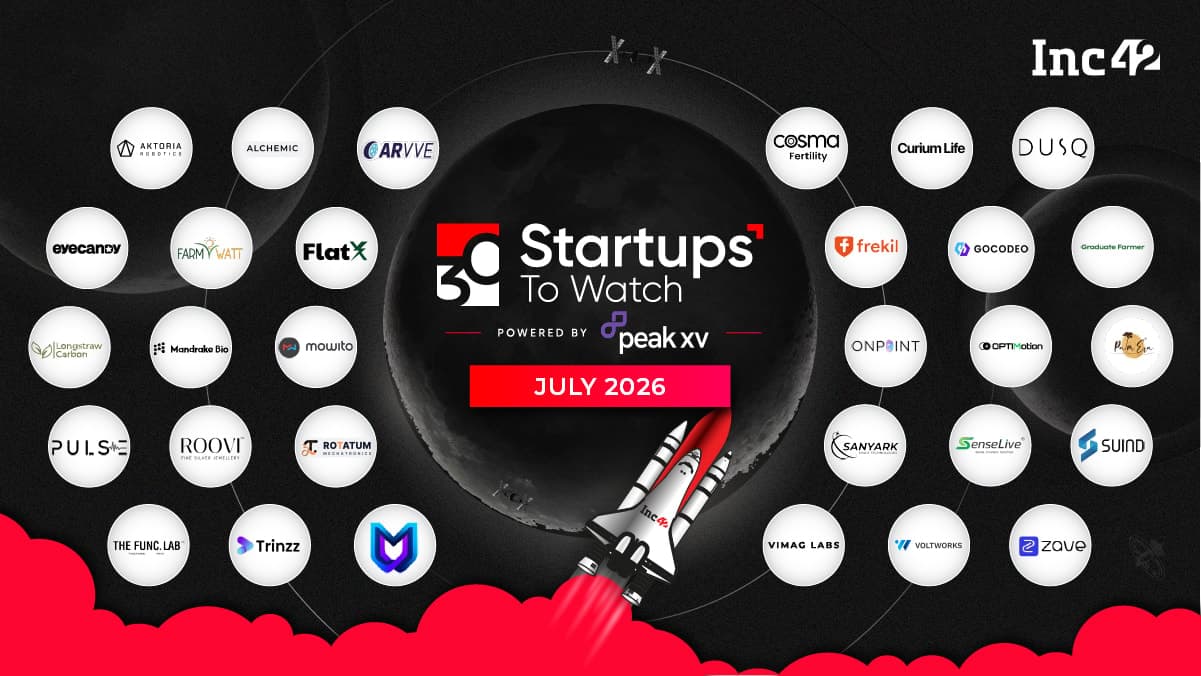
Inc42 released its 73rd edition of "30 Startups To Watch," spotlighting early-stage Indian ventures across robotics, AI-powered market research, spacetech and consumer tech. The July 2026 list arrives as Indian startups pulled in over $800 Mn during the month, down from June's $2 Bn haul driven by CRED's $900 Mn round.

The month's biggest headline: Skyroot Aerospace became the first Indian private company to launch a rocket into space. On the unicorn front, AI startup Emergent closed a $130 Mn round, becoming India's 132nd unicorn and third in the AI category.
Which robotics startups made the cut?
Aktoria Robotics stands out for what it is not building. Founded in 2026 by Shreenabh Agrawal and Jaskaran Singh Walia, the company builds the human layer for autonomous robots rather than the robots themselves.
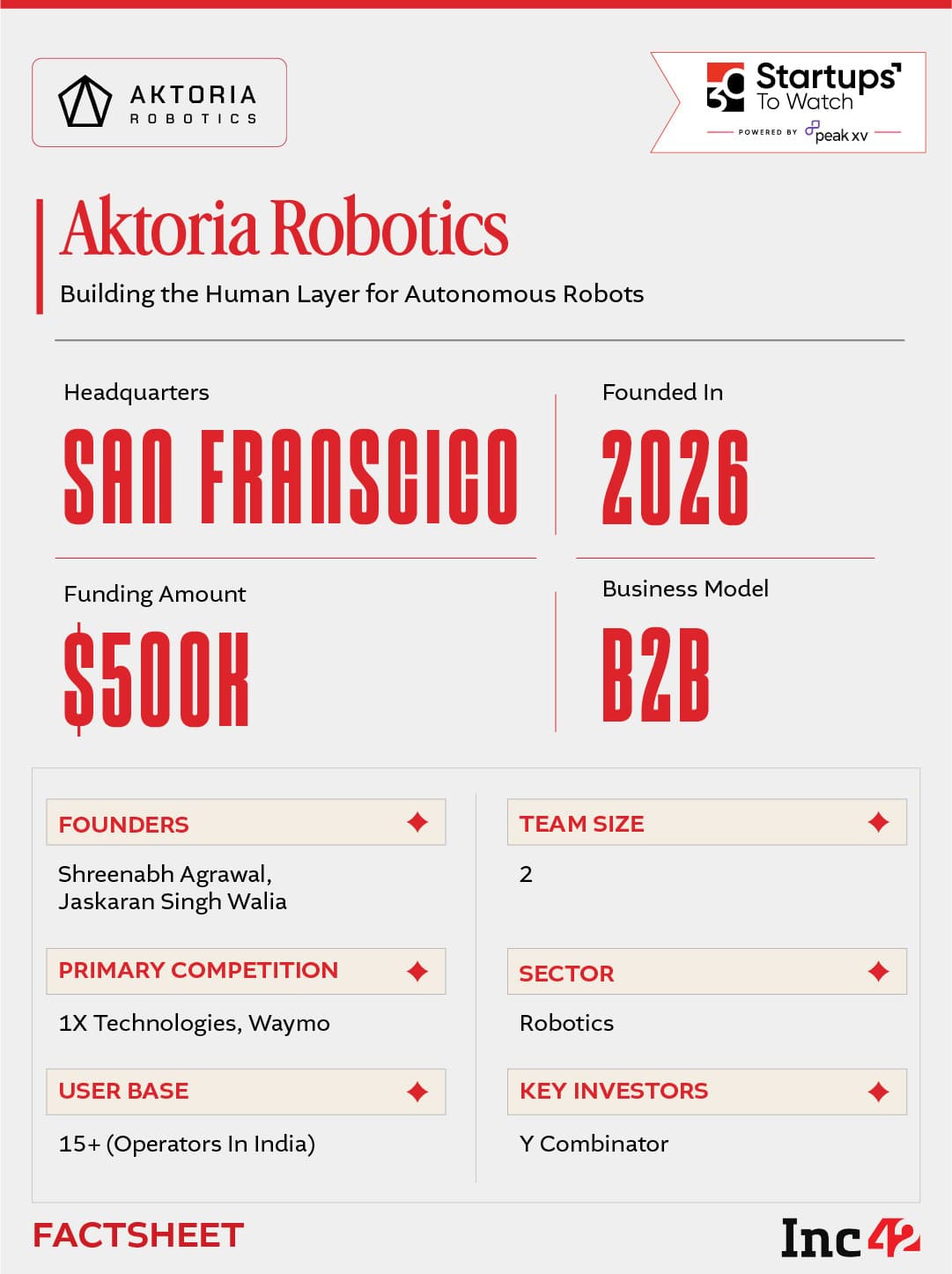
The problem: autonomous robots still fail at edge cases. The odd shelf. The unexpected obstacle. Tasks they were never trained on. Getting past that requires massive amounts of real-world intervention data that most robotics teams cannot generate at scale.
Aktoria's platform lets operators remotely control robots anywhere in the world, collect operational data around the clock, take over when a robot gets stuck, and feed those interventions back to improve autonomy. It positions itself as pick-and-shovel infrastructure for companies deploying autonomous robots.
The global robotics market is estimated at over $70 Bn and expected to expand sharply through the decade as embodied AI moves from labs into warehouses, streets and homes. Aktoria is betting the bottleneck is data collection, not robot hardware.
How is AI reshaping market research?
Traditional market research is slow. Surveys, panels and focus groups take weeks to field and analyse. Mumbai-based Alchemic, founded in 2024 by Sreenadh Narayanan and Maurice Dhar, is compressing that timeline.
The startup runs AI-powered customer conversations on behalf of brands. Its system interviews customers at scale, conducts adaptive interview-style exchanges rather than static questionnaires, analyses those conversations, and returns consumer insights in days rather than weeks.
The pitch is aimed at brand, product and growth teams that need directional consumer understanding faster than legacy agencies can deliver. The global market research industry is estimated at over $96 Bn, a category under pressure to modernise.
Context on recent AI and fintech funding activity
Consumer plays: car accessories and beyond
Carvve targets a different pain point entirely: upgrading your car without leaving home. The car accessories market is highly fragmented, with inconsistent quality and limited post-installation support. Many shops offer no reliable warranties. Markets are usually located in crowded areas, making it inconvenient for customers to visit, get accessories installed and return for after-sales service.
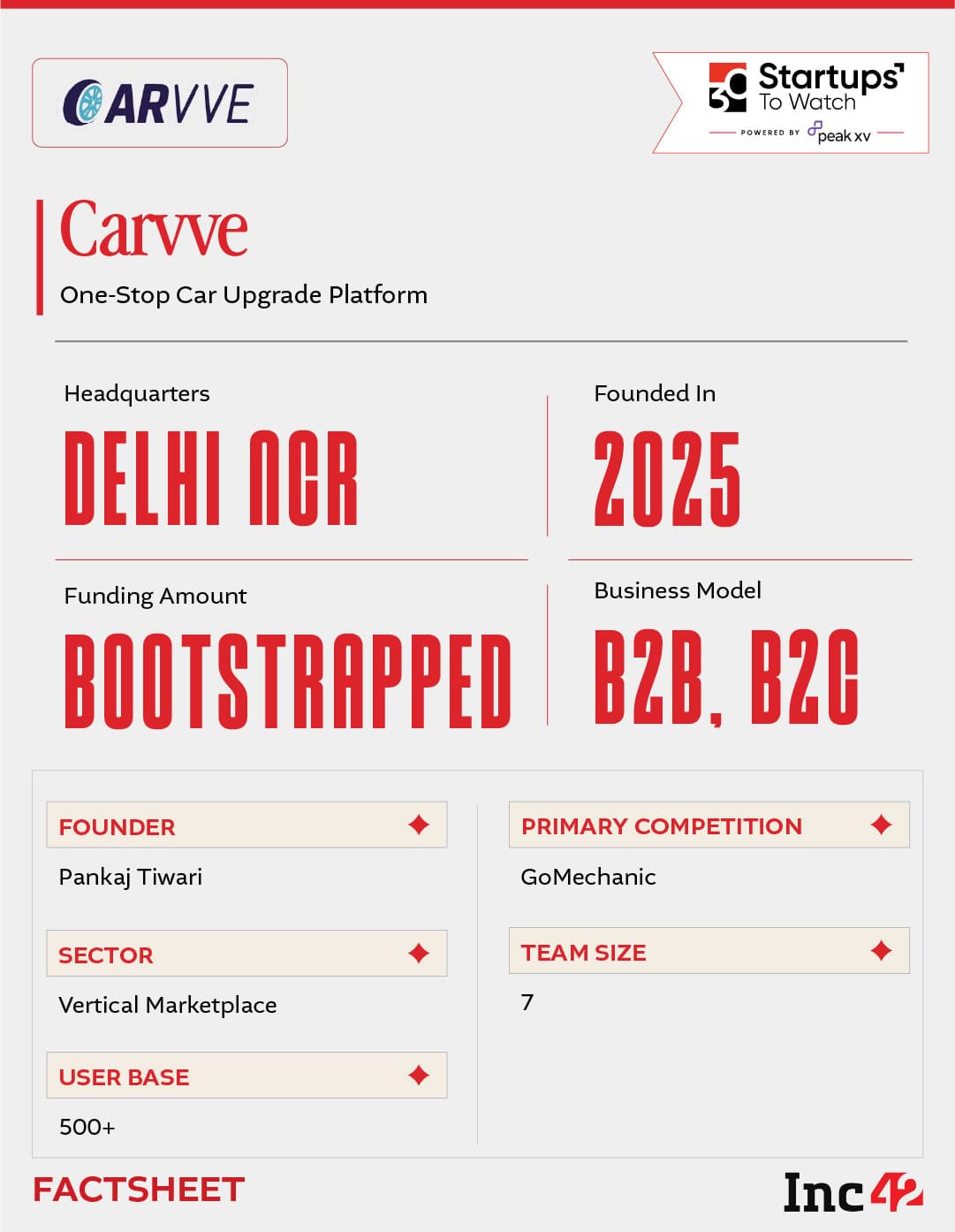
Carvve's model brings the service to the customer. It is a one-stop car upgrade platform that handles selection, installation and support. The startup is betting that convenience and standardised quality can unlock a fragmented market.
Policy tailwinds for hardware startups
The timing is notable. The Union Cabinet approved the Mobile Phone Manufacturing Scheme (MPMS) with a budgetary outlay of ₹62,500 Cr. The Cabinet also cleared the second phase of the India Semiconductor Mission (ISM 2.0), allocating ₹1.28 Lakh Cr to strengthen chip design and fabrication.
For hardware-adjacent startups in the list, whether in spacetech, robotics or auto tech, these policy moves create real tailwinds. Government capital flowing into chip fabrication and manufacturing infrastructure lowers the barrier for startups building physical products.
What the list reveals about early-stage bets
The 30 startups span robotics, agritech, spacetech, auto tech, healthtech, enterprise software and consumer brands. The common thread: they are building differentiated products and technologies, not me-too plays.
Aktoria is not building robots; it is building the data layer that makes robots smarter. Alchemic is not running surveys; it is running AI interviews. Carvve is not selling car parts; it is selling convenience. Each startup has picked a specific wedge.
For fintech teams watching this space, the signal is clear. The early-stage market is shifting toward infrastructure plays and vertical-specific applications. Pure horizontal SaaS is not where the action is.
Logicity's Take
The July 2026 list skews toward pick-and-shovel infrastructure rather than direct-to-consumer plays. Aktoria's model, building tooling for robot operators rather than competing with OEMs, mirrors what worked in cloud computing. For fintech and finance teams evaluating partnerships, these infrastructure bets are often lower risk than end-user plays. The question is whether Indian VCs, historically consumer-focused, will sustain funding for companies with longer sales cycles.
Related coverage on Indian startup IPO activity
The funding gap to watch
July's $800 Mn total is a sharp drop from June's $2 Bn. Strip out CRED's $900 Mn mega round, and June's number is closer to $1.1 Bn. Still a 27% decline month over month.
Emergent's $130 Mn round carried a lot of the July total. Without it, the early-stage funding picture looks thinner. The 30 startups on this list are competing for a smaller pool of capital than they would have faced six months ago.
For founders, that means tighter runways and harder conversations with VCs. For fintech teams evaluating partnerships or acquisitions, it means leverage. Early-stage startups with real technology but thin balance sheets make better partners than they did when capital was cheap.
Need Help Implementing This?
Logicity helps fintech and finance teams track emerging Indian startups, evaluate partnership opportunities and monitor funding activity. Contact us for custom briefings.
Source: Inc42 Media / Akshit Pushkarna
Manaal Khan
Tech & Innovation Writer
Produced with AI assistance and reviewed by the Logicity editorial team. Learn more in our Editorial Policy.