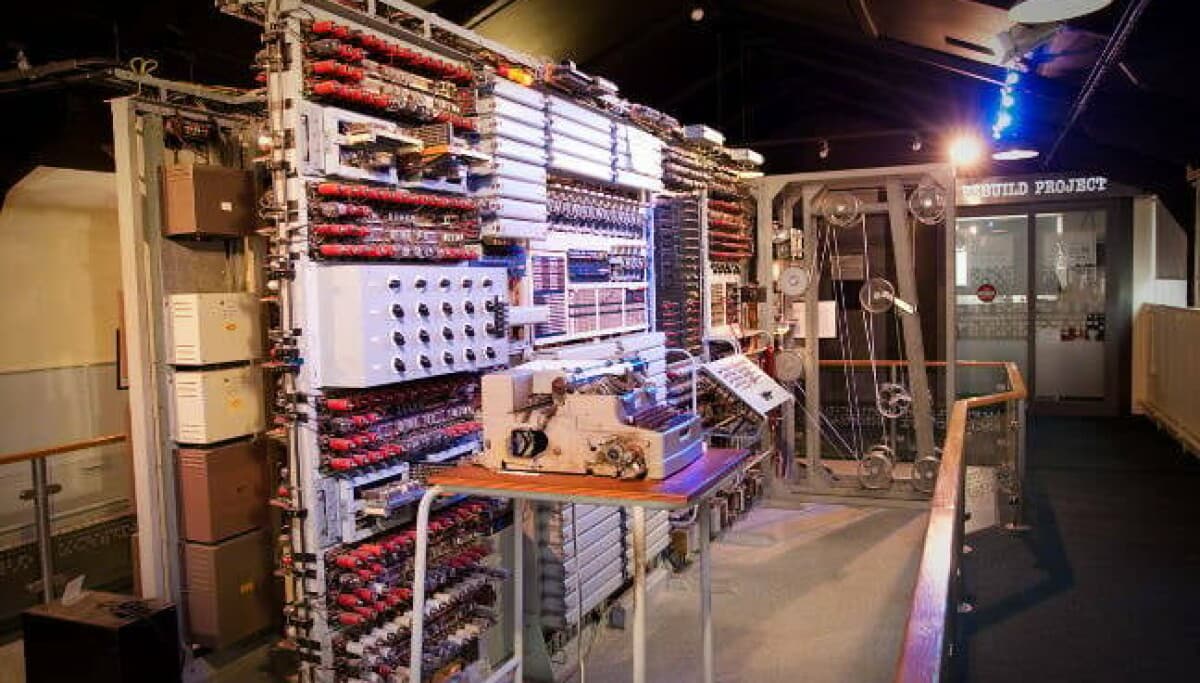
The UK's National Museum of Computing at Bletchley Park is using Claude Code to investigate and document vintage hardware, proving that agentic AI tools have applications far beyond modern software development. The museum, home to restored machines from wartime Colossus computers to 1970s British mainframes, has found Anthropic's coding agent surprisingly capable at digital archaeology work.
The Register's Rupert Goodwins, a self-described AI skeptic, reports that the tool has impressed researchers working on the museum's microprocessor-era collection. "As a big AI skeptic, you just blew my mind," Goodwins wrote, describing the reaction to Claude Code's performance on legacy system investigation.
Why legacy hardware needs AI assistance
Claude Code Full Course | Beginner to Expert
Digital archaeology presents unique challenges that traditional development tools cannot address. Documentation for machines from the 1960s and 1970s often exists only in fragments, scattered across technical manuals, personal notes, and institutional archives. The people who built and operated these systems are aging or gone. Much institutional knowledge has already been lost.
TNMoC's collection spans computing's formative decades. The museum has restored the wartime Colossus codebreaking machine, multiple British mainframes, and early microcomputers. Each restoration project requires piecing together hardware specifications, software behaviors, and operational procedures from incomplete records.
Claude Code's ability to parse technical documentation, cross-reference specifications, and generate working code from fragmentary sources makes it useful for this kind of investigative work. The agent can process scanned manuals, interpret obsolete programming languages, and help reconstruct system behaviors that would take human researchers far longer to decode.
Enterprise implications beyond museums
The museum's experience points to broader applications for AI coding agents in legacy system work. Many enterprises still run critical infrastructure on decades-old code. COBOL powers banking systems. Fortran runs scientific simulations. Assembly language lurks in embedded systems. The engineers who wrote this code are retiring or have retired.
Companies facing legacy modernization projects often struggle with the same problems TNMoC encounters: incomplete documentation, obscure languages, and vanishing expertise. If Claude Code can help reconstruct the behavior of a 1970s mainframe from fragmentary sources, it can likely help enterprises understand and migrate their own legacy systems.
Logicity's Take
This is a clever proof of concept that IT leaders should watch. If an AI agent can decode 50-year-old hardware from scattered documentation, it can probably help with your COBOL modernization or that undocumented system your retired architect built. The museum use case is niche, but the underlying capability, parsing fragmentary technical documentation and reconstructing system behavior, applies to any enterprise carrying technical debt.
A skeptic's endorsement
Goodwins' reaction matters because he is not a credulous AI enthusiast. The Register's columnists have spent years scrutinizing vendor claims and puncturing hype. When a skeptic admits that a tool "blew my mind," the statement carries weight that a press release cannot match.
The specific applications at TNMoC remain undisclosed in detail, but the museum's collection suggests several possibilities: reconstructing forgotten operating systems, interpreting proprietary bus protocols, or generating test programs for hardware verification. Each task requires the kind of reasoning across incomplete information that large language models handle well.
Related Claude security consideration for enterprises evaluating the tool
What TNMoC's experiment does not prove
Museum work differs from enterprise IT in important ways. A restoration project tolerates trial and error. A banking system does not. TNMoC can verify Claude Code's outputs against physical hardware; an enterprise migrating a black-box legacy system may lack that safety net.
The museum's success with vintage hardware also does not guarantee similar results with enterprise legacy systems. Mainframes from the 1960s were often better documented than corporate systems from the 1990s, when institutional documentation practices had decayed but complexity had grown. Your undocumented PowerBuilder application may prove harder to reverse-engineer than Colossus.
Still, the experiment suggests a direction. AI agents that can reason about technical systems from incomplete information may finally offer a path through the legacy modernization problem that has stalled enterprise IT for decades. Whether that path leads anywhere useful remains, for now, an open question.
Need Help Implementing This?
If you're evaluating AI coding agents for legacy system work or modernization projects, contact Logicity's consulting partners for vendor-neutral guidance on tooling, risk assessment, and implementation strategy.
Source: www.theregister.com
Huma Shazia
Senior AI & Tech Writer
Produced with AI assistance and reviewed by the Logicity editorial team. Learn more in our Editorial Policy.