Key Takeaways
- Venus and Jupiter dominate the evening sky, with Venus shining seven times brighter than Jupiter at magnitude -4.0
- Key dates: May 18 for Venus-Moon pairing, May 20 for Jupiter-Moon conjunction, and late May for Mercury's appearance
- May 2026 features a rare Blue Moon month with full moons on both May 1 and May 31
Three bright planets are putting on a show this month. Venus, Jupiter, and Mercury will line up across the western sky throughout May, offering some of the best evening stargazing of 2026.
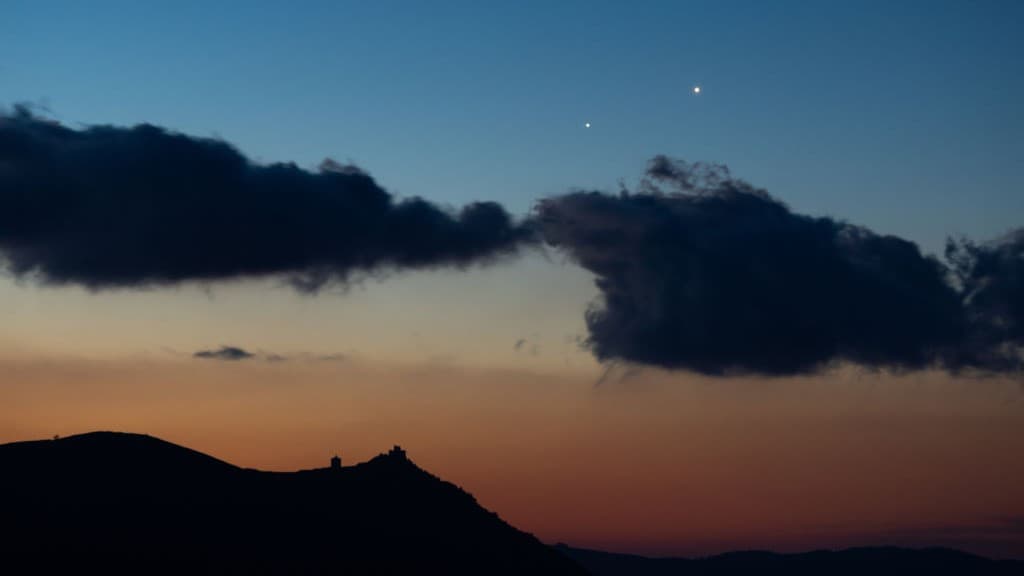
This planetary display is more than just a casual sky event. It's the opening act for one of the year's most anticipated astronomical moments: the ultra-close conjunction of Venus and Jupiter on June 9. Throughout May, these two brightest planets will steadily converge in the twilight, with Mercury joining the scene in the final week.
Jupiter: The Departing King
Jupiter has dominated evening skywatching for months, visible with the naked eye and impressive through binoculars or telescopes. But its reign is ending. The gas giant is descending noticeably down the western sky during May.
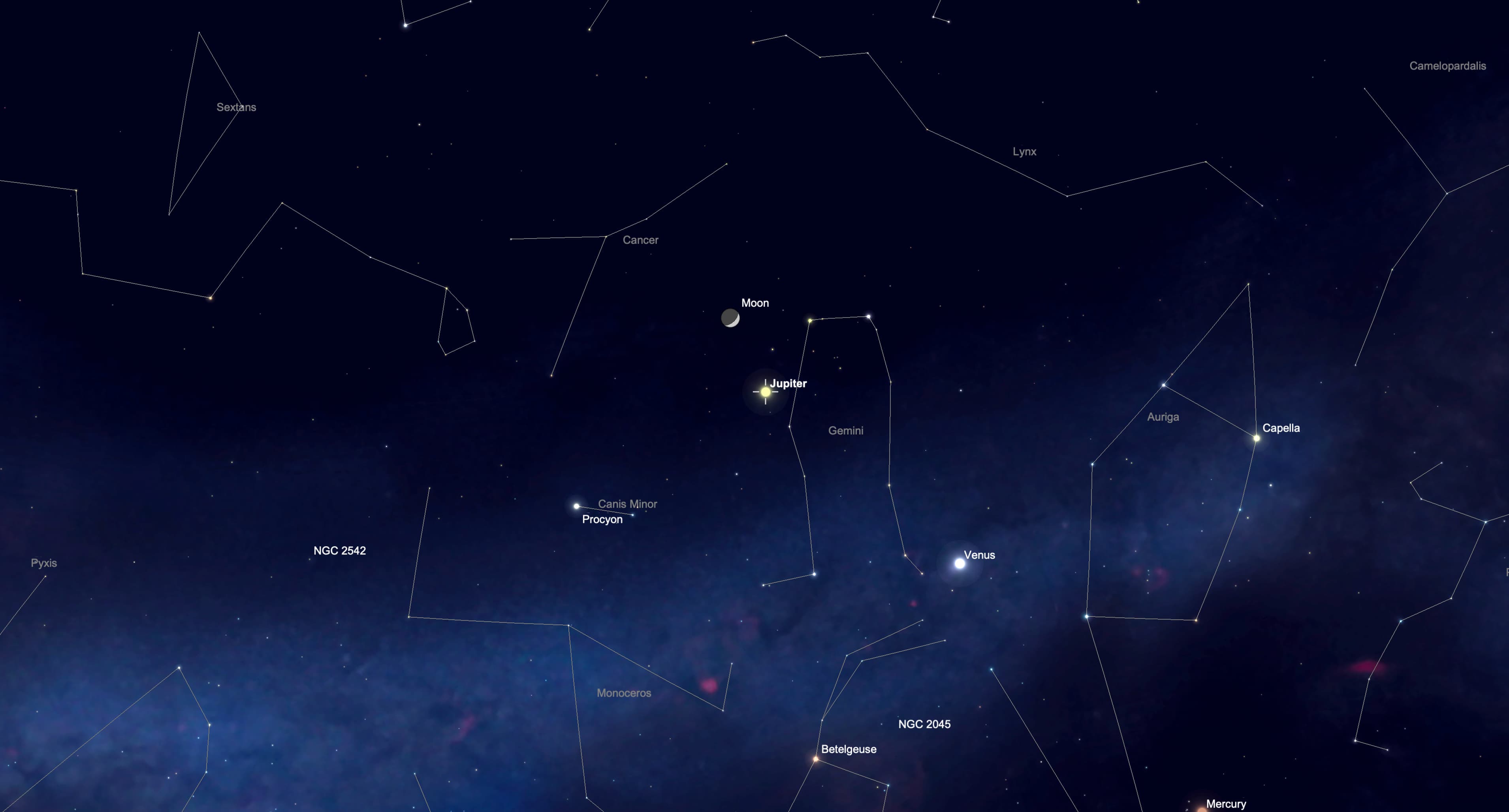
You'll find Jupiter near the "Twin Stars" of Gemini, Pollux and Castor. The best viewing opportunity comes on May 20, when a crescent moon passes nearby, creating what Space.com describes as "a rather attractive sky picture."
Venus: The Evening Star at Peak Brightness
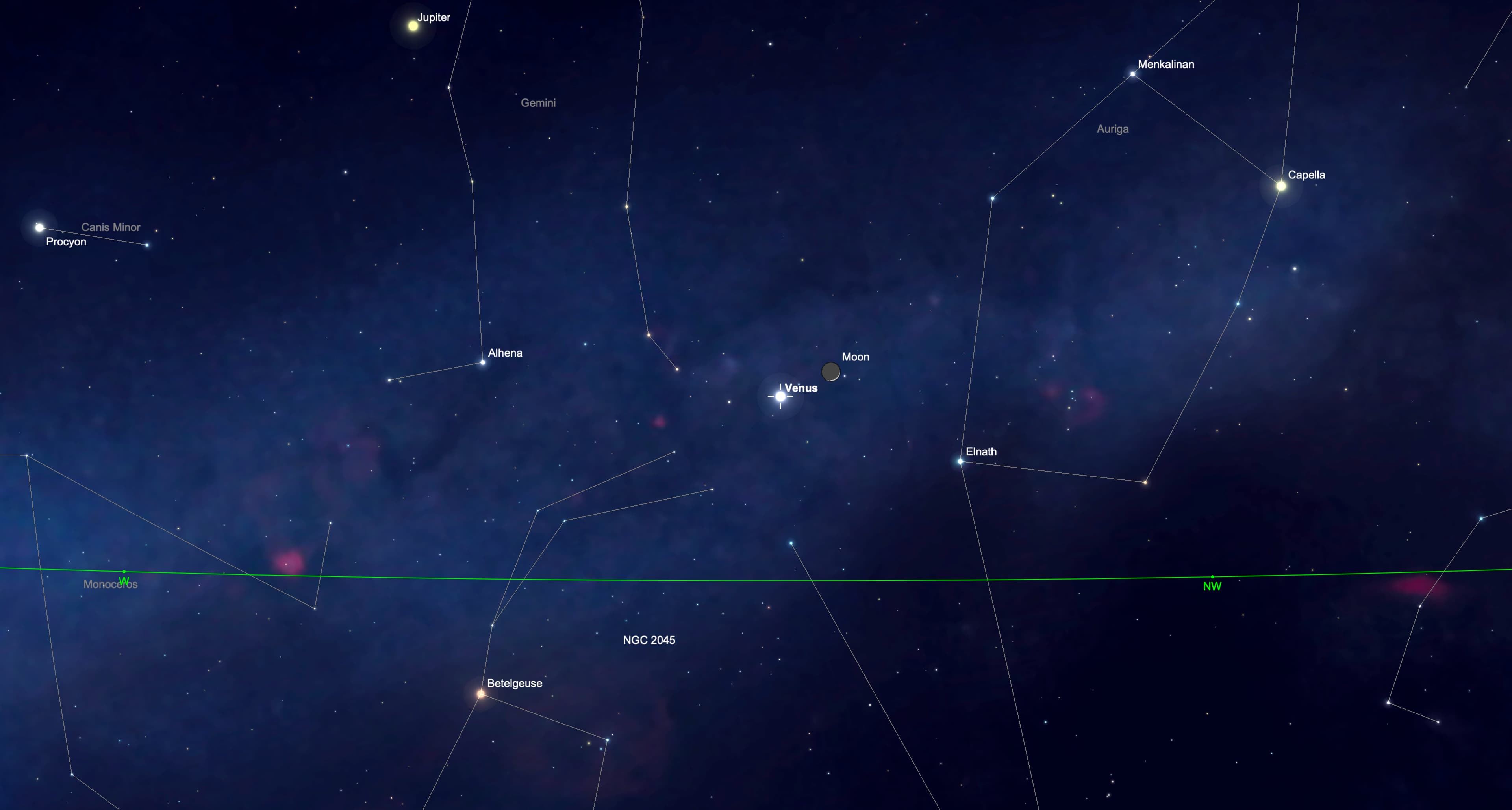
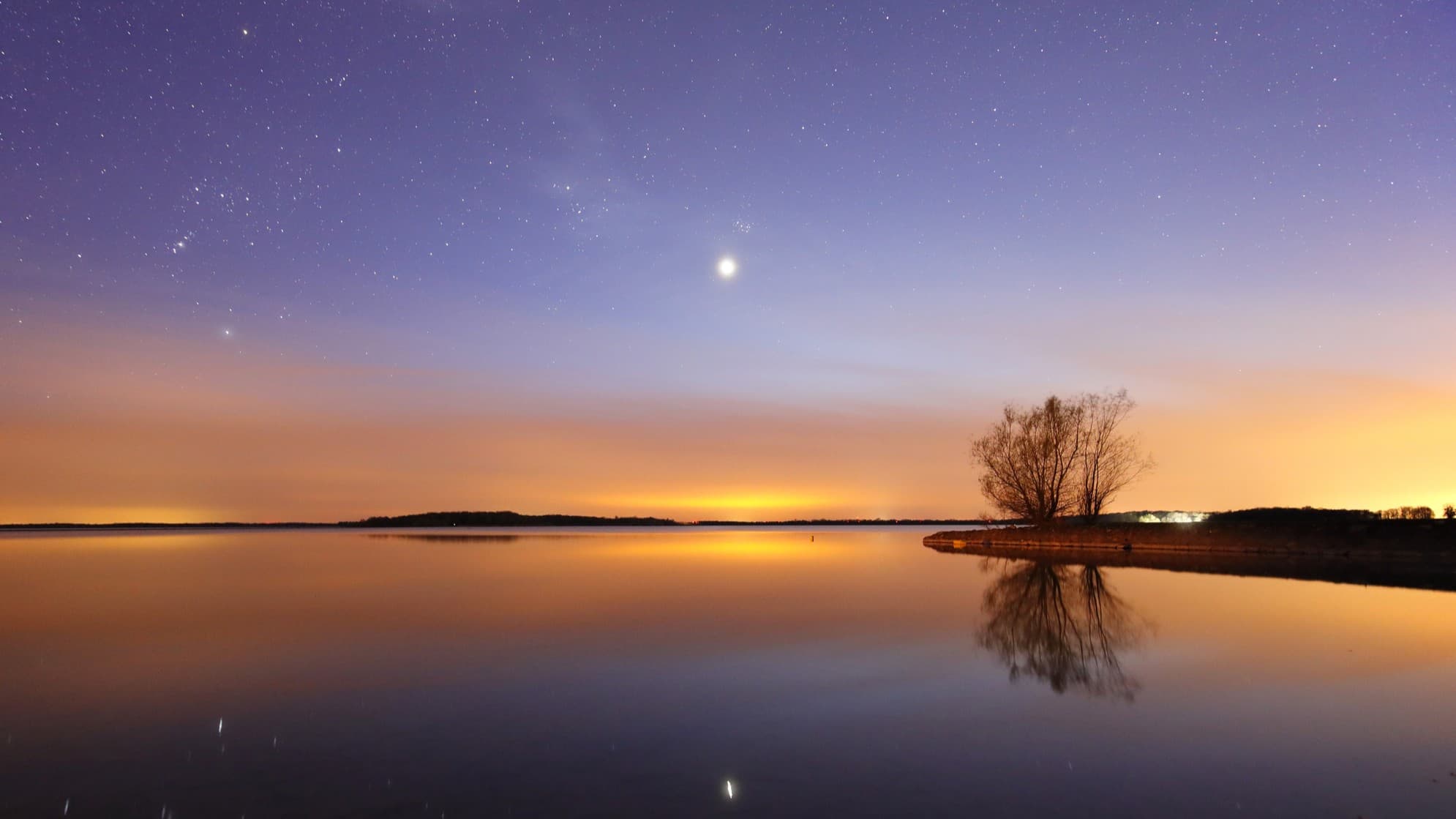
Lower in the western sky but impossible to miss, Venus shines at a dazzling magnitude -4.0. That's about seven times brighter than Jupiter. Through telescopes, it's "rather disappointing," appearing as a small, featureless gibbous disk. But to the naked eye, it's spectacular.
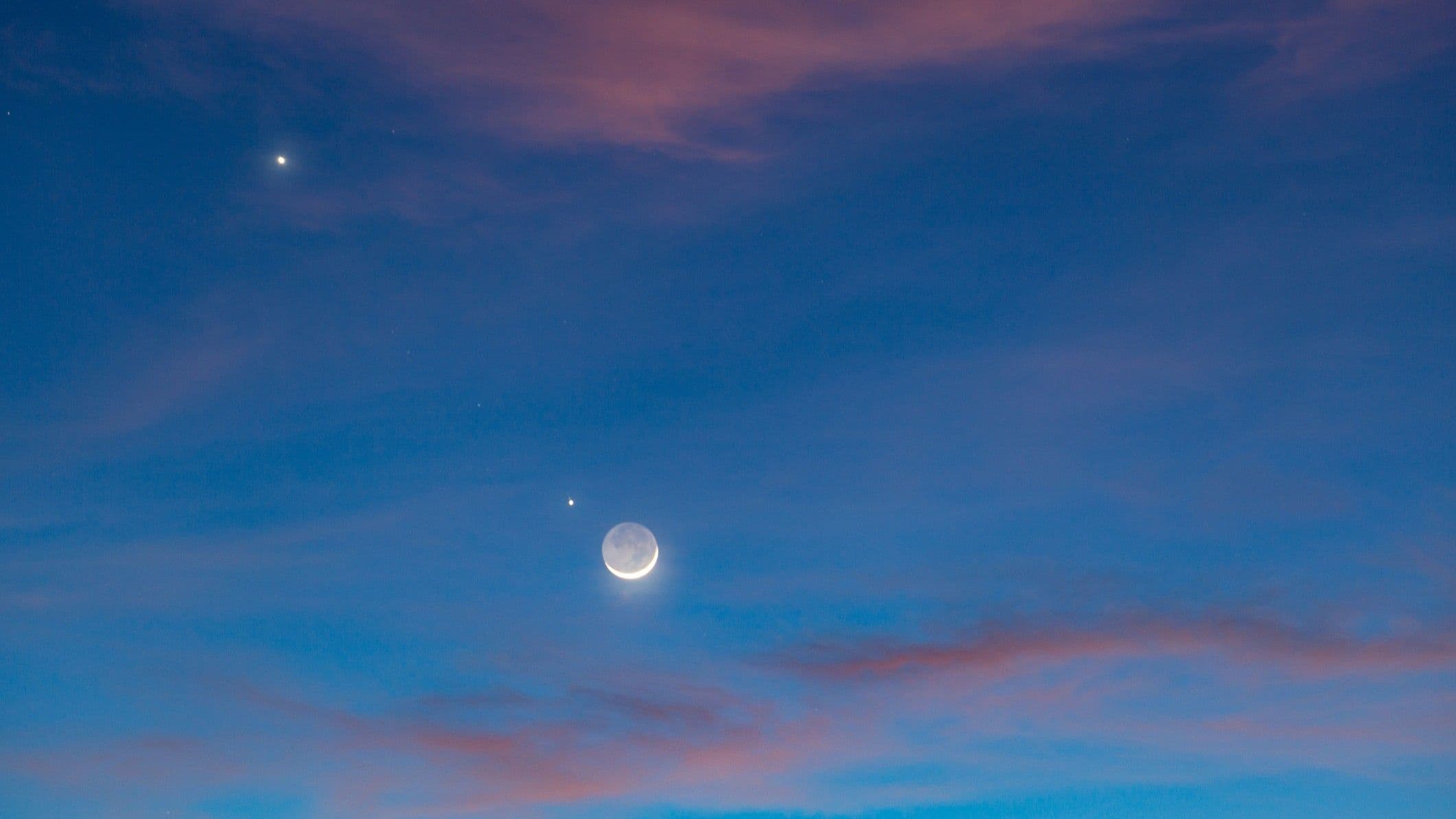
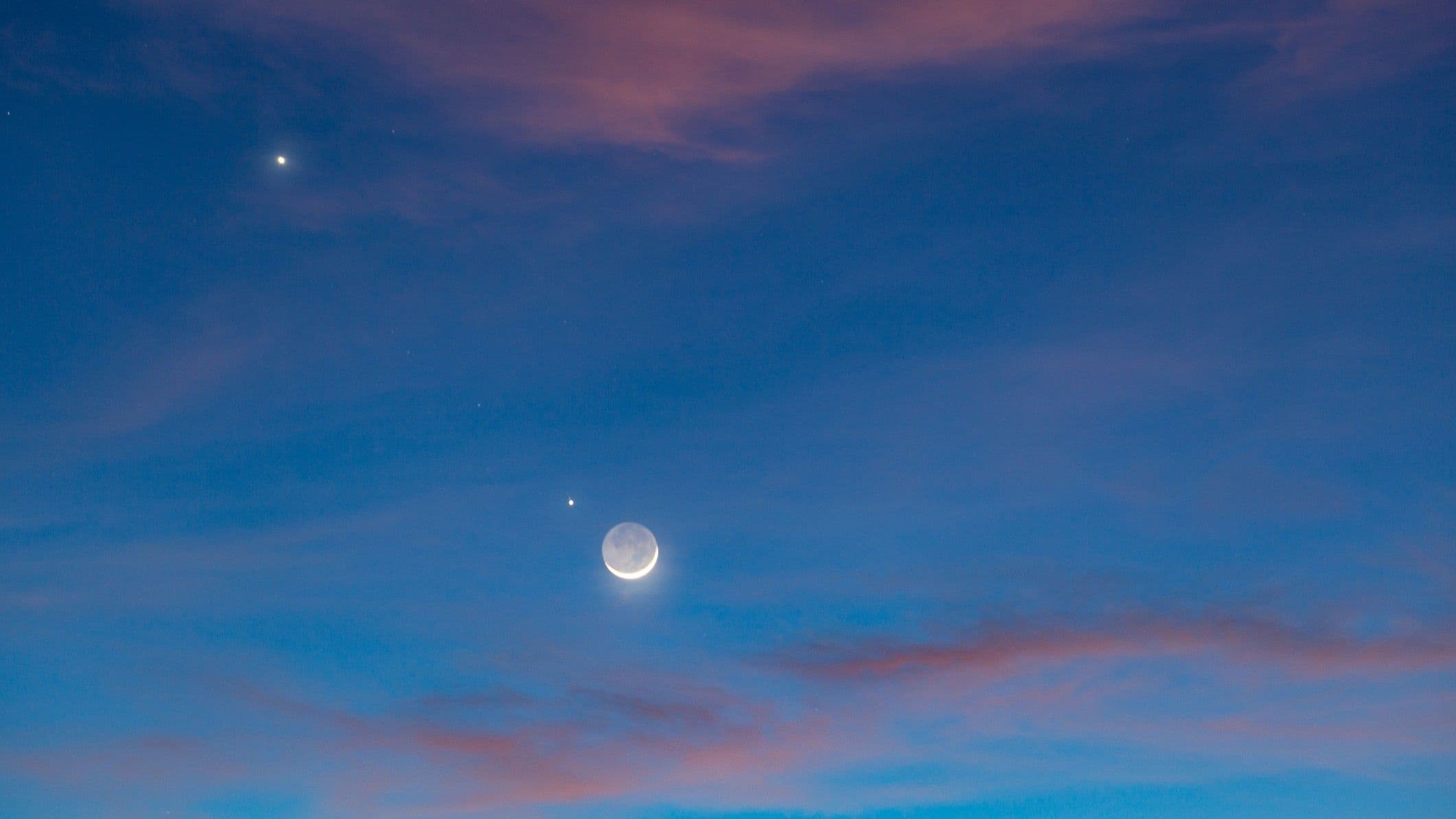
The best night to watch Venus is May 18. A slender crescent moon will appear in conjunction with the planet. Look for Earthshine, the faint glow illuminating the moon's dark side. It will make the view appear almost three-dimensional.
“The May sky is a stunning demonstration of the moon's orbital motion and the planets' conjunctions as they race toward their big June encounter.”
— Joe Rao, Skywatching Columnist at Space.com
Mercury: The Late Arrival
Mercury reaches superior conjunction on May 14, meaning it passes behind the sun and becomes temporarily invisible. The speedy planet is actually occulted by the sun's disk that day, though the event is unobservable.
By May 22, Mercury reappears in the evening sky at magnitude -1.4, as bright as Sirius. It will be 10 degrees east of the sun and will set about 55 minutes after sunset. Using binoculars, start looking a quarter hour after sundown, low in the west-northwest.
By May 25, Mercury should be visible to the naked eye at magnitude -1.1. By month's end, it will be obvious to spot around 45 minutes after sunset. Look for a negative magnitude "star" sitting roughly a fist's width above the western horizon at arm's length.
Mercury's peak appearance and greatest elongation from the sun won't occur until mid-June, so May is just the warm-up.
Bonus: A Rare Blue Moon Month
May 2026 delivers an unusual astronomical bonus: two full moons. The first arrives on May 1, the second on May 31. When two full moons occur in a single calendar month, the second is called a Blue Moon.
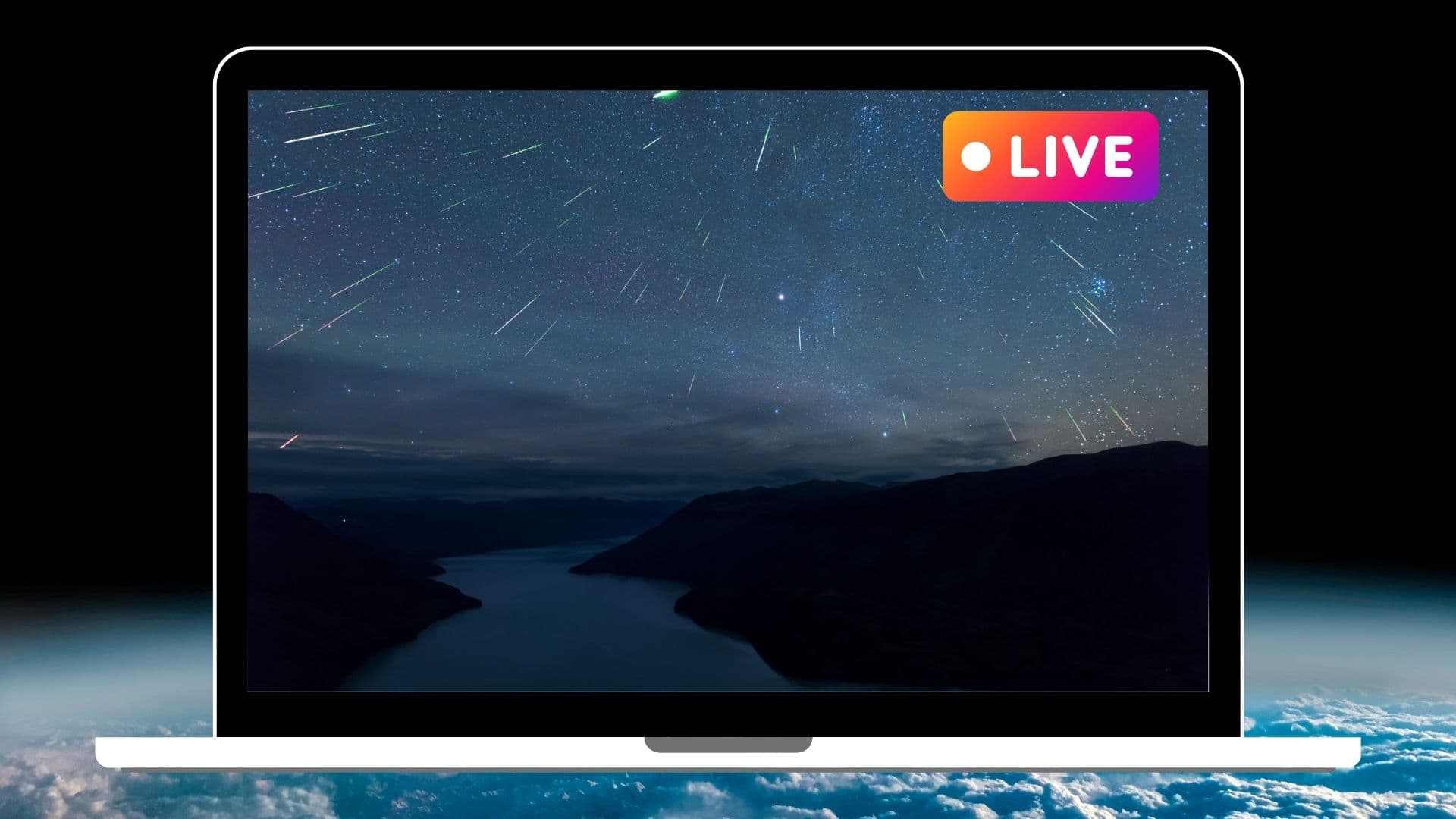
“May 2026 is officially 'Stargazer Month.' Between the meteor shower, a rare planetary alignment, and a month-ending Blue Moon, the night sky is putting on a masterclass.”
— Marcy Curran, EarthSky Video Host
What About Mars and Saturn?
Mars is gradually becoming easier to spot in the morning sky, rising in the east just as dawn breaks. It's been lingering in bright morning twilight since early 2026, making it a difficult target. On May 14, a skinny crescent moon can help guide you to it.
Saturn remains a morning sky object as well, though the source focuses primarily on the evening show. For most casual observers, the Venus-Jupiter-Mercury trio in the west after sunset offers the best viewing opportunities.
Your May 2026 Stargazing Calendar
How to Get the Best View
- Find a location with a clear view of the western horizon
- Start looking 15-45 minutes after sunset, depending on which planet you're targeting
- Bring binoculars for Mercury and to enhance the moon-planet pairings
- Check weather forecasts and plan for clear nights around the key dates
- The May 18-20 window offers the best photo opportunities as the moon passes between Venus and Jupiter

Logicity's Take
Frequently Asked Questions
What time should I look for planets in May 2026?
Start looking 15-45 minutes after sunset. Venus and Jupiter are visible first, with Mercury appearing lower on the horizon about 45 minutes after sunset by late May.
Do I need a telescope to see the planets?
No. Venus, Jupiter, and Mercury are all visible to the naked eye. Binoculars help for Mercury when it first appears and enhance the moon-planet pairings.
What is a Blue Moon?
A Blue Moon occurs when two full moons happen in a single calendar month. In May 2026, full moons appear on May 1 and May 31, making the second a Blue Moon.
Why is Venus disappointing through telescopes?
Venus appears as a small, featureless gibbous disk when viewed through telescopes. Its thick cloud cover reflects light brilliantly but reveals no surface details.
When is the best single night to stargaze in May 2026?
May 18 offers the most photogenic view, with a slender crescent moon near Venus showing visible Earthshine. May 20 brings a similar pairing with Jupiter.
Need Help Implementing This?
Source: Latest from Space.com
Huma Shazia
Senior AI & Tech Writer
Produced with AI assistance and reviewed by the Logicity editorial team. Learn more in our Editorial Policy.