Key Takeaways
- AI-driven forecasting tools now reduce prediction errors by up to 50% compared to spreadsheet methods
- Salesforce leads for enterprise scalability while Pipedrive wins for small business simplicity
- Integration with existing CRM and tech stacks is the critical differentiator among modern forecasting tools
Sales forecasting software in 2026 has moved well beyond spreadsheet gymnastics. The best tools now pull live CRM data, apply machine learning to historical patterns, and adjust predictions as deals progress through your pipeline. Zapier's team tested ten platforms across criteria that matter: data sourcing, integrations, AI capabilities, and whether a sales team would actually use them.
The stakes are real. Gartner research shows 80% of sales organizations miss their forecasts by more than 25%. Companies using machine learning for predictions report up to 50% fewer forecasting errors than those stuck on manual methods. With the global sales forecasting market projected to hit $5.25 billion by 2026, vendors are racing to differentiate.
Which tools made the cut?
The Zapier evaluation focused on tools that could source data effectively, integrate with existing tech stacks, and deliver AI-powered insights. Apps without useful integrations were excluded immediately. The logic: siloed forecasting tools create data gaps that undermine accuracy.
Here's the full list: Salesforce for business scalability, Weflow for budget-conscious teams, Aviso for AI-driven insights, TransImpact for demand planning, Clari for B2B organizations, Gong for conversational intelligence, Forecastio for HubSpot users, SAS Forecast Server for statistical depth, IBM Planning Analytics for enterprise planning, and Pipedrive for small businesses.
Salesforce: the enterprise default
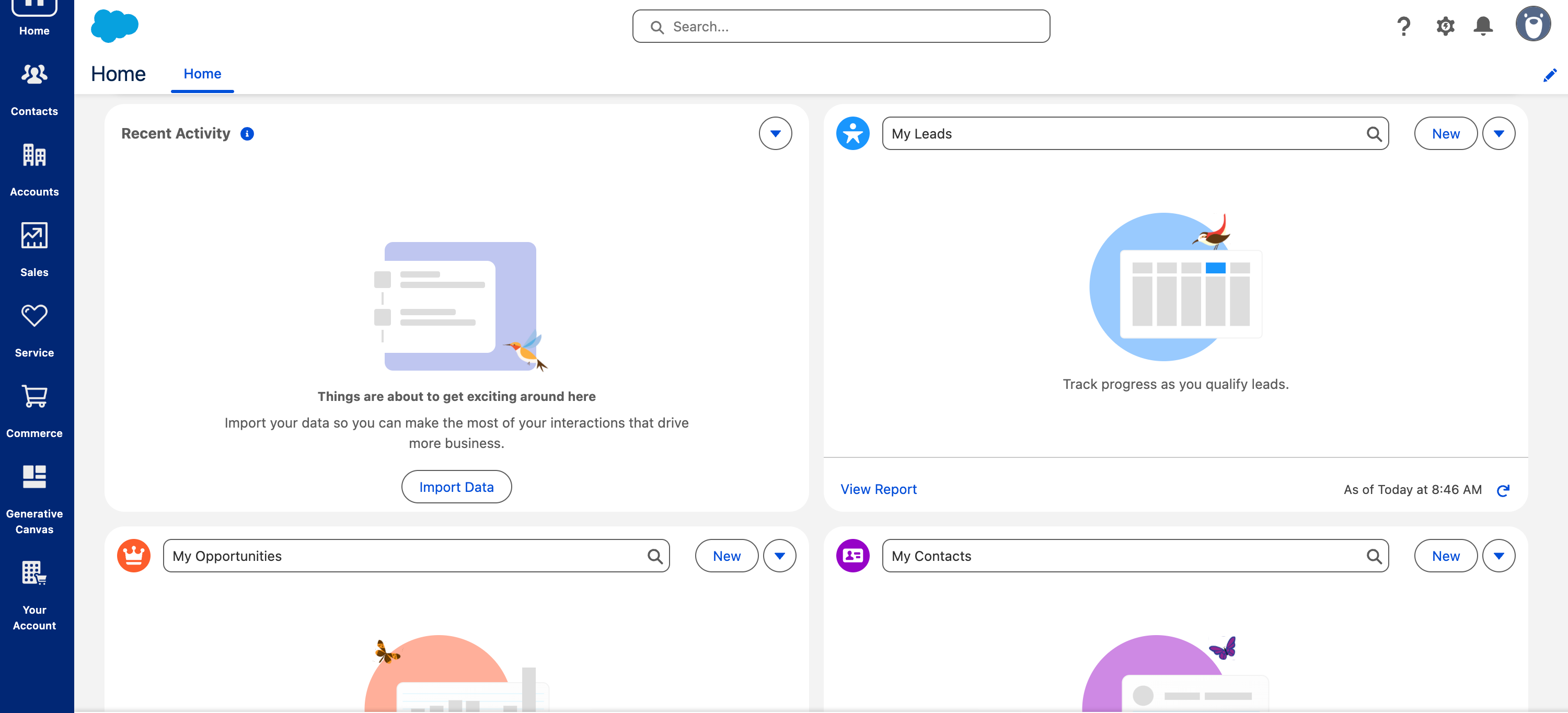
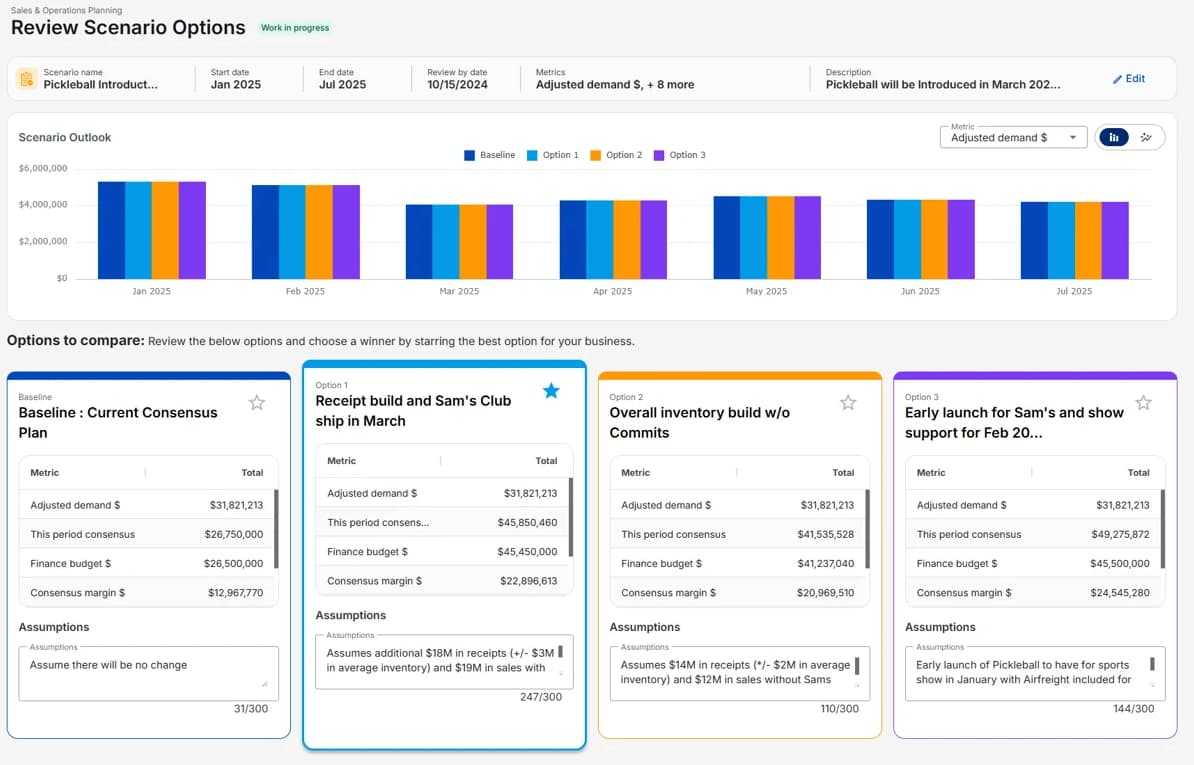
Salesforce remains the default choice for organizations prioritizing scalability. Its real-time forecasting management pulls data directly from your CRM, and Einstein Analytics applies AI to spot patterns human analysts miss. The tradeoff: complexity. Smaller teams often find themselves paying for capabilities they'll never configure.
Budget picks: Weflow and Pipedrive
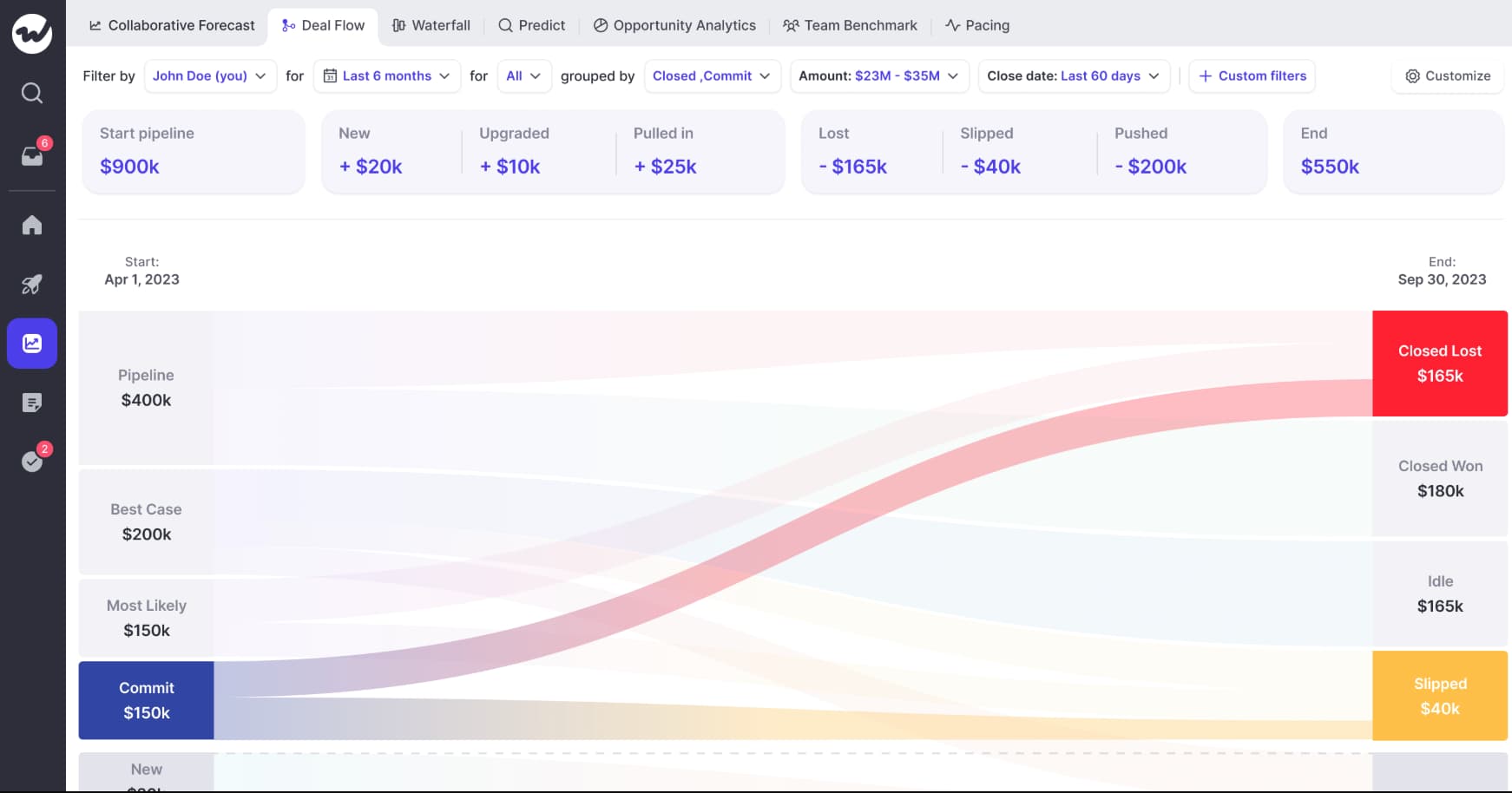
Weflow targets teams that need forecasting without enterprise pricing. It connects to your existing CRM and layers prediction tools on top, avoiding the migration headache of switching platforms entirely.
Pipedrive takes a different approach. Built for small businesses, it keeps forecasting simple and visual. Sales managers can see pipeline health at a glance without wading through configuration menus. The limitation is obvious: once you outgrow Pipedrive's capabilities, you're looking at a platform switch.
Where AI makes the biggest difference
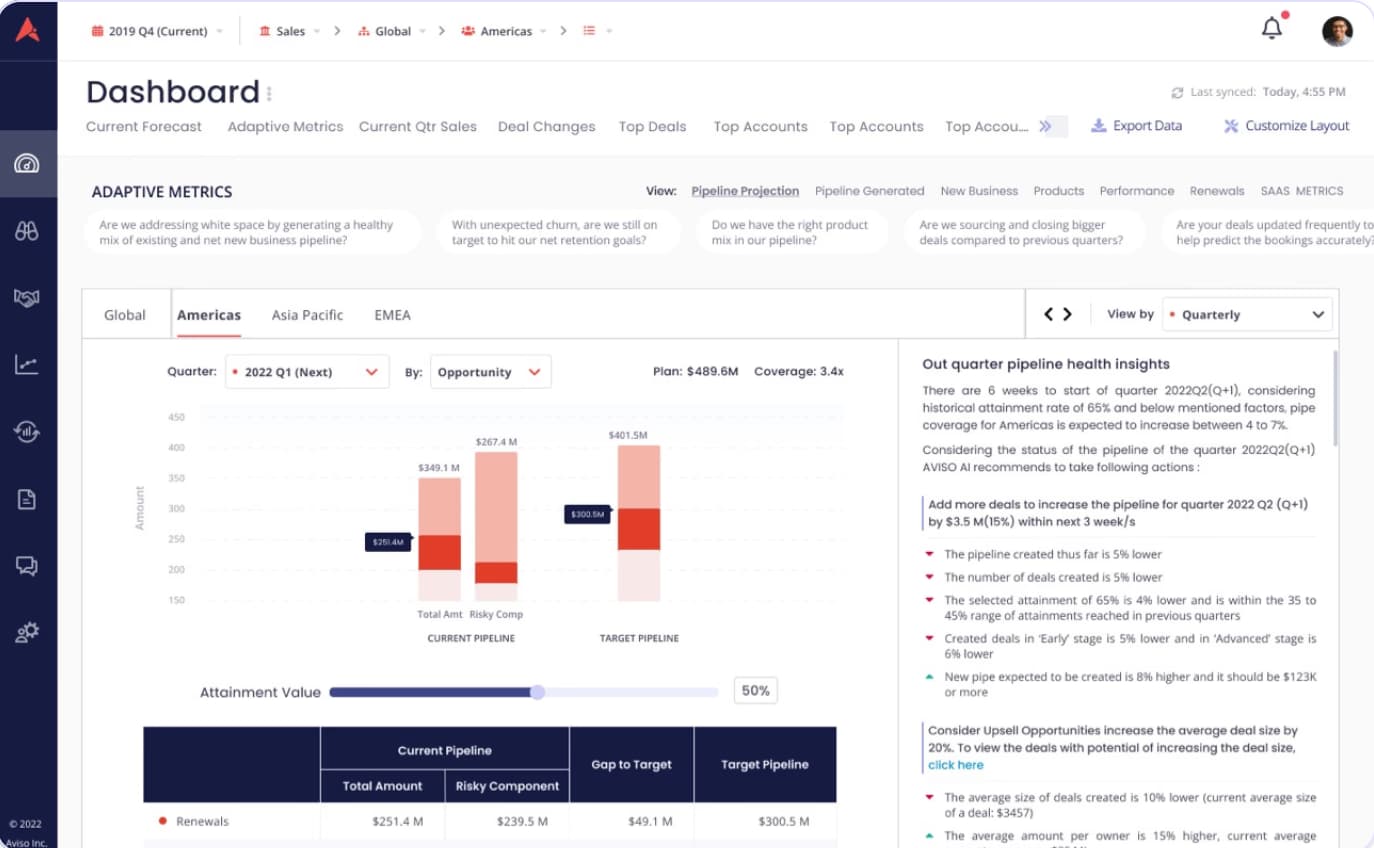
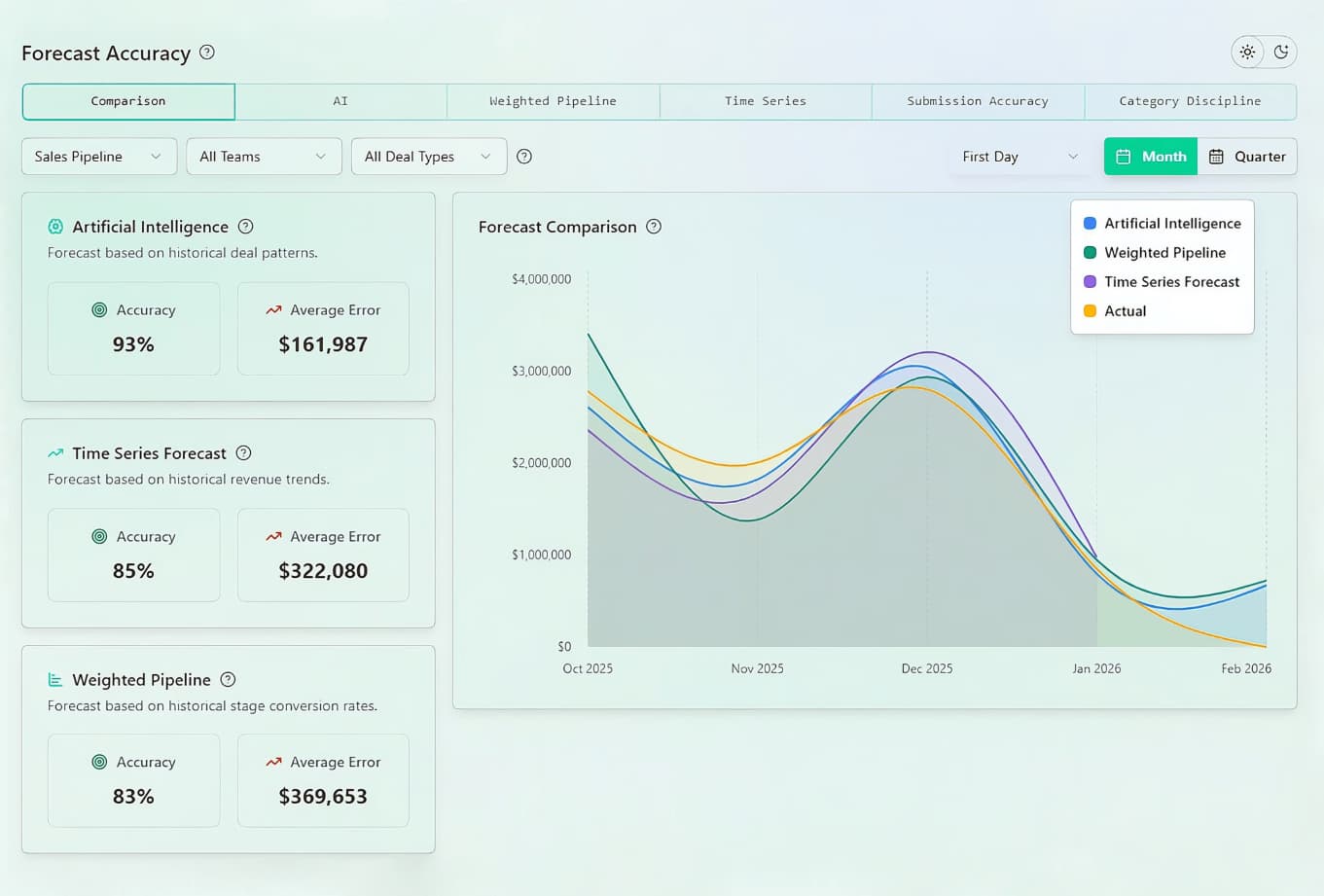
Aviso stands out for organizations betting heavily on AI-driven predictions. The platform analyzes deal velocity, rep performance, and historical close rates to generate probabilistic forecasts rather than simple weighted averages. For B2B sales cycles that stretch months, this granularity matters.
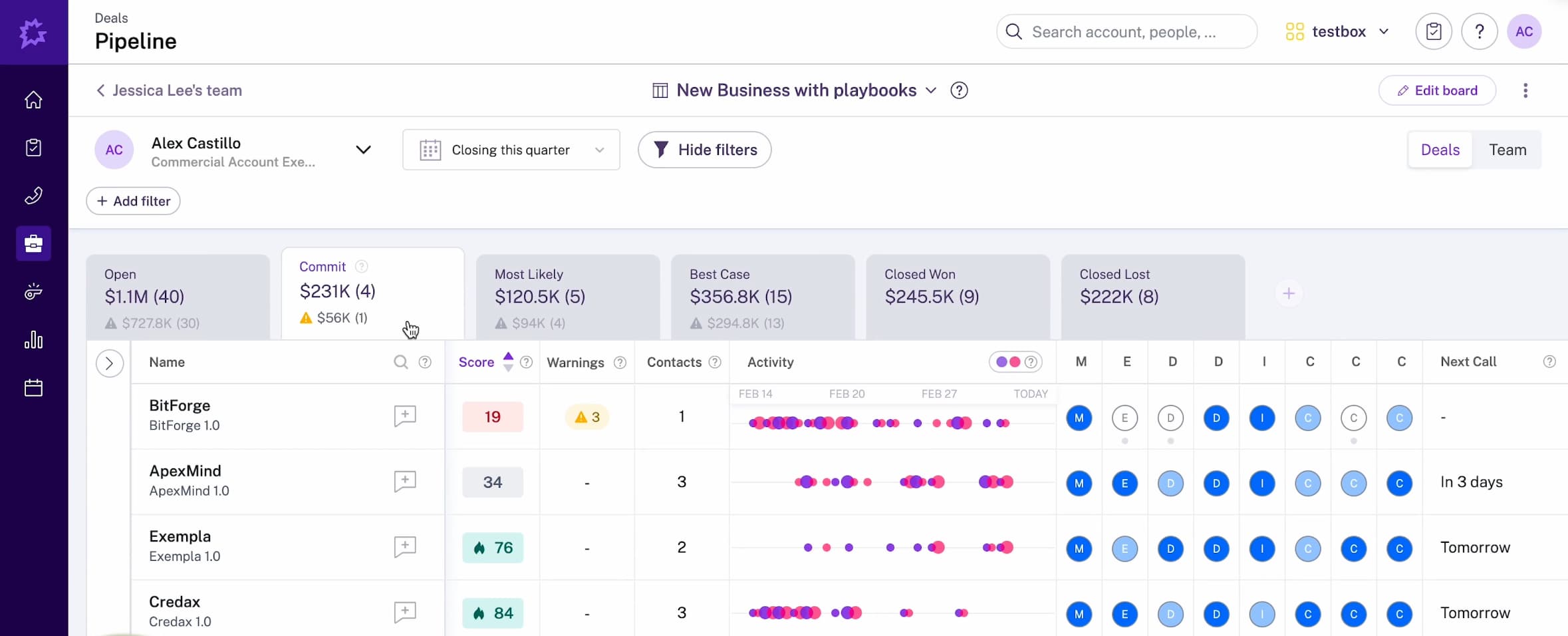
Gong takes AI in a different direction. Instead of just analyzing pipeline data, it mines sales conversations for signals. A rep who mentions competitors frequently, or a prospect whose tone shifts during pricing discussions, generates data points that traditional CRM fields miss entirely.
Specialized tools for specific needs
TransImpact goes beyond sales to comprehensive demand planning, pulling in supply chain data alongside revenue projections. Useful for manufacturing and distribution companies where inventory decisions depend on accurate sales forecasts.
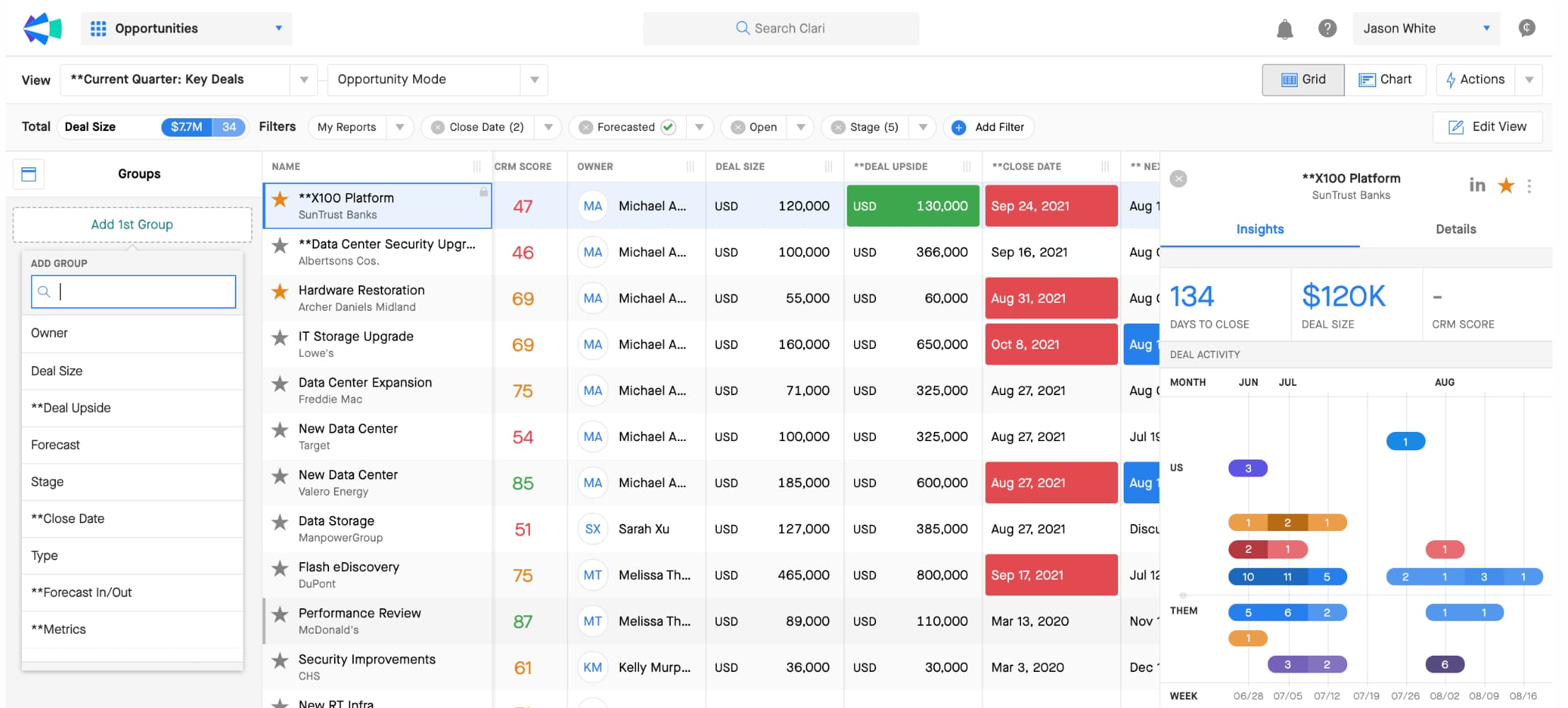
Clari focuses specifically on B2B revenue operations. The platform consolidates pipeline data across teams and applies machine learning to identify deals at risk of slipping. Sales leaders get a single view of revenue health rather than stitching together reports from multiple systems.
Forecastio exists for HubSpot shops that want forecasting without leaving their CRM. It's purpose-built for that integration, which means setup is faster than bolting on a standalone tool. The tradeoff: you're locked into the HubSpot ecosystem.
Enterprise heavyweights: SAS and IBM
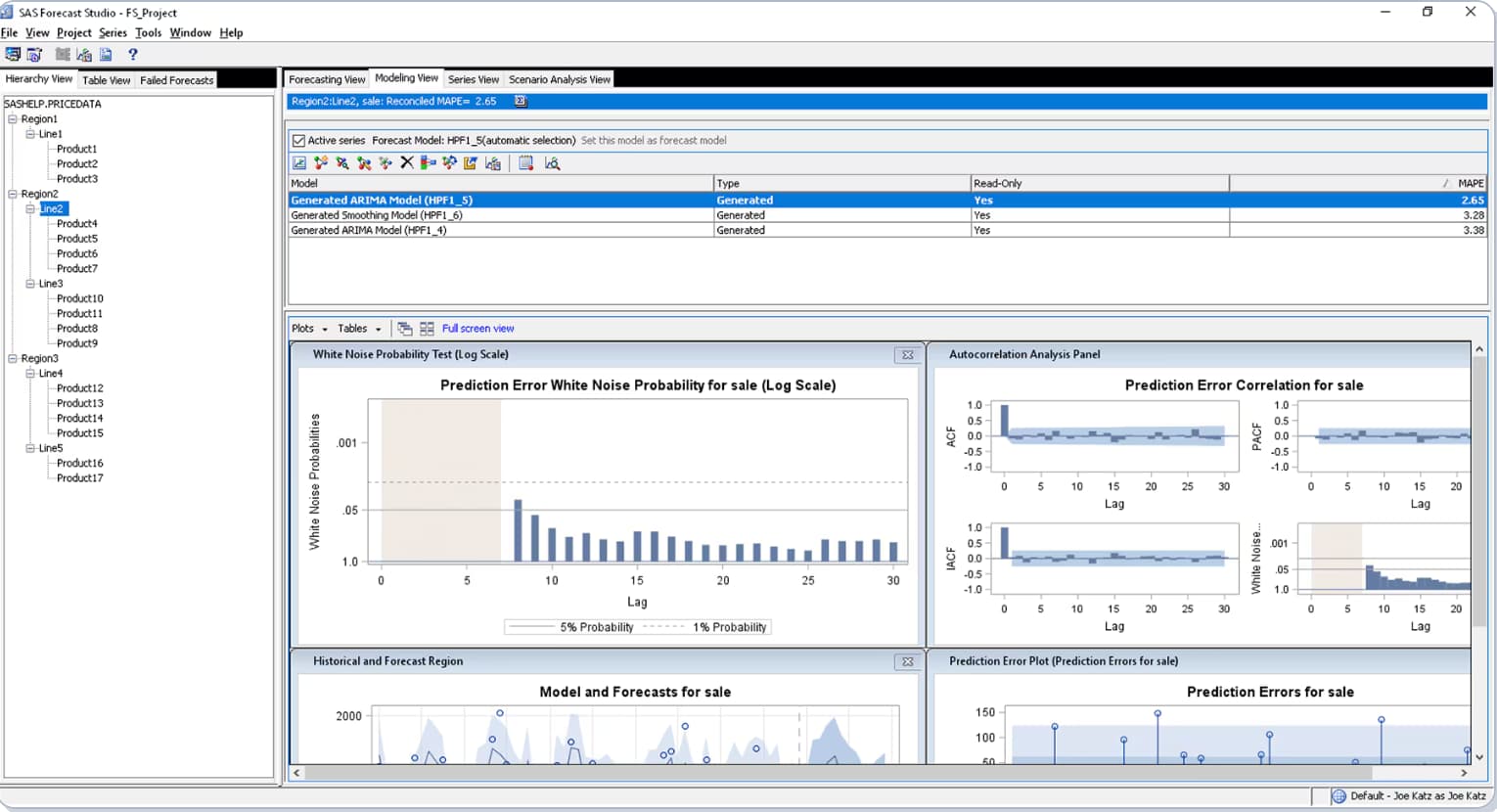
SAS Forecast Server and IBM Planning Analytics target large enterprises with dedicated analytics teams. SAS offers detailed statistical analysis for organizations that want to build custom forecasting models. IBM Planning Analytics fits into broader enterprise planning workflows, connecting sales projections to financial planning and resource allocation.
Both require significant implementation effort. These aren't tools a sales manager sets up over a weekend. They're platforms that need IT involvement, training programs, and ongoing maintenance.
What separates good forecasting from guesswork
The testing revealed five criteria that matter most. Data sourcing comes first: a forecasting tool is useless if it can't access your sales data easily, whether from a CRM, market data, or historical records. Integration depth follows. Teams don't use one tool. They run CRMs, pipeline managers, marketing automation, and yes, that spreadsheet someone built in 2007. Forecasting software needs to pull from all of it.
AI capabilities have become table stakes. Every tool on the list uses machine learning for analytics or predictions. The differentiation is in how they apply it. Some analyze pipeline data; others mine conversation transcripts or external market signals.
Ease of use often determines whether a tool gets adopted or ignored. Software that requires weeks of training rarely survives contact with a busy sales team. Finally, additional capabilities like pipeline management, performance tracking, and custom reporting extend a forecasting tool's value beyond the core prediction function.
| Tool | Best For | AI Features | Integration Depth |
|---|---|---|---|
| Salesforce | Enterprise scale | Einstein Analytics | Deep |
| Weflow | Budget teams | Basic ML | CRM-focused |
| Aviso | AI-first forecasting | Advanced predictive | Moderate |
| Pipedrive | Small business | Limited | Basic |
| Clari | B2B revenue ops | Risk detection | Deep |
| Gong | Conversation mining | NLP analysis | Moderate |
Logicity's Take
The real shift in sales forecasting isn't the AI itself. It's that forecasting is becoming embedded in revenue operations rather than living as a separate planning exercise. Tools like Clari and Gong blur the line between prediction and pipeline management. For most mid-market companies, the decision comes down to where they already store their data. If you're on HubSpot, Forecastio makes sense. If you're on Salesforce, its native tools are hard to beat. Standalone forecasting tools face an uphill battle against this platform gravity.
Frequently Asked Questions
What is sales forecasting software used for?
Sales forecasting software predicts future revenue by analyzing rep performance, sales cycle length, and historical deal data. It helps teams make data-driven decisions about resource allocation and investment priorities.
Can I use spreadsheets instead of dedicated forecasting tools?
Technically yes, but spreadsheets use static formulas while forecasting software applies flexible models and AI that adjust predictions as deals progress. Companies using ML-based tools report up to 50% fewer forecasting errors.
Which sales forecasting tool is best for small businesses?
Pipedrive offers the simplest setup for small teams with visual pipeline management and basic forecasting. Weflow provides more capabilities at a budget price point for teams that need more than Pipedrive offers.
How important are CRM integrations for forecasting accuracy?
Critical. Siloed forecasting tools that can't access your CRM data create gaps that undermine prediction accuracy. The best tools integrate with your entire tech stack including CRM, ERP, and marketing systems.
Do all modern forecasting tools use AI?
Most serious options now include AI or machine learning capabilities. The differentiation is in application: some analyze pipeline data, others mine sales conversations, and enterprise tools build custom statistical models.
Need Help Implementing This?
Choosing the right forecasting tool depends on your existing tech stack and team size. Contact our team at Logicity for guidance on evaluating platforms and integrating them with your current systems.
Source: The Zapier Blog
Huma Shazia
Senior AI & Tech Writer
Produced with AI assistance and reviewed by the Logicity editorial team. Learn more in our Editorial Policy.