Key Takeaways

- Zapier runs deterministic workflows with optional AI steps; ChatGPT runs everything through AI and consumes tokens on every action
- Zapier lets you swap between OpenAI, Anthropic, and Google models; ChatGPT locks you into OpenAI
- The strongest setup combines both: ChatGPT as the reasoning layer, Zapier as the governed automation layer
Operations teams face a practical question: should you route your automation through Zapier, through ChatGPT, or both? The tools started from opposite ends. Zapier built a deterministic workflow engine connecting 9,000+ apps via triggers and actions. ChatGPT started as a reasoning chatbot. Both have since grown agentic AI features, and the overlap has created real confusion about where each belongs in a RevOps stack.
Disclosure
Some links in this post are affiliate links — Logicity earns a commission if you sign up, at no extra cost to you. We only link products we have used or actively recommend.
The short version: Zapier automates the predictable stuff and adds AI only where you specify. ChatGPT reasons through ambiguous requests but burns tokens on every step. The cleanest architecture uses ChatGPT as the reasoning layer and Zapier as the governed execution layer underneath.
How do you actually interact with each tool?
ChatGPT lives in a chat window. You type requests in plain English, attach files, and get back summaries, analyses, code, or images. OpenAI's Codex coding agent runs even on the free tier. Business and Enterprise plans add workspace agents that pick up tasks from Slack and execute multi-step operations in the background. OpenAI calls this an "agent harness": it becomes an agent when you grant it tools and permissions.
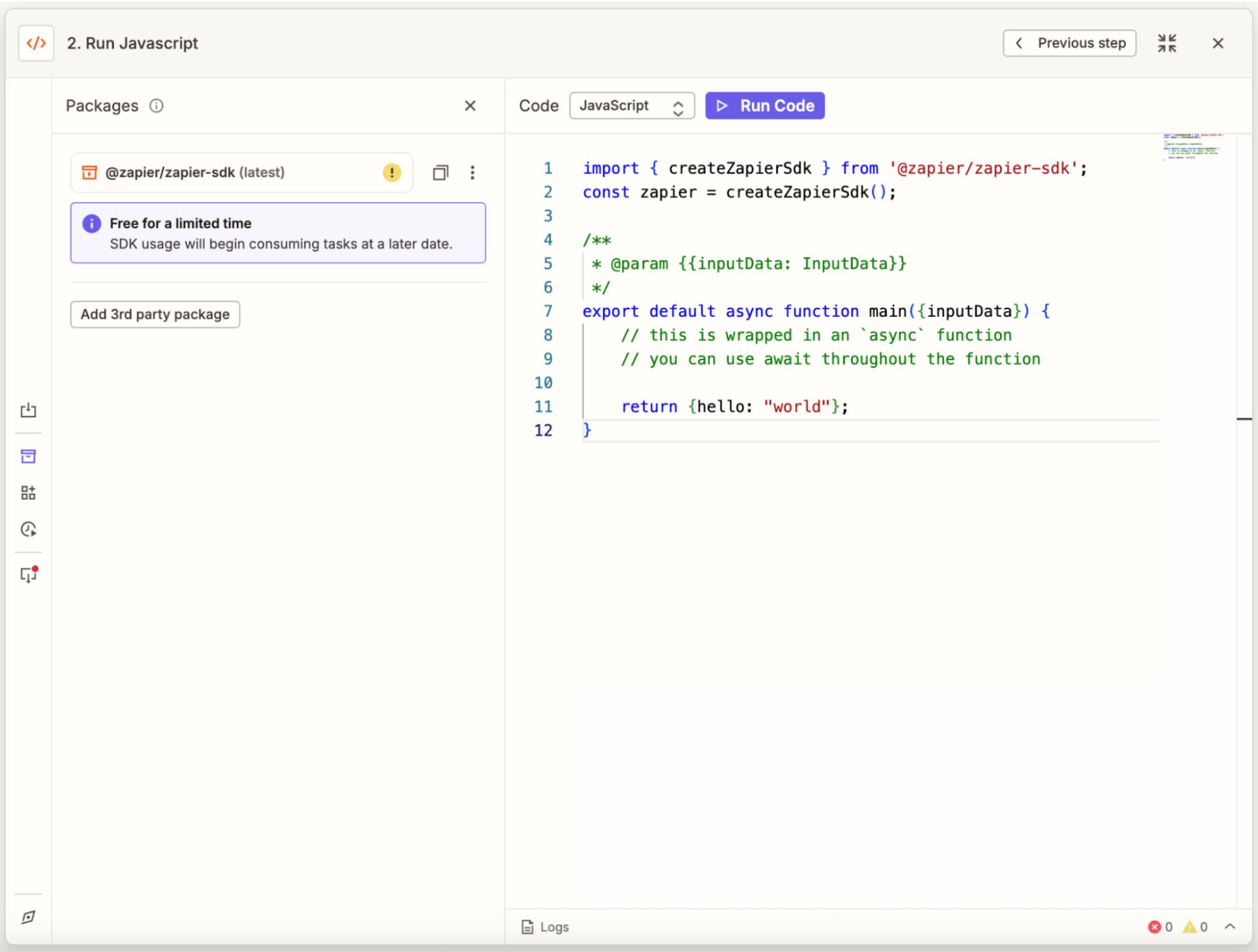
Zapier works differently. In the Zap editor, you build workflows starting with a trigger (an event or schedule) followed by actions. You can chain as many actions as you want, add conditional logic with filters or path steps, and drop in code blocks for technical flows. The AI by Zapier feature lets you slot an LLM step into exactly the part of the workflow that needs reasoning. Outside the editor, Zapier MCP and the Zapier SDK let AI tools, including ChatGPT itself, execute governed actions across your connected apps.
AI on every step vs. AI where you need it
This is the core architectural difference. ChatGPT runs every request through AI. That's powerful for ambiguous tasks, but it consumes tokens on every action. Zapier runs deterministic automation by default and adds AI only at specific nodes you define.
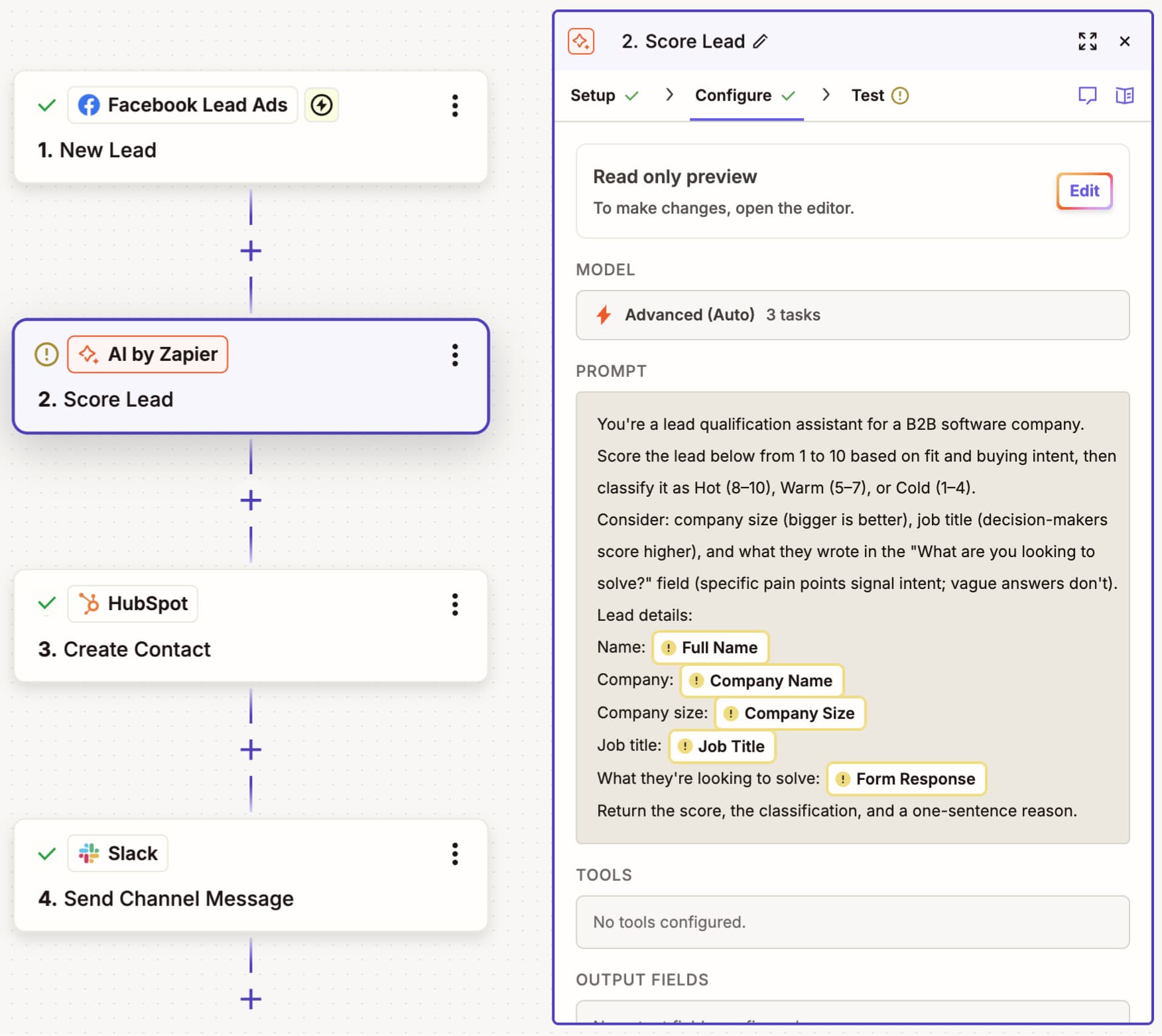
For predictable workflows, pulling leads from a CRM, routing them to sales reps, updating a spreadsheet, you don't need an LLM interpreting each step. You need a trigger-action chain that runs the same way every time. Zapier handles that at a fixed cost. ChatGPT shines when the task requires judgment: summarizing a sales call, classifying inbound tickets by urgency, or drafting a personalized follow-up email.
The token economics matter. A 50-step ChatGPT agent workflow can rack up meaningful API costs. The same workflow in Zapier, with AI only on the three steps that actually need reasoning, stays predictable.
Model flexibility: locked in vs. pick your provider
ChatGPT runs on OpenAI models. That's it. Zapier lets you switch between frontier models from OpenAI, Anthropic, Google, and other providers. Some OpenAI and Google models are included free.
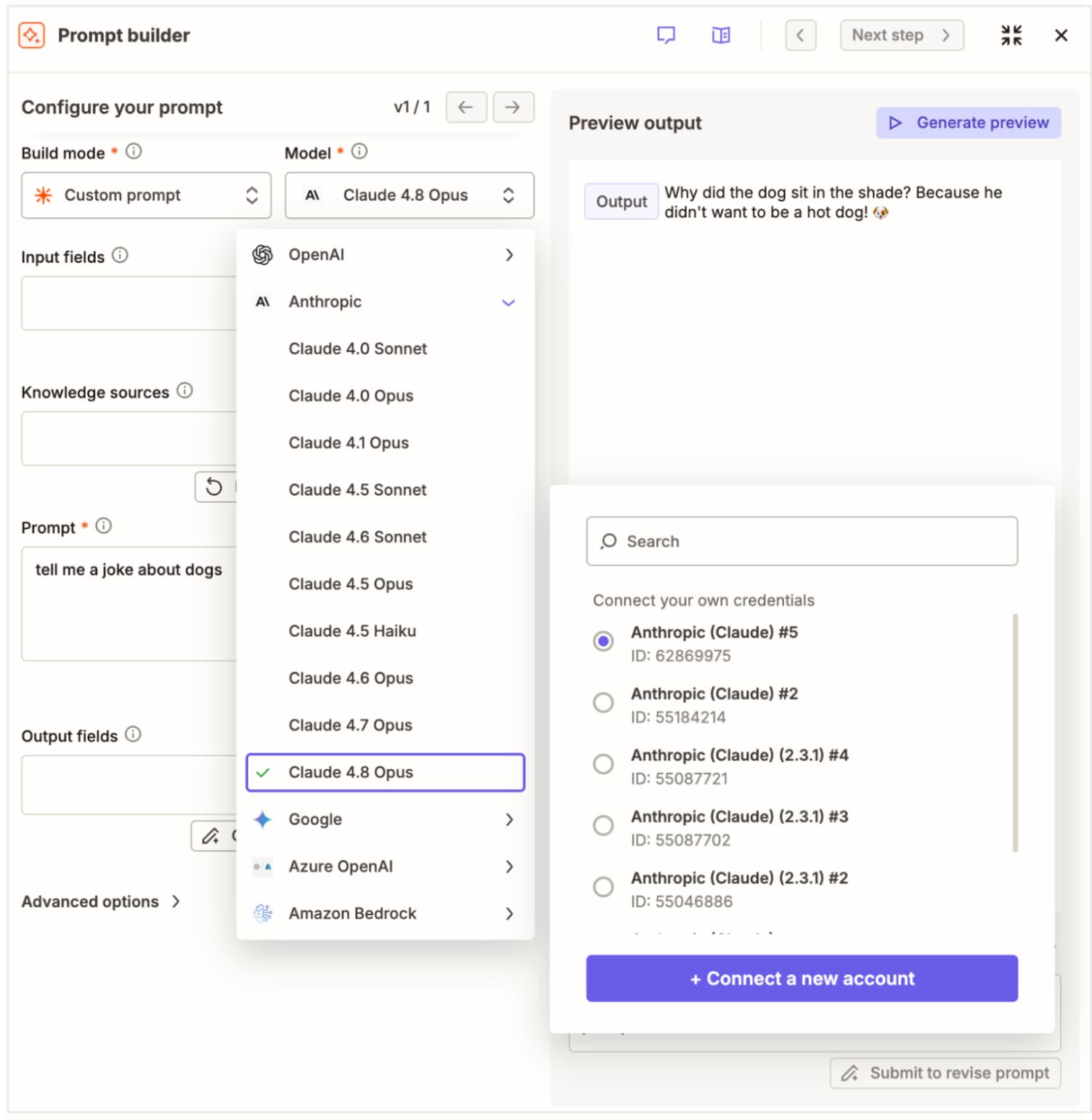
This matters for RevOps teams with specific compliance or performance requirements. If you need Claude for its longer context window on legal document review, or Gemini for cost reasons on high-volume classification tasks, Zapier accommodates that. ChatGPT does not.
Governance and enterprise controls
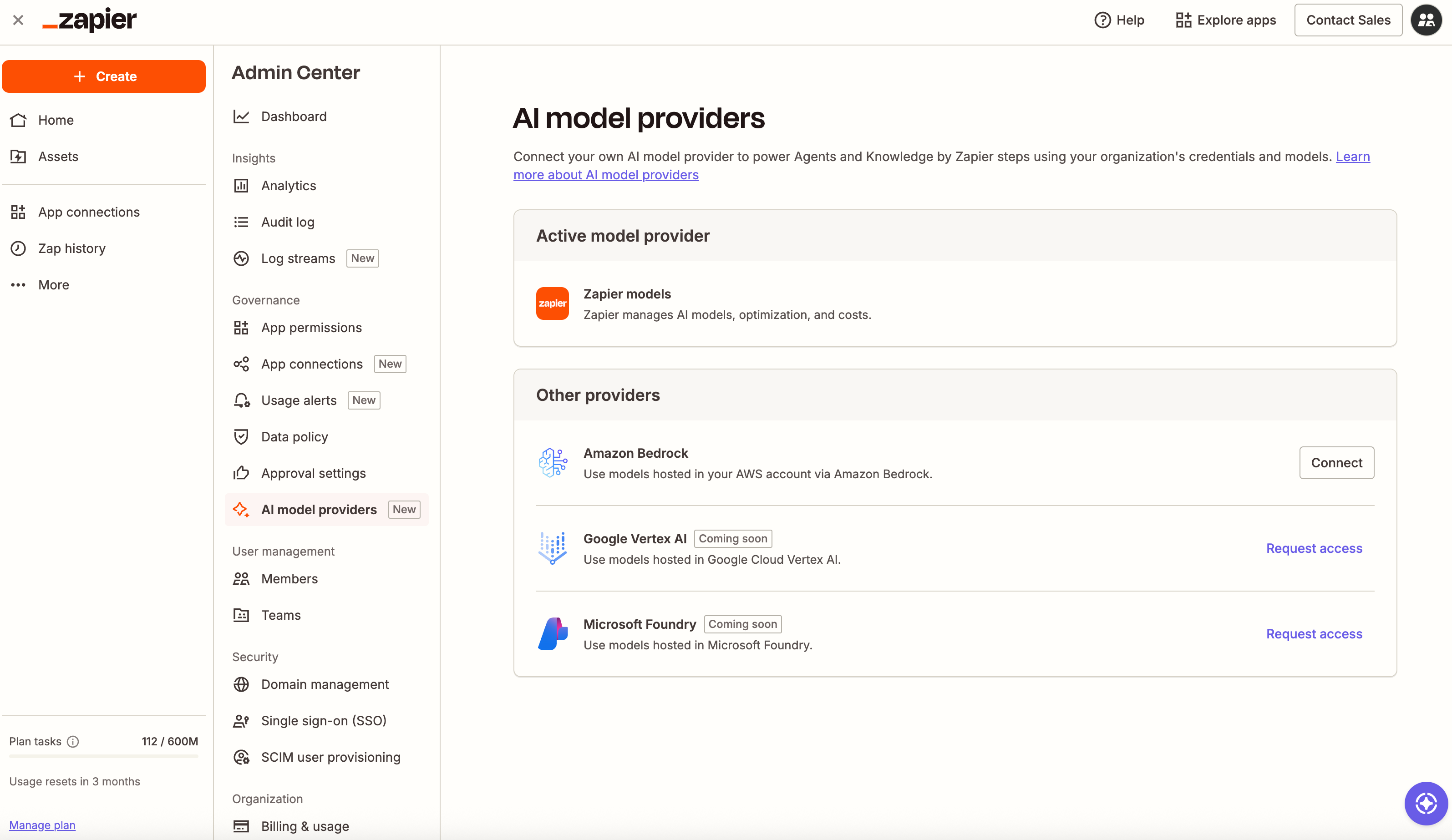
Both platforms carry SOC 2 certification and commit to not training on your business data. Zapier adds app and action permissions, an admin audit log, and Bring Your Own Model via AWS Bedrock. ChatGPT offers role-based controls and an agent activity dashboard.
One caveat: Zapier's SDK is still in open beta and not yet SOC 2 certified. If your security team requires certification end-to-end, stick to the Zap editor and MCP for now.
Pricing: predictable vs. metered
Zapier's paid plans start at $19.99/month with predictable pricing for AI steps. ChatGPT starts cheaper at $8/month, but adds metered charges for agent and Codex usage. For occasional use, ChatGPT costs less. For high-volume automation with AI sprinkled in, Zapier's flat structure wins.
| Feature | Zapier | ChatGPT |
|---|---|---|
| Best for | Governed app automation with optional AI | Conversational AI, research, writing, agents |
| AI usage model | Deterministic automation + AI where needed | Every step runs through AI |
| Model flexibility | OpenAI, Anthropic, Google, others | OpenAI only |
| Paid plans start | $19.99/month, predictable | $8/month + metered usage |
| App integrations | 9,000+ | Limited to GPT Actions ecosystem |
The best setup: ChatGPT + Zapier together
The strongest architecture uses both. ChatGPT serves as the agent harness, handling reasoning, interpretation, and generation. Zapier serves as the automation layer, executing governed actions across your stack without ChatGPT needing direct API access to every tool.
You can install Zapier directly inside ChatGPT via Zapier MCP. ChatGPT handles the conversation and decides what to do. Zapier handles the execution. This cuts token spend because Zapier runs deterministic steps without AI overhead. It also centralizes permissions management: instead of granting ChatGPT API keys to HubSpot, Salesforce, Slack, and every other tool, you grant it access to Zapier, and Zapier handles the rest under one policy.
When to use which tool
- Use ChatGPT alone when the task is primarily reasoning, writing, or research and doesn't require app integrations
- Use Zapier alone when the workflow is deterministic: lead routing, data sync, notifications, scheduled reports
- Use both when you need reasoning (ChatGPT) combined with governed execution across multiple apps (Zapier)
For RevOps specifically, most workflows fall into the third category. You want AI to interpret messy data, then reliable automation to push clean outputs to your CRM, your spreadsheets, and your team's Slack channels.
Logicity's Take
For Operations and RevOps teams, the real value isn't choosing one tool over the other. It's architecting them together. Run reasoning tasks through ChatGPT (or Claude via Zapier if you prefer Anthropic's models), then hand execution to Zapier. This keeps token costs predictable, keeps permissions centralized, and lets you swap AI providers without rebuilding workflows. If you're evaluating alternatives, [Make](https://logicity.in/r/make) offers similar multi-model flexibility at a lower price point, while [n8n](https://logicity.in/r/n8n) provides a self-hosted option for teams with strict data residency requirements.
Frequently Asked Questions
Can ChatGPT replace Zapier for automation?
Not efficiently. ChatGPT runs AI on every step, consuming tokens for tasks that don't need reasoning. Zapier runs deterministic workflows cheaply and adds AI only where you specify.
Does Zapier work inside ChatGPT?
Yes. Zapier MCP and the Zapier SDK let ChatGPT execute governed actions across 9,000+ apps directly from the chat window.
Which is cheaper for high-volume automation?
Zapier. Its pricing is flat and predictable. ChatGPT's metered agent usage can escalate costs quickly at scale.
Can Zapier use models other than OpenAI?
Yes. Zapier supports models from Anthropic, Google, and other providers. ChatGPT locks you into OpenAI models only.
Is the Zapier SDK production-ready?
It's in open beta and not yet SOC 2 certified. For compliance-sensitive use cases, stick to the Zap editor or MCP.
Need Help Implementing This?
Logicity helps RevOps teams architect AI automation stacks that combine reasoning and execution layers efficiently. Reach out if you want guidance on structuring Zapier + ChatGPT workflows for your specific tooling.
Source: The Zapier Blog
Huma Shazia
Senior AI & Tech Writer
Produced with AI assistance and reviewed by the Logicity editorial team. Learn more in our Editorial Policy.