Key Takeaways
- Ask YouTube uses Gemini AI to group videos by topic and provide text summaries alongside results
- The feature deep-links to specific timestamps but sometimes skips essential context
- Currently exclusive to YouTube Premium, with a broader rollout planned for late 2026
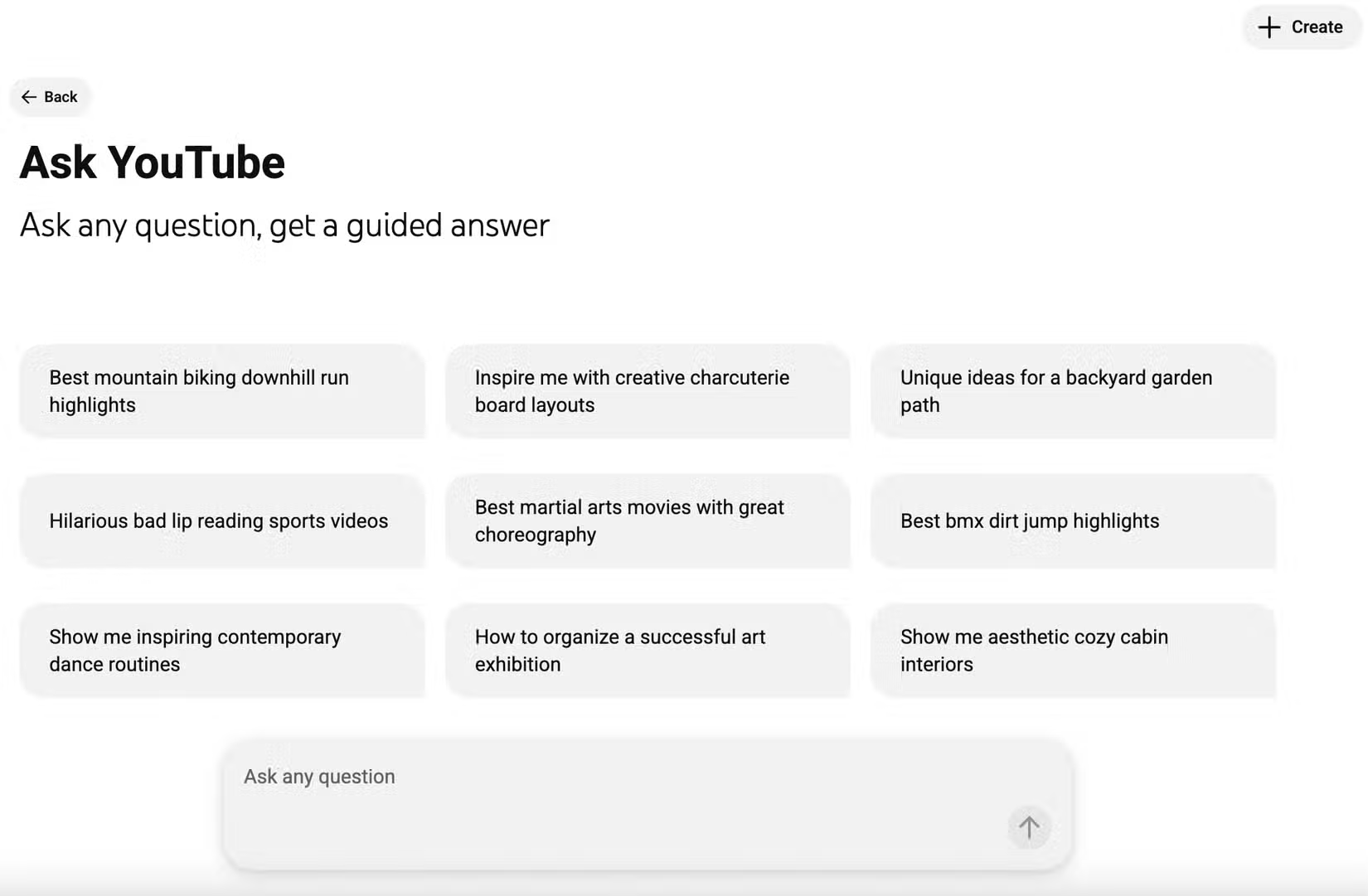
Google is changing how you find things on YouTube. At Google I/O 2026, the company announced 'Ask YouTube,' a search feature powered by Gemini AI. Instead of matching keywords, it understands your question and jumps you to the exact moment in a video where you'll find your answer.
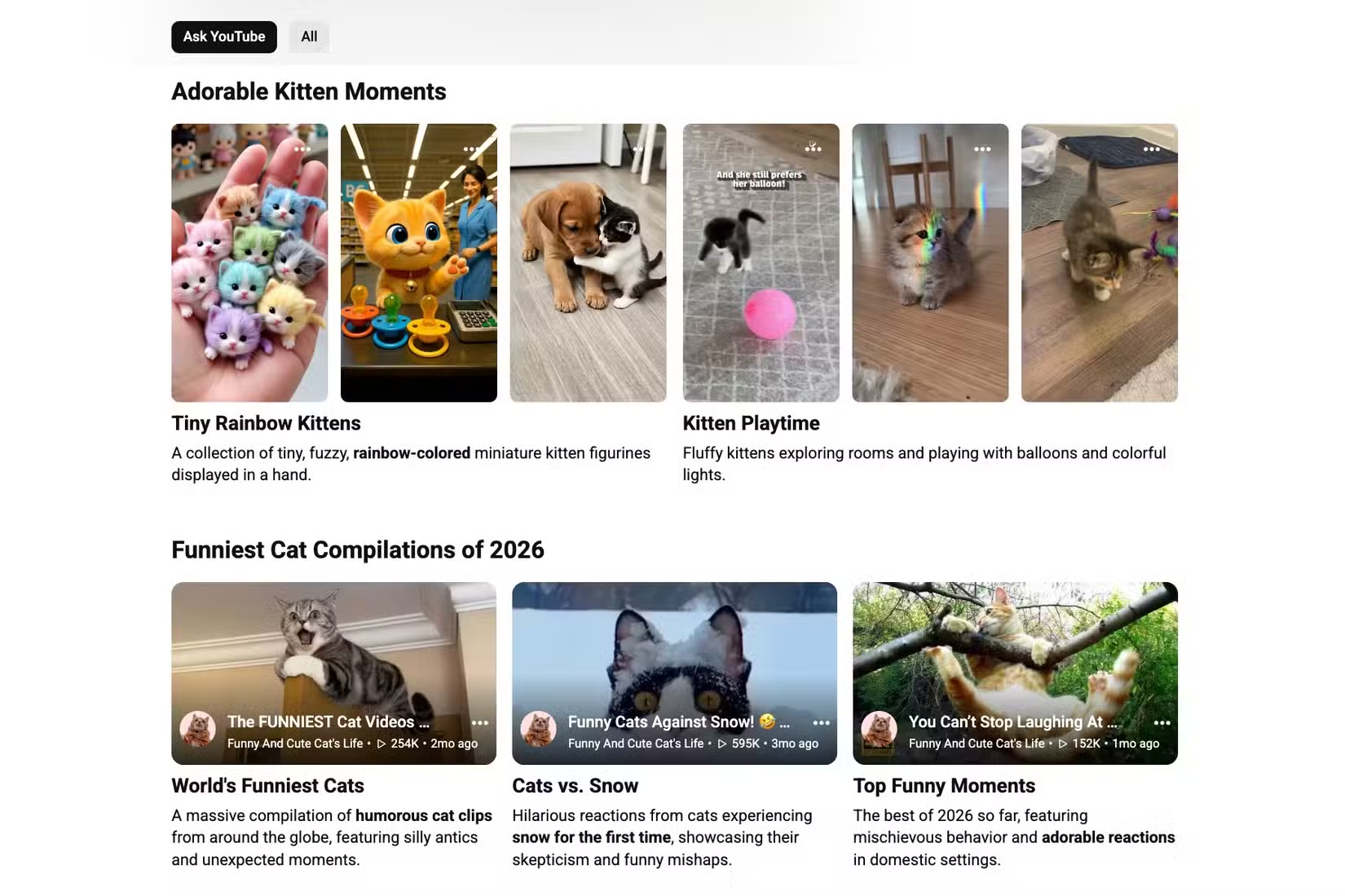
The pitch is simple. Type a question like 'How do I remove background noise in Premiere Pro?' and YouTube won't just list videos with those words in the title. It will show you grouped results with categories like 'Step-by-Step Noise Reduction Methods' and 'Advanced Cleanup and Finishing Touches.' Each video gets a text description explaining what it covers. Click one, and playback starts at the timestamp Gemini thinks answers your question.
“We are making information much more digestible, helping you get the answers you need without having to hunt through multiple videos.”
— Sundar Pichai, CEO of Google
The feature is available now in the US for YouTube Premium subscribers. Google says it will expand to free users later this year.
How It Works in Practice
Tech journalist Dan Selcke tested Ask YouTube with a specific video editing question. The standard YouTube search returned a list of videos matching his query. Ask YouTube returned the same videos but organized them into logical groupings with brief descriptions.
The real selling point is the timestamped deep-linking. When Selcke clicked a video about removing background noise in Premiere Pro, it started playing about one minute in, at the point where the creator explains what button to click.
Here's the problem: the video started after the creator explained where to find that button. The context Selcke needed was in the first 60 seconds, which Gemini skipped. He had to scrub back anyway.
This is a fundamental tension in the feature's design. Jumping to the 'answer' assumes the question exists in isolation. But tutorials often build on earlier steps. Skip the foundation, and the answer stops making sense.
A Shift from Keywords to Intent
Ask YouTube represents a significant change in how video search works. Traditional YouTube search matches words in your query against video titles, descriptions, and transcripts. Gemini attempts to understand what you're actually trying to accomplish.
The difference matters for complex queries. 'Remove background noise Premiere Pro' and 'How do I make my podcast audio sound cleaner when recording with a cheap mic in a noisy room?' are different questions. Traditional search treats them similarly. Gemini can, in theory, parse the nuance.
Google's internal testing showed a 25% increase in user engagement when people used AI-driven search prompts. The company also claims users save an average of 30 seconds per complex query thanks to the timestamped links.
What Creators and Users Are Saying
Reddit users on r/technology have welcomed the convenience of timestamped deep-links, especially for tutorials. But there's a recurring concern: if users skip directly to answers, they skip ads. That could hurt creator revenue.
On HackerNews, the discussion has focused on AI reliability. Gemini summarizes video content to generate its groupings and descriptions. If those summaries are wrong, users get pointed to the wrong timestamps. LLM hallucinations in search results could erode trust in the feature.
These aren't hypothetical problems. Selcke's test case, a straightforward video editing question, already surfaced the timestamp accuracy issue. More ambiguous queries could produce worse results.
Premium Now, Everyone Later
Google is positioning Ask YouTube as a Premium perk. With over 100 million Premium subscribers as of mid-2026, that's a sizable test audience. The company can gather feedback and refine the feature before the broader rollout.
For Premium subscribers evaluating whether the subscription is worth it, Ask YouTube adds to the value proposition alongside ad-free viewing, background playback, and YouTube Music access.
A deeper look at what Premium subscribers actually get for their money
Where This Could Go
The underlying technology is part of Google's broader push to embed Gemini across its products. Search, Gmail, Docs, and now YouTube are all getting AI-powered features that attempt to understand user intent rather than just match keywords.
If Ask YouTube works well, expect similar features on other video platforms. TikTok and Instagram already use AI for content recommendations. Search-based discovery with conversational queries is a logical next step.
The bigger question is whether users will trust AI-curated results. Google's traditional search has faced criticism for promoting sponsored content and SEO-gamed pages. YouTube's algorithm has been criticized for recommendation rabbit holes. Ask YouTube adds a new layer of AI interpretation. That's either a more helpful interface or another point of failure, depending on how well Gemini performs.
Logicity's Take
Frequently Asked Questions
What is YouTube's Ask YouTube feature?
Ask YouTube is a Gemini AI-powered search function that understands natural language questions, groups video results by topic, and deep-links to specific timestamps where your question is answered.
Is Ask YouTube available to all users?
No. It's currently limited to YouTube Premium subscribers in the US. Google plans to roll it out to free users later in 2026.
Does Ask YouTube always jump to the right part of a video?
Not always. Testing shows the feature sometimes skips important context that comes before the 'answer,' requiring users to scrub back manually.
Will Ask YouTube affect creator ad revenue?
Potentially. If users skip directly to timestamped answers, they may bypass mid-roll ads. This concern has been raised by creators and discussed on Reddit.
How is Ask YouTube different from regular YouTube search?
Regular search matches keywords. Ask YouTube uses Gemini AI to understand the intent behind your question, group results into categories, and provide text summaries alongside videos.
Need Help Implementing This?
Source: MakeUseOf
Manaal Khan
Tech & Innovation Writer
Produced with AI assistance and reviewed by the Logicity editorial team. Learn more in our Editorial Policy.