Key Takeaways
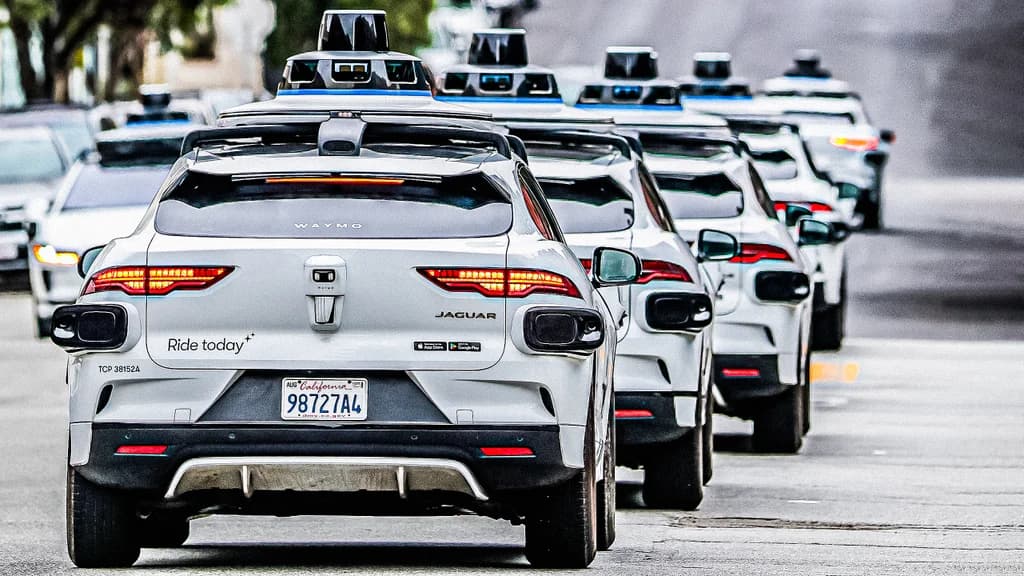
- Waymo vehicles caused gridlock near San Francisco's July 4 fireworks, with some requiring towing after batteries died
- City officials remain frustrated with Waymo's performance during chaotic events despite a new emergency-response arrangement
- The incident highlights a core challenge: autonomous systems that work 99% of the time can still create chaos at scale during edge cases
Waymo vehicles clogged San Francisco streets during the city's July 4 fireworks celebration, with a string of robotaxis apparently unaware of event-related road closures. Some autonomous vehicles ran out of battery and needed towing. At least one Waymo drove straight through a firework. The incident, documented in videos posted online, raises pointed questions about whether autonomous vehicle systems can handle the unpredictable chaos that human drivers navigate routinely.
This is not a one-off glitch. It's a pattern. And for AI teams building autonomous systems, the lesson is clear: edge cases at scale become fleet-wide failures.
What happened on July 4?
Waymo's autonomous vehicles encountered road closures near San Francisco's northern waterfront that the company says were not communicated in advance. The cars, unable to process the unexpected barriers, contributed to severe gridlock. Some vehicles sat so long their batteries died, requiring roadside assistance to tow them out. One Waymo drove directly through an active firework, captured on video by onlookers.
Waymo said many vehicles eventually navigated away once congestion cleared, and noted that its cars are trained to respond to fireworks. But city officials are not satisfied. One San Francisco official told Fast Company that local government remains frustrated with how Waymo vehicles perform during chaotic events. The official questioned whether an emergency-response arrangement implemented after a blackout in December 2024 was sufficient.
Under that plan, a Waymo employee is stationed at the city's emergency response department. Waymo confirmed an employee was on site July 4 and "served as a key resource during the event." The company pointed to successful operations during other large gatherings, including the Super Bowl in Santa Clara and SXSW in Austin.
Why edge cases matter more at scale
Waymo's technology is genuinely impressive under normal conditions. The vehicles navigate city streets smoothly, yield to cyclists, and handle complex intersections with no human driver. But as Waymo has removed precautionary safety drivers and expanded to fully driverless operations across San Francisco, Phoenix, Los Angeles, and Austin, the stakes of failure have changed.
Bryant Walker Smith, a law professor at the University of South Carolina who specializes in autonomous vehicle law, has framed the problem succinctly: "The challenge isn't the technology working 99% of the time. It's that 1% that creates chaos at scale." When you have 700+ vehicles in one city completing 150,000+ paid rides per week, a rare failure mode stops being rare. It becomes a weekly occurrence.
This is not unique to Waymo. Any autonomous system faces the same math. The problem is that most AI teams optimize for average-case performance, not worst-case resilience. Fireworks, unexpected road closures, and mass gatherings are not average cases. They are precisely the scenarios where human judgment fills gaps that sensor data cannot.
The communication breakdown
Waymo's statement blamed road closures that "had not been communicated." This is plausible. City event planning often involves last-minute changes, and no autonomous vehicle company has real-time access to every traffic barrier a crew drags into place at 6pm. But it's also a deflection. Human drivers encounter uncommunicated road closures constantly. They see the barrier, process the crowd, hear the fireworks, and route around.
The question for Waymo is whether the vehicle's sensors and decision systems should have recognized the situation independently. A line of stopped cars, pedestrians in the roadway, and literal explosions overhead are strong signals that something unusual is happening. If the vehicles cannot synthesize those signals into "find another route," the communication excuse only goes so far.
A pattern, not an anomaly
This is not Waymo's first high-profile incident in San Francisco. In February 2024, a crowd vandalized and set fire to a Waymo vehicle in Chinatown during Lunar New Year celebrations. The company has faced ongoing criticism about vehicles blocking traffic, hesitating at intersections, and struggling with construction zones. Each incident is defensible in isolation. Taken together, they suggest autonomous vehicles still lack the contextual awareness to handle urban chaos.
Missy Cummings, a former NHTSA senior safety advisor and robotics professor at George Mason University, has noted that "autonomous vehicles represent an amazing technology, but they still struggle with edge cases that human drivers navigate intuitively." The July 4 incident is Exhibit A.
What Waymo says it's doing
In its statement, Waymo emphasized coordination with local authorities and emergency services. The company's roadside assistance team "worked quickly to clear our vehicles from the area." Waymo said its team is "always evaluating ways to strengthen Waymo's resilience in major traffic disruptions." The company also noted that vehicles are trained to respond to fireworks, suggesting the direct drive-through was not expected behavior.
“Our priority is keeping San Francisco moving safely, especially during major city celebrations. On July 4th, extreme traffic congestion in Northern San Francisco disrupted normal operations for several Waymo vehicles.”
— Waymo spokesperson
The statement reads as damage control. It acknowledges the problem without explaining what specific changes will prevent recurrence. For a company that has raised $5.6 billion from Alphabet and operates the largest commercial robotaxi service in the US, the response feels thin.
Logicity's Take
For AI builders, Waymo's July 4 failure illustrates a fundamental tension: autonomous systems optimize for defined conditions, but the real world is full of undefined ones. Edge-case handling is not a nice-to-have feature; it's where public trust lives or dies. Teams building any autonomous product, from robotaxis to delivery drones to warehouse robots, should stress-test against adversarial scenarios: What happens when inputs conflict? When external data is missing? When the environment changes faster than the model can update? The companies that solve resilience at scale, not just accuracy in testing, will own the next decade of autonomy.
Frequently Asked Questions
How many Waymo vehicles operate in San Francisco?
Waymo operates an estimated 700+ vehicles in San Francisco alone, part of a fleet that completes over 150,000 paid rides per week across four US cities.
What caused Waymo vehicles to get stuck on July 4?
Waymo says road closures for the fireworks celebration were not communicated to its system in advance. The vehicles encountered unexpected barriers and could not route around the congestion.
Has Waymo had problems during events before?
Yes. In February 2024, a Waymo vehicle was vandalized and set on fire during Lunar New Year in Chinatown. The company has faced ongoing criticism about vehicles blocking traffic and struggling with construction zones.
What is Waymo doing to prevent future incidents?
Waymo has stationed an employee at San Francisco's emergency response department and says it is evaluating ways to improve resilience during major traffic disruptions. Specific technical changes have not been disclosed.
Need Help Implementing This?
Building autonomous systems that handle edge cases? Logicity covers the tools, frameworks, and strategies AI teams use to ship resilient products. Subscribe to our newsletter for weekly analysis on what's working in production AI.
Source: Fast Company / Rebecca Heilweil
Manaal Khan
Tech & Innovation Writer
Produced with AI assistance and reviewed by the Logicity editorial team. Learn more in our Editorial Policy.