Key Takeaways
- Aina raised $5.5M from Redstart Labs, 360 ONE, and angel investors including WhatsApp head Kunal Shah
- The startup's thesis: passive context capture is solved; the next interface needs to trigger AI actions
- First product Dune ships as a three-key macro keyboard; a second 'agentic' device is in testing
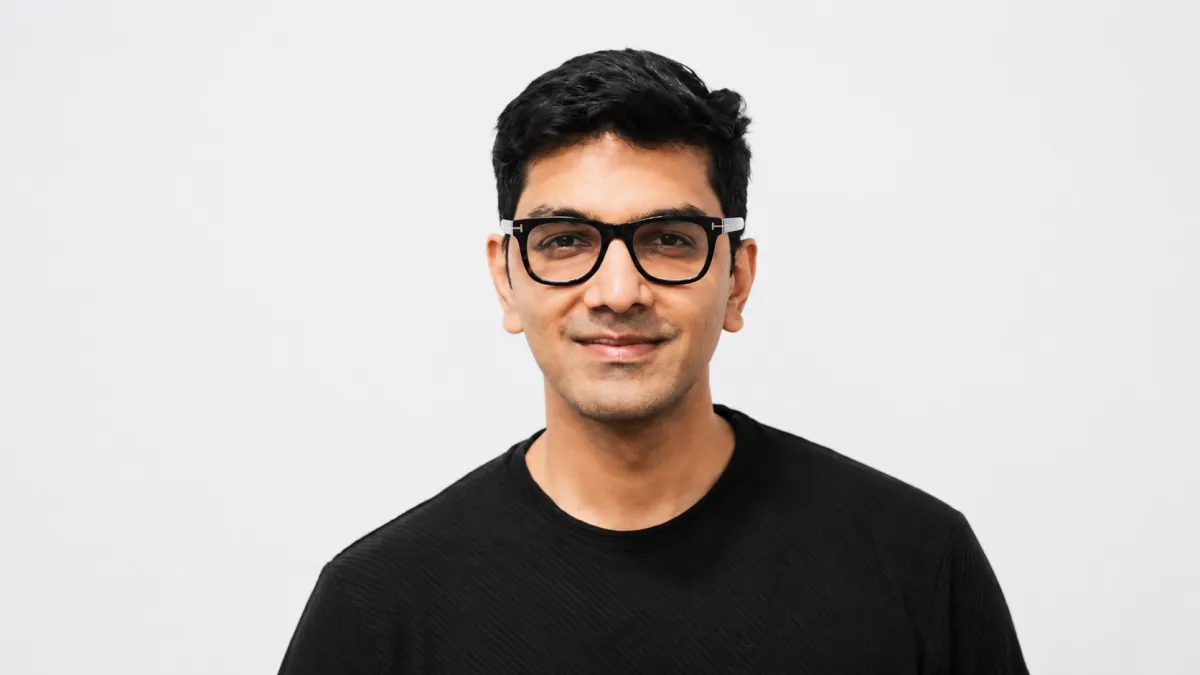
Apoorv Shankar spent years at Ultrahuman building smart rings that track your body. Now he's betting that the next AI interface won't record what you do. It will act on your behalf. His new startup Aina just raised $5.5 million to prove it.
The seed round was led by Redstart Labs (Info Edge India) and 360 ONE, with participation from MIXI Global Investments, Antler, and Blume Founders Fund. The angel list reads like an Indian tech all-star roster: newly appointed WhatsApp head Kunal Shah, Razorpay co-founders Harshil Mathur and Shashank Kumar, and Scribd founder Tikhon Bernstam.
What is Aina actually building?
Aina, previously known as Project Mirage, is based in Bengaluru and San Francisco. The company built three prototype devices and let early users pick a winner.
First, there's Dune: a three-key, context-aware macro keyboard. It controls your meeting mic and camera and runs shortcuts or scripts based on which app is in focus. Think of it as a programmable keypad that knows what you're doing on screen.
Second, Radiance: a tabletop remote for video calls with a dial for volume plus buttons for mic, camera, AI notetaker, voice modulation, and joining meetings. Third, Shift: a single-tap button that triggers an AI agent to execute a repeated task via your phone.
Dune won. Users gravitated toward the keypad, and Aina realized it could roll features from Radiance and Shift into the same form factor. So Dune ships first while the company watches how people actually use it.
Why Shankar left Ultrahuman
Before joining Ultrahuman, Shankar ran LazyCo, a hardware interface startup that made a ring for controlling smartphones. Ultrahuman acquired LazyCo and brought him in as VP of Hardware. He left last year.
“I left Ultrahuman last year because I was just super curious about the space of AI interfaces. Devices like Rabbit and Humane Pin had launched, and I had my own disappointments with them. However, I was just excited that we are seeing interfaces being a thing now.”
— Apoorv Shankar, founder of Aina
His disappointment points to a common critique of the current AI hardware wave. The Rabbit R1 and Humane AI Pin generated hype but shipped with limited functionality. Shankar's bet: the problem isn't the hardware. It's the paradigm. Most devices try to capture context, whether through always-on mics, camera recordings, or meeting transcriptions. But your phone and laptop already have that context. The missing piece is a physical trigger to act on it.
The 'agentic' device thesis
Shankar is explicit about what Aina is not building. No passive "context capture" gadget. No always-listening ring. No Plaud-style meeting notetaker that just records what's happening around you.
“I think you have enough context, you have in your phone and your laptop all the time, and we haven't even started using that well. We are building an action-oriented device that will use the context to help you control and trigger workflows.”
— Apoorv Shankar
The timing aligns with a broader shift in how developers interact with AI. Tools like Claude Code and OpenAI's Codex are moving from chat interfaces to persistent agents that run tasks in the background. These agents need triggers. OpenAI itself released a custom keypad for Codex this week, built with Work Louder. Qualcomm says it's experimenting with more than 40 device form factors for AI interaction.
A crowded field without a clear winner
The list of competitors is long and growing. On the wearable side: the Sandbar ring, Plaud's AI pin and desktop notetaker, Pocket's credit card-sized pucks, Bee, Friend, Meta Ray-Bans, and Even Realities smart glasses. On the desktop side: macro keyboards from Work Louder, DIY enthusiasts building their own controllers, and reports that OpenAI is developing a smart speaker with a built-in AI assistant.
No form factor has won. Ring, pin, glasses, keypad, speaker. They're all in play. Aina's bet is that the keypad, positioned on your desk where you actually work, has an advantage: it's always in reach when you're in front of a computer, which is when most knowledge workers need to trigger AI workflows.
The company isn't revealing details of its next device, but Shankar confirmed it will begin testing with a small group of users in the coming weeks. The goal: learn what tasks people actually want to automate before committing to a form factor.
The investor signal
The round's composition matters. Kunal Shah is now running WhatsApp, which is itself becoming an AI agent interface in many markets. The Razorpay founders have seen how fintech workflows benefit from automation. Scribd's founder knows content-heavy workflows. These aren't passive checks. They're bets that AI agent control will become a real product category.
Logicity's Take
Aina's thesis is contrarian in a useful way. Most AI hardware startups assume the bottleneck is data capture. Shankar argues the bottleneck is action. If he's right, the winner won't be whoever records the most context but whoever makes triggering AI agents feel as natural as hitting a keyboard shortcut. The $5.5M is modest compared to Humane's $230M or Rabbit's $30M, but that's arguably an advantage: Aina can ship fast, learn from real users, and iterate without the pressure of justifying a massive valuation. For CTOs evaluating AI tooling, the question isn't whether to adopt agent-based workflows. It's how your team will invoke them. A dedicated physical trigger, positioned where work happens, may beat voice commands or app-switching.
Frequently Asked Questions
What is Aina's Dune device?
Dune is a three-key, context-aware macro keyboard that controls your meeting mic and camera and runs shortcuts or scripts based on the app you're currently viewing. It's designed to trigger AI agent workflows rather than just record context.
Who founded Aina and what's their background?
Aina was founded by Apoorv Shankar, former VP of Hardware at smart ring maker Ultrahuman. Before Ultrahuman, he ran LazyCo, a hardware interface startup that Ultrahuman acquired.
How does Aina differ from Rabbit R1 or Humane AI Pin?
Unlike Rabbit and Humane, which focus on voice-based AI interaction and context capture, Aina is building devices specifically to control and trigger AI agents. The thesis is that context already exists on your phone and laptop; what's missing is a physical way to invoke actions.
Who invested in Aina's $5.5M seed round?
The round was led by Redstart Labs and 360 ONE, with participation from MIXI Global Investments, Antler, and Blume Founders Fund. Angel investors include WhatsApp head Kunal Shah, Razorpay co-founders Harshil Mathur and Shashank Kumar, and Scribd founder Tikhon Bernstam.
When will Aina's next device be available?
Aina plans to begin testing its next agentic device with a small group of users in the coming weeks. No public release date has been announced.
Context on the broader funding environment for Asian hardware startups
Another major AI seed round this quarter
Need Help Implementing This?
If your team is evaluating AI agent workflows or hardware interfaces for productivity automation, Logicity's consulting network can connect you with implementation partners. Contact us at consulting@logicity.in.
Source: TechCrunch / Ivan Mehta
Huma Shazia
Senior AI & Tech Writer
Produced with AI assistance and reviewed by the Logicity editorial team. Learn more in our Editorial Policy.