Key Takeaways
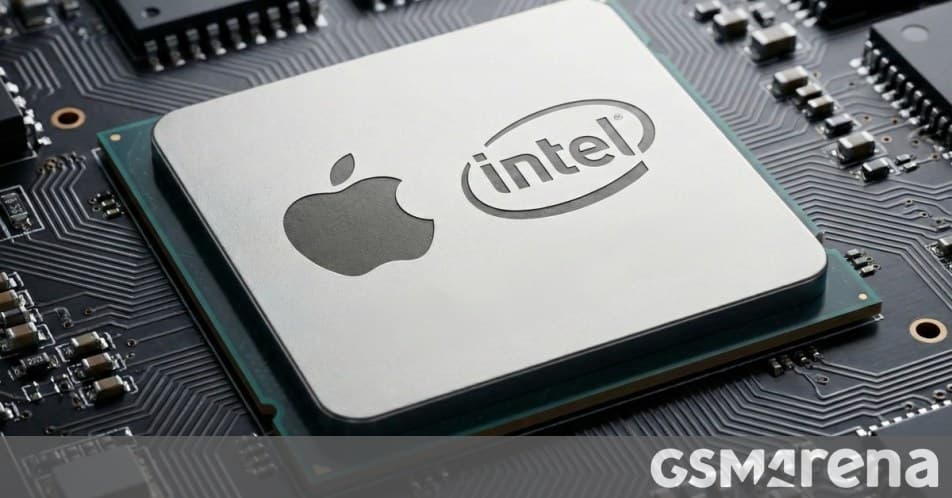
- Trump announced via Truth Social that Apple and Intel have agreed to design and manufacture chips domestically
- Apple currently relies entirely on TSMC for its A-series and M-series chips, creating supply chain vulnerability
- Intel could secure stable demand while Apple diversifies away from Taiwan-based manufacturing
President Trump announced on Truth Social that Apple and Intel have agreed to design and manufacture chips together in the United States. Neither company has confirmed the partnership, but the claim aligns with earlier reports that Apple was reconsidering Intel as a supplier after years of building its own silicon.
If true, this marks a significant shift for Apple, which ditched Intel processors in its Macs back in 2020. The company has since relied almost exclusively on TSMC in Taiwan to fabricate its custom A-series and M-series chips.
Why would Apple consider Intel again?
Apple's dependency on TSMC creates real risk. The Taiwanese chipmaker controls over 90% of the world's advanced chip manufacturing at 3nm and below. That's a bottleneck, and AI demand has made it worse. Nvidia and AMD are fighting for the same production capacity Apple needs for iPhones, iPads, and Macs.
Diversification makes strategic sense. Taiwan sits in a geopolitically sensitive region, and any disruption to TSMC would cripple Apple's entire product lineup. An Intel partnership would give Apple a second manufacturing option on American soil.
The relationship between Apple and Intel is complicated but not hostile. Apple bought Intel's smartphone modem division for $1 billion in 2019. The companies know how to work together.
What does Intel get out of this?
Intel desperately needs a win. The company has stumbled for years, losing manufacturing leadership to TSMC and Samsung while watching Apple walk away from its processors. Landing Apple as a foundry customer would validate Intel's turnaround strategy under its IDM 2.0 plan.
Intel recently announced its 18A manufacturing process, which the company claims will be competitive with TSMC's leading-edge nodes. Signing Apple would prove that claim to the market. It would also guarantee high-volume orders for Intel's fabrication facilities, which need utilization to stay profitable.
The timing matters. Intel parted ways with CEO Pat Gelsinger in December 2024, and the company is searching for direction. An Apple deal would give Intel's new leadership something concrete to build around.
The bigger picture: US chip independence
Trump's announcement fits the administration's broader push to bring semiconductor manufacturing back to the US. The federal government has already committed $10 billion to Intel to boost domestic production, part of the $52.7 billion allocated under the CHIPS Act.
The administration frames this as national security. Reducing reliance on Taiwan-based manufacturing insulates American tech companies from potential conflict in the Taiwan Strait. It also means jobs and capital investment staying stateside.
Intel has committed $152 billion to US manufacturing facilities, including a $20 billion fab complex in Ohio. Apple joining that ecosystem would be a visible proof point for the reshoring narrative.
What remains unclear
Trump's announcement lacks critical details. Would Apple use Intel's foundry services to manufacture existing chip designs, or would the companies collaborate on new architectures? Would this cover iPhones, Macs, or both? How soon could Intel's facilities handle Apple's volume requirements?
Neither Apple nor Intel has issued a statement. That silence is notable. Both companies typically control their own messaging carefully. A presidential announcement ahead of any corporate confirmation suggests either coordination with the administration or Trump getting ahead of incomplete negotiations.
Apple spent years designing around Intel's limitations before switching to its own chips. Any return to Intel, even as a foundry customer, requires confidence that Intel can deliver on yield, performance, and timeline. That trust takes time to rebuild.
Logicity's Take
This announcement matters more for Intel than Apple. Apple has leverage: TSMC's manufacturing remains best-in-class, and Apple can afford to wait. Intel needs a flagship customer to prove its foundry business is real. The risk is that Trump is overstating a preliminary conversation. If no formal partnership materializes, Intel's credibility takes another hit at exactly the wrong moment.
Frequently Asked Questions
Did Apple confirm the Intel partnership?
No. As of now, only Trump has announced the partnership via Truth Social. Neither Apple nor Intel has issued a public statement confirming the deal.
Why did Apple stop using Intel chips?
Apple switched to its own custom-designed chips (Apple Silicon) in 2020. The company's M-series processors offered better performance per watt than Intel's offerings, giving Apple more control over its product roadmap.
Would Intel manufacture Apple's existing chip designs?
The announcement doesn't specify. Intel could serve as a foundry manufacturing Apple-designed chips, or the companies could collaborate on new designs. The scope remains unclear.
How much has the US government invested in Intel?
The US government has pledged $10 billion to Intel as part of the CHIPS Act, which allocated $52.7 billion total to boost domestic semiconductor production.
When could Intel start making chips for Apple?
No timeline has been announced. Intel's 18A manufacturing process is still ramping up, and qualifying it for Apple's high-volume production would take significant time.
Need Help Implementing This?
If your company is navigating supply chain diversification or evaluating domestic manufacturing options, Logicity can connect you with analysts tracking the semiconductor landscape. Reach out to our editorial team for deeper coverage.
Source: GSMArena.com / Ro
Manaal Khan
Tech & Innovation Writer
Produced with AI assistance and reviewed by the Logicity editorial team. Learn more in our Editorial Policy.