Key Takeaways
- A 270,000-vehicle recall affects Toyota's 3.4L V6 engine due to manufacturing debris
- Some 2024 Tacoma owners report total transmission failure at under 1,000 miles
- New platforms and hybrid powertrains are introducing reliability unknowns Toyota buyers didn't face before
Toyota spent decades earning a reputation that made "Toyota reliability" a redundant phrase. The brand became shorthand for cars that start every time, hit 200,000 miles without drama, and cost less to own than nearly anything else on the road. For SUV buyers, this meant the 4Runner, Land Cruiser, and Highlander sat at the top of shopping lists almost by default.
That assumption is getting harder to justify. A wave of recalls, manufacturing defects, and owner complaints suggests Toyota's quality control is struggling to keep pace with the company's aggressive platform updates and hybrid rollouts.
The Engine Recall That Changed the Conversation
The most significant quality issue centers on Toyota's 3.4L twin-turbo V6 engine. Manufacturing debris left inside engines during production has forced a recall of 270,000 vehicles across North America, affecting models including the Tundra and Lexus variants. This isn't a design flaw that slipped through testing. It's a factory floor problem, the kind Toyota's manufacturing system was built to prevent.
“The reputation for bulletproof reliability is being severely tested by these manufacturing oversights. It's not the design that's failing, it's the execution on the factory floor.”
— Automotive Analyst, Independent Industry Report
The recall is particularly damaging because Toyota's reputation rested on meticulous production quality. The Toyota Production System became a case study in manufacturing excellence, taught in business schools worldwide. When engines leave the factory with debris inside, that narrative takes a hit that marketing can't fix.
Transmission Failures Before the First Oil Change
The engine recall isn't an isolated incident. Some 2024 Toyota Tacoma owners have reported total transmission failure at under 1,000 miles. These aren't high-mileage vehicles with accumulated wear. They're trucks that haven't finished their break-in period.
Early failures like this create a specific problem for buyers who chose Toyota to avoid exactly this scenario. A transmission replacement on a new truck is covered under warranty, but it's the kind of experience that erodes trust. Buyers who paid a Toyota premium specifically to avoid dealer service bays find themselves there anyway.
Why This Is Happening Now
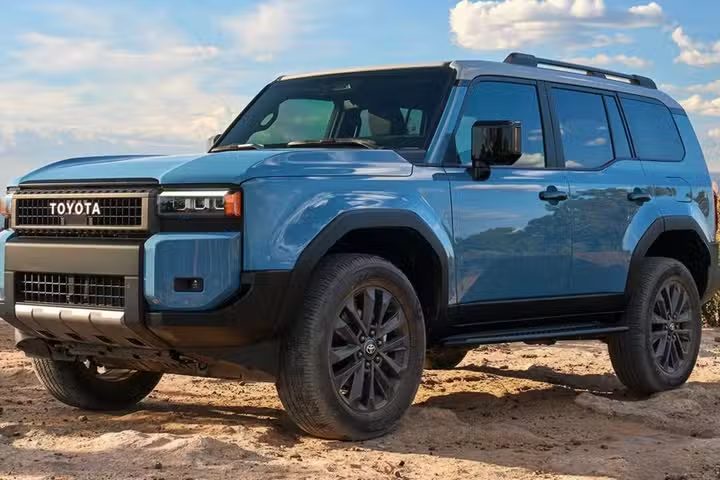
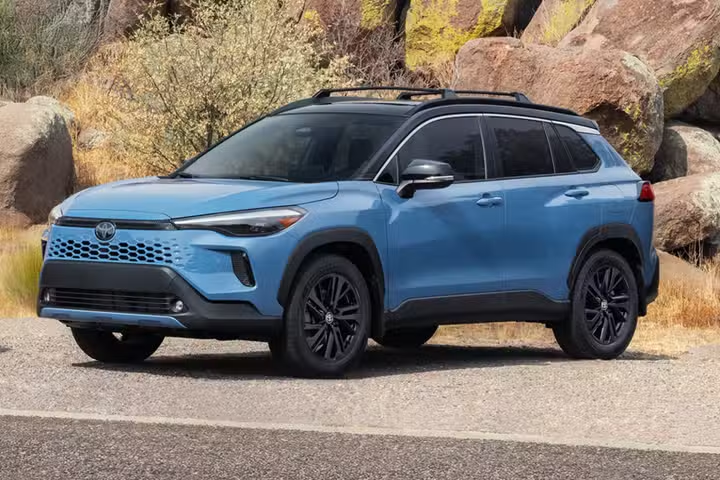
Toyota is in the middle of a major transition period. The company is updating nearly every SUV in its lineup, introducing new generations of the RAV4, 4Runner, Land Cruiser, and C-HR. Simultaneously, hybrid powertrains are spreading across models that never had them before.
New platforms mean new manufacturing processes, new supplier relationships, and new opportunities for defects. Hybrid systems add complexity that traditional Toyota reliability data doesn't capture. A 2015 4Runner with 150,000 trouble-free miles tells you nothing about the 2025 model's long-term durability.
The source article from How-To Geek notes that several new models, including the RAV4, 4Runner, bZ, and C-HR, had to be excluded from reliability rankings because there wasn't enough data available. That data gap is the problem. Buyers are being asked to trust Toyota's reputation rather than Toyota's track record on the specific vehicle they're purchasing.
What the Reliability Scores Show
Using data from J.D. Power, CarEdge, RepairPal, and EPA sources, the 2026 Toyota Land Cruiser scores 73 out of 100 for reliability. That's a respectable number for most brands, but it's not the bulletproof rating Toyota buyers expect.
The Land Cruiser's return to the U.S. market has been smooth in terms of sales, but it's a fundamentally different vehicle than the previous generation. New powertrain, new platform, new manufacturing processes. The reliability score reflects what can be measured so far, not what will happen at 100,000 miles.
Owner Communities Are Split
Reddit communities including r/Toyota and r/LandCruiser reflect the tension between brand loyalty and recent experience. Long-time Toyota owners express frustration over what they call "growing pains" of new platforms. Others defend the brand, arguing that isolated issues don't invalidate decades of reliability data.
The debate on HackerNews takes a more systemic view. Modern automotive manufacturing involves more complexity in powertrain electronics and turbocharging, leaving less margin for error in assembly. When production relies on manual processes, the room for mistakes grows.
The Business Calculation Has Changed
For fleet managers and buyers making long-term ownership decisions, Toyota's value proposition was straightforward: pay slightly more upfront, spend significantly less on repairs and downtime. That calculation assumed reliability data from existing models applied to new ones.
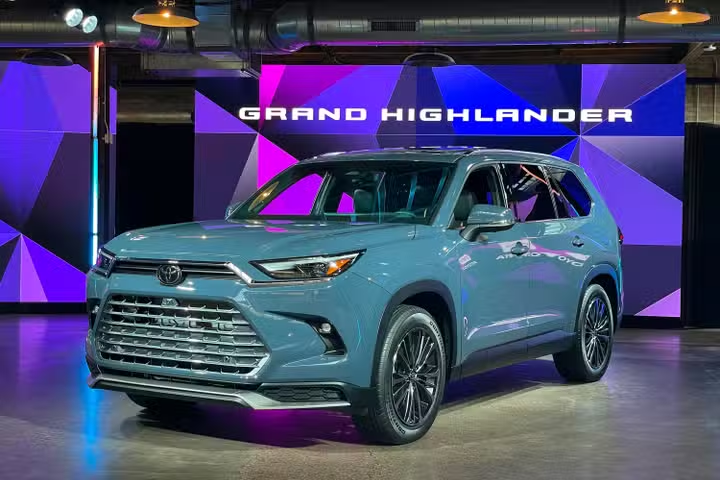
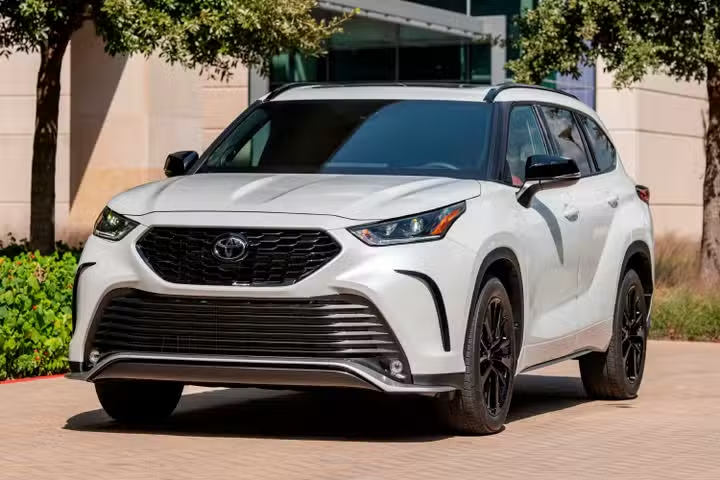
With so many vehicles on new platforms, that assumption no longer holds. A company buying 50 Highlanders for a corporate fleet can't rely on 2019 Highlander reliability data to predict 2026 Highlander ownership costs. The vehicles share a name but little else.
What Buyers Should Do
Waiting is the most practical response for buyers without urgent needs. Let early adopters discover problems. Let Toyota issue recalls and software updates. A model year or two of production typically irons out the worst manufacturing inconsistencies.
For buyers who can't wait, the strategy shifts to risk mitigation: comprehensive warranty coverage, detailed pre-purchase inspection, and realistic expectations about potential service visits. Toyota's warranty will cover defects, but it won't cover the inconvenience.
- Check NHTSA recall databases before purchasing any 2024-2026 Toyota SUV
- Read owner forums for your specific model and model year
- Consider extended warranty coverage for new-platform vehicles
- Factor potential service time into fleet planning decisions
Logicity's Take
Frequently Asked Questions
Which Toyota SUVs are affected by the engine recall?
The 270,000-vehicle recall affects models with the 3.4L twin-turbo V6 engine, including the Tundra and certain Lexus variants. Check NHTSA's database for your specific VIN.
Is the new Toyota Land Cruiser reliable?
The 2026 Land Cruiser scores 73/100 for reliability, but it's built on a new platform with limited long-term data. The score reflects early ownership experience, not 100,000-mile durability.
Should I wait to buy a new Toyota SUV?
If you can wait, letting early production issues surface through recalls and owner reports reduces your risk. First-year models on new platforms historically have more problems than later production runs.
Are Toyota hybrids less reliable than non-hybrid models?
Toyota's hybrid system has a strong track record in models like the Prius and Camry Hybrid. However, new hybrid implementations on fresh platforms don't inherit that reliability data automatically.
What caused Toyota's manufacturing quality problems?
Industry analysts point to rapid platform changes, increased powertrain complexity, and assembly process issues. The engine debris recall specifically indicates factory floor quality control failures rather than design problems.
Need Help Implementing This?
Source: How-To Geek
Huma Shazia
Senior AI & Tech Writer
Produced with AI assistance and reviewed by the Logicity editorial team. Learn more in our Editorial Policy.