Key Takeaways
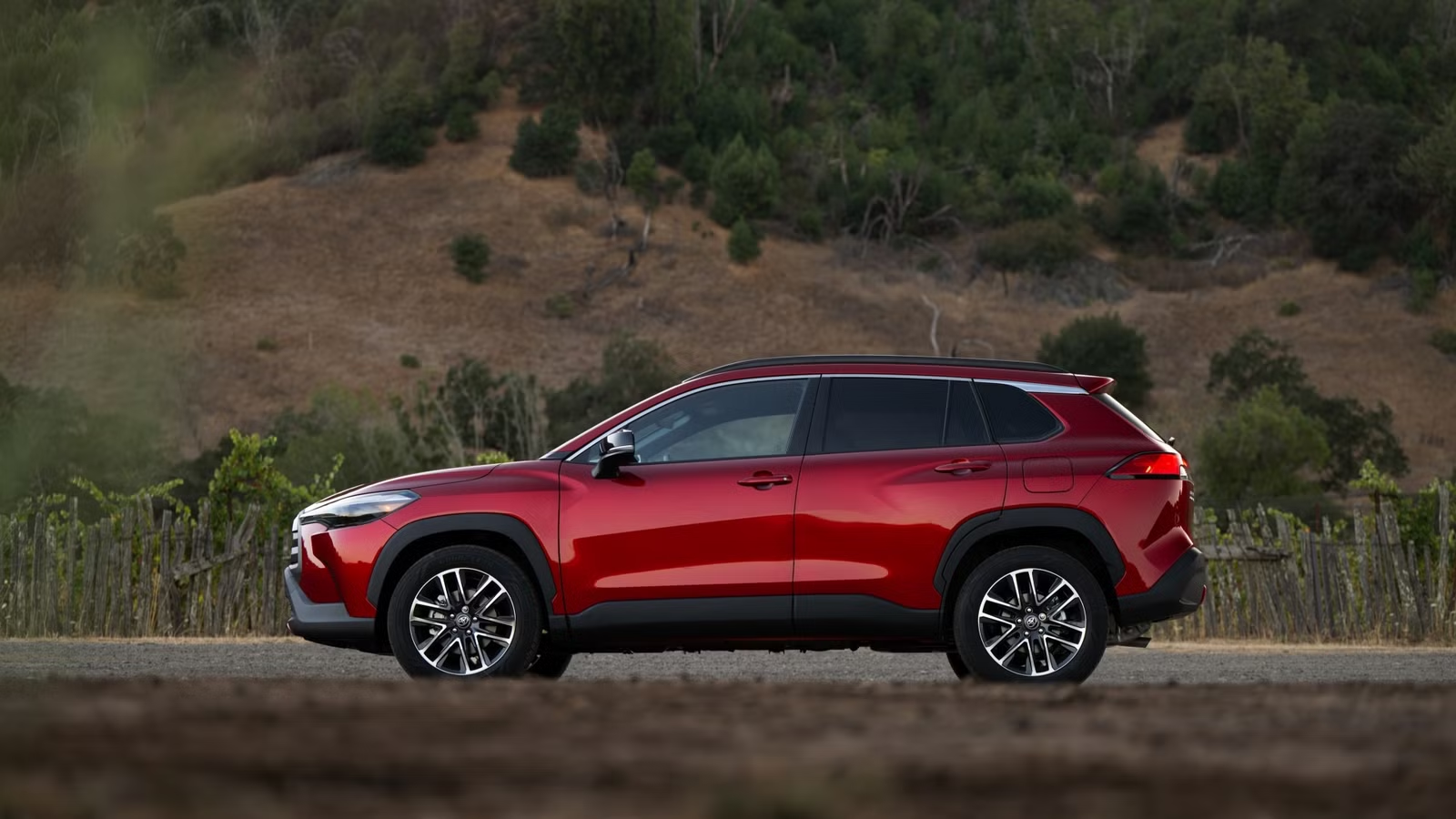
- Toyota Corolla Cross and Nissan Rogue both achieve 32 MPG combined using conventional gasoline engines
- The Corolla Cross favors city driving at 31 MPG, while the Rogue excels on highways at 36 MPG
- Starting at $25,235, the Corolla Cross costs significantly less than hybrid alternatives
Two SUVs hit 32 MPG combined in 2026 without any hybrid hardware: the Toyota Corolla Cross and the Nissan Rogue. Both achieve efficiency numbers that would have required electrification just a few years ago, yet neither carries a battery pack or the price premium that comes with one.
The push toward hybrids has become so aggressive that buyers assume adding a battery is the only path to decent fuel economy. That assumption costs money. Hybrid variants typically run $3,000 to $6,000 more than their gasoline counterparts. For drivers who cover average mileage, the payback period stretches into years. Some never recoup the premium at all.
How do these SUVs achieve 32 MPG on gasoline alone?
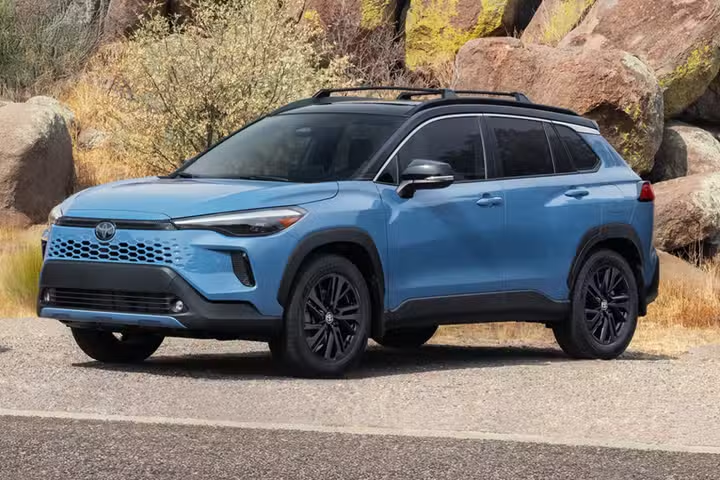
The Corolla Cross and Rogue take different engineering routes to the same destination. Toyota relies on its 2.0-liter four-cylinder, tuned for efficiency over power. The engine pairs with a CVT that keeps revs in the optimal range during steady cruising. Weight also matters. The Corolla Cross is a subcompact, and every pound shed improves efficiency.
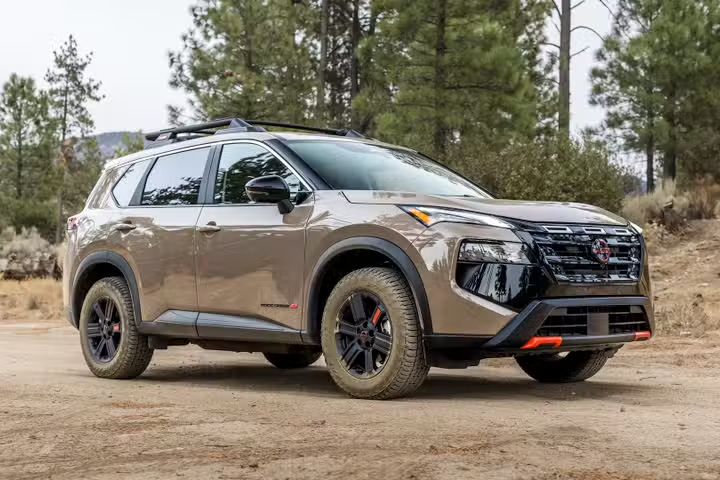
Nissan's approach with the Rogue is more surprising. This is a larger vehicle, closer in size to the Toyota RAV4. Yet it matches the smaller Corolla Cross in combined efficiency. The Rogue uses a turbocharged three-cylinder engine, an unusual choice for an SUV this size. Turbo downsizing extracts more energy from less fuel while variable compression technology adjusts the engine's behavior based on driving conditions.
| Model | City MPG | Highway MPG | Combined MPG |
|---|---|---|---|
| Toyota Corolla Cross | 31 | 33 | 32 |
| Nissan Rogue | 29 | 36 | 32 |
Which high-MPG SUV fits city drivers better?
The split in city versus highway numbers tells you exactly which vehicle suits which buyer. The Corolla Cross pulls ahead in stop-and-go traffic at 31 MPG versus the Rogue's 29 MPG. If your commute involves stoplights, parking garages, and dense urban streets, those two extra miles per gallon compound over thousands of annual miles.
The Corolla Cross also brings a smaller footprint. Parking in tight spots becomes less stressful. Maneuverability improves. For urban dwellers who need SUV practicality without SUV bulk, this is the obvious pick.
Does the Nissan Rogue make more sense for highway commuters?
On the highway, the Rogue dominates. The EPA rates it at 36 MPG, three miles per gallon better than the Corolla Cross's 33 MPG. That gap matters if you regularly cover long distances. A weekly 200-mile highway round trip would save roughly a gallon of fuel every two weeks with the Rogue.
The larger cabin also makes the Rogue more comfortable at sustained speeds. Passengers have more room. The heavier chassis feels more planted when semis blow past. For suburban families who hit the interstate often, the Rogue's highway bias works in their favor.
How does pricing compare between the two?
The Corolla Cross starts at $25,235 for the base L trim. The LE jumps to $27,565, and the XLE tops the range at $30,160. These prices undercut most hybrid alternatives, including Toyota's own Corolla Cross Hybrid.
Nissan positions the Rogue at a higher price point, reflecting its larger size and more feature-rich positioning. Buyers choosing between these two need to weigh whether the extra cargo space and highway comfort justify the additional outlay.
Should you skip the hybrid markup entirely?
The math depends on your annual mileage. At 12,000 miles per year and $3.50 per gallon, a vehicle getting 32 MPG costs about $1,312 in fuel annually. A 40 MPG hybrid drops that to $1,050, saving $262 per year. If the hybrid costs $4,000 more, you need over 15 years to break even.
High-mileage drivers shift those numbers. Someone covering 25,000 miles annually would see the hybrid payback period drop under seven years. But for average drivers, these 32 MPG gasoline SUVs deliver almost all the efficiency benefit without the upfront hit.
The Corolla Cross and Rogue also dodge the complexity question. Hybrid systems add components that eventually need servicing. Battery packs degrade. Repair costs can run higher when specialized parts are involved. A conventional powertrain is familiar territory for any mechanic.
Logicity's Take
The 32 MPG figure matters less than how these vehicles achieve it. Toyota and Nissan are proving that combustion engines still have headroom for efficiency gains through turbo downsizing, transmission tuning, and weight reduction. For automakers facing tightening emissions regulations, this buys time while EV infrastructure catches up. For buyers, it means viable options exist between inefficient traditional SUVs and pricey hybrids.
Frequently Asked Questions
What is the most fuel-efficient SUV without a hybrid system in 2026?
The Toyota Corolla Cross and Nissan Rogue tie at 32 MPG combined, making them the highest MPG SUVs available without hybrid technology in 2026.
Is the Nissan Rogue more fuel-efficient than the Toyota Corolla Cross?
They achieve the same 32 MPG combined rating, but the Rogue is better on highways at 36 MPG while the Corolla Cross leads in city driving at 31 MPG.
How much does the Toyota Corolla Cross cost in 2026?
The 2026 Toyota Corolla Cross starts at $25,235 for the L trim, with the LE at $27,565 and XLE at $30,160.
Is it worth buying a hybrid SUV over a fuel-efficient gasoline model?
For average drivers covering 12,000 miles annually, the hybrid premium can take over 15 years to recoup through fuel savings. High-mileage drivers see faster payback.
What engine does the Nissan Rogue use to achieve 32 MPG?
The Rogue uses a turbocharged three-cylinder engine with variable compression technology to maximize fuel efficiency despite its larger size.
Need Help Implementing This?
Evaluating total cost of ownership between hybrid and conventional powertrains requires more than comparing sticker prices. If you're a fleet manager or making a company vehicle decision, reach out to Logicity for deeper analysis on fuel strategy and vehicle procurement.
Source: How-To Geek
Manaal Khan
Tech & Innovation Writer
Produced with AI assistance and reviewed by the Logicity editorial team. Learn more in our Editorial Policy.