Key Takeaways

- Meta's top AI user consumed 281 billion tokens in a single period, costing hundreds of thousands of dollars
- Amazon shut down its AI usage leaderboard with the note: 'Don't use AI just for the sake of using AI'
- Token volume is a vanity metric; companies should measure output quality and cost-per-task instead
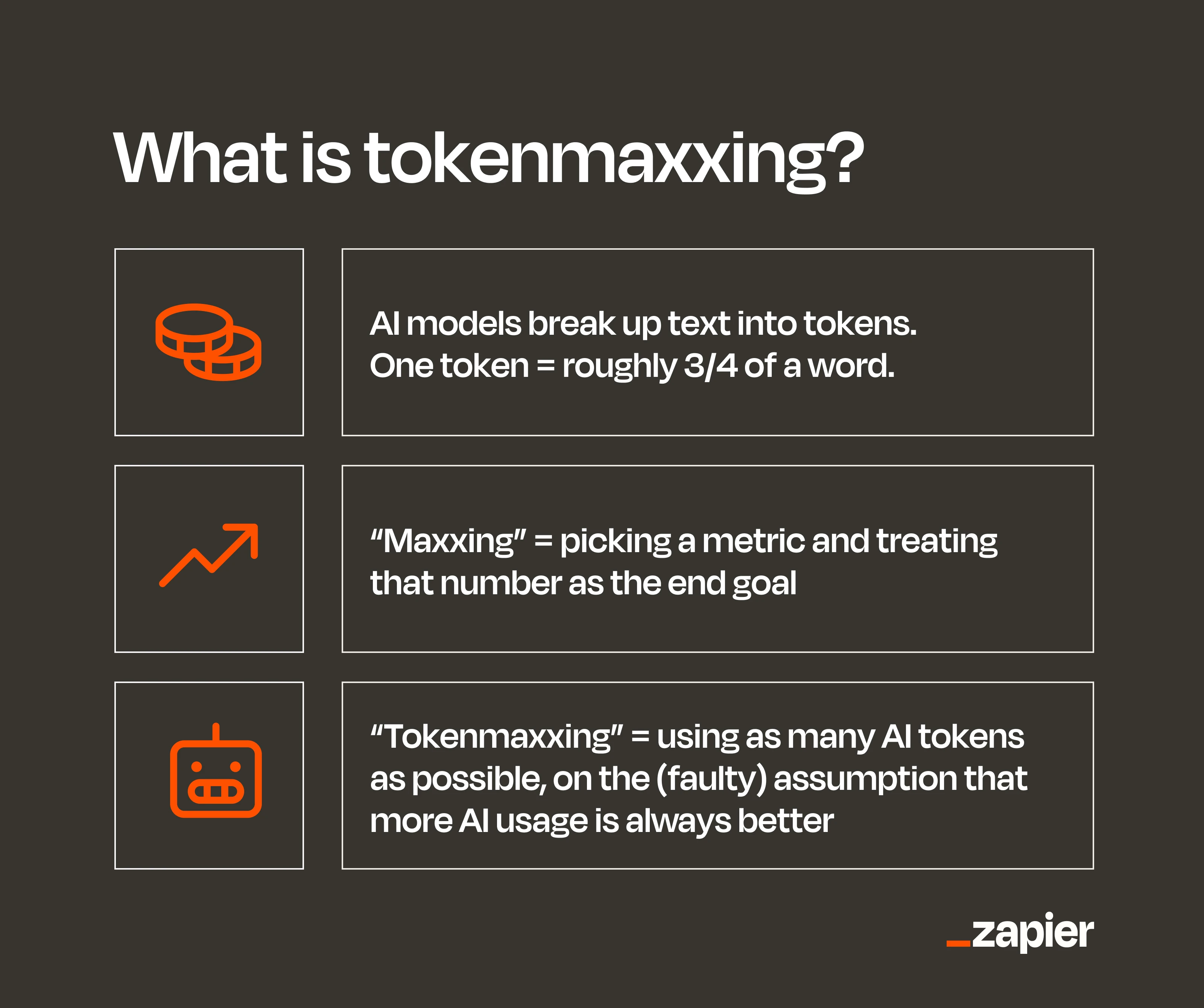
Tokenmaxxing is the practice of maximizing AI token consumption as a proxy for productivity. Meta built an internal leaderboard called "Claudeonomics" that handed out badges like "Cache Wizard" and "Model Connoisseur." The top user burned through 281 billion tokens in a single period, running up costs in the hundreds of thousands of dollars. Amazon ran a similar system until May 2026, when it shut the whole thing down with a blunt internal message: "Don't use AI just for the sake of using AI."
Disclosure
Some links in this post are affiliate links — Logicity earns a commission if you sign up, at no extra cost to you. We only link products we have used or actively recommend.
The overcorrection is now underway. After a year of treating token spend as a KPI, operations teams are scrambling to figure out what they should have been measuring all along.
How did token leaderboards become a thing?
When you send a prompt to an AI model, the system breaks your text into chunks called tokens. A token is roughly three-quarters of a word. Every prompt and response gets processed as a stream of these chunks, and most providers bill by volume, either through subscription caps or per-token API pricing.
In 2025 and early 2026, AI adoption became something executives tracked, measured, and often explicitly mandated. Shopify CEO Tobi Lütke sent a memo telling employees that anyone not using AI could expect a conversation with their manager.
Nvidia CEO Jensen Huang said publicly that if an engineer with a $500,000 salary didn't consume at least $250,000 worth of tokens in a year, he'd be "deeply alarmed." That framing pushed companies to measure what they could measure. Token spend became a convenient proxy for AI engagement, and leaderboards went up.
Why tokenmaxxing backfired
People found two ways to game the system. The first is usage theater: writing longer prompts, leaving AI agents running in the background even when idle, and generally inflating activity without improving output. The second is model defaulting. When leadership pressures teams to use AI constantly, people reach for the most powerful models available. The problem is those models are also the most expensive.
Summarizing a structured weekly report and synthesizing six months of unstructured customer interviews are not the same task. But if your default is always GPT-4 or Claude Opus, you're paying frontier prices for everything. A task that could run on a cheaper model for $0.002 ends up costing $0.06. Multiply that across thousands of daily API calls, and the math gets ugly fast.
Token volume turned out to be a vanity metric. It told leadership that AI was being used. It said nothing about whether the work got better, faster, or cheaper.
What should operations teams measure instead?
The shift now is toward outcome-based metrics. Instead of tracking how many tokens flowed through your systems, track what those tokens produced. Cost-per-task is one option: how much did it cost to generate a sales summary, draft an email sequence, or process a support ticket? Time-to-completion is another. If AI cut a two-hour task to fifteen minutes, that's measurable impact.
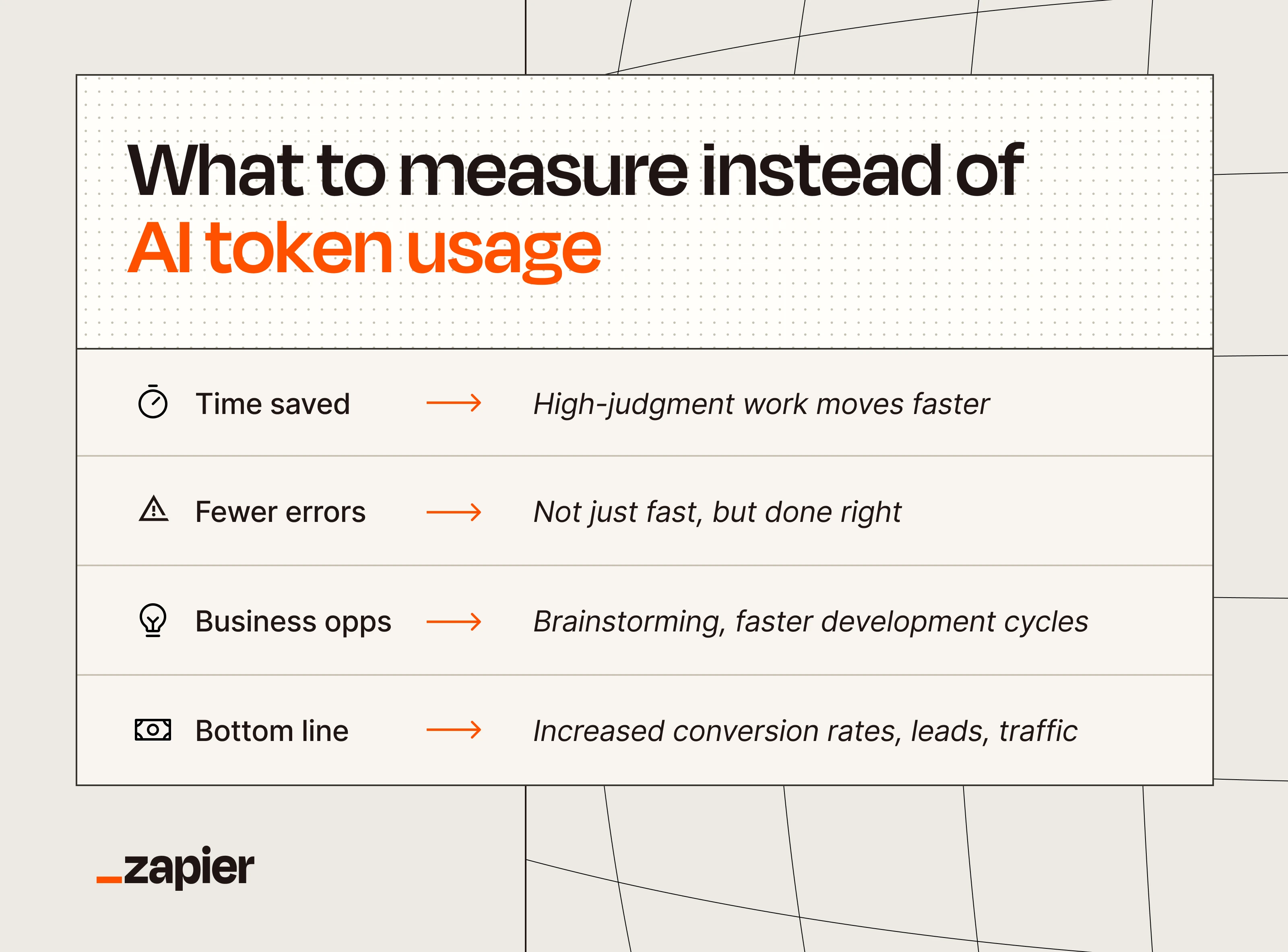
Quality matters too. A model that produces a draft requiring heavy human editing is more expensive than its token cost suggests. Teams running AI workflows through platforms like Zapier, Make, or n8n can log both token spend and downstream edits to get a clearer picture of true cost.
Matching model power to task complexity
A big part of governing AI spend is routing work to the right model. Not every task needs the latest frontier model. Structured data extraction, simple summarization, and template-based generation can run on smaller, cheaper models with no noticeable drop in quality.
Some teams build tiered routing logic: simple tasks go to a fast, cheap model; complex reasoning tasks escalate to a more capable one. This requires upfront work to classify tasks, but the savings compound quickly. The alternative is paying premium rates for work that doesn't need it.
Avoiding the overcorrection
Amazon's memo sparked a predictable reaction. After months of being told to use AI more, employees suddenly heard "use it less." That whiplash creates its own problem: teams become hesitant to experiment, and legitimate high-value use cases get deprioritized because people don't want to look like token hogs.
The answer isn't to minimize token spend. It's to connect spend to outcomes. A team that burns a million tokens generating qualified leads is in a different category than one burning the same amount on recreational prompts. The governance question isn't "how much are you spending?" It's "what are you getting for it?"
Logicity's Take
For RevOps teams, the tokenmaxxing debacle is a reminder that any metric can be gamed if it's disconnected from outcomes. The smarter play is building dashboards that tie AI usage to pipeline stages, deal velocity, or support resolution time. Zapier's automation platform (starting at $29.99/month for pro features) lets you log API calls alongside CRM events in tools like [HubSpot](https://logicity.in/r/hubspot) or [Salesforce](https://logicity.in/r/salesforce). Make and n8n offer similar capabilities at lower price points. Whichever you choose, the principle is the same: instrument your workflows so you can see both cost and impact in one view.
Frequently Asked Questions
What does tokenmaxxing mean?
Tokenmaxxing refers to the practice of maximizing AI token consumption, often by using longer prompts or always defaulting to expensive models, as a way to signal AI engagement within an organization.
How much does enterprise AI token usage cost?
Costs vary by model and provider. Advanced models like GPT-4 or Claude Opus can cost $20-30 per million tokens. Meta's top individual user reportedly spent hundreds of thousands of dollars in a single period on 281 billion tokens.
How can companies govern AI spend without slowing adoption?
Route tasks to appropriately-sized models, track cost-per-task instead of raw token volume, and build workflows that log both spend and outcomes. This lets teams experiment without creating runaway costs.
Why did Amazon shut down its AI usage leaderboard?
Amazon issued an internal correction in May 2026 stating employees should not use AI just for the sake of using AI. The leaderboard had incentivized consumption without connecting it to business outcomes.
Another look at how large engineering organizations govern tool usage across thousands of developers
Need Help Implementing This?
If your team is struggling to balance AI adoption with cost control, reach out to us at Logicity. We help operations teams build instrumented workflows that track both spend and outcomes, so you can stop guessing and start measuring.
Source: The Zapier Blog
غير قابل للدمج - موضوع مختلف تماماً
المقال الجديد يتناول موضوعاً مختلفاً تماماً: إطلاق Anthropic لمنتج جديد يسمى Claude Science، وهو منصة عمل مخصصة للباحثين العلميين. يتضمن معلومات عن ميزات المنتج، والتكامل مع أدوات Nvidia BioNeMo، وبرنامج منح بقيمة 30,000 دولار لـ 50 مشروعاً بحثياً. هذا لا يرتبط بموضوع Tokenmaxxing الأصلي.
تحديث: Anthropic تطلق نموذجاً أرخص للوكلاء الذكية - كيف تتغير اقتصاديات التوكنات؟
المقال الجديد يتناول إطلاق Anthropic لنموذج Claude Sonnet 5 بأسعار محددة ($2-3 لكل مليون توكن إدخال و$10 لكل مليون توكن إخراج)، مع مقارنة تنافسية بأسعار نماذج OpenAI وGoogle. هذا يوفر سياقاً جديداً حول تكاليف التوكنات الفعلية التي يمكن إضافتها للمقال الأصلي عن Tokenmaxxing.
اكتشاف: Claude Code يستخدم علامات مخفية لتتبع مصادر الطلبات
المقال الجديد يكشف عن اكتشاف تقني مختلف تماماً: وجود كود مخفي في برنامج Claude Code (الإصدار 2.1.196) يستخدم تقنية الستيغانوغرافيا لتضمين علامات مخفية في الطلبات المرسلة للنموذج عبر تغيير شكل الفاصلة العليا وفاصل التاريخ. هذا يتضمن كوداً برمجياً محدداً يكشف كيفية تتبع المستخدمين بناءً على نطاقات معينة ومناطق زمنية صينية.
Anthropic تخفض تكاليف التوكنات مع إطلاق Claude Sonnet 5
المقال الجديد يتضمن معلومات عن إطلاق Anthropic لنموذج Claude Sonnet 5 بأسعار مخفضة ($2-3 لكل مليون توكن إدخال و$10-15 لكل مليون توكن إخراج)، وهو ما يرتبط بموضوع تكاليف استهلاك التوكنات. كما يعلن عن منتج جديد يسمى Claude Science للعلماء. هذه تطورات جديدة من Anthropic قد تؤثر على اقتصاديات استخدام الذكاء الاصطناعي التي يناقشها المقال الأصلي.
Huma Shazia
Senior AI & Tech Writer
Produced with AI assistance and reviewed by the Logicity editorial team. Learn more in our Editorial Policy.