The era of general-purpose AI models is coming to an end, and customization is the next big thing. By tailoring AI models to specific industries and organizations, companies can unlock significant advantages and stay ahead of the competition. From automotive engineering to public sector services, customization is the key to creating AI systems that truly understand the nuances of a particular field.
Key Takeaways
- Customization is the next big thing in AI
- General-purpose AI models are no longer sufficient
- Tailoring AI models to specific industries and organizations can unlock significant advantages
In This Article
- The Rise of AI Customization
- The Power of Domain Expertise
- Real-World Examples of AI Customization
- The Blueprint for Strategic Customization
- The Future of AI Customization
- Conclusion and Next Steps
The Rise of AI Customization
In the early days of artificial intelligence, general-purpose models were the norm. However, as the technology has advanced, it has become clear that customization is the key to unlocking true potential. By tailoring AI models to specific industries and organizations, companies can create systems that truly understand the nuances of a particular field.
- General-purpose AI models are no longer sufficient
- Customization allows for the creation of AI systems that are tailored to specific industries and organizations
The Power of Domain Expertise
Every industry has its own unique language and set of challenges. By incorporating domain expertise into AI models, companies can create systems that are finely tuned to the specific needs of their industry. This can lead to significant advantages, including increased efficiency and improved decision-making.
- Domain expertise is essential for creating effective AI systems
- Incorporating domain expertise into AI models can lead to significant advantages
Real-World Examples of AI Customization
From automotive engineering to public sector services, customization is being used to create AI systems that are tailored to specific industries and organizations. For example, a leading automotive company is using customization to revolutionize crash test simulations, while a government agency in Southeast Asia is building a sovereign AI layer to move beyond Western-centric models.
- Customization is being used in a variety of industries, including automotive engineering and public sector services
- Real-world examples of customization include the use of AI in crash test simulations and sovereign AI layers
The Blueprint for Strategic Customization
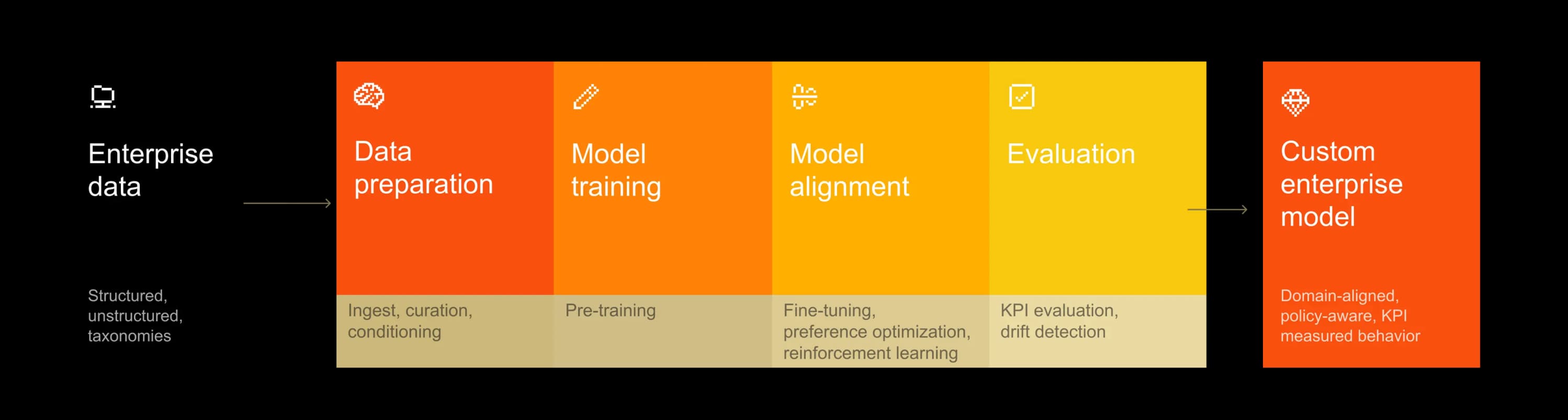
To move from a general-purpose AI strategy to a domain-specific advantage, companies need to rethink the role of AI within their organization. This requires a structural shift in organizational logic, including treating AI as infrastructure, not an experiment.
- Companies need to rethink the role of AI within their organization
- Treating AI as infrastructure, not an experiment, is essential for strategic customization
The Future of AI Customization
As the technology continues to advance, it is likely that customization will become even more important. Companies that adopt customization now will be well-positioned to take advantage of the benefits it offers, including increased efficiency and improved decision-making.
- Customization is likely to become even more important in the future
- Companies that adopt customization now will be well-positioned to take advantage of its benefits
Conclusion and Next Steps
In conclusion, customization is the key to unlocking the true potential of AI. By tailoring AI models to specific industries and organizations, companies can create systems that truly understand the nuances of a particular field. As the technology continues to advance, it is essential for companies to stay ahead of the curve and adopt customization now.
- Customization is the key to unlocking the true potential of AI
- Companies should adopt customization now to stay ahead of the curve
“The institutionalization of proprietary logic is the next frontier of advantage”
— Barry Conklin
Final Thoughts
As the AI landscape continues to evolve, one thing is clear: customization is the key to unlocking true potential. By adopting customization now, companies can stay ahead of the curve and reap the benefits of AI, including increased efficiency and improved decision-making. The future of AI is customization, and it's time for companies to get on board.
Sources & Credits
Originally reported by Unknown
Huma Shazia
Senior AI & Tech Writer
Produced with AI assistance and reviewed by the Logicity editorial team. Learn more in our Editorial Policy.