Temple, the wearable health startup founded by Zomato CEO Deepinder Goyal, has nearly doubled its valuation to $375 million and launched its first ESOP liquidity programme, according to a Moneycontrol report. The buyback will allow around 20 of the company's 200-220 employees to sell up to 25% of their vested stock options.
The new valuation nearly doubles the $190 million mark set during Temple's $54 million seed round in February 2026. Goyal told employees in an internal memo that external investors have expressed interest at a $500 million valuation ahead of the next funding round. The company chose to conduct the ESOP event at the lower figure.
“We are offering all eligible employees the option to sell up to 25% of their vested ESOPs at a $375 Mn valuation. This is completely optional.”
— Deepinder Goyal, per internal memo
What Temple is building
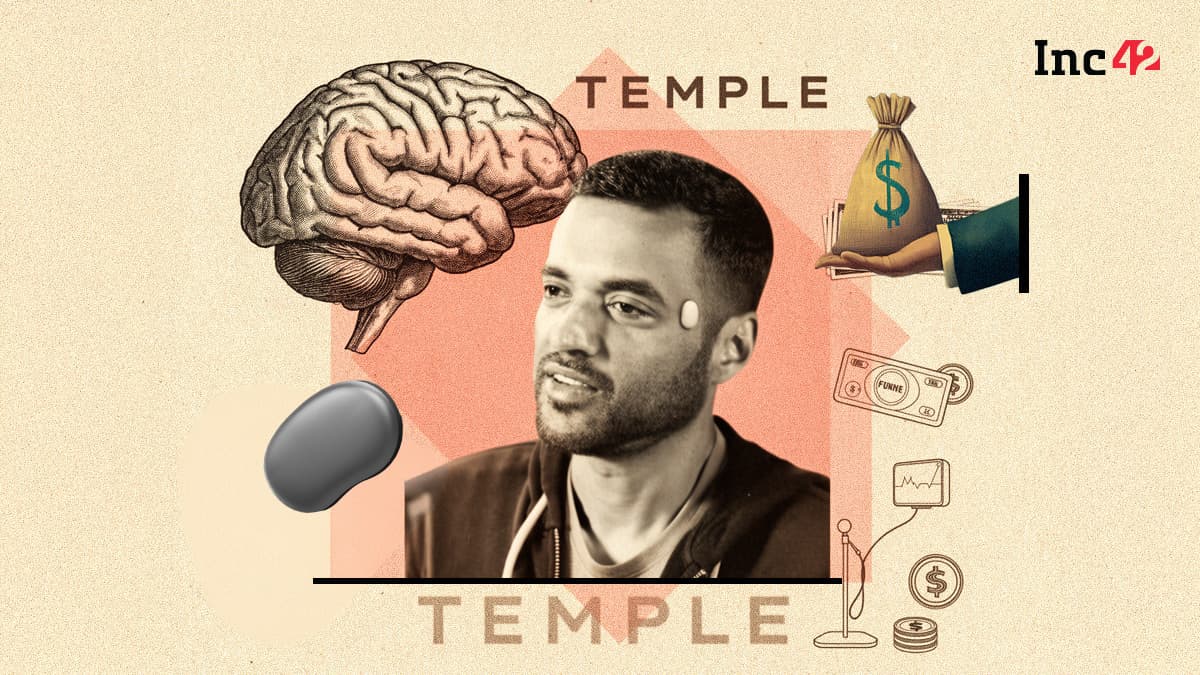
Temple makes a forehead-worn wearable that measures the body's metabolic state in real time. The device is currently available through an early access programme, with a broader commercial launch still in the works. Manufacturing partners include Ethereal Machines and Zetwerk.
The startup is closely tied to Continue Research, Goyal's longevity-focused research initiative. Last year, the group published a hypothesis linking reduced cerebral blood flow caused by gravity to human aging. The claim triggered debate among researchers and medical experts over its scientific basis.
Goyal has acknowledged the hypothesis might not hold up. But he maintains Temple's wearable can succeed as a standalone consumer health device regardless of whether the underlying research proves correct.
Ownership and investors
Temple's February seed round was led by Steadview Capital, Peak XV Partners, Vy Capital, and Info Edge, alongside several founder-investors and early employees. Regulatory filings show Goyal holds about 28% of the company. Employees collectively own around 10% through ESOPs.
A crowded health wearable market
Temple enters a market where Indian startups have already expanded well beyond conventional fitness tracking. Ultrahuman, Gabit, and FITTR now offer broader health monitoring features. Newer entrants are developing AI-powered wearables and specialised sensors as consumer demand for personalised health data grows.
The valuation jump reflects rising investor appetite for preventive healthcare and longevity technologies. But Temple still faces a high bar: converting early access users into paying customers, validating its scientific claims, and scaling manufacturing for a mass-market launch.
Logicity's Take
Temple's ESOP buyback at $375 million rather than the $500 million external interest level is a smart liquidity move for early employees. But the 2x valuation jump in five months rests on investor enthusiasm for longevity tech, not revenue or user traction. For fintech teams watching health-adjacent plays, the real test comes when Temple attempts commercial scale. A forehead-worn wearable is a harder sell than a ring or watch. Whether the science pans out or not, Temple's path to profitability depends on consumer adoption, and that remains unproven.
Another startup navigating valuation expectations ahead of a major financing event
Need Help Implementing This?
If you're building health tech or tracking startup equity events, Logicity covers the funding and product moves that matter. Subscribe to our newsletter for weekly updates on fintech and emerging tech.
Source: Inc42 Media / Lokesh Choudhary
Manaal Khan
Tech & Innovation Writer
Produced with AI assistance and reviewed by the Logicity editorial team. Learn more in our Editorial Policy.