
Key Takeaways
SBI Mutual Fund invests Rs 100 crore ($12M) in Lenskart ahead of IPO | Rs 402/share
- Temasek sold 2% of Lenskart for Rs 1,945 crore through open-market transactions on July 10
- SoftBank and ADIA have also exited post-IPO, with combined sales exceeding Rs 6,700 crore
- Lenskart's six-month IPO lock-in ended on May 8, triggering the wave of institutional exits
Singapore's sovereign wealth fund Temasek has sold a 2% stake in eyewear retailer Lenskart for Rs 1,945 crore, cutting its holding to 4.75% from 6.8%. The sale, executed through open-market transactions on July 10, follows similar exits by Abu Dhabi Investment Authority and SoftBank since Lenskart's IPO lock-in expired in May.

Lenskart shares closed at Rs 543.65 on the National Stock Exchange. The stock has held relatively steady despite the institutional selling pressure, suggesting domestic buyers are absorbing the supply.
Why are major investors exiting Lenskart?
The exits are mechanical, not a vote against the business. Lenskart listed in November 2025, and its six-month IPO lock-in ended on May 8. That date opened the door for pre-IPO investors to sell.
ADIA sold shares worth Rs 1,944 crore. SoftBank offloaded Rs 2,873 crore through a block deal. Combined with Temasek's sale, pre-IPO investors have cashed out more than Rs 6,700 crore in just two months. This pattern is common: institutional investors treat IPOs as liquidity events, not long-term commitments.
Temasek still holds 4.75%. Whether it sells more depends on Lenskart's performance over the next few quarters and Temasek's broader portfolio rebalancing across India.
Udaan closes $160M structured financing amid insolvency battle

In a separate development, B2B ecommerce platform Udaan announced a $160 million structured financing transaction. The deal combines fresh equity, new debt, and debt-to-equity conversion, arriving just days after banks and hedge funds initiated insolvency proceedings against Udaan's parent company in Singapore's High Court.
Existing investors Lightspeed and M&G Prudential are putting in $50-60 million in fresh equity. BlackRock's credit platform is providing roughly $45 million in debt. The remaining amount comes from bondholders converting debt into equity, effectively swapping paper claims for ownership stakes.
"With a stronger balance sheet and a simpler capital structure, we are well positioned to continue investing in customer value, deepening our market leadership and progressing towards our long-term public market ambitions," said CEO Vaibhav Gupta.
The insolvency proceedings stem from an alleged default on $170 million of compulsorily convertible notes that matured on June 30. This financing deal, subject to regulatory approvals, aims to resolve that overhang.
Avendus closes third fund at Rs 1,800 crore
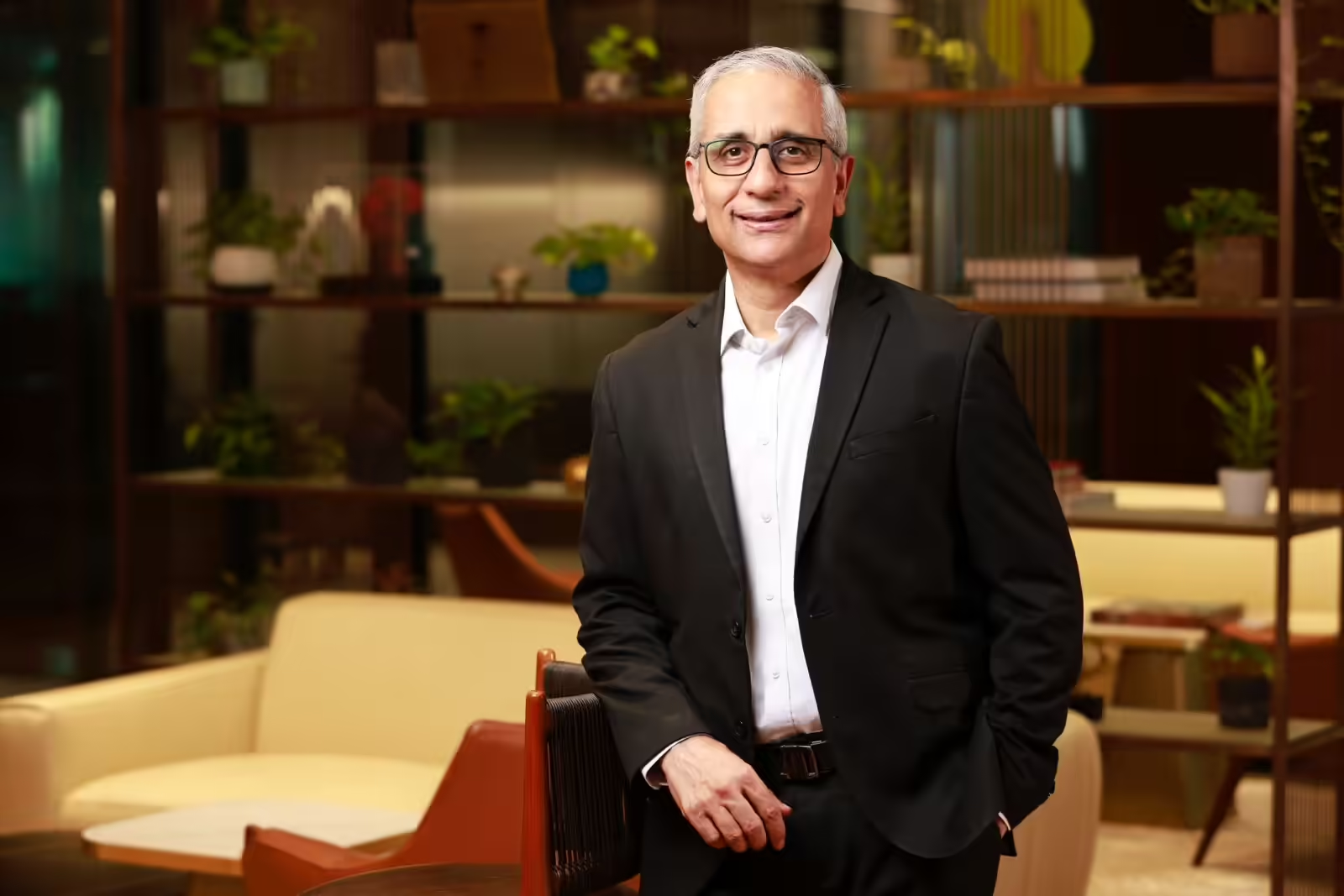
Avendus Group is wrapping its third Future Leaders Fund at around Rs 1,800 crore by the end of July, about Rs 300 crore above its original target. The fund will back late-stage, cash-generating companies.
FLF III hit its first close at Rs 850 crore in January 2025. The previous fund, FLF II, closed at Rs 1,600 crore in 2022 and has already returned about 20% of investors' capital. The first fund closed at Rs 375 crore in 2020. Together, the three funds manage more than Rs 4,000 crore.
Byju's founder faces Singapore jail sentence

The High Court of Singapore refused to stay Byju Raveendran's six-month jail sentence for contempt, leaving him exposed to imprisonment if he returns to the city-state. Raveendran was sentenced in May, with a temporary stay granted last month. He has appealed to Singapore's Court of Appeal.
According to his law firm, Lazareff Le Bars, Raveendran is currently outside Singapore. His lawyer told Bloomberg it is unclear if or when he will return.
The legal troubles extend beyond Singapore. Foreign lenders are trying to recover losses on a $1.2 billion loan in the US. A unit of the Qatar Investment Authority has also taken legal action over its investment in Byju's. QIA welcomed the latest ruling and said it will pursue legal remedies.
Quick commerce platforms chase premium groceries
Quick commerce firms are racing upmarket. Zepto, Swiggy Instamart, and Blinkit are expanding premium grocery offerings to court higher-spending shoppers.
Zepto is preparing to launch 'Select', a new section for imported products. The move signals that quick commerce players see more margin in premium SKUs than in commodity groceries, where price competition is brutal.

Meanwhile, gaming companies continue battling GST authorities over tax treatment. The outcome will shape whether India's gaming startups can operate profitably or face crippling retrospective tax demands.

Logicity's Take
Three patterns emerge from this week's news. First, IPO lock-in expiries are functioning as scheduled liquidity events. Temasek, SoftBank, and ADIA are not abandoning India; they are following standard portfolio management. Retail and institutional buyers appear willing to absorb supply at current prices. Second, Udaan's 'structured financing' is debt restructuring with a better name. Converting bondholder debt to equity dilutes existing shareholders but keeps the company operating. The Singapore insolvency proceedings create legal uncertainty, but the deal suggests Udaan's core B2B business still has believers. Third, watch Avendus. A fund closing 20% above target in this market indicates LP appetite for late-stage Indian companies with actual cash flows.
Deep dive into the Udaan financing structure and IPO timeline
Frequently Asked Questions
Why did Temasek sell its Lenskart stake?
Temasek sold after Lenskart's six-month IPO lock-in ended on May 8, allowing pre-IPO investors to liquidate holdings. This is standard portfolio management, not necessarily a negative signal about the company.
How much have investors cashed out of Lenskart since the IPO?
Combined, Temasek, SoftBank, and ADIA have sold over Rs 6,700 crore in Lenskart shares since the lock-in expired.
What is Udaan's $160 million financing deal for?
The deal restructures Udaan's debt, combining fresh equity from Lightspeed and M&G Prudential, new debt from BlackRock, and conversion of existing bondholder debt into equity. It addresses alleged defaults on $170 million in convertible notes.
Can Byju Raveendran be jailed in Singapore?
Yes. The Singapore High Court refused to stay his six-month contempt sentence. If he enters Singapore, he could be imprisoned. He is currently outside the country.
What is Avendus Future Leaders Fund III investing in?
FLF III targets late-stage, cash-generating Indian companies and is closing at Rs 1,800 crore, exceeding its original target by Rs 300 crore.
Need Help Implementing This?
Building or scaling a B2B commerce platform like Udaan? Our team can help you evaluate technology stack options, unit economics modeling, and investor positioning. Reach out at hello@logicity.in for a consultation.
Source: Tech-Economic Times
Huma Shazia
Senior AI & Tech Writer
Produced with AI assistance and reviewed by the Logicity editorial team. Learn more in our Editorial Policy.




