Key Takeaways
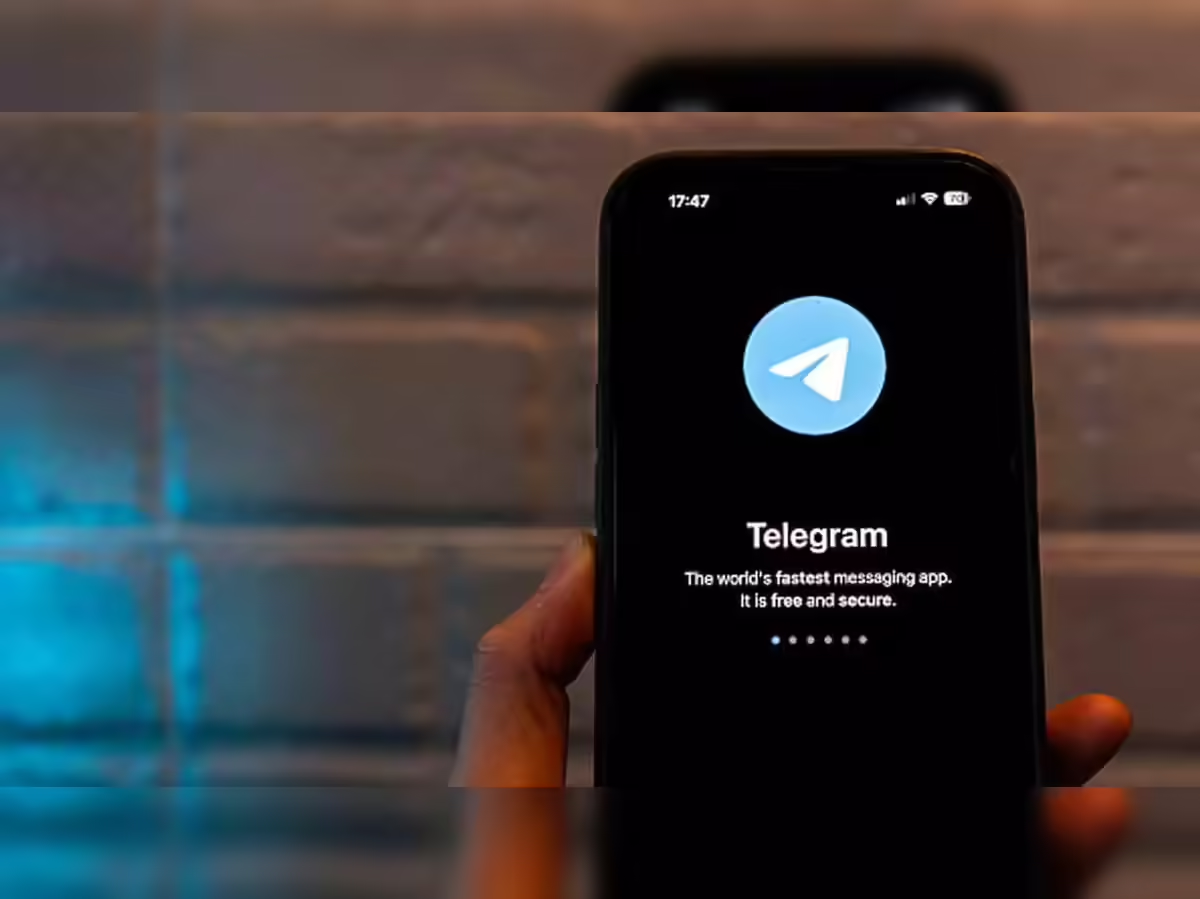
- Telegram filed a nearly 200-page petition in Delhi High Court challenging India's temporary app block as unconstitutional
- The government blocked Telegram nationwide until June 22 to prevent leaks of the NEET medical entrance exam
- 150 million Indian Telegram users are affected by a ban targeting channels run by a small subset of bad actors
Telegram has filed a nearly 200-page petition in the Delhi High Court challenging India's temporary block of its messaging app, calling the nationwide shutdown an unconstitutional overreach that punishes 150 million users for the actions of a few. The block, which went into effect on Tuesday and runs until June 22, was ordered to prevent the leaking of exam papers for the NEET-UG medical entrance test.
The government invoked Section 69A of India's IT Act, a provision that allows blocking internet services in the "interest of sovereignty and integrity of India." But Telegram argues the justification does not hold. In its filing, the company contends that disabling an entire platform because some channels posted exam materials sets a dangerous precedent.
“Disabling the entire app is a grossly disproportionate action that treats millions of innocent users as collaterals, violating fundamental constitutional rights to free speech and information.”
— Legal Counsel for Telegram, Delhi High Court filing
Why did India block Telegram?
The NEET-UG exam, taken by 2.3 million students this year, has been plagued by allegations of paper leaks. Last month, the exam was cancelled after millions had already sat for it, following widespread reports that exam materials had circulated on messaging platforms beforehand. The government's response: shut down the platform it believes was the primary distribution channel.
But Telegram says it had already been cooperating. According to the company, it removed over 900 links containing unlawful NEET exam content prior to the government's blocking order. The platform argues that a blanket shutdown ignores these efforts and fails to address the actual source of the leaks: insiders within the examination system.
Telegram founder Pavel Durov has been blunt. He called the ban a punishment for India's 150 million Telegram users rather than the insiders who actually leaked the materials. The company's filing echoes this point, stating the order was issued "on the impermissible premise that misuse by a subset of users justifies blocking of an entire platform."
What happened in court?
Both sides presented brief arguments before the Delhi High Court on Wednesday. India's Solicitor General Tushar Mehta pushed to adjourn until Thursday, which the judge granted. Mehta indicated the government would counter Telegram's position and said officials have repeatedly asked the company to fix its systems.
The government also mandated that Telegram disable its message-editing feature until the re-examination process concludes. The reasoning: edited messages could be used to create "backdated" evidence. It is unclear whether Telegram has complied with this specific demand.
A pattern of tech platform clashes
Telegram is not the first tech company to fight the Modi government over content takedowns. Last year, Elon Musk's X (formerly Twitter) went through a bitter legal battle over similar orders. That fight ended with the government reducing the number of officials authorized to issue takedown requests. The outcome of Telegram's case could set new precedent for how India regulates digital platforms.
The Internet Freedom Foundation has been critical of the ban, calling it "disproportionate." The organization argues that penalizing an entire platform for the misconduct of some users is a slippery slope that could be applied to any service hosting user-generated content.
Public reaction is split
Online discussions reflect the tension. On forums like Reddit's r/india and Hacker News, many users express frustration that the government is targeting the messenger rather than securing the examination process itself. Telegram hosts countless professional groups, news channels, and community forums that have nothing to do with exam cheating. These users now have no access.
Others take a more pragmatic view: if Telegram channels were the primary vector for organized paper leaks, the government had to act. But even supporters of intervention largely agree that a total shutdown is excessive and unlikely to solve the underlying problem.
What comes next?
The Delhi High Court hearing continues Thursday. If Telegram prevails, the block could be lifted before June 22. If the government's position holds, the ban stays in place through the re-exam period, and India will have established that blanket platform shutdowns are an acceptable tool for managing national security concerns.
Either way, the case raises uncomfortable questions. Can a democracy justify cutting off 150 million users from a communication tool because a small number misused it? Is targeting platforms an effective response to systemic failures in institutions like the examination system? And if this precedent stands, which platform is next?
Another look at how governments are navigating tech policy and international regulations
Frequently Asked Questions
Why did India block Telegram?
India blocked Telegram to prevent the circulation of leaked exam papers for the NEET-UG medical entrance test. The government used Section 69A of the IT Act, which allows blocking internet services for reasons of national security.
How many users are affected by the Telegram India block?
Approximately 150 million monthly active Telegram users in India are affected by the temporary block, which runs until June 22.
What is Telegram's argument against the ban?
Telegram argues the ban is unconstitutional and disproportionate. The company says it already removed over 900 links with unlawful exam content and that blocking the entire platform punishes millions of innocent users for the actions of a few.
When will the Delhi High Court rule on the Telegram case?
The hearing continues Thursday, when the Indian government is expected to present its counter-arguments. A ruling could come shortly after, potentially before the June 22 expiration of the block.
Has India blocked apps like this before?
Yes. India has blocked apps under Section 69A before, including TikTok and several Chinese apps in 2020. Last year, Elon Musk's X fought a legal battle over content takedown orders.
Logicity's Take
This case exposes a fundamental mismatch: the government is treating a distribution channel as the root cause of a corruption problem. Exam papers leak because of insider failures, not because Telegram exists. Blocking the app might slow circulation during one exam cycle, but it does nothing to address why exam materials keep reaching outside hands in the first place. If India wins this case, expect the playbook to be repeated. Every future crisis involving a digital platform becomes an opportunity for a shutdown, regardless of whether the platform is the problem or just the medium.
Need Help Implementing This?
If you're a platform operating in India or navigating content moderation challenges in regulated markets, reach out to Logicity for analysis and strategic guidance on compliance and policy response.
Source: Tech-Economic Times / ET
Huma Shazia
Senior AI & Tech Writer
Produced with AI assistance and reviewed by the Logicity editorial team. Learn more in our Editorial Policy.




