Key Takeaways
- G7 nations are negotiating a 'trusted partners' scheme to regain access to US frontier AI models blocked by Trump's June 12 directive
- The framework would let allied countries and vetted companies use models like Anthropic's Mythos for cybersecurity defense
- Europe continues pushing for AI sovereignty through 'gigafactories' while acknowledging it remains years behind US rivals
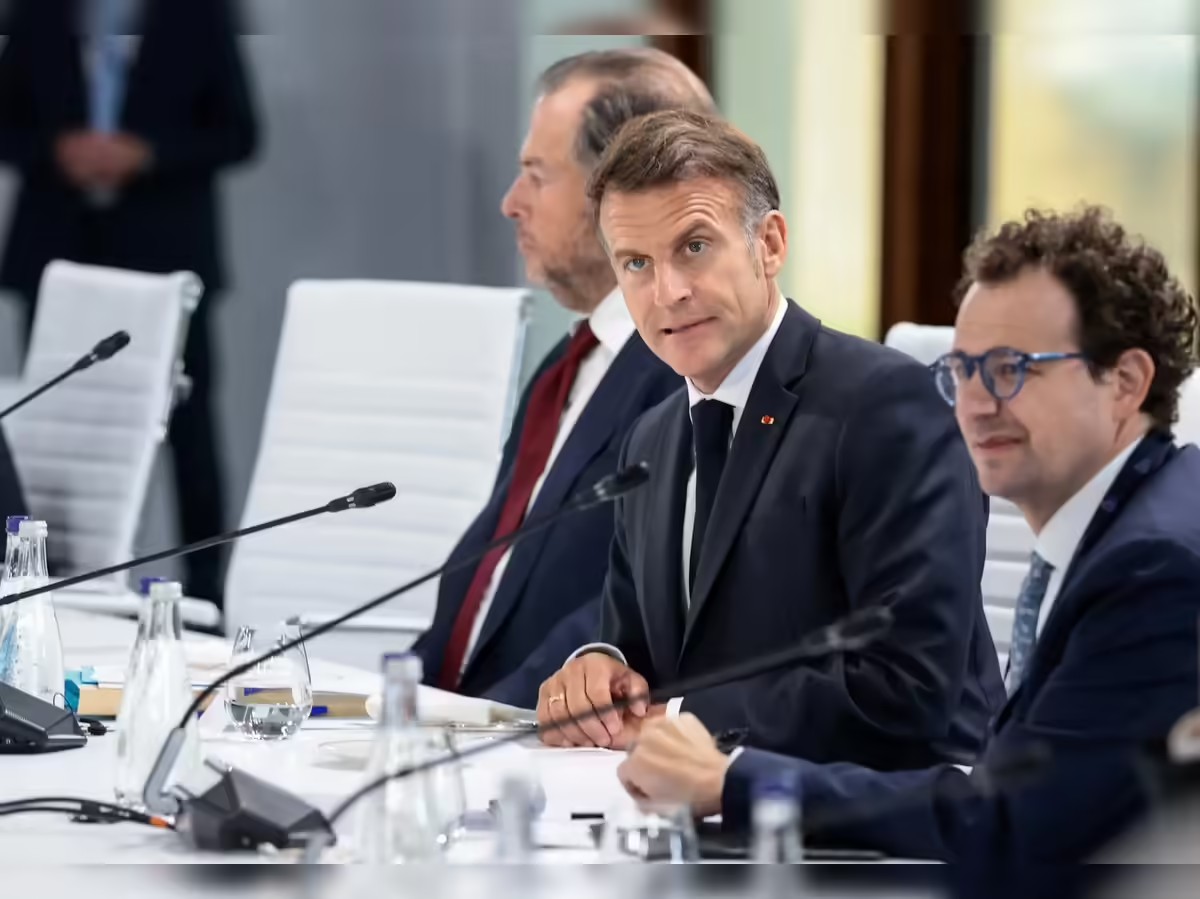
G7 leaders meeting at Evian-les-Bains spent much of their June 15-17 summit hashing out a workaround to US President Donald Trump's blanket ban on foreign access to advanced American AI models. The result: a draft 'trusted partners' scheme that could let allied nations and vetted corporations use systems like Anthropic's Mythos to strengthen cybersecurity defenses, even as Washington tightens export controls in the name of national security.
The joint statement tasked finance officials, regulators, and cybersecurity experts with assessing how frontier AI models could affect financial stability, productivity, and labor markets. But the bigger news came from the side negotiations. Trump's June 12 directive cut off 100% of frontier AI model access for foreign nationals, and America's closest allies want back in.
What is the trusted partners scheme?
According to Reuters, the trusted partners designation could apply to entire countries or individual companies. It would create a path around the US restrictions, granting access to models that are otherwise blocked. The primary use case: cybersecurity. Allied nations want to deploy American AI to defend critical infrastructure against state-sponsored attacks from China and other adversaries.
The irony here is sharp. Anthropic's Mythos was built to find coding flaws and bolster cyber defenses. Cybersecurity researchers worry the same capability could turbocharge attacks on the systems it was designed to protect. That dual-use concern is precisely why the US restricted access. And it's also why allies argue they need the tool to compete with adversaries who will find ways to exploit similar technology.
Who attended and what did they discuss?
AI executives from Anthropic, OpenAI, and Google joined a working lunch with G7 leaders on Wednesday. All three companies develop highly advanced models now caught in the export control web. The agenda covered regulation, AI infrastructure, and the practical mechanics of a trusted partners framework.
Seven nations are now involved in these negotiations. The stakes extend beyond cybersecurity. Cloud computing, semiconductor design, and cutting-edge AI research are dominated by American firms. European and Asian allies depend on this technology, and a prolonged shutout could force them toward non-US alternatives or accelerate their own development programs.
Europe's sovereignty problem
The trusted partners debate exposes a deeper tension for European policymakers. They want technological independence from American platforms. They also don't want to fall further behind. The European Commission recently unveiled plans for AI 'gigafactories' and large-scale computing infrastructure to give the region sovereign access to processing power. New legislation targets domestic cloud, AI, and semiconductor industries.
Critics point out that Europe remains years behind US rivals in all these areas. Building from scratch takes time and capital. In the short term, access to American AI is not a luxury. It's a competitive necessity.
European Commission President Ursula von der Leyen struck a pragmatic tone at the tech leaders' lunch. She argued that mutual interest should drive collaboration: 'We use each other's trusted technology, and our financial systems are interconnected.' She praised US moves to ensure AI firms act responsibly when introducing powerful new models, a nod to the regulatory frameworks both sides are developing.
Can geographic AI restrictions actually work?
Online communities are skeptical. Discussions on HackerNews and specialized AI subreddits focus on the enforcement problem. These models run in the cloud. Geographic restrictions are hard to police. Many users argue that blanket bans hinder collaborative cybersecurity research without meaningfully slowing adversaries. Worse, they could push allies toward developing alternative AI architectures outside American control.
That outcome would fracture the technology ecosystem in ways that serve no one's security interests. The trusted partners scheme is an attempt to thread the needle: maintain some control over sensitive capabilities while keeping allies inside the tent.
What happens next?
The G7 statement assigns the assessment work to finance officials and cybersecurity experts, but no timeline was announced. The trusted partners framework remains in negotiation. Implementation will require buy-in from the Trump administration, which has shown little appetite for carve-outs that dilute its national security posture.
For now, America's closest allies wait. Their cybersecurity teams want access to the best defensive tools available. Their governments want leverage in the broader tech competition with China. And their industries want to avoid being locked out of the AI ecosystem they've depended on for a decade.
Frequently Asked Questions
What is the G7 trusted partners scheme for AI?
A proposed framework that would allow allied nations and vetted companies to access advanced US AI models currently blocked by export restrictions, primarily for cybersecurity applications.
Why did the US restrict access to frontier AI models?
President Trump's June 12 directive cited national security concerns, particularly the dual-use nature of tools like Anthropic's Mythos that could both defend and attack computer systems.
Which AI companies are involved in G7 discussions?
Executives from Anthropic, OpenAI, and Google attended a working lunch with G7 leaders to discuss regulation and AI infrastructure.
How is Europe responding to US AI restrictions?
The European Commission is investing in AI 'gigafactories' and sovereign computing infrastructure, though critics note Europe remains years behind US capabilities.
Can AI export restrictions be effectively enforced?
Many experts are skeptical, since these models run in the cloud and geographic restrictions are difficult to police in practice.
Logicity's Take
The trusted partners scheme is less about AI policy and more about alliance management. Trump's blanket ban treated long-standing allies like potential adversaries, and G7 leaders spent three days finding a diplomatic workaround. The real question isn't whether the framework will work technically. It's whether Washington will accept any limits on its unilateral control over frontier AI. If it doesn't, expect Europe's gigafactory plans to accelerate, and expect the global AI ecosystem to fragment along geopolitical lines.
Another example of how AI infrastructure is reshaping corporate strategy
Need Help Implementing This?
Navigating AI export controls and compliance frameworks is complex. If your organization needs guidance on accessing frontier AI models within regulatory constraints, contact Logicity's advisory team for a consultation.
Source: Tech-Economic Times / ET
Huma Shazia
Senior AI & Tech Writer
Produced with AI assistance and reviewed by the Logicity editorial team. Learn more in our Editorial Policy.




