
Key Takeaways
- TCS Q1 FY26 profit rose 5% YoY to Rs 13,349 crore with revenue up 14% to Rs 72,275 crore
- Nandan Nilekani commits his largest VC investment as anchor LP in Fundamentum's Rs 2,200 crore Fund III
- India's non-RMG mobile gaming market could hit $2.4 billion by 2029 from IAP and advertising
Tata Consultancy Services opened FY26 with a 5% jump in net profit to Rs 13,349 crore and a $9.5 billion order book, signaling that enterprise tech spending remains resilient despite tariff fears and macro uncertainty. Separately, Infosys co-founder Nandan Nilekani is making his largest venture capital commitment yet, anchoring Fundamentum's Rs 2,200 crore third fund targeting consumer tech, fintech, and AI-native startups.
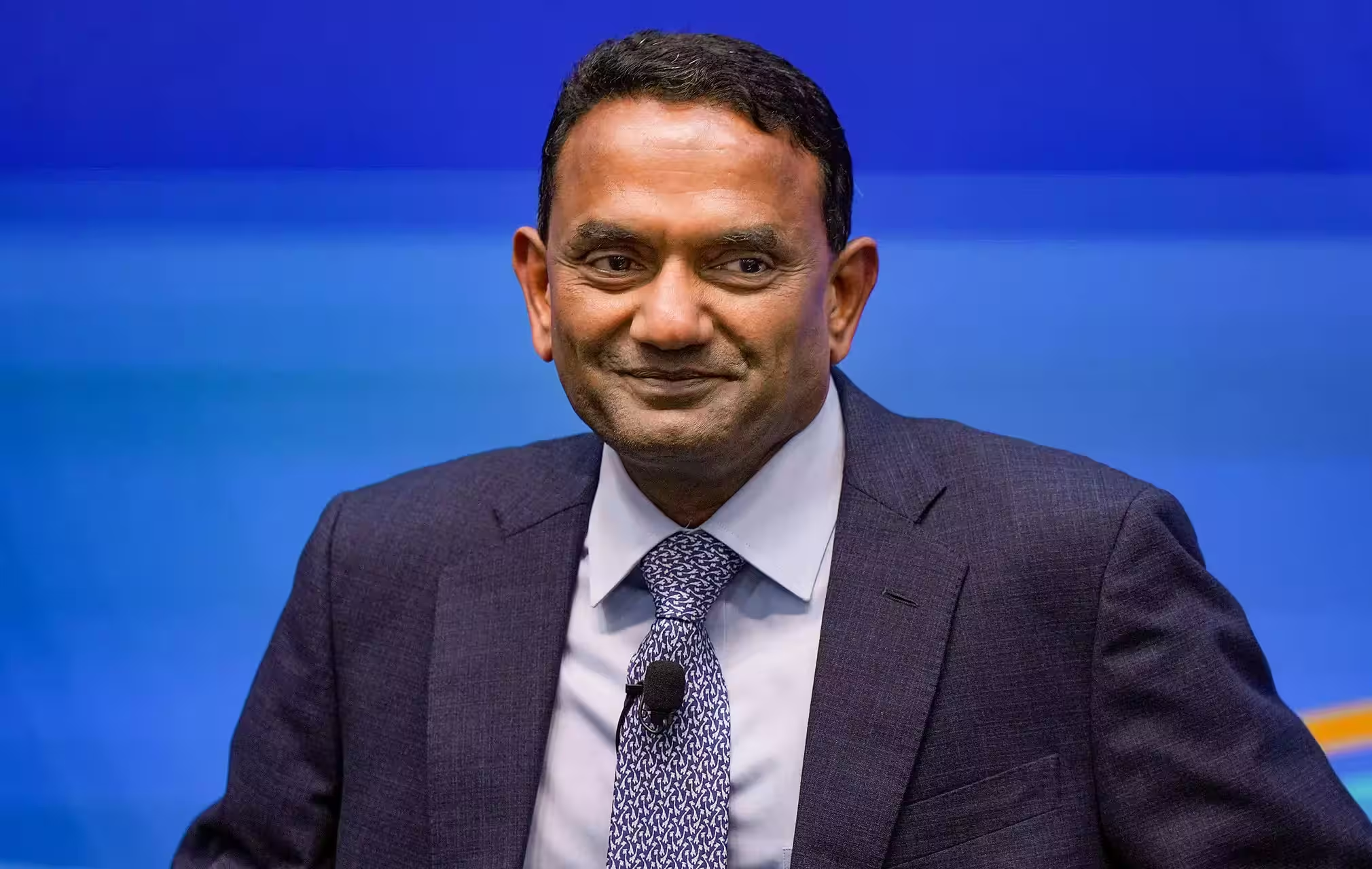
TCS Q1 numbers: What the results actually show
Revenue climbed 14% year-on-year to Rs 72,275 crore. Net profit reached Rs 13,349 crore, up from Rs 12,760 crore in the same quarter last year. The company added roughly 9,300 employees during the June quarter, pushing total headcount to 593,798. That's a meaningful reversal after quarters of flat or declining headcount across Indian IT.
CEO K Krithivasan pointed to AI, modernization, cybersecurity, sovereign cloud, and platform simplification as the spending priorities clients are backing with real budgets. TCS chairman N Chandrasekaran went further, calling AI an opportunity rather than a threat for IT services firms.
The $9.5 billion order book matters because it suggests demand visibility for the next few quarters. For context, TCS reported a similar book in the trailing quarters of FY25, so the pipeline is holding rather than surging. Still, holding steady in an uncertain macro environment counts as a win.
Nilekani's biggest VC bet: Fundamentum Fund III
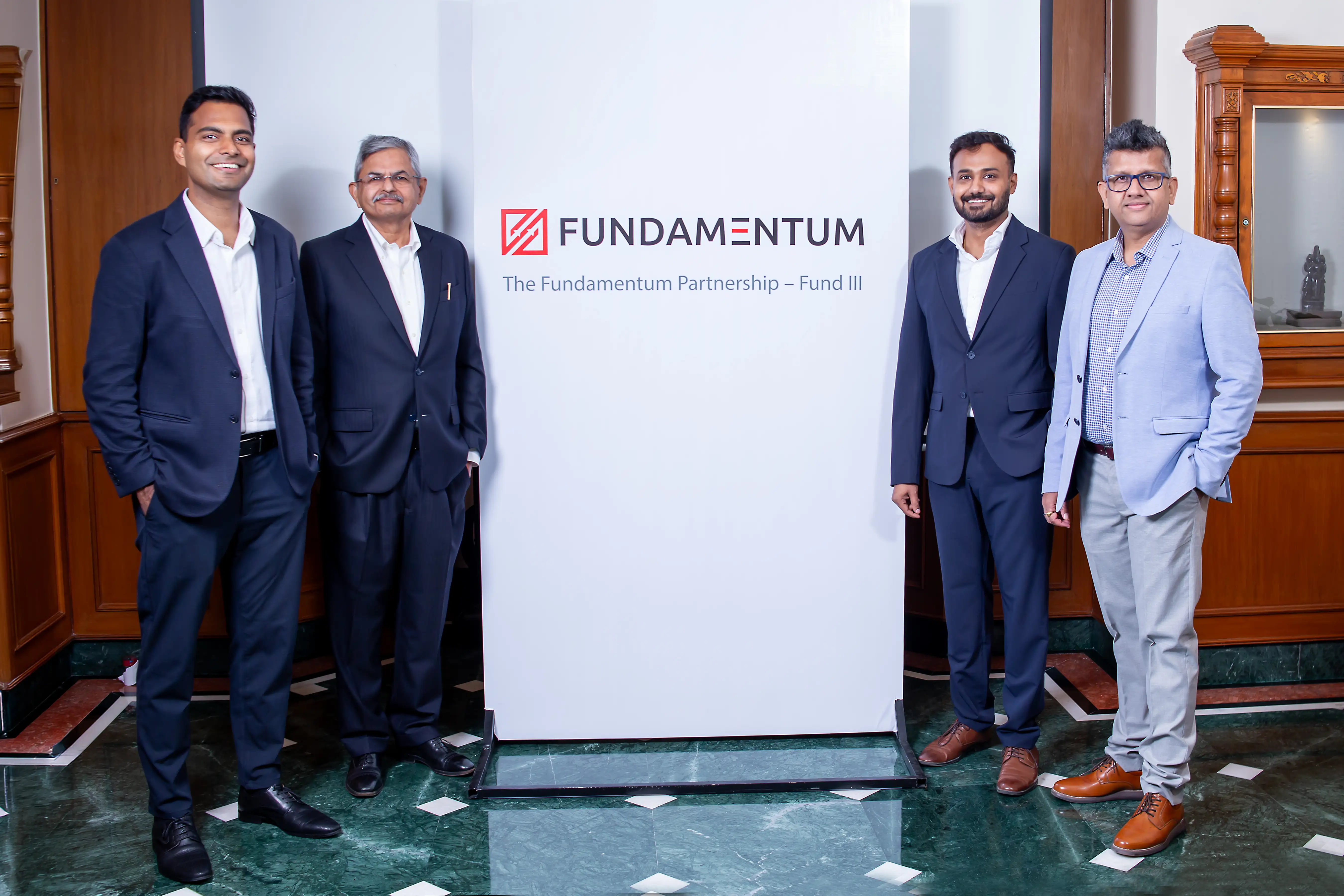
Fundamentum, the growth-stage VC firm Nilekani co-founded with Helion Ventures' Sanjeev Aggarwal, has launched its third fund with a Rs 2,200 crore target corpus (including a Rs 400 crore greenshoe option). Nilekani is stepping back from the general partner role to become the anchor limited partner. His mentorship of the team and portfolio founders will continue.
The fund will write average checks of $10 to $15 million across about 11 companies. Roughly 40% of the corpus is earmarked for follow-on investments. Investment focus: consumer tech, fintech, and startups that are AI-native or AI-enabled from the ground up.
“India has a very good startup ecosystem, but the wheels come off when companies try to scale.”
— Sanjeev Aggarwal, General Partner, Fundamentum
Aggarwal told ET that Fundamentum was created to fill the gap startups face at growth stage. Beyond capital, the firm provides hands-on support with organization design, governance, hiring, and go-to-market strategy. Partner Ashish Kumar has moved to lead Fundamentum Frontier Advisors (F2A), a separate vehicle focused on AI and deeptech.
Honasa Consumer guides for 30% YoY growth in Q1

Mamaearth's parent company expects year-on-year revenue growth in the thirties for Q1 FY27. Reported growth will land in the mid-twenties because Flipkart Group revised its revenue recognition policy, compressing numbers for marketplace sellers. The flagship Mamaearth brand is guiding for high-teen growth on stronger demand and continued offline expansion.
The company also announced plans to acquire a majority stake in Fluence Pharma at a Rs 135 crore valuation, extending its portfolio beyond direct-to-consumer beauty.
India's mobile gaming market: $2.4 billion by 2029

A new report from gaming research firm Naavik, prepared for Mixi Global Investments, projects India's mobile gaming industry will generate $2.4 billion from in-app purchases and advertising by 2029. The upside is concentrated in non-real-money games rather than fantasy sports and rummy apps that have dominated headlines.
India's IAP revenue grew 14.6% to $800 million in 2025, while China's declined 2.2%. Krafton India reported a 17% rise in paying users for Battlegrounds Mobile India in Q1. Dot9 Games (FAU-G: Domination) and casual gaming startup Felicity Games both expect higher ad revenue and IAP this year.
Meta and Netflix: Quick hits
Meta's AI video generation tool Muse is drawing regulatory attention, though details remain thin. The company continues to face questions about how generative AI features will interact with existing content moderation policies.

Netflix is expanding its India playbook, doubling down on local-language originals and regional partnerships. The streaming giant has been testing lower price points and mobile-only plans to grow subscribers outside metro markets.
Logicity's Take
TCS's results are fine, not exceptional. The real signal is that the AI services revenue that IT firms have been talking up for two years is finally translating into actual client spending. Meanwhile, Nilekani's shift from GP to anchor LP at Fundamentum suggests he's optimizing for leverage: backing proven fund managers rather than picking companies directly. For Indian startups, this is good news. Fundamentum has a reputation for staying engaged through the messy growth-stage years when Series B and C companies struggle to professionalize. The Rs 2,200 crore corpus is modest by global standards but meaningful in India's Series B-C funding gap.
Frequently Asked Questions
How much profit did TCS report in Q1 FY26?
TCS reported a net profit of Rs 13,349 crore for Q1 FY26, up 5% from Rs 12,760 crore in the same quarter last year.
What is Nandan Nilekani investing in through Fundamentum?
Nilekani is the anchor limited partner in Fundamentum's Rs 2,200 crore Fund III, which targets consumer tech, fintech, and AI-native startups with $10-15 million average check sizes.
How many employees did TCS add in Q1?
TCS added approximately 9,300 employees during the June quarter, bringing total headcount to 593,798.
What is India's projected mobile gaming revenue by 2029?
India's mobile gaming industry is projected to generate $2.4 billion from in-app purchases and advertising by 2029, according to a Naavik report.
What is Fundamentum's investment focus?
Fundamentum invests in growth-stage companies in consumer technology, fintech, and AI-native or AI-enabled startups, with roughly 40% of the fund reserved for follow-on investments.
Need Help Implementing This?
Whether you're scaling your startup or evaluating IT services partnerships, Logicity can help you understand the vendor landscape and make informed decisions. Contact us at hello@logicity.in.
Source: Tech-Economic Times
Huma Shazia
Senior AI & Tech Writer
Produced with AI assistance and reviewed by the Logicity editorial team. Learn more in our Editorial Policy.




