Key Takeaways
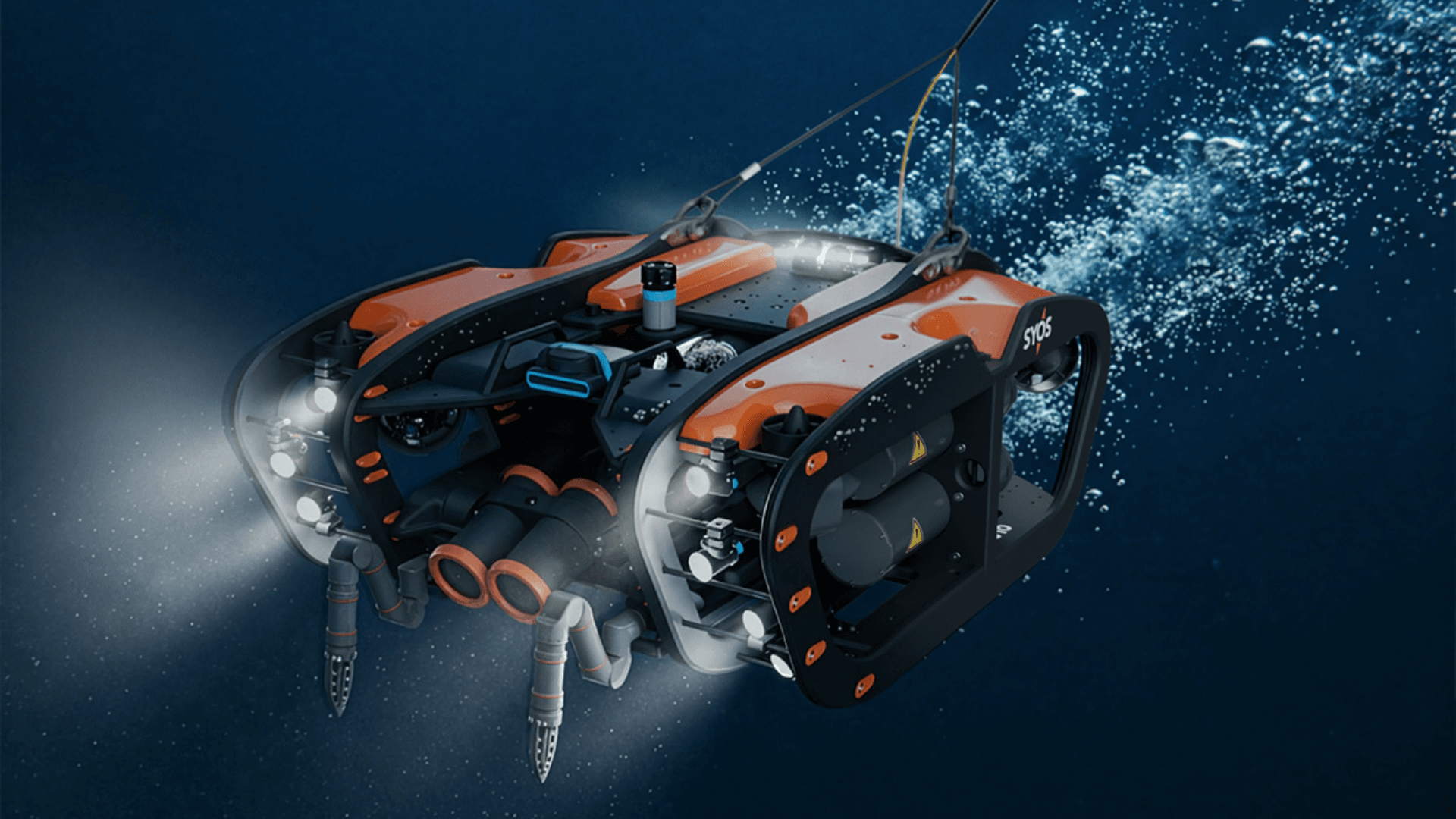
- The SU10 can operate at depths up to 1,640 feet (500 meters) with a 22-pound payload capacity
- Battery life is 4 hours standalone, but unlimited when tethered to surface power via fiber-optic cable
- SYOS's AAIM software integrates air, land, and sea drones into coordinated operations
SYOS, a startup building autonomous systems across air, land, and sea, has unveiled the SU10. It's a small underwater drone designed to patrol and protect the undersea cables that carry 95% of intercontinental data traffic.
The drone can dive to 1,640 feet (500 meters) and carry a 10-kilogram (22-pound) modular payload. On battery power alone, it runs for four hours. But when tethered to a surface vessel, it can operate indefinitely.
How the Tether Changes Everything
Four hours of battery life sounds short for cable patrol duty. But SYOS designed the SU10 to work tethered to larger vessels on the surface. The tether carries more than just power. It includes an ultra-slim fiber-optic line for real-time data transfer and live video feeds.
This setup lets operators switch between autonomous operation and manual control as needed. The drone can loiter underwater, watching for disturbances. When it detects something, it alerts the operator, who can take over, verify the threat, and deploy additional resources.
Engineers on Reddit and Hacker News have debated the tether's vulnerability. A fiber-optic line trailing from drone to ship could get snagged by fishing gear or cut by currents. SYOS hasn't publicly detailed how they protect the cable, but the concern highlights a real operational tradeoff: unlimited endurance versus physical exposure.
Launch Options: Shore, Ship, or Autonomous Surface Vessel
The SU10 can launch three ways. Operators can deploy it directly from shore. They can use a crewed mothership. Or they can send it from SYOS's own uncrewed surface vessel, which includes an automated launch-and-recovery system.
That last option points to something bigger. SYOS isn't just selling a single drone. They're building a multi-domain autonomous system.
The AAIM Software Stack
SYOS has been building uncrewed systems for air, land, and sea surface. Their proprietary AAIM software stack ties all these platforms together. A single operator can coordinate drones across multiple domains from one interface.
This resembles the drone wolf pack concept China has developed for the PLA. But SYOS extends the idea beyond any single domain. Air drones could provide surveillance. Surface vessels could carry power and communications. Underwater units like the SU10 could inspect infrastructure. AAIM coordinates the whole swarm.
Why Subsea Cables Matter Now
Subsea cables have become a national security concern. They carry telecommunications and connect energy infrastructure between continents. Recent geopolitical tensions have raised fears about sabotage. The Baltic Sea has seen multiple cable incidents in the past year.
Traditionally, monitoring these assets required expensive crewed vessels. Constant surveillance was economically impossible. Governments ran periodic surveys and hoped for the best.
The SU10 offers a different model. Tethered to an uncrewed surface ship, it can provide persistent underwater presence at a fraction of crewed vessel costs. Even governments with limited defense budgets could afford continuous monitoring.
Logicity's Take
Operational Reality
The SU10 supports various mission packages. SYOS mentions infrastructure protection, inspections, and intervention. The 10-kilogram payload bay can carry different sensor suites or tools depending on the job.
In inspection mode, the drone could examine cable conditions, check for damage, and identify repair needs. In protection mode, it could detect unauthorized vessels or divers approaching critical infrastructure. The intervention capability suggests it might eventually carry tools to address minor issues without surfacing.
Frequently Asked Questions
How deep can the SYOS SU10 underwater drone operate?
The SU10 can operate at depths up to 1,640 feet (500 meters), which covers the depth range where most subsea cables and pipelines are located.
How long can the SU10 stay underwater?
On battery power, the SU10 runs for 4 hours. When tethered to a surface power source, it can operate indefinitely.
What is the SU10 designed to protect?
The drone targets subsea infrastructure protection, primarily telecommunications cables and energy pipelines that run along the ocean floor.
Can the SU10 operate autonomously?
Yes. The SU10 can run autonomous missions using SYOS's AAIM software. Operators can also switch to manual control via the fiber-optic tether when needed.
Another look at autonomous systems and the costs of scaling new technology
Need Help Implementing This?
Source: Latest from Tom's Hardware
Manaal Khan
Tech & Innovation Writer
Produced with AI assistance and reviewed by the Logicity editorial team. Learn more in our Editorial Policy.