Key Takeaways
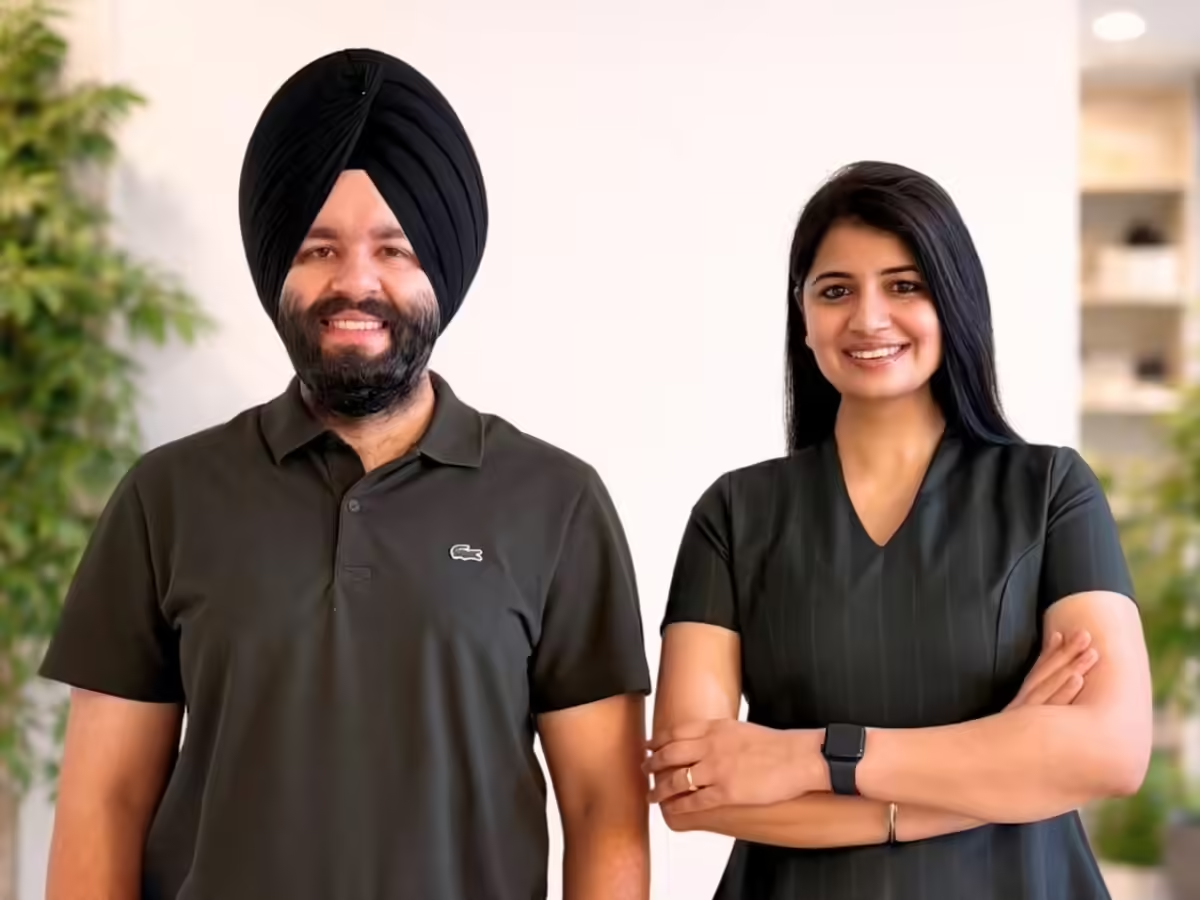
- Superliving raised $7 million in a round led by Lightspeed, with Kae Capital and All In Capital participating
- 74% of paying users come from tier 2 and tier 3 cities like Meerut, Varanasi, and Indore
- The startup has crossed 1.5 million app installs and 100,000 paying subscribers in less than a year
Superliving, a Bengaluru-based preventive healthcare startup, has raised $7 million in a funding round led by Lightspeed. Existing investors Kae Capital and All In Capital also participated. The company builds an AI-powered wellness platform that targets lifestyle-related health problems before they become chronic conditions.
The round brings Superliving's total funding to roughly $10.5 million. The company previously raised $2 million in a seed round in January 2026 and $228,000 in September 2025, according to Tracxn data.
What does Superliving actually do?
Founded by Manavdeep Singh Grover and Gurjot Kaur, both former Pocket FM executives, Superliving sits in the gap between healthy and sick. The platform uses AI wellness companions, personalized health programs, and expert content to guide users on nutrition, exercise, sleep, and stress management.
"We come into the picture when people are not sick, but they are not healthy either," Grover told ET. "Many adults experience issues such as poor sleep, acidity, low mobility, or fatigue but often don't know what's causing them or where to seek help."
The AI models draw on in-house proprietary health knowledge bases and undergo continuous review by medical experts. Superliving plans to use the fresh capital to deepen research, strengthen its health knowledge infrastructure, expand vernacular content, and scale user acquisition in smaller cities.
Why target tier 2 and tier 3 India?
Unlike most health-tech platforms chasing metro consumers, Superliving has built its business around India's smaller cities and towns. The numbers back this strategy: 73 to 74% of paying users come from these markets. Metro cities account for only 11 to 12%.
"Accessibility, affordability, and accuracy remain the biggest barriers to preventive healthcare in tier 2 and tier 3 India," Grover said. The company's paying user base spans cities including Meerut, Gangtok, Agra, Nashik, Bhiwadi, Varanasi, Hisar, Jalandhar, Indore, Jaipur, and Visakhapatnam.
The startup has built its recommendation systems around Indian cultural patterns. "Whether it's fasting periods, wedding seasons, or regional dietary habits, these cultural nuances influence health decisions and need to be reflected in the recommendations users receive," Grover explained.
Product-market fit signals
Grover points to retention as the company's strongest indicator of product-market fit. More than 50% of users continue using the platform after the first month. For consumer AI products, that's a high bar.
Superliving currently operates with a nine-person team and plans to stay lean. "AI has fundamentally changed productivity. One person today can do the work of several people, which allows us to stay extremely efficient while continuing to grow," Grover said.
The competitive landscape
The preventive healthcare space in India is crowded. Superliving competes with established players like Healthify, GOQii, Fitterfly, and Breathe Well-being. Its bet is that AI-powered health companions combined with regional language content and local health behavior understanding will carve out a distinct position.
The founders' background in consumer tech helps. At Pocket FM, they worked on AI-driven engagement in an audio entertainment platform that has raised over $200 million. That experience in building sticky consumer products translates directly to health engagement challenges.
What's next for Superliving?
The company will use the funding to expand its vernacular content offerings. This matters because health advice needs to reach users in languages they think in, not just read. Scaling user acquisition across smaller cities remains the primary growth lever.
The timing aligns with a broader shift in preventive healthcare. More startups are using AI to deliver personalized recommendations at scale, moving the model from reactive sick-care to proactive health maintenance.
Frequently Asked Questions
How much funding has Superliving raised in total?
Superliving has raised approximately $10.5 million across three rounds, including the latest $7 million Series A led by Lightspeed.
Who are the founders of Superliving?
Manavdeep Singh Grover and Gurjot Kaur, both former executives at audio platform Pocket FM.
What percentage of Superliving users come from tier 2 and tier 3 cities?
According to the company, 73 to 74% of paying users come from tier 2 and tier 3 markets.
How many users does Superliving have?
The startup has crossed 1.5 million app installs and more than 100,000 paying subscribers in less than a year since launch.
Logicity's Take
Superliving's most interesting insight isn't the AI. It's the geographic arbitrage. While competitors fight for saturated metro markets, Superliving found that smaller cities have both the demand (lifestyle diseases are rising fast) and less supply (fewer doctors, gyms, nutritionists). The 74% tier 2/3 user base isn't a limitation. It's a moat. If the retention numbers hold, this could become the template for how consumer health companies scale in India.
Need Help Implementing This?
If you're building in healthtech or exploring AI-driven consumer products for emerging markets, Logicity tracks funding rounds, product strategies, and go-to-market patterns weekly. Subscribe to our newsletter for curated insights.
Source: Tech-Economic Times / ET
Manaal Khan
Tech & Innovation Writer
Produced with AI assistance and reviewed by the Logicity editorial team. Learn more in our Editorial Policy.




