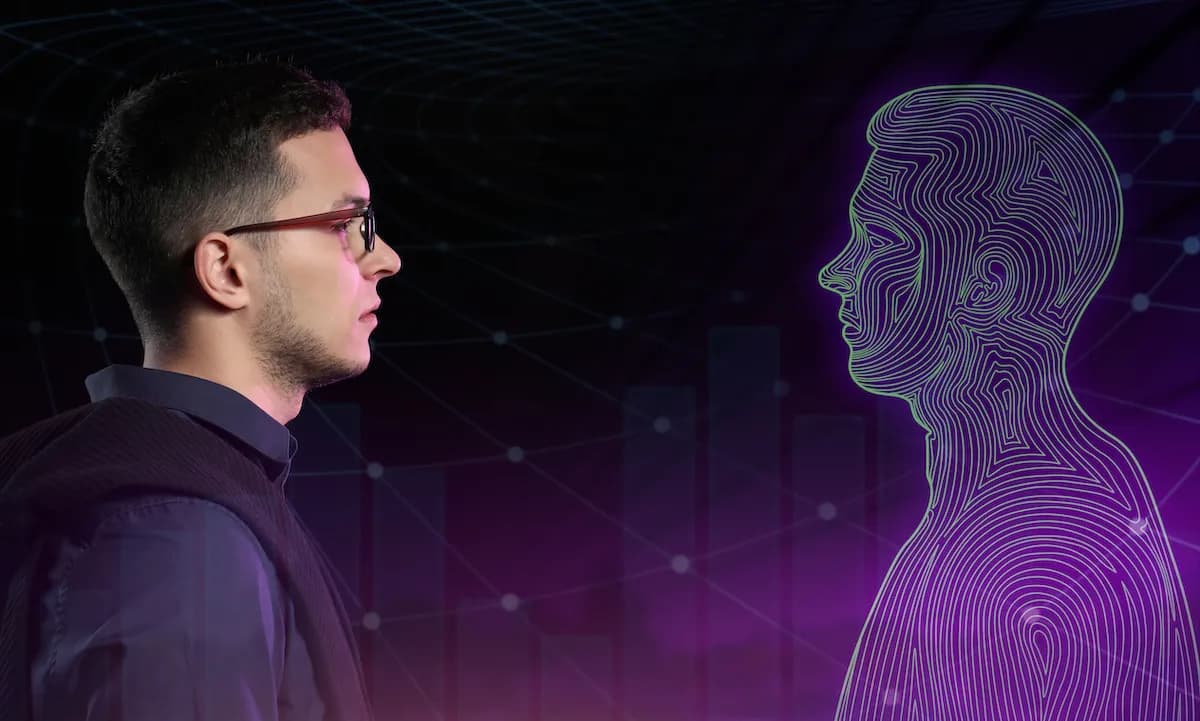
Simile, a startup building AI models that simulate human behavior, raised $200 million in Series B funding at a $2 billion valuation. The company's goal is to create digital twins of all 8 billion people on Earth, a synthetic population that brands and institutions can test products against before launching to real customers.
The round, announced July 30, will fund what Simile calls "a first-of-its-kind confidence model that predicts the accuracy of every simulation." Translation: the company wants to tell clients not just what their synthetic humans did, but how much to trust the result.
How CVS Health is using synthetic patients
CVS Health became a Simile customer last fall, according to The New York Times. The pharmacy giant faces a persistent problem: millions of patients never fill prescriptions, or abandon them partway through. CVS wanted to understand why, and what messaging might change the behavior.
Rather than survey real patients at scale, CVS tested interventions against 400,000 "agentic twins" generated by Simile. These synthetic profiles behave like the humans they represent, responding to prompts and scenarios the way their real counterparts might.
Simile built its core model from two-hour interviews with 1,000 people chosen to represent the broader population. The company validated responses by comparing synthetic answers to new answers from the same human panelists. The pitch: compress months of A/B testing into days, without ever touching a real customer.
Banks are already running similar playbooks
Financial institutions have moved faster than most industries on synthetic consumers. U.S. Bank deploys synthetic audiences to model customer segments and refine campaigns before launch. JPMorgan Chase generates synthetic financial data to simulate market behaviors for risk management. NatWest, Monzo, and Santander use synthetic data ecosystems to train AI models without exposing real customer records.
The appeal is obvious. A synthetic credit-card customer can test an onboarding flow in hours. A real one takes weeks to acquire and months to observe. "The synthetic consumer doesn't just compress timelines," PYMNTS reported in June. "It changes how banks bring products to market."
Deeper coverage of the funding round and valuation context
The risk no one in the press release mentions
Synthetic data is not inherently safe. Models trained on historical behavior can encode historical biases, then scale them across millions of simulated decisions. Worse, the abstraction makes those biases harder to detect, audit, or challenge.
There are also inference and linkage risks. A synthetic profile built from enough real signals can leak information about the person it was modeled on, even if no personal data was directly copied. Regulators have not caught up. The rules governing synthetic data in lending, healthcare, and insurance remain thin.
Logicity's Take
Simile's pitch is compelling for any team tired of slow, expensive user research. But the real test comes when a synthetic twin gets it wrong. If CVS sends a nudge campaign that synthetic patients loved but real patients ignore, who owns that failure? Simile's confidence model is an acknowledgment of the problem. It is not a solution. Finance teams should treat these tools like any predictive model: useful for directional bets, dangerous as a replacement for live validation.
What Simile is really selling
The company's blog post frames the product as a response to AI's creative explosion. "With AI, anyone can now create a product, a campaign, a policy or a script," the company wrote. "The bottleneck has moved upstream. The hard question is no longer whether you can create something, but rather what to create, for whom, and how to bring it to life."
Simile positions itself as the answer to that upstream question. Feed it a concept, and your digital twin population will tell you whether it resonates. The bet is that companies will pay handsomely to derisk creative decisions before committing real dollars.

At a $2 billion valuation, investors clearly believe demand exists. Whether the synthetic population can actually predict the real one, at scale, under regulatory scrutiny, is the open question Simile has $200 million to answer.
Need Help Implementing This?
If you're evaluating synthetic data tools or AI-driven customer research for your finance or product team, reach out to Logicity for guidance on vendor selection and implementation strategies.
Source: PYMNTS | / PYMNTS
Manaal Khan
Tech & Innovation Writer
Produced with AI assistance and reviewed by the Logicity editorial team. Learn more in our Editorial Policy.