Key Takeaways
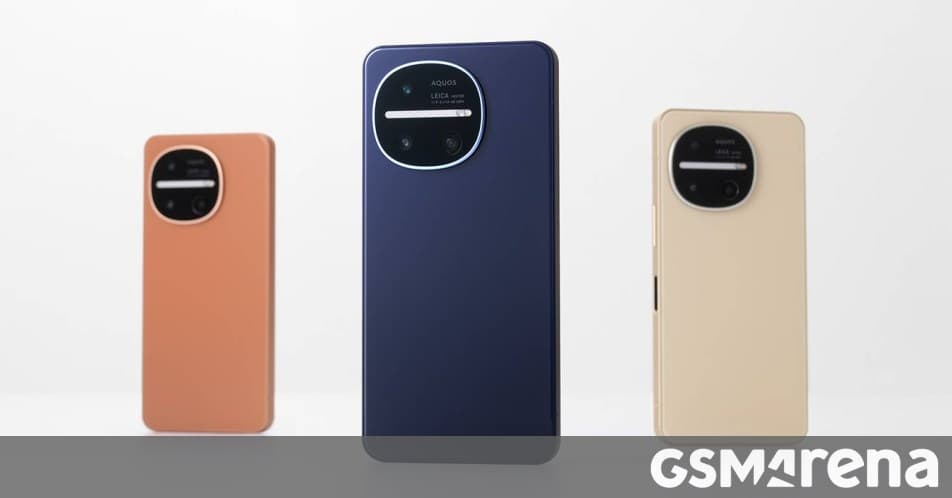
- The Aquos R11 features the brightest display Sharp has ever shipped: 3,600 nits peak, 20% brighter than its predecessor.
- Sharp upgraded to the Snapdragon 8s Gen 4 and added a 38.5MP telephoto camera with Leica HEKTOR optics.
- The phone launches in Japan at ¥163,900 (~$1,025) in early July, with no confirmed international availability.
Sharp has unveiled the Aquos R11, a flagship smartphone that pairs a record-setting 3,600-nit display with Qualcomm's Snapdragon 8s Gen 4 chipset. The phone launches in Japan in early July at ¥163,900 (roughly $1,025), targeting buyers who want top-tier specs without leaving Japan's domestic ecosystem.
The R11 succeeds last year's Aquos R10, and the upgrade list is substantial: a new telephoto camera, a brighter and faster screen, and a more powerful processor. Sharp did remove the microSD slot, though. That trade-off will frustrate the brand's loyal users, many of whom picked Aquos phones precisely because they kept legacy utility features.
What makes the Sharp Aquos R11's display special?
The 6.5-inch Pro IGZO OLED panel hits 3,600 nits peak brightness, making it the brightest screen Sharp has ever put in a phone. That's a 20% jump over the R10. At 100% APL (a fully white screen), it sustains 1,800 nits, a figure competitive with Samsung's S-series flagships. The variable refresh rate spans 1Hz to 240Hz, adjusting dynamically to save power during static content and ramping up for scrolling or gaming.
Resolution sits at 1,080 x 2,340 pixels. Sharp protected both the front and back glass with Gorilla Glass Victus 2. The phone carries IP68 and IP69 ratings for dust and water resistance, plus MIL-STD-810G and 810H certifications for drop, shock, and temperature extremes. Sharp even says you can wipe it down with alcohol or hand soap, a practical detail for anyone who wants to sanitize their device.
Triple Leica cameras: what's new?
The rear camera array carries Leica HEKTOR branding and includes three sensors. The main shooter uses a 50.3MP 1/1.55-inch sensor behind an f/1.9 23mm lens with optical and electronic stabilization. The ultra-wide is another 50.3MP sensor (1/2.55-inch) with a 122-degree field of view at 13mm, f/2.2.
New this year is a dedicated telephoto. It's a 38.5MP sensor with a 2.9x optical zoom (68mm equivalent) and an f/2.4 aperture. Both OIS and EIS are present. Sharp also included a 14-channel spectral sensor to improve color accuracy. The selfie camera matches the main camera's resolution at 50.3MP, sitting behind an f/2.2 23mm lens.
Snapdragon 8s Gen 4: how does it compare?
Sharp moved from the Snapdragon 7+ Gen 3 in the R10 to the Snapdragon 8s Gen 4 in the R11. The 8s Gen 4 sits below Qualcomm's flagship 8 Gen 4 but above the 7-series, offering higher CPU clock speeds and a more capable GPU. Sharp paired the chip with 12GB of LPDDR5X RAM and 512GB of UFS 4.1 storage. A larger vapor chamber handles thermal management.
The removal of the microSD slot is notable. Sharp's Aquos line historically appealed to users who wanted expandable storage and other "legacy" features that other manufacturers dropped years ago. Losing that slot signals Sharp aligning with mainstream flagship conventions, for better or worse.
Battery and software: the fine print
The R11 ships with a 5,100mAh battery, only 100mAh larger than the R10. Sharp calls it the biggest battery in Aquos history, but the improvement is marginal. Wired charging tops out at 36W, filling the cell in about 90 minutes. There's no wireless charging.
Connectivity includes USB 3.2 Gen 1 with DisplayPort 1.4 output, Wi-Fi 7, Bluetooth 6.0, and dual-band GPS. The phone runs Android 16 out of the box. Sharp committed to three OS updates and five years of security patches, a respectable software promise for a Japanese-market device.
What is the 'Akarium' LED bar?
A horizontal LED strip sits on the back, which Sharp calls "Akarium." At baseline, it works as a fill light for photography and a notification indicator. Sharp also added ambient lighting modes: fireplace, water, rustling leaves. These come with sound effects supervised by sound designer Shinya Kiyokawa.
Forum discussions have been polarized. Some users see the Akarium as a creative departure from the flat, anonymous design language dominating modern smartphones. Others view it as a gimmick. Either way, it's the kind of idiosyncratic feature that keeps Sharp interesting in a market dominated by samey slabs.
Pricing and availability
The Aquos R11 launches in early July through Sharp's online store, DoCoMo, and SoftBank. Pricing is ¥163,900 (approximately $1,025 or €880). Color options are Terracotta, Navy, and Ivory. As with most Sharp phones, there's no confirmed international release. Buyers outside Japan will need to import.
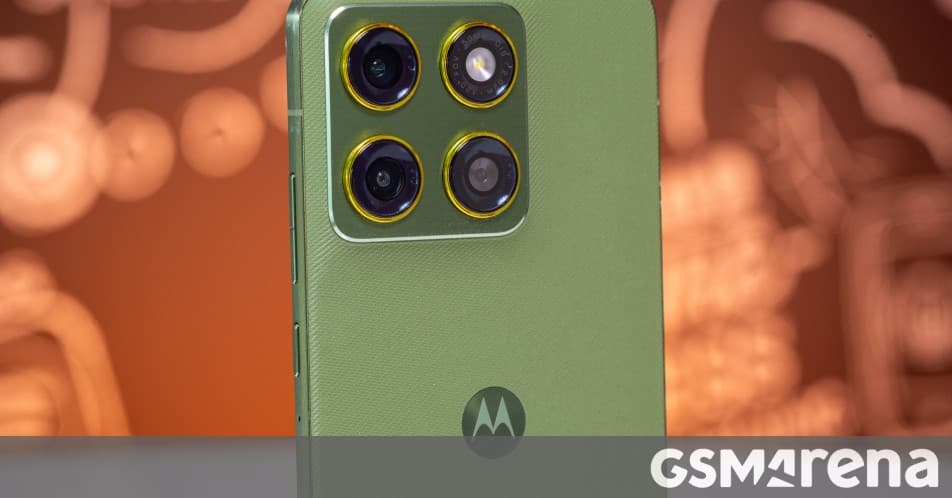
Another recent phone with IP69 water resistance at a very different price point
SoftBank is one of the carriers selling the Aquos R11
Logicity's Take
Sharp occupies a strange niche: hardware that genuinely competes with Samsung and Apple flagships, but distribution that rarely leaves Japan. The Aquos R11's 3,600-nit display and Leica optics would turn heads anywhere. But at $1,025 with no microSD slot and no wireless charging, it's a hard sell for import buyers who can get a Galaxy S25 Ultra with better resale value and global warranty support. Sharp's real audience remains Japanese consumers who value domestic brands and carrier integration.
Frequently Asked Questions
When does the Sharp Aquos R11 release?
Early July 2025 in Japan through Sharp's online store, DoCoMo, and SoftBank. No international release has been announced.
Does the Sharp Aquos R11 have a microSD slot?
No. Sharp removed the microSD slot on this model. It ships with 512GB of fixed UFS 4.1 storage.
How bright is the Aquos R11 display?
Peak brightness is 3,600 nits, making it the brightest screen Sharp has shipped. Sustained brightness at 100% APL is 1,800 nits.
What processor does the Aquos R11 use?
It runs the Qualcomm Snapdragon 8s Gen 4, an upper-mid tier chip with higher clock speeds than the 7+ Gen 3 in last year's R10.
Can I buy the Sharp Aquos R11 outside Japan?
Not officially. Sharp has not announced international availability. Import is possible, but you lose carrier compatibility and warranty support.
Need Help Implementing This?
If you're tracking the smartphone market for product decisions, sourcing, or competitive analysis, Logicity covers hardware launches weekly. Subscribe to our newsletter for direct updates, or reach out to our editorial team for enterprise briefings.
Source: GSMArena.com / Peter
Huma Shazia
Senior AI & Tech Writer
Produced with AI assistance and reviewed by the Logicity editorial team. Learn more in our Editorial Policy.