Saudi Arabia's Border Guard arrested 11 Ethiopian nationals in the Jazan region on August 3 after intercepting an attempt to smuggle 220 kilograms of khat, the stimulant plant banned in the Kingdom but widely consumed across the Horn of Africa and Yemen. The seizure occurred in the Al-Dayer sector, a corridor along Saudi Arabia's southwestern border that sees frequent smuggling attempts due to its proximity to Yemeni khat-growing areas.
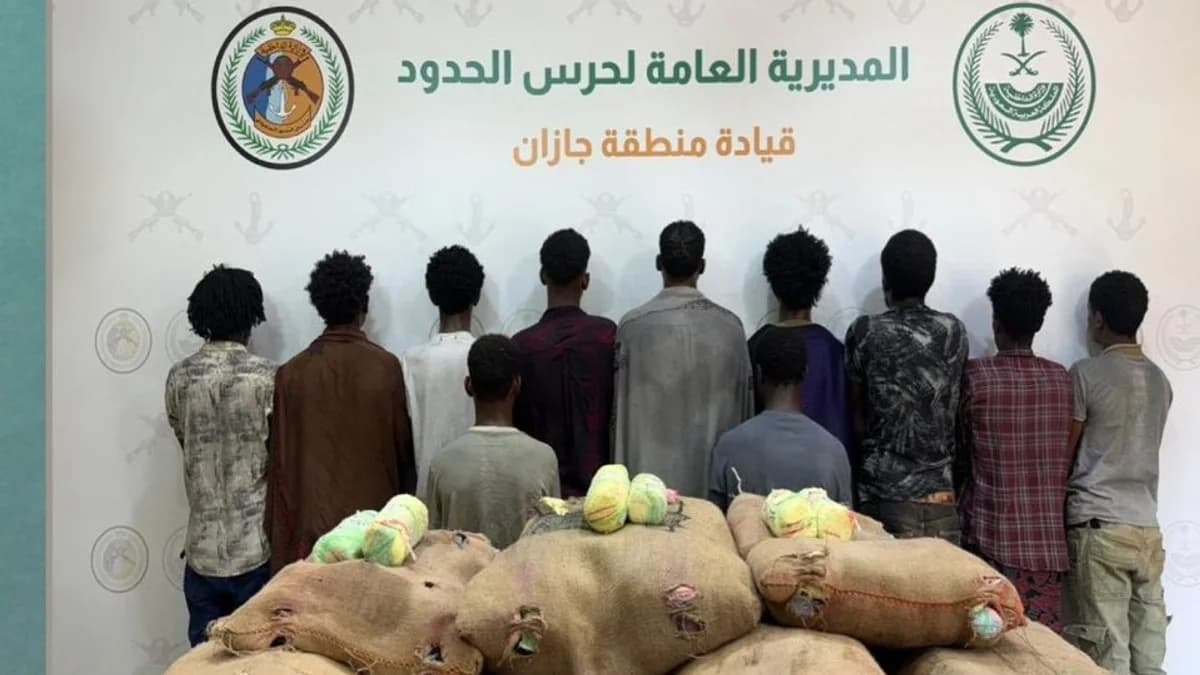
The Border Guard completed legal procedures against the detained individuals before transferring them and the seized contraband to relevant authorities. Saudi officials used the announcement to remind residents they can report suspected drug smuggling by calling 911 in Makkah, Madinah, Riyadh, and the Eastern Province, or 999 elsewhere in the Kingdom.
Why Jazan is a smuggling hotspot
Saudi Border Guards Arrest 11 People With 220kg Qat Shipment in Jazan
Jazan sits at the southwestern tip of Saudi Arabia, sharing roughly 260 kilometers of border with Yemen. That proximity makes it a natural entry point for khat, which is legal and culturally significant in Yemen and Ethiopia but classified alongside heroin and cocaine under Saudi narcotics law.
Khat leaves contain cathinone and cathine, stimulant compounds that produce effects similar to amphetamines when chewed fresh. The plant is a major cash crop in Yemen and parts of East Africa, where millions consume it daily. But Saudi Arabia treats any import as drug trafficking, with penalties ranging from imprisonment to execution depending on quantity and prior offenses.
Ethiopian migrants and the smuggling route
The arrest of Ethiopian nationals fits a pattern. Migrants from Ethiopia and other Horn of Africa countries often traverse Yemen en route to Gulf states seeking work. Some become involved in smuggling operations, whether by coercion or economic desperation, transporting khat across the porous border terrain.
Saudi authorities have increased border enforcement in recent years, deploying land patrol units and surveillance technology across remote sectors. The Jazan region in particular has seen a steady stream of interdictions, though exact annual figures remain unpublished.
Reporting channels the Kingdom is pushing
The Border Guard statement emphasized public cooperation, listing multiple reporting channels: emergency lines 911 and 999, a dedicated Border Guard number, and the General Directorate of Narcotics Control at 995 or via email. The messaging suggests authorities view civilian tips as a key enforcement tool.
Logicity's Take
For AI teams working on border security or supply-chain compliance tools, this case illustrates the persistent gap between policy and enforcement in cross-border contraband flows. Detection systems that integrate satellite imagery, patrol logistics, and tip-line data could find traction with Gulf state agencies. The challenge is not technology alone but the socioeconomic conditions driving migrants into smuggling networks.
Whether this seizure represents a spike in activity or simply a publicized success in routine operations remains unclear. Saudi authorities rarely disclose trend data on khat interdictions, making it difficult to assess whether enforcement is growing more effective or smugglers are adapting.
Need Help Implementing This?
Logicity helps engineering and product teams scope AI solutions for compliance, logistics, and security use cases. Contact our consulting team to discuss your project.
Source: https://saudigazette.com.sa / Saudi Gazette report
Huma Shazia
Senior AI & Tech Writer
Produced with AI assistance and reviewed by the Logicity editorial team. Learn more in our Editorial Policy.