Key Takeaways
Samsung Just Warned: The AI Chip Shortage Could Last Until 2028
- Samsung forecasts the memory chip shortage will intensify in 2027 and persist until at least 2028
- AI labs are now sharing demand forecasts directly with Samsung to secure long-term supply contracts
- Consumer device prices are rising across the board as manufacturers pass component costs to buyers
The global memory chip shortage will worsen through 2027 and likely persist until 2028, Samsung said during its Q2 2026 earnings call. The company, which manufactures roughly a third of the world's memory chips, attributed the extended timeline to insatiable AI demand that shows no sign of slowing. For tech buyers and hardware planners, this means higher prices and tighter supply for at least two more years.
Samsung's warning carries weight. The Korean giant sits at the center of the global memory supply chain, and its visibility into customer demand stretches years ahead. What it sees: frontier AI labs are now sharing multi-year demand forecasts directly with Samsung to lock in future supply. That desperation signals just how constrained the market has become.
Why AI labs are bypassing normal procurement
The typical chip procurement process involves quarterly forecasts and flexible ordering. That model has broken down. According to Samsung, AI labs are now disclosing their "medium- to long-term demand forecasts" directly to secure priority access. This unprecedented transparency gives Samsung confidence to install new equipment and ramp production without the fear of demand evaporating.
For Samsung, this shifts the business model. The company can now prioritize customers willing to sign long-term contracts, effectively choosing who gets supply and who waits. This multi-year visibility helps the memory industry avoid its historical boom-and-bust cycles, where overbuilding during shortages leads to price crashes when demand cools.
The arrangement benefits both sides, but smaller players and consumer electronics manufacturers are left fighting over remaining capacity. Memory production that once went to smartphones, laptops, and gaming consoles is now redirected toward AI data centers.
Details Samsung's record semiconductor profits amid the AI boom
The price squeeze hitting Samsung's own products
Memory shortages have created a peculiar problem for Samsung. Its semiconductor unit posted all-time high sales in Q2 2026, riding the wave of elevated chip prices. But those same prices are squeezing profitability in Samsung's smartphone and TV divisions, which must buy memory at market rates.
Samsung has responded by raising prices on Galaxy smartphones and tablets. The result: weakening demand for its consumer devices. It is a classic margin trap. The company's chip business profits while its consumer electronics business struggles with the cost of its own components.
This dynamic explains why Samsung cannot simply allocate more memory internally. The semiconductor division operates as a separate profit center, and diverting supply from high-margin AI customers to lower-margin consumer products would hurt overall company earnings.
Apple and Nvidia face the same reality
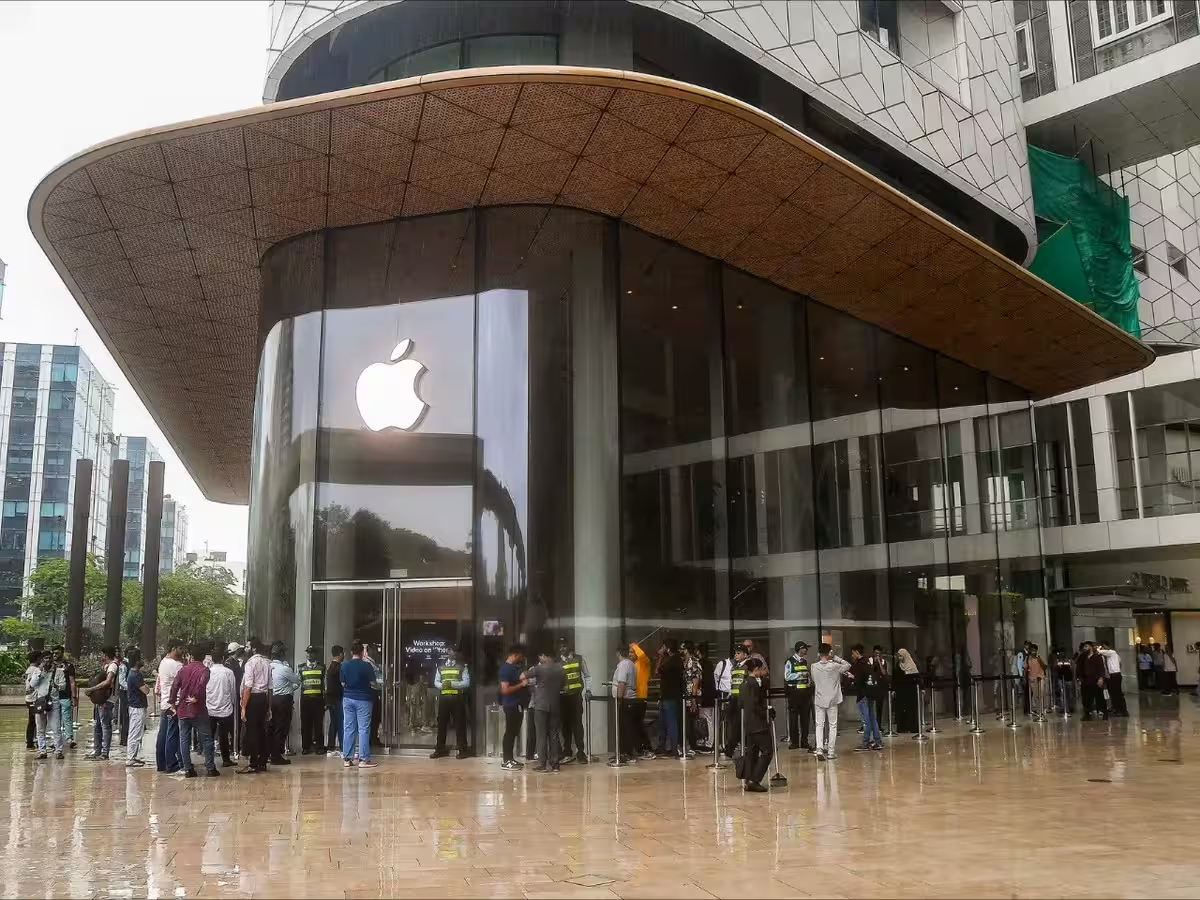
Samsung's competitors are in the same bind. Apple raised prices on MacBooks, Macs, and iPads last month, citing component costs. On Apple's Q3 2026 earnings call, the company warned that revenue growth for the current quarter would slow to 9% to 11% year-over-year, down from its recent 16% quarterly pace. Memory costs are not the only factor, but they are a significant headwind.
Nvidia, meanwhile, is expected to raise consumer graphics card prices by 20% to 30%. This will ripple through the gaming PC market, affecting desktop builds, gaming laptops, and even consoles that use similar memory architectures.
Apple's latest earnings show the company navigating higher component costs
What the 2028 timeline actually means
Samsung's forecast of supply constraints "lasting until at least 2028" deserves unpacking. Memory chip fabrication requires 18 to 24 months from investment decision to volume production. Even with Samsung installing new equipment today, meaningful capacity increases will not arrive until late 2027 or early 2028.
The shortage's informal nickname, "RAMaggedon," captures the mood among hardware planners. For organizations scaling AI infrastructure, the advice is straightforward: lock in supply agreements now, even if prices feel elevated. Waiting for relief in 2028 means competing with everyone else who also waited.
For consumer-facing businesses, the calculus differs. Higher device prices will dampen upgrade cycles. Enterprises managing laptop fleets or planning hardware refreshes should factor 10% to 20% higher costs into 2027 budgets compared to pre-shortage baselines.
Who wins and who loses
The clearest winners are memory manufacturers themselves. Samsung, SK Hynix, and Micron can raise prices without losing volume because demand exceeds supply. AI labs, willing to pay premium prices and sign multi-year deals, get priority access. The shortage essentially lets suppliers pick their customers.
The losers include consumer electronics makers who cannot pass costs to buyers without killing demand. Gaming PC builders face the same margin compression. And end consumers will pay more for every memory-dependent device, from phones to smart TVs to automobiles.
Mid-tier cloud providers and startups face a particularly difficult position. They need memory for AI workloads but lack the scale to negotiate priority contracts. Many will find themselves on allocation, receiving less supply than they request, or paying spot-market premiums that destroy unit economics.
The structural shift behind the shortage
This shortage differs from previous memory crunches. Earlier cycles resulted from temporary supply-demand mismatches. The current shortage reflects a structural shift: AI workloads require vastly more memory per compute unit than traditional applications.
Training a large language model consumes thousands of high-bandwidth memory (HBM) chips. Running inference at scale requires memory-rich configurations across data centers. These requirements did not exist five years ago. Memory manufacturers built capacity for a world of smartphones and PCs. They are now scrambling to serve a world where AI training runs consume more memory than entire countries of smartphone users.
Samsung's multi-year forecasts from AI labs suggest this is not a bubble. The demand is real, backed by committed spending, and growing. Memory manufacturers are responding, but physics and capital expenditure timelines impose hard limits on how quickly supply can catch up.
Logicity's Take
Samsung's warning is notable for what it does not say: how pricing will evolve. The company benefits enormously from elevated memory prices and has little incentive to accelerate relief. Its semiconductor division posted record revenue this quarter precisely because supply is tight. For tech buyers, the actionable insight is that waiting for prices to drop is a losing strategy. Anyone planning AI infrastructure or large hardware purchases should negotiate now, accept higher costs, and budget for two more years of constraint. The alternative is paying even more on the spot market when 2027 demand peaks.
What hardware buyers should do now
Organizations with significant hardware budgets face three practical options. First, accelerate purchases planned for 2027 into late 2026 if cash flow permits. Prices will likely rise further, and locking in current rates provides certainty.
Second, evaluate whether memory-heavy workloads can shift to cloud providers who have already secured supply. AWS, Google Cloud, and Azure negotiated capacity years ago. Their pricing may beat self-provisioning during a shortage, even if it would be more expensive in normal times.
Third, explore memory-efficient architectures. Techniques like quantization, model distillation, and sparse inference can reduce memory requirements by 50% or more. The engineering investment pays for itself when memory costs dominate hardware budgets.
For consumer device companies, the playbook involves managing customer expectations. Price increases are coming. The question is whether to raise prices gradually or in one large jump. Samsung's experience, where demand dropped after Galaxy price hikes, suggests gradual increases may preserve volume better than sticker shock.
Frequently Asked Questions
How long will the memory chip shortage last?
Samsung expects the shortage to worsen through 2027 and persist until at least 2028, with supply constraints gradually easing after new manufacturing capacity comes online.
Why is the memory shortage happening now?
AI workloads require far more memory per compute unit than traditional applications. Memory manufacturers built capacity for smartphones and PCs, not AI training runs that consume thousands of HBM chips per model.
Will device prices keep rising?
Yes. Samsung, Apple, and Nvidia have all raised or plan to raise device prices. Expect 10% to 30% increases across smartphones, laptops, gaming PCs, and graphics cards through 2027.
Need Help Implementing This?
If your organization is planning AI infrastructure investments or large hardware purchases, Logicity can connect you with procurement specialists who have navigated previous chip shortages. Contact us for vendor introductions and budget planning frameworks.
Source: TechCrunch / Marina Temkin
Huma Shazia
Senior AI & Tech Writer
Produced with AI assistance and reviewed by the Logicity editorial team. Learn more in our Editorial Policy.