Key Takeaways
- Around 70,000 Samsung union members will vote online through May 27 on a tentative wage deal
- Semiconductor division employees get a new bonus pool equal to 10.5% of operating profit, paid in stock
- The agreement averted an 18-day strike that was set to begin Thursday
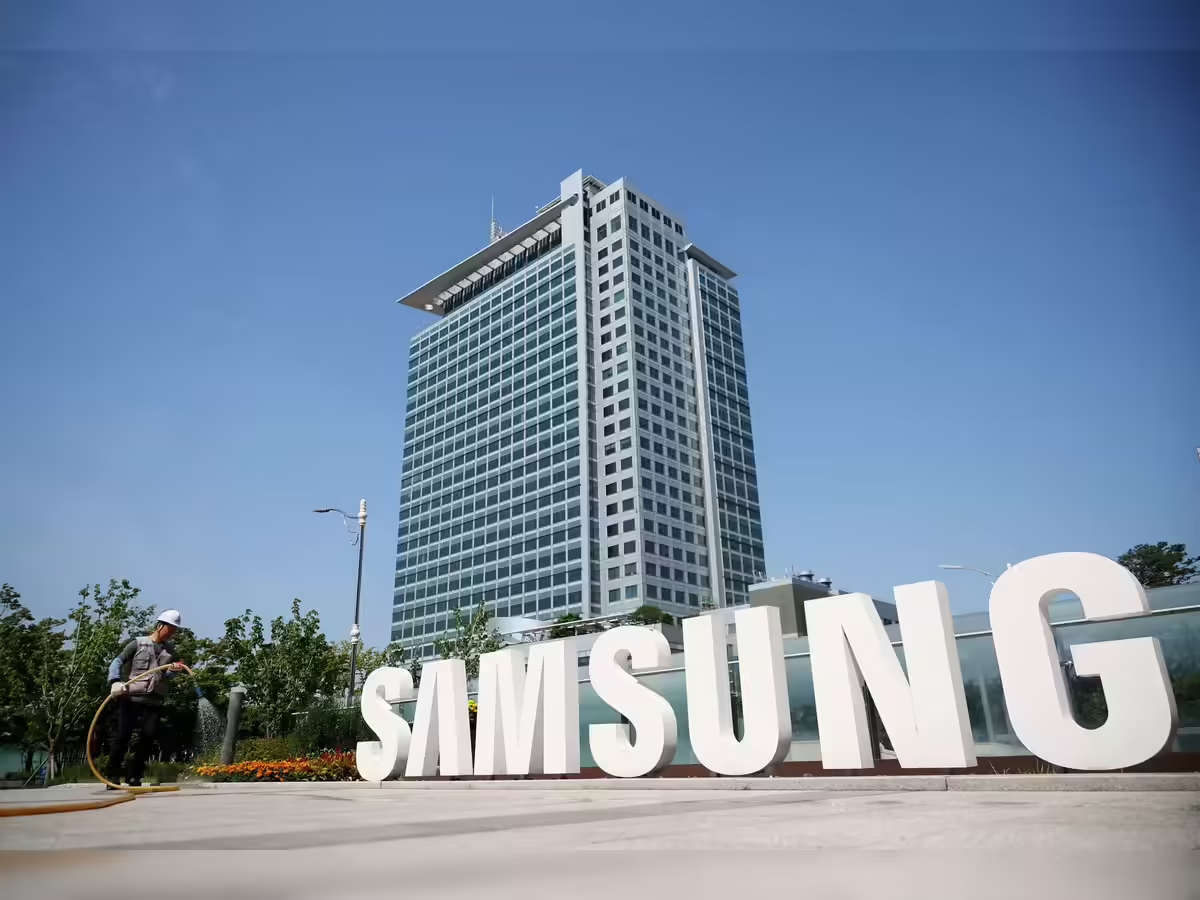
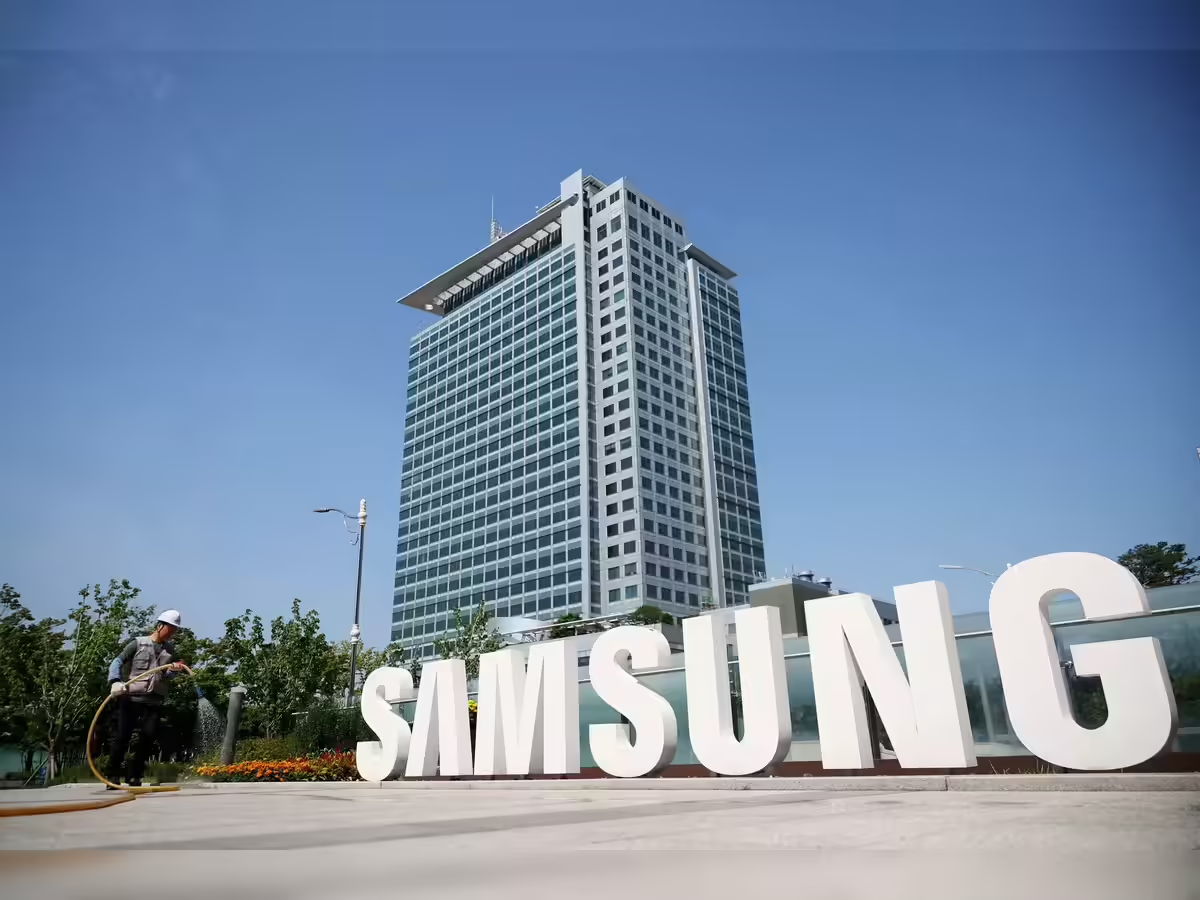
Samsung's labor union members began voting Friday on a tentative wage deal that stopped what would have been a major strike at the world's largest memory chip maker. The vote, originally scheduled for Saturday, was moved up a day and will run online through May 27.
Around 70,000 members are eligible to cast ballots. The agreement passes if more than half vote and a majority of those approve it, according to the union's lawyer.
What the Deal Includes
The tentative agreement creates a new bonus structure for Samsung's semiconductor division. Employees there will share a pool equivalent to 10.5% of the division's operating profit. The bonuses will be paid in Samsung stock rather than cash.
Based on an estimated 331 trillion won in operating profit and roughly 78,000 chip employees, individual workers could receive around 509 million won ($337,000), a Samsung company official confirmed to AFP. That figure is a rough calculation, not a guaranteed amount.
The company and union reached the provisional agreement late Wednesday after last-minute talks mediated by the South Korean government. The planned 18-day strike was set to begin Thursday.
Shareholders Push Back
Not everyone supports the deal. Some Samsung shareholders say they will pursue legal action against the tentative agreement.
On Thursday, a shareholders' group held a rally near the residence of Samsung chairman Lee Jae-yong. Their argument: operating profit-linked bonuses were not approved through a shareholder resolution and therefore lack legal validity under current commercial law.
The company has not publicly responded to the shareholders' legal claims.
Why This Strike Would Have Mattered
Samsung's memory chips go into consumer electronics, computer processors, and AI data centers. The company's high-bandwidth memory chips are critical components for scaling AI infrastructure.
A work stoppage at Samsung would have rippled through South Korea's economy. Semiconductors account for around 35% of the country's exports. The global AI boom has turbocharged Samsung's chip business and lifted South Korea's economic growth and stock market.
Samsung reported in April that its first-quarter operating profit jumped roughly 750% from a year earlier. The company's market capitalization topped $1 trillion for the first time this month.
What Happens Next
The online vote runs through May 27. If the deal passes, Samsung avoids what would have been the largest strike in its history. If it fails, the union could return to strike preparations, though neither side has said what a rejection would trigger.
The shareholder legal challenge adds another layer of uncertainty. Even a ratified deal could face court battles over whether profit-linked bonuses require shareholder approval.
Logicity's Take
Frequently Asked Questions
When will Samsung union members finish voting on the wage deal?
The online vote runs through May 27, 2025. Around 70,000 members are eligible to participate.
How much could Samsung chip workers receive under the new deal?
Based on estimated operating profit and headcount, semiconductor employees could receive around 509 million won ($337,000), paid in Samsung stock.
Why are Samsung shareholders opposing the wage agreement?
A shareholders' group argues that profit-linked bonuses were not approved through a shareholder resolution and lack legal validity under South Korean commercial law.
How long was the planned Samsung strike?
The union had planned an 18-day strike starting Thursday, which the tentative agreement averted.
Need Help Implementing This?
Source: Tech-Economic Times / ET
Manaal Khan
Tech & Innovation Writer
Produced with AI assistance and reviewed by the Logicity editorial team. Learn more in our Editorial Policy.