Key Takeaways
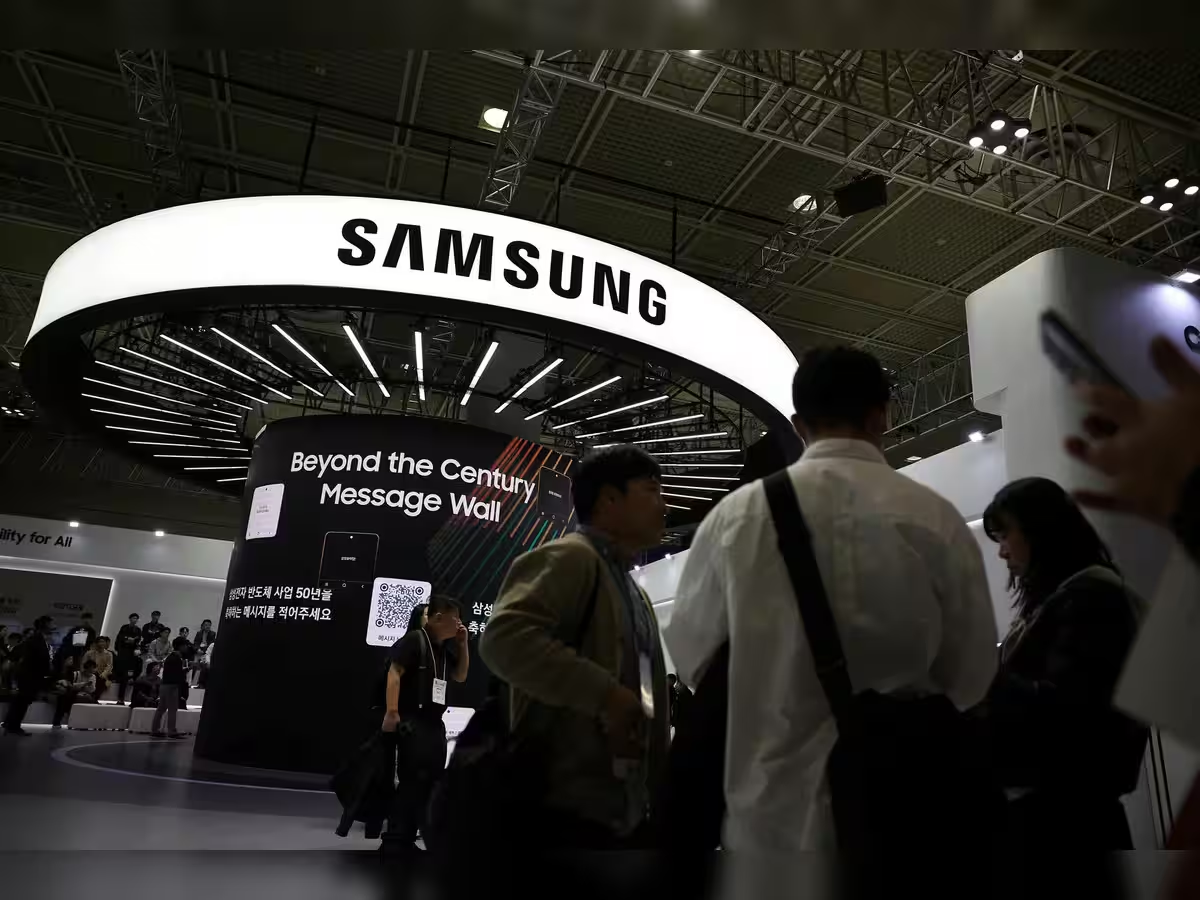
- Samsung moves Yongin fab start from 2030-2031 to 2029, a 1-2 year acceleration
- South Korea aims to double memory chip production capacity within five years
- Samsung and SK Hynix together pledging $300B+ in domestic semiconductor investment
Samsung Electronics will start operations at its massive Yongin chip fabrication plant in 2029, one to two years earlier than planned. The Korean giant confirmed the timeline shift on Monday, citing surging demand for memory chips used in AI infrastructure.
The original schedule had the first fab coming online sometime between 2030 and 2031. Now Samsung is compressing that timeline significantly. A spokesperson put it plainly: Samsung "plans to begin operations at its first fabrication plant in Yongin by 2029."
Why is Samsung accelerating the Yongin project?
Two forces are pushing Samsung to move faster. First, the AI infrastructure boom has created insatiable demand for High Bandwidth Memory chips. Every major AI training cluster, every hyperscaler data center, needs HBM. Samsung's smaller rival SK Hynix currently dominates HBM supply to Nvidia, and Samsung needs capacity to catch up.
Second, political pressure. South Korean President Lee Jae Myung has called for industrial investment to narrow regional economic divides. Last month, both Samsung and SK Hynix responded with pledges totaling hundreds of billions of dollars for domestic chip production expansion.
The scale of Korea's semiconductor bet
Samsung's commitment alone runs to roughly $228 billion through 2047. SK Hynix has pledged another $75 billion. The government's stated goal: double South Korea's memory chip production capacity within five years.
The plan involves more than just Yongin. Samsung and SK Hynix are both accelerating fab construction there, while a new chip cluster in Gwangju city will add further capacity. South Korea already produces the majority of the world's memory chips. This expansion cements that dominance for the AI era.
What does this mean for AI chip supply?
Memory chips are the quiet bottleneck in AI infrastructure. GPUs get the headlines, but they're useless without enough HBM to feed them data. Nvidia's H100 and H200 accelerators rely on HBM3 and HBM3e memory stacked directly onto the chip package.
SK Hynix has captured most of Nvidia's HBM orders. Samsung has struggled with yield issues on its HBM3e production. An earlier Yongin start gives Samsung more capacity to refine its HBM process and compete for AI contracts.
For hyperscalers and AI companies, more HBM supply means better pricing leverage and fewer allocation fights. The memory market has historically been cyclical and brutal on pricing. More capacity typically benefits buyers.
The geopolitical dimension
Korea's chip push isn't happening in isolation. The U.S. CHIPS Act has pulled billions in semiconductor investment to American soil. Taiwan's TSMC is building fabs in Arizona. Japan has revived its domestic chip ambitions. Every major economy now views semiconductor self-sufficiency as a national security priority.
Samsung operates fabs in Texas and is building a new $17 billion facility there. But the Yongin acceleration signals that Korea intends to remain the center of gravity for Samsung's memory production. That's where the bulk of the investment and the advanced manufacturing expertise will stay.
Logicity's Take
Samsung's timeline acceleration is as much about catching SK Hynix in the HBM race as it is about meeting AI demand. SK Hynix has locked up Nvidia's HBM supply contracts, and Samsung's HBM3e yields have reportedly lagged. Pulling Yongin forward by a year or two gives Samsung more runway to fix yield problems and win back AI chip customers. For enterprise buyers watching AI infrastructure costs, more Samsung capacity entering the market by 2029 should ease HBM pricing pressure that currently favors suppliers.
Frequently Asked Questions
When will Samsung's Yongin chip factory start production?
Samsung now targets 2029 for the first Yongin fab, accelerated from the original 2030-2031 timeline.
How much is Samsung investing in Korean chip production?
Samsung has pledged approximately $228 billion for semiconductor expansion in South Korea through 2047.
Why is Samsung accelerating its chip factory timeline?
Surging demand for memory chips used in AI infrastructure, combined with government pressure to expand domestic production capacity.
How does this affect SK Hynix?
SK Hynix is also accelerating fab construction in Yongin and has pledged $75 billion in domestic investment. The two companies are competing intensely for AI memory chip contracts.
Need Help Implementing This?
If you're tracking semiconductor supply chains or planning AI infrastructure investments, Logicity can help you stay ahead of capacity shifts and pricing trends. Contact our research team for custom briefings.
Source: Tech-Economic Times / ET
Huma Shazia
Senior AI & Tech Writer
Produced with AI assistance and reviewed by the Logicity editorial team. Learn more in our Editorial Policy.




