Key Takeaways
NotebookLM’s New Vertical Shorts Are INCREDIBLE
- NotebookLM now converts uploaded documents into 60-second vertical videos
- The feature is available now for Google AI Ultra and Pro subscribers, with free access coming soon
- This follows the viral success of NotebookLM's Audio Overviews podcast feature
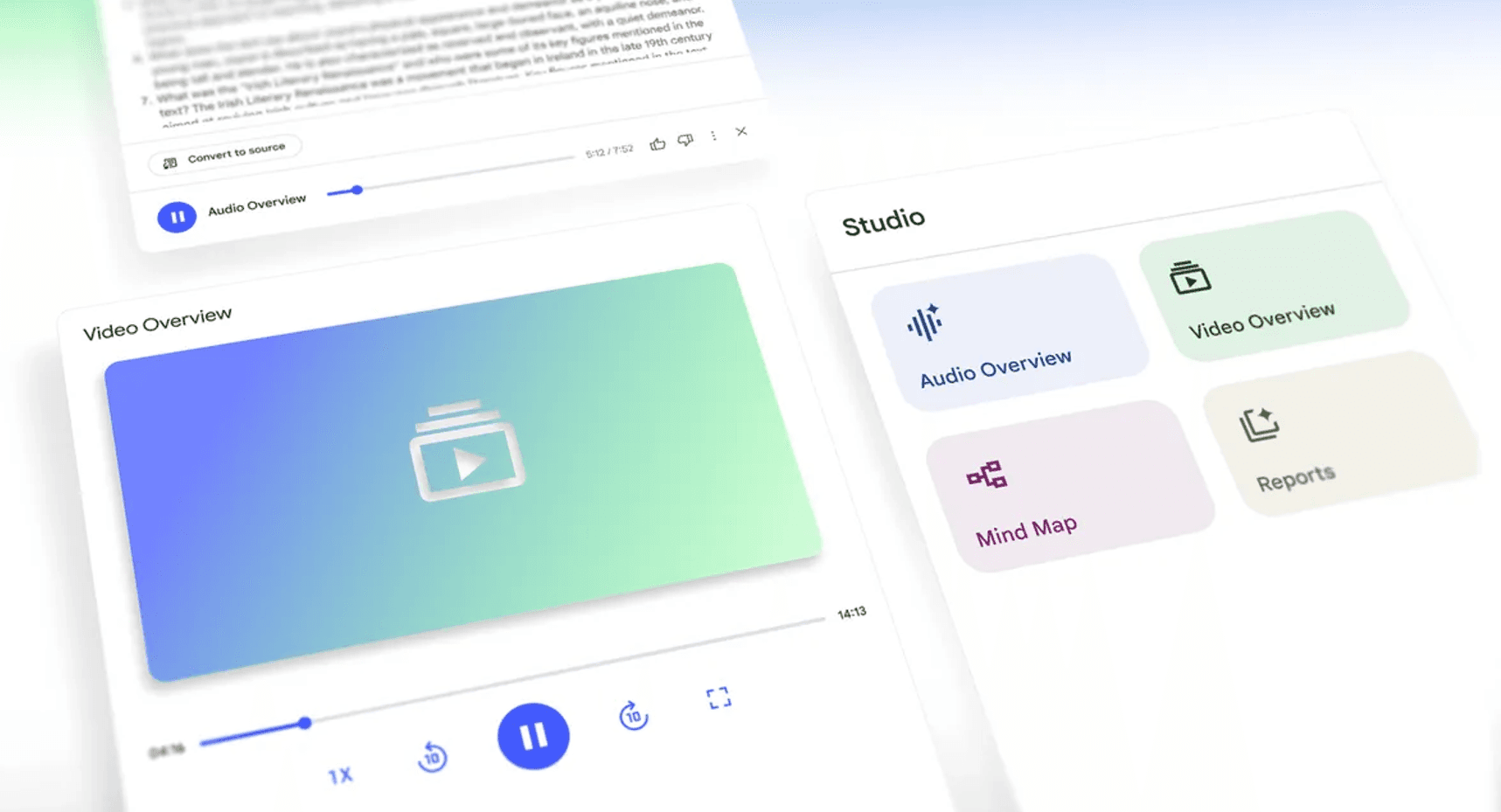
Google has added video generation to NotebookLM. The new feature, called video overviews, converts uploaded sources into 60-second vertical videos that explain a specific topic. It's the same short-form format that dominates TikTok, Instagram Reels, and YouTube Shorts.
The feature is rolling out now on mobile and web for Google AI Ultra and Pro subscribers. Free users will get access soon, though Google hasn't set a date.
How NotebookLM video overviews work
NotebookLM lets users upload documents, websites, PDFs, and other source material. The tool then creates a personalized AI research assistant that can answer questions, summarize content, and generate different output formats from that material.
Video overviews add a new output type. Instead of reading a summary or listening to an AI-generated podcast, users can now get a vertical video that breaks down their uploaded content in under a minute. The format matches what people are already watching on social platforms.
This follows the pattern Google established with Audio Overviews, the podcast-style feature that went viral in late 2024. Audio Overviews generates realistic conversations between two AI hosts discussing your uploaded content. Google said the feature produced over 2 billion podcast episodes within its first year.
Why short-form video from documents?
The logic is simple: people consume short videos far more readily than they read dense documents. For product teams building internal documentation, or educators creating learning materials, a 60-second explainer video can reach audiences that would never open a PDF.
Steven Johnson, Editorial Director at Google Labs, described NotebookLM's purpose at launch: "NotebookLM is designed to help people think and learn with their own information." Video overviews extend that philosophy to visual learners and mobile-first users.
The timing aligns with broader shifts in enterprise communication. Internal training, product announcements, and knowledge sharing increasingly happen through video. Building that video manually takes hours. If NotebookLM can generate a decent first draft in seconds, it removes a significant production bottleneck.
Subscription tiers and pricing
Google AI Ultra and Pro subscribers get video overviews now. Google AI Premium costs $30 per month and includes access to advanced Gemini features across Google's product line. The free tier of NotebookLM retains core functionality, with premium features like video overviews rolling out to free users on a delay.
NotebookLM reached over 400 million users by early 2025. That scale gives Google substantial leverage to push users toward paid subscriptions by gating new features behind the paywall, even temporarily.
Logicity's Take
This is Google applying the same playbook that made Audio Overviews viral: take dense source material and repackage it into a format people actually want to consume. For AI product teams, the interesting question is whether video overviews can achieve the same quality bar as the podcast feature. Audio is forgiving. Video is not. If the generated videos look cheap or awkward, adoption will stall. Competing tools like [Loom](https://logicity.in/r/loom) for screen recording and [Jasper](https://logicity.in/r/jasper) for AI content generation don't yet offer this document-to-video pipeline, which gives NotebookLM a head start. But the gap won't last long if the feature gains traction.
Disclosure
Some links in this post are affiliate links — Logicity earns a commission if you sign up, at no extra cost to you. We only link products we have used or actively recommend.
What this means for content workflows
Product teams already use NotebookLM for research synthesis and onboarding documentation. Video overviews open new use cases: generating explainer clips for feature launches, converting technical specs into shareable content for sales teams, or creating training snippets from policy documents.
The 60-second limit is both a constraint and a feature. It forces the AI to distill information ruthlessly, which often produces clearer explanations than a human trying to cover everything.
Google hasn't revealed what the videos actually look like. The visual style, voiceover quality, and customization options will determine whether teams use this for internal prototyping or polish it enough for external audiences.
Frequently Asked Questions
How long are NotebookLM video overviews?
Each video overview is 60 seconds and formatted as a vertical video for mobile viewing.
Who can access NotebookLM video overviews now?
Google AI Ultra and Pro subscribers have access immediately. Free users will get the feature later, though no timeline has been announced.
What sources can NotebookLM turn into videos?
NotebookLM accepts documents, PDFs, websites, and other uploaded source material. Video overviews generate content based on whatever you've added to your notebook.
How much does Google AI Premium cost?
Google AI Premium subscriptions cost $30 per month and include access to advanced Gemini features and NotebookLM premium outputs.
Is NotebookLM video generation different from Audio Overviews?
Yes. Audio Overviews produce podcast-style conversations between AI hosts. Video overviews create short-form visual content in the TikTok and Reels format.
Need Help Implementing This?
Want guidance on integrating NotebookLM or other AI tools into your product workflow? Reach out to our team at Logicity for hands-on implementation support.
Source: The Decoder / Maximilian Schreiner
Manaal Khan
Tech & Innovation Writer
Produced with AI assistance and reviewed by the Logicity editorial team. Learn more in our Editorial Policy.