Samsung's next flagship foldable, the Galaxy Z Fold8 Ultra, will ship with a sharper display than the Z Fold7, according to prolific leaker Ice Universe. The tipster describes the resolution bump as "significantly enhanced" but stopped short of revealing actual numbers, or which of the two screens (inner foldable or outer cover) will get the upgrade.
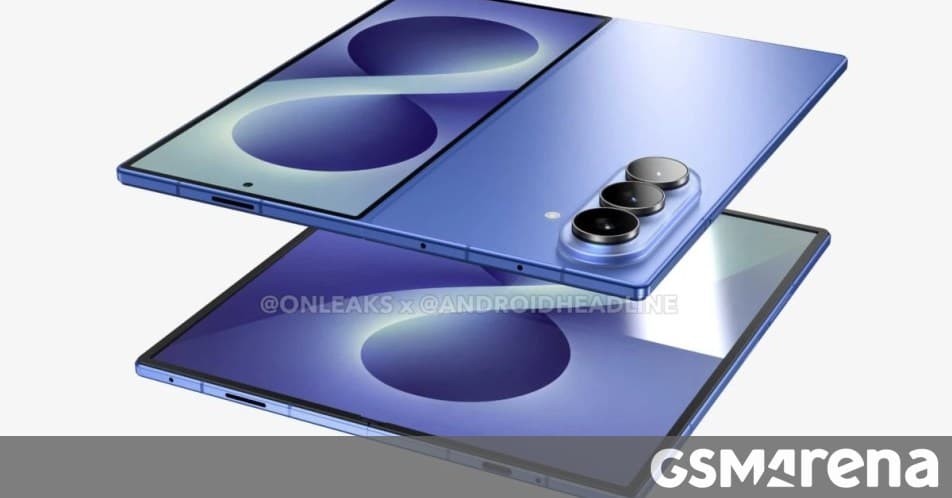
Samsung is set to unveil the Z Fold8 Ultra at its Galaxy Unpacked event on July 22, 2025, in London. The lineup will also include the standard Galaxy Z Fold8, Galaxy Z Flip8, Galaxy Watch9, and Galaxy Watch Ultra 2.
What we know about the Z Fold8 Ultra display
For context, the current Galaxy Z Fold7 runs a 1968 × 2184 resolution on its main folding screen and 1080 × 2520 on the cover display. Those figures translate to pixel densities in the mid-300s ppi, which is respectable but trails some competitors. A resolution jump could mean Samsung is targeting 2K+ territory on the inner panel, matching or exceeding what Honor and OnePlus have achieved on recent foldables.
Ice Universe did not specify which screen benefits. If Samsung focuses on the cover display, users who prefer the smaller screen for quick tasks would see a meaningful clarity boost. If it's the inner screen, media consumption and productivity on the tablet-sized panel would improve noticeably.
Other rumored specs: Snapdragon 8 Elite Gen 5, bigger battery
Beyond the screen, earlier leaks paint a familiar but upgraded spec sheet. The Z Fold8 Ultra will reportedly run on Qualcomm's Snapdragon 8 Elite Gen 5, the company's next-generation flagship chipset. Battery capacity is said to climb to 5,000 mAh, a welcome increase that addresses one of the Z Fold line's persistent weak points.
Storage options will span 256GB, 512GB, and 1TB. Color choices are rumored to include Cream, Graphite, Green Shadow, and Violet Shadow. Samsung is also said to have minimized the crease on the folding display, an area where Chinese rivals have aggressively closed the gap.
Why Samsung is pushing an Ultra tier for foldables
The "Ultra" branding signals Samsung's intent to stratify its foldable lineup the same way it segments the Galaxy S series. A premium-tier foldable gives the company room to pack in experimental features and charge more, while the standard Z Fold8 can compete on price against Chinese OEMs.
Competition has intensified. Honor's Magic V3, Xiaomi's Mix Fold 4, and OnePlus Open have all shipped with thinner bodies, lighter builds, and less visible creases. Samsung's response appears to be doubling down on display quality and processing power, areas where it can still claim leadership.
What's missing from this leak
Ice Universe's leak is thin on details. We don't have exact resolution figures, so "significantly enhanced" could mean anything from a modest bump to a generational leap. There's no word on refresh rate improvements, peak brightness, or whether Samsung will introduce LTPO 2.0 to the foldable line for better battery efficiency.
Pricing also remains unknown. The Z Fold7 launched around $1,800. Given the Ultra moniker and upgraded components, expect the Z Fold8 Ultra to push past $2,000, possibly significantly.
Logicity's Take
Samsung is playing defense and offense simultaneously. The resolution upgrade, minimal crease, and Ultra branding are direct responses to Chinese competitors who have closed the gap on hardware. But the real test will be whether Samsung can justify an Ultra price tag when Honor and OnePlus deliver comparable foldables for hundreds less. The July 22 event needs to show more than incremental improvements to keep enthusiasts from looking elsewhere.
Frequently Asked Questions
When does the Samsung Galaxy Z Fold8 Ultra launch?
Samsung is expected to unveil the Galaxy Z Fold8 Ultra at its Galaxy Unpacked event on July 22, 2025, in London.
What is the display resolution of the Galaxy Z Fold8 Ultra?
Exact figures haven't been revealed. Leaker Ice Universe claims the resolution will be "significantly enhanced" compared to the Z Fold7's 1968 × 2184 (inner) and 1080 × 2520 (cover) displays.
What processor will the Galaxy Z Fold8 Ultra use?
The device is rumored to run on Qualcomm's Snapdragon 8 Elite Gen 5 chipset.
How much storage will the Galaxy Z Fold8 Ultra have?
Leaks suggest 256GB, 512GB, and 1TB storage options.
Will the Galaxy Z Fold8 Ultra have a visible crease?
According to rumors, Samsung has minimized the crease on the folding display, though it's unclear if it's fully eliminated.
If you're upgrading to a new foldable, these accessories keep your setup streamlined.
Need Help Implementing This?
Evaluating enterprise mobile deployments or comparing flagship devices for your team? Contact Logicity's tech advisory desk for vendor-neutral recommendations tailored to your organization's needs.
Source: GSMArena.com / Vlad
Huma Shazia
Senior AI & Tech Writer
Produced with AI assistance and reviewed by the Logicity editorial team. Learn more in our Editorial Policy.