Key Takeaways
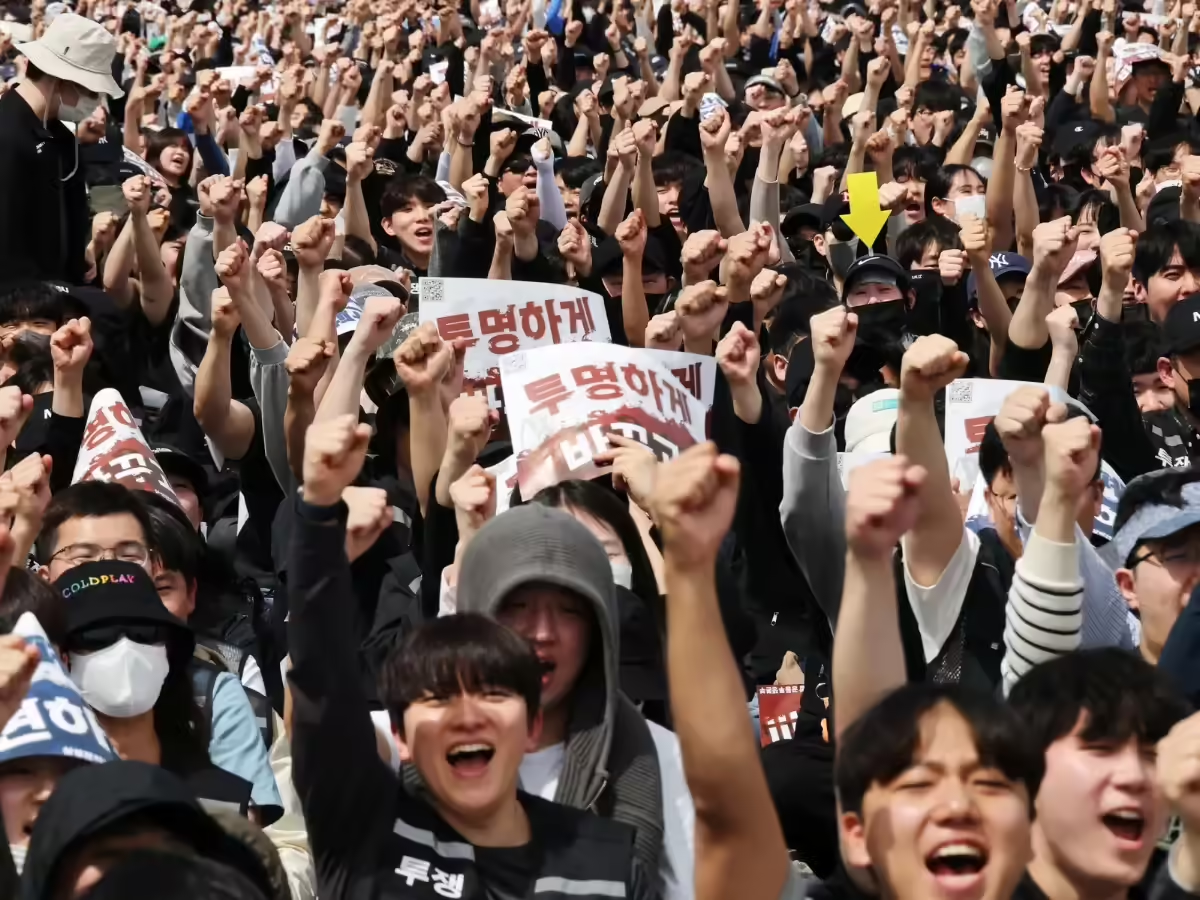
- 45,000 Samsung workers plan to strike for 18 days starting Thursday
- SK Hynix bonuses are over three times higher than Samsung's, fueling worker frustration
- South Korea's prime minister has threatened emergency arbitration to block the strike
What's Happening
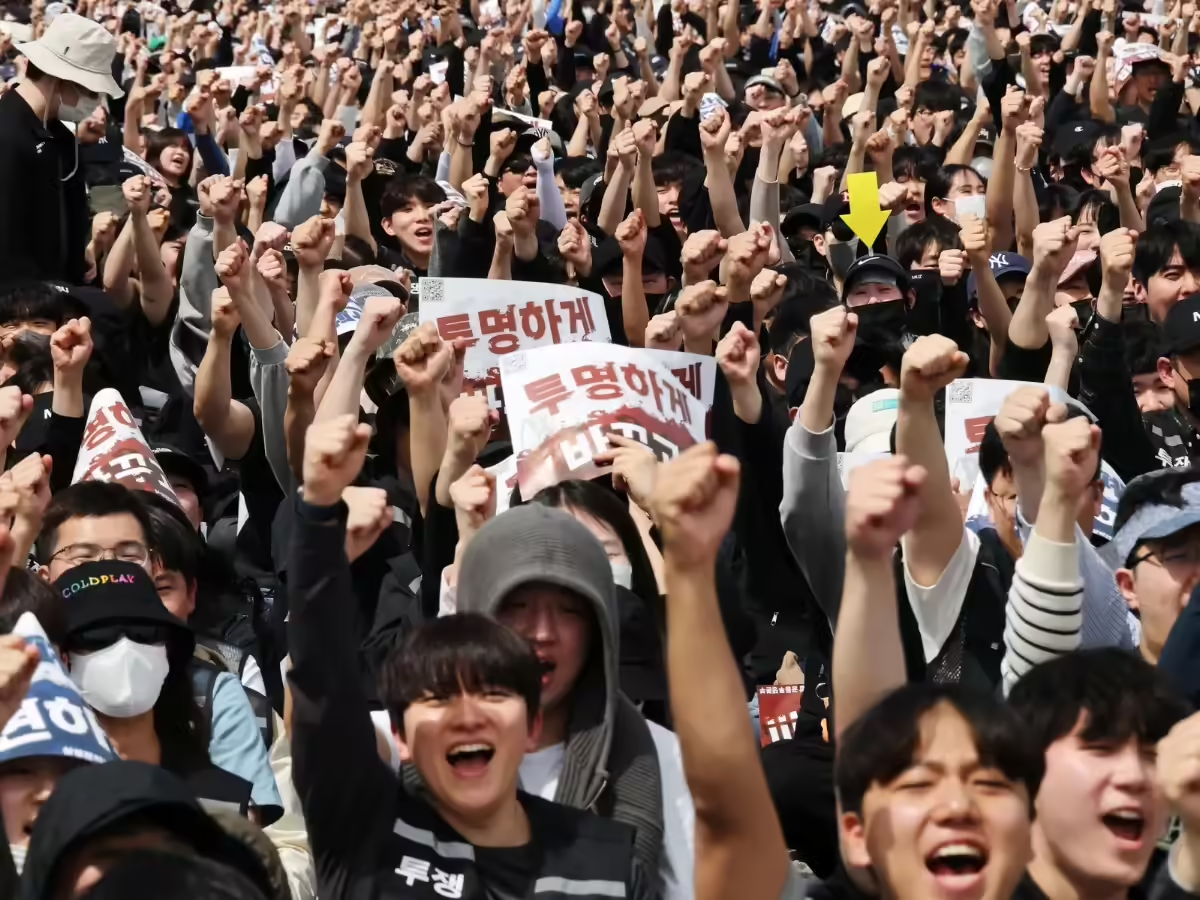
Samsung Electronics and its South Korean labor union returned to government-mediated talks on Tuesday. The goal: prevent the biggest strike in the tech conglomerate's history.
The two sides remain far apart on pay and bonuses, though the chairman of the National Labor Relations Commission said they are narrowing some differences. If no deal is reached, 45,000 workers will walk out on Thursday for 18 days.
Samsung is the world's largest memory chipmaker. The company accounts for nearly a quarter of South Korea's exports. A prolonged strike would hurt both the Korean economy and global supply chains for AI data centers, smartphones, and laptops.
South Korea's prime minister threatened over the weekend to invoke emergency arbitration to resolve the crisis. Business groups urged the government on Monday to act immediately.
Why Workers Are Angry
The dispute boils down to money. Smaller rival SK Hynix overhauled its pay structure last year. The result: SK Hynix bonuses are now more than three times higher than what Samsung offers.
SK Hynix took an early lead in supplying high-bandwidth memory for AI chip units to Nvidia. That success translated into fatter paychecks for SK Hynix employees. Samsung workers noticed.
The pay gap has accelerated talent defections to SK Hynix and sparked a surge in Samsung union membership, according to union members. Workers feel they deserve a larger share of Samsung's record profits, driven by the AI boom's demand for chips.
This is the biggest clash between Samsung and its labor union since Chairman Jay Y. Lee pledged in 2020 to shed the company's reputation for union-busting activities. That pledge came months after Samsung's first labor union was created.
Market Reaction
Investors are nervous. Samsung shares fell 2.5% on Tuesday. The broader Korean market dropped 3.2%.
The timing is particularly bad. Memory chips are in acute global shortage. They are essential components for AI data centers, which companies like Nvidia, Microsoft, and Google are building at a rapid pace. Any disruption to Samsung's production would ripple across the tech industry.
What Happens Next
Talks continue. Neither Samsung nor the union has commented publicly on the negotiations.
If no agreement is reached by Thursday, the strike begins. The prime minister's threat of emergency arbitration looms over both parties. South Korean business groups have made clear they want the government to step in.
The union wants higher bonuses and profit sharing. Samsung, despite record profits, has not yet offered enough to satisfy workers who see their SK Hynix counterparts earning far more.
Logicity's Take
Frequently Asked Questions
Why are Samsung workers planning to strike?
Workers want higher bonuses and profit sharing. They are frustrated that rival SK Hynix pays bonuses more than three times higher than Samsung's, despite Samsung posting record profits from AI chip demand.
How long will the Samsung strike last?
The strike is scheduled to last 18 days, starting Thursday, and involves 45,000 workers.
Could the South Korean government block the Samsung strike?
Yes. South Korea's prime minister has threatened to invoke emergency arbitration, which would suspend the strike. Business groups are urging the government to act immediately.
How will a Samsung strike affect global chip supply?
Samsung is the world's largest memory chipmaker. A strike during the current global chip shortage could disrupt supply chains for AI data centers, smartphones, and laptops worldwide.
Need Help Implementing This?
Source: Tech-Economic Times / ET
Manaal Khan
Tech & Innovation Writer
Produced with AI assistance and reviewed by the Logicity editorial team. Learn more in our Editorial Policy.