Key Takeaways
- Gemini Spark is an always-on AI agent that runs in the cloud even when your devices are off
- The agent requires access to Gmail, Calendar, Photos, and search history to function
- Google's AI Ultra subscription costs $100-$200 per month for dedicated cloud compute
The Promise: An Agent That Works While You Sleep
Google has big promises for its AI future. Most of them depend on you handing over the keys to your digital life.
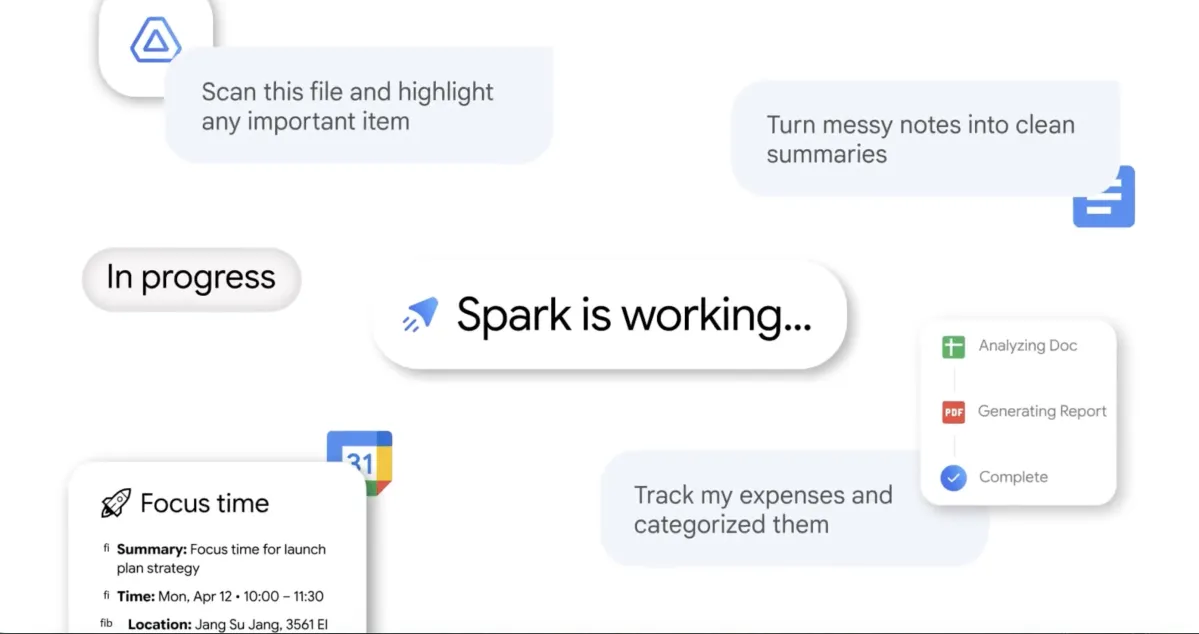
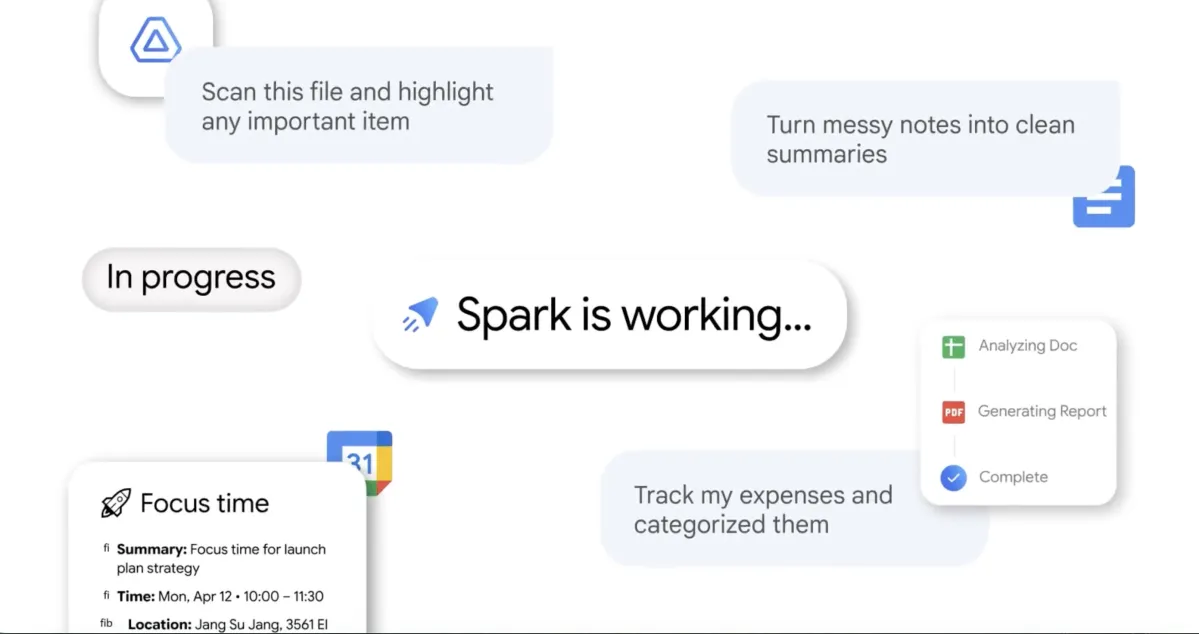
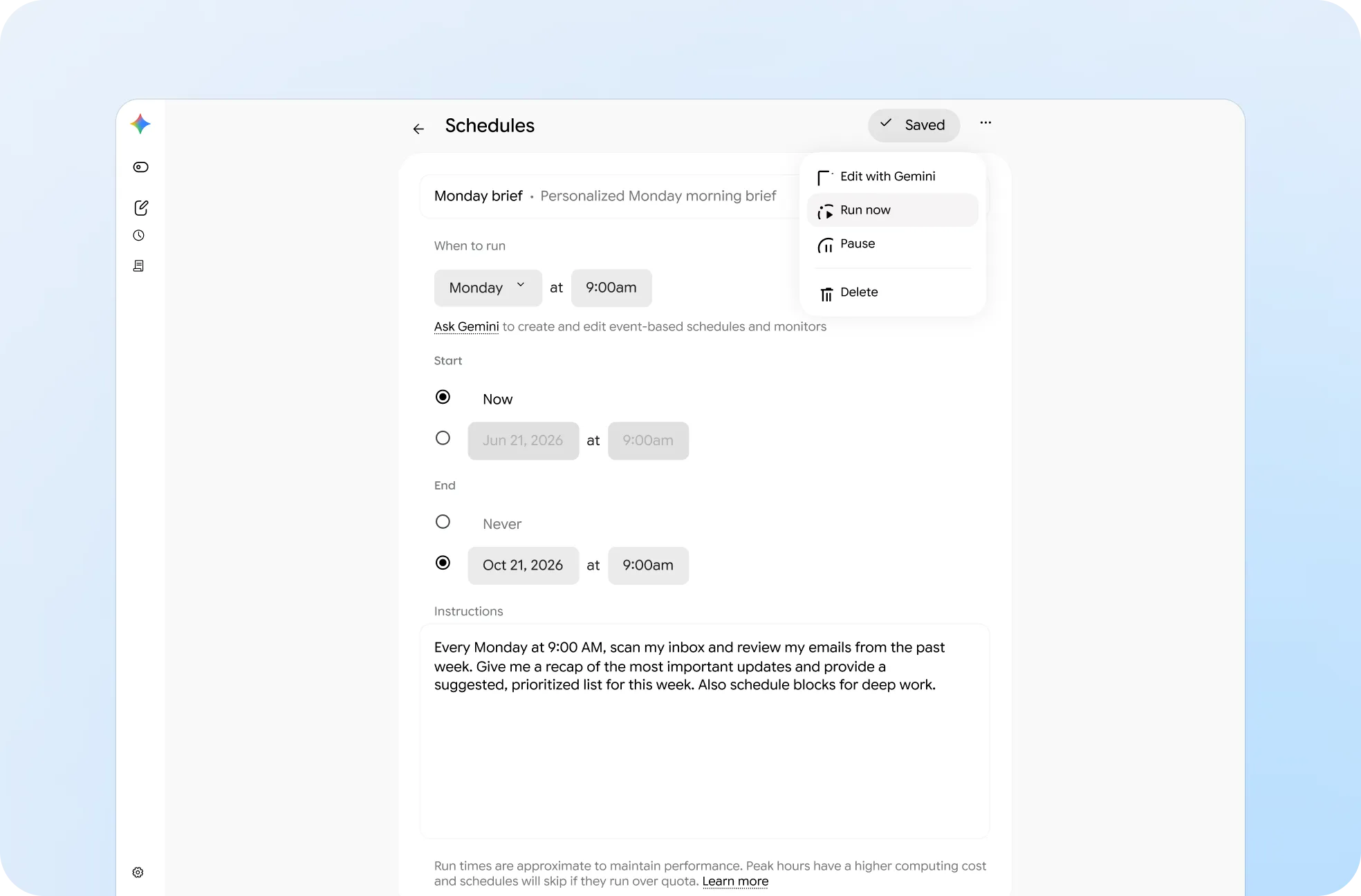
At I/O 2026, the company unveiled Gemini Spark, an always-on AI agent that runs on dedicated virtual machines in the cloud. Unlike previous AI assistants that respond when prompted, Spark operates continuously. It can review your inbox at scheduled times, flag calendar conflicts, and complete multi-step tasks over hours or days without requiring you to stay connected.
During the keynote demo, Spark autonomously built a custom operating system and ran DOOM in 12 hours. The message was clear: this agent can handle complex, long-horizon work.
“We're entering the agentic era with Gemini Spark. It's a persistent partner that navigates your digital life so you can focus on what matters.”
— Sundar Pichai, CEO at Google
The Price: Unprecedented Data Access
For Spark to be useful, it needs to know you. Really know you.
The agent pulls from Gmail, Google Calendar, Google Photos, your search history, and YouTube watch history. While competitors like OpenAI, Microsoft, and Anthropic let you connect external apps, Google's advantage is simpler: it already has your data. Connecting it to Gemini sits behind a single opt-in menu.
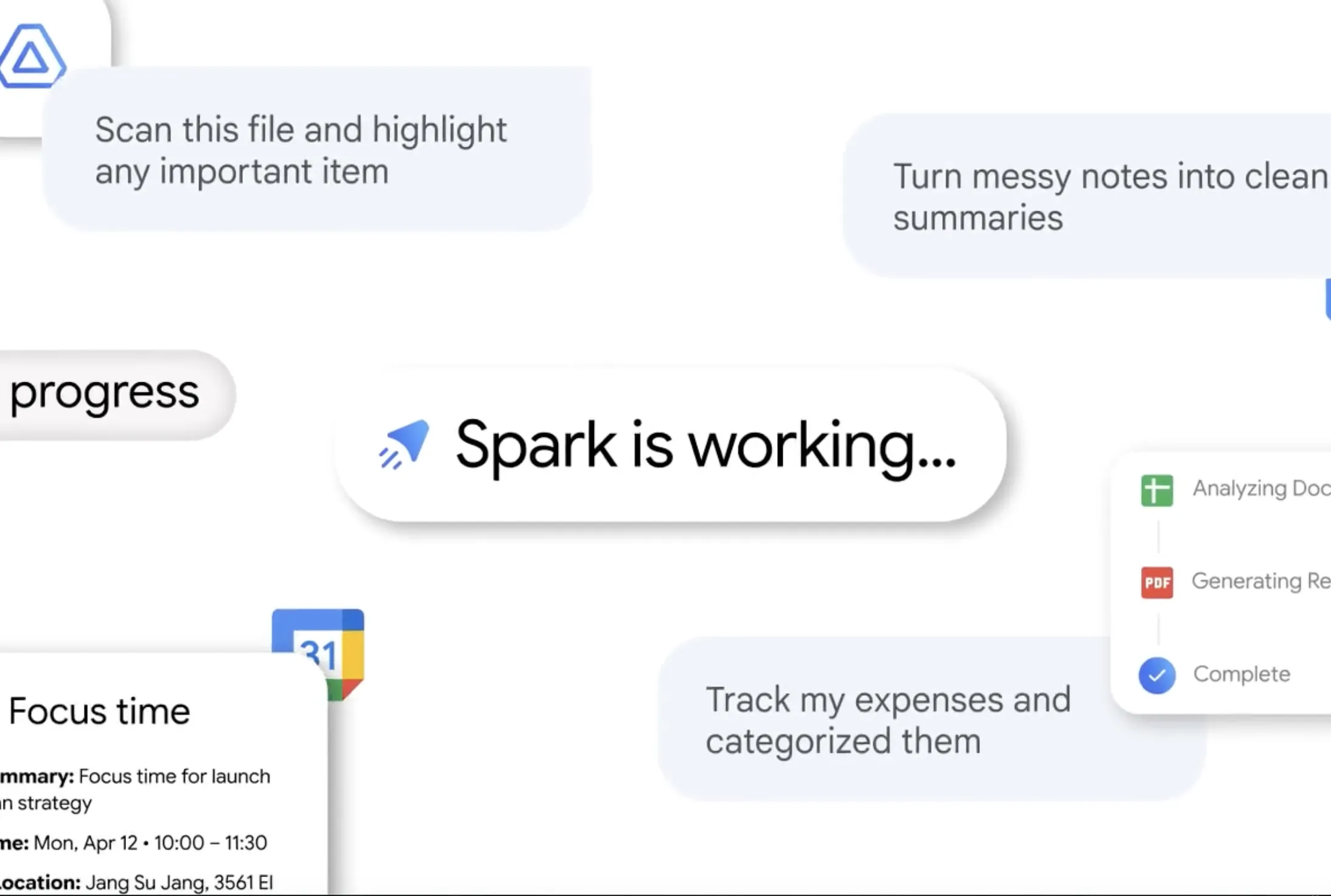
Google started down this path in 2024 when it integrated Gemini into Workspace apps. The AI could sift through your Drive files or draft emails based on context. Then came "Personal Intelligence" in January 2026, which allowed Gemini to reason across Gmail, Photos, Search, and YouTube history without explicit prompts.
Josh Woodward, head of Google Labs and the Gemini app, said millions use Personal Intelligence daily. "They found it so helpful for things like personalized product and trip recommendations, or acting as a thought partner for navigating big decisions in life, like a career change," he said at I/O.
What It Costs
Spark's 24/7 cloud compute comes at a price. Google's new AI Ultra subscription tiers run $100 to $200 per month for dedicated background processing power. Daily Brief, a lighter feature that scans Gmail and flags calendar events, is available to AI Plus, Pro, and Ultra subscribers.
The underlying model got faster too. Gemini 3.5 Flash runs 4x faster than the previous 3.1 Pro version, which helps explain how Spark can juggle persistent background tasks.
The Trust Problem
Google's AI roadmap hinges on users opting in. The features are genuinely useful. An agent that organizes your inbox, manages your calendar, and surfaces relevant information across your accounts could save hours each week.
But each feature runs on a trove of personal information. And Google's history with user data gives some people pause.
“For Gemini Spark to be truly useful, users must grant it unprecedented access to their personal lives. It is helpful, but also slightly uncanny.”
— Emma Roth, News Writer at The Verge
Community reactions are split. Some Reddit users call Spark a "sleeper hit" that finally solves mundane digital chores. Others mock it as "packaged slop." The divide tracks a familiar pattern: people who already trust Google see a helpful tool, while skeptics see surveillance dressed up as convenience.
What This Means for the AI Race
Google's bet is strategic. OpenAI, Microsoft, and Anthropic are building general-purpose assistants that need users to connect data sources one by one. Google already has the data. If users opt in, Gemini gets a head start that competitors can't easily match.
The "Antigravity" harness that powers Spark represents a technical shift too. Unlike assistants that run on your device or spin up cloud resources on demand, Spark runs on dedicated VMs that persist even when you're offline. That's a first for a consumer AI agent.
"This is the first time we've seen a consumer agent with this level of autonomy, running on dedicated VMs in the cloud," said tech analyst Andrew Curran.
Logicity's Take
Full coverage of Google's I/O 2026 announcements
Practical guide to Google's new agent features
Frequently Asked Questions
What is Gemini Spark?
Gemini Spark is Google's always-on AI agent announced at I/O 2026. It runs 24/7 on dedicated cloud servers and can complete tasks like inbox management and event planning even when your devices are offline.
How much does Gemini Spark cost?
Gemini Spark requires Google's AI Ultra subscription, which costs $100 to $200 per month for dedicated cloud compute resources.
What data does Gemini Spark access?
Spark can access Gmail, Google Calendar, Google Photos, your search history, and YouTube watch history. All access requires user opt-in through Google's settings.
Is Gemini Spark safe to use?
Google says all Spark features are opt-in. The safety depends on your comfort level with Google accessing your personal data across its services. The agent runs on Google's cloud infrastructure.
How is Gemini Spark different from other AI assistants?
Unlike Siri, Alexa, or ChatGPT, Spark runs continuously on dedicated virtual machines in the cloud. It can work on tasks for hours or days without requiring you to stay connected or provide prompts.
Need Help Implementing This?
External App Support and Rollout Timeline
The new article specifies that Gemini Spark supports Model Context Protocol (MCP) for external app automation and includes a safety feature requiring user approval for sensitive tasks like payments. It also provides a concrete rollout timeline: trusted testers this week and a US beta launch next week.
AI Integration Expands to YouTube Search and Creator Safety
The new article introduces 'Ask YouTube,' an AI conversational search tool for Premium subscribers, and the integration of the Gemini Omni video model into Shorts. It also details an expanded likeness-detection tool that allows creators over 18 to request the removal of AI-generated deepfakes.
Google Unveils Gemini 3.5 Flash and Video-Generative Omni Models
The new article introduces the Gemini 3.5 Flash model as the new default for coding and agentic tasks, outperforming previous Pro versions. It also unveils Gemini Omni, a model capable of generating and editing realistic videos from any input, featuring custom Avatars and SynthID watermarking.
Gemini Intelligence and Wear OS 7 Integration
The new article introduces the integration of 'Gemini Intelligence' into Wear OS 7, enabling agentic features like food ordering and workout tracking directly from the wrist via the new AppFunctions API. It also highlights specific platform improvements, including a 10% boost in battery life and a new Live Updates feature for real-time progress tracking.
Huma Shazia
Senior AI & Tech Writer
Produced with AI assistance and reviewed by the Logicity editorial team. Learn more in our Editorial Policy.