Key Takeaways
- Samsung Display achieved 80%+ manufacturing yield, triggering Apple's production approval
- Apple ordered an initial batch of 3 million OLED panels from Samsung's Vietnam facility
- The device will use Samsung's M16 display technology, an upgrade from the initially planned M14 stack
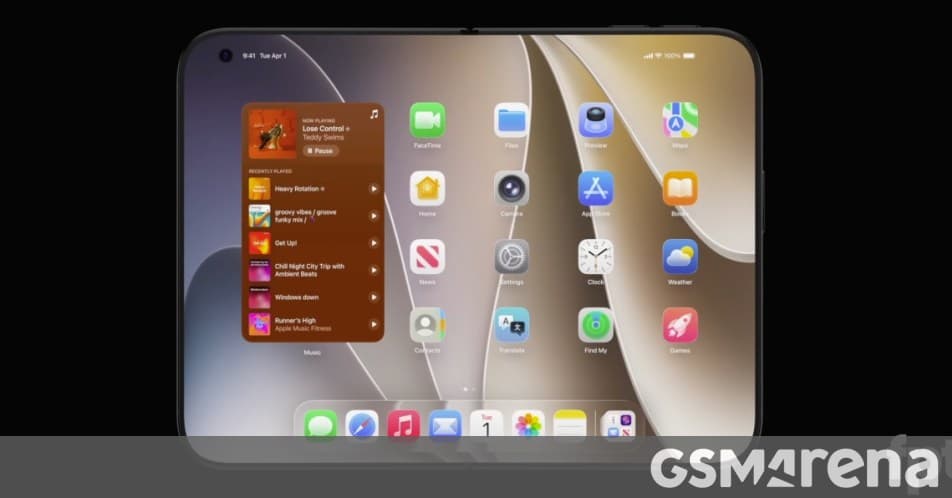
Samsung Display has begun mass production of OLED panels for Apple's first foldable iPhone, according to a report from Display Supply Chain Consultants. The Korean supplier received Apple's approval after achieving manufacturing yields above 80%, a threshold Apple requires before greenlighting large-scale production.
Apple has reportedly ordered 3 million panels for the initial run, with Samsung's Vietnam facility already operational. The device, rumored to launch as the iPhone Ultra, is expected to debut alongside the iPhone 17 lineup in September 2025.
Why did Apple choose Samsung's M16 display stack?
Earlier reports indicated Apple would use Samsung's M14 display technology, but the company has now opted for the newer M16 luminescent material. The upgrade brings tangible benefits: higher brightness, better color reproduction, improved power efficiency, and a longer lifespan.
For a foldable phone, battery life and display durability matter more than on a standard slab. The crease at the fold point takes constant stress. Panels dim over time with use. Choosing M16 over M14 suggests Apple is prioritizing longevity over cost savings, a pattern consistent with its premium positioning.
The panels will also incorporate Color Filter on Encapsulation (CoE) technology. This approach places the color filter directly on the encapsulation layer, reducing panel thickness and improving optical performance. Samsung uses CoE in its own Galaxy Z Fold displays.
What does Samsung's exclusive supplier role mean?
Samsung Display being the sole supplier for foldable iPhone panels is notable for two reasons. First, Samsung has more experience manufacturing foldable OLED panels than any competitor. It has shipped six generations of Galaxy Fold and Flip devices since 2019. Second, Samsung is simultaneously Apple's supplier and its direct competitor in the foldable market.
This arrangement is not new. Samsung has supplied OLED panels for standard iPhones for years while competing head-to-head in smartphones. But foldables are different. Samsung currently dominates this category. Helping Apple enter the market means creating a formidable rival.
The economics likely override competitive concerns. Foldable OLED panels command premium prices, and Apple's volumes would represent significant revenue for Samsung Display. The component business and smartphone business operate as separate profit centers.
Why is production happening in Vietnam?
Samsung Display's Vietnam facility offers geographic diversification away from South Korea. The move aligns with broader industry trends as tech companies seek to reduce manufacturing concentration risk. Vietnam also offers lower labor costs and favorable trade relationships with key markets.
Apple has been pushing suppliers to diversify beyond China for years. Vietnam and India have emerged as primary beneficiaries. Samsung's decision to produce foldable iPhone panels in Vietnam fits this pattern.
How will the foldable iPhone be priced?
Analyst estimates place the foldable iPhone somewhere between $1,500 and $2,000. For context, Samsung's Galaxy Z Fold 6 launched at $1,899. Apple rarely undercuts competitors on price, particularly for a first-generation product in a new category.
The 3 million unit initial order is modest by Apple standards. The company typically ships over 200 million iPhones annually. A 3 million panel order suggests Apple expects the foldable to be a low-volume, high-margin product in its first year.
This makes sense. Foldables remain a niche. Samsung sold roughly 10 million foldable phones in 2024. Apple entering the market could expand the category, but the company appears to be setting conservative expectations.
What is Apple's competitive position in foldables?
Apple is late to foldables by any measure. Samsung launched the Galaxy Fold in 2019. Huawei, Oppo, and Xiaomi followed with their own devices. Apple will be entering a market where competitors have already iterated through multiple hardware generations.
Being late can be an advantage. Apple watched early foldables struggle with durability issues, crease visibility, and software optimization. It can learn from those mistakes. The company also has iOS, which remains the preferred platform for high-spending consumers in Western markets.
The wild card is form factor. Rumors describe a device that unfolds to 7.9 inches, matching the iPad mini screen size. If accurate, Apple may position the foldable as a pocket-sized iPad as much as a large phone.
Logicity's Take
The 80% yield threshold tells us Apple is treating foldables like any other product: no compromises on quality, even if it means waiting. Samsung has shipped foldables with lower yields and accepted higher defect rates. Apple waited until the manufacturing process matured. This patience may frustrate fans who wanted a foldable iPhone years ago, but it likely means fewer early-adopter regrets when the device ships.
Frequently Asked Questions
When will the foldable iPhone launch?
Reports indicate a September 2025 debut alongside the iPhone 17 lineup. The device is rumored to be called iPhone Ultra.
How much will the foldable iPhone cost?
Analyst estimates range from $1,500 to $2,000, positioning it as Apple's most expensive iPhone ever.
Who is making the display for the foldable iPhone?
Samsung Display is the exclusive supplier, using its M16 OLED technology and Color Filter on Encapsulation (CoE).
How big is the foldable iPhone screen?
Rumors suggest a 7.9-inch display when unfolded, matching the iPad mini's screen size.
How many foldable iPhones will Apple make initially?
Apple has ordered 3 million OLED panels for the first production run, indicating modest initial volumes.
Need Help Implementing This?
If you're building mobile apps or considering foldable device support in your product strategy, our team covers the latest in hardware trends and platform development. Subscribe to Logicity.in for updates on the foldable iPhone and its implications for developers and enterprise.
Source: GSMArena.com / Siddharth
Manaal Khan
Tech & Innovation Writer
Produced with AI assistance and reviewed by the Logicity editorial team. Learn more in our Editorial Policy.