Key Takeaways
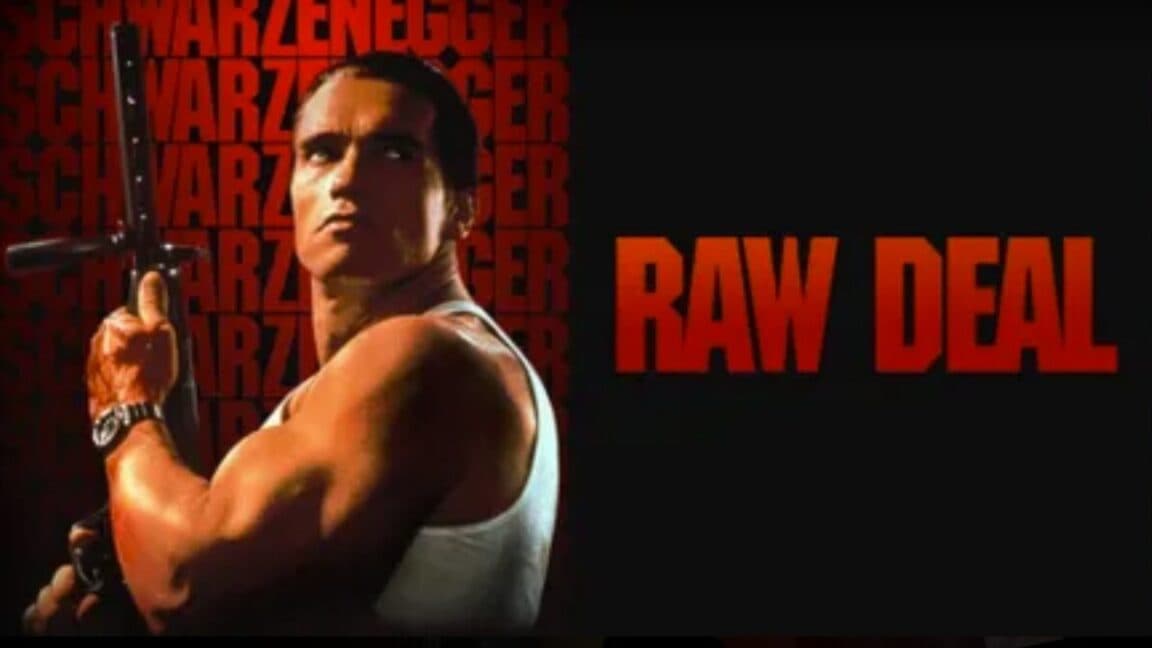
- Antenna estimates Howdy gained roughly 100,000 subscribers per month since its August 2025 launch
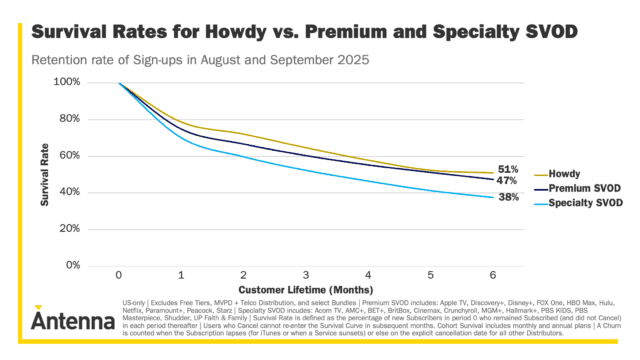
- Howdy's 51% six-month retention rate beats both premium SVOD (47%) and specialty SVOD (38%) averages
- The service now available on Amazon Prime Video and as standalone iOS/Android apps
Roku's budget streaming experiment appears to be working. Research firm Antenna estimates that Howdy, the company's $2.99 per month ad-free service, has crossed 1 million subscribers just six months after launch.
The numbers tell a consistent growth story. Antenna reports that nearly 300,000 people signed up in August 2025, with roughly 100,000 new subscribers joining each month since. Roku hasn't confirmed these figures but told The Hollywood Reporter it's "pleased with Howdy's strong early performance."
Old Movies, New Strategy
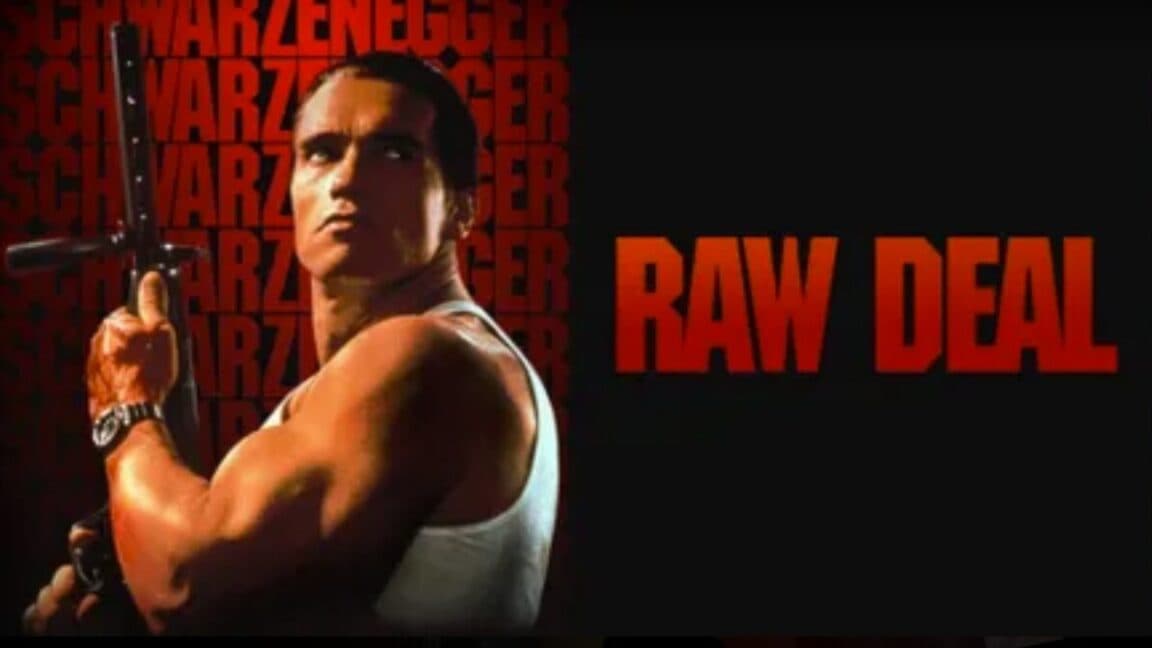
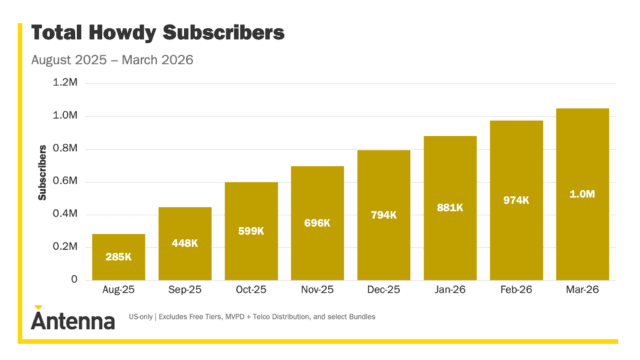
Howdy makes no pretense about its catalog. The service's slogan includes "Almost everything you want to watch," and its featured content skews decidedly vintage. Current highlights include Raw Deal (1986), The Age of Innocence (1993), Brooklyn's Finest (2009), and Edge of Tomorrow (2014).
The TV selection follows suit: Mad TV (1995–2009), Nash Bridges (1996–2001), Nip/Tuck (2003–2010), and Southland (2010–2013). These aren't the shows dominating social media, but they represent thousands of hours of content at a price point that undercuts virtually every competitor.
Lisa Holme, Roku's head of content, told The Hollywood Reporter in February that newer movies are coming. But the current strategy seems deliberate: license older, cheaper content and pass the savings to subscribers who prioritize affordability over freshness.
Why Subscribers Are Sticking Around
The most interesting data point isn't subscriber count. It's retention. Among people who signed up for Howdy in August and September 2025, Antenna estimates 51% were still subscribed six months later.
That 51% "survival rate" beats the premium SVOD average of 47% and handily outperforms the 38% average for specialty streaming services. The $2.99 price point likely explains much of this. As Antenna noted, "the low monthly commitment reduces the friction that drives churn on higher-priced services."
Put simply: canceling a $3 subscription feels less urgent than canceling a $15 one. Many subscribers probably keep Howdy running in the background, even if they're not watching regularly.
Distribution Expansion
Howdy launched exclusively through The Roku Channel, Roku's free ad-supported streaming platform. Since then, Howdy has accounted for 23% of all subscription video-on-demand signups made through The Roku Channel, according to Antenna.

In March, Roku expanded distribution by making Howdy available through Amazon Prime Video and as standalone iOS and Android apps. This multi-platform availability should accelerate growth, though it also means Howdy will face more direct comparison with other services.
A Roku spokesperson noted that "the vast majority of Howdy subscribers are [The Roku Channel] viewers who are now just adding Howdy on top." This suggests Howdy functions partly as an upsell to existing Roku users rather than a standalone acquisition tool.
The Ad Fatigue Factor
Howdy's growth comes amid widespread frustration with streaming's direction. Services that once promised ad-free viewing now push ad-supported tiers. Prices keep climbing. The value proposition has shifted.
Howdy offers the opposite: no ads, low price, older content. It's not trying to be your primary streaming service. It's trying to be the cheap add-on you never cancel because, at $36 per year, the cognitive cost of deciding whether to keep it exceeds the financial cost of just paying.
✅ Pros
- • At $2.99/month, it's cheaper than most streaming services' ad-supported tiers
- • Completely ad-free viewing experience
- • High retention suggests subscribers find enough value to stay
- • Now available on multiple platforms beyond Roku devices
❌ Cons
- • Catalog heavily weighted toward older, dated content
- • No original programming or exclusive releases
- • Limited appeal for viewers who want current shows and movies
- • Content library unclear compared to major competitors
Logicity's Take
Frequently Asked Questions
How much does Howdy cost?
Howdy costs $2.99 per month with no ads. There's no annual plan or premium tier currently available.
What devices support Howdy?
Howdy is available through The Roku Channel, Amazon Prime Video, and as standalone apps on iOS and Android devices.
Does Howdy have new movies and shows?
Currently, Howdy's catalog skews older, with featured titles from the 1980s through early 2010s. Roku has said newer movies are coming, but no specific timeline has been announced.
How does Howdy compare to other streaming services?
Howdy is significantly cheaper than most competitors but offers older content. Its main selling points are the ad-free experience and low price, not content freshness or exclusives.
Can I watch Howdy without a Roku device?
Yes. Since March 2026, Howdy is available through Amazon Prime Video and as standalone iOS and Android apps, so you don't need Roku hardware.
Another streaming platform update worth tracking
Need Help Implementing This?
Source: Ars Technica
Huma Shazia
Senior AI & Tech Writer
Produced with AI assistance and reviewed by the Logicity editorial team. Learn more in our Editorial Policy.