Key Takeaways
Roborock Saros 20 Review: The Ultimate All-in-One?
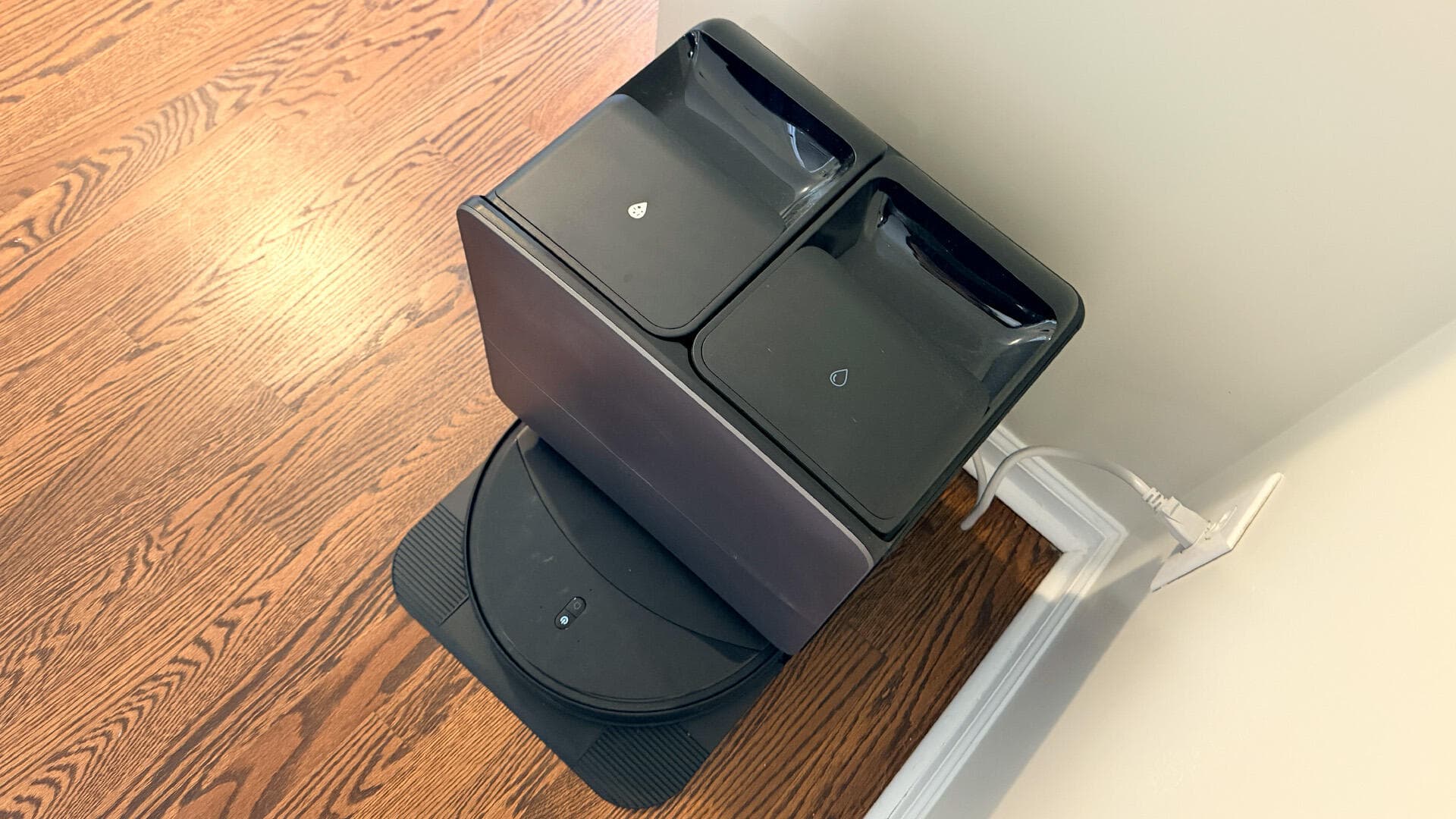
- The Saros 20 picked up five times more sand from medium-pile carpet than the Saros 10R in lab tests
- At 36,000 Pa suction, it's the strongest Roborock flagship yet while maintaining the same $1,600 price point
- Obstacle avoidance hit 91% accuracy on cords, with only thin black cables on dark floors causing issues
Roborock's Saros 20 robot vacuum and mop doubles down on raw performance. ZDNET's hands-on testing found it picked up five times as much sand from medium-pile carpet as the Saros 10R and avoided floor obstacles 91% of the time. The price stays at $1,600.
That last part matters. Roborock could have bumped the price to justify the spec sheet. Instead, the company improved suction from roughly 8,500 Pa (in the Saros 10 lineup) to 36,000 Pa, added better obstacle detection, and held the line on cost. For a flagship robot vacuum, that's uncommon restraint.
What the lab tests actually showed
ZDNET's Maria Diaz ran the Saros 20 through standardized cleaning tests on hardwood, low-pile carpet, and medium-pile carpet. The robot performed well on the first two surfaces, but medium-pile carpet is where it pulled ahead. It collected almost twice as much sand as the Saros 10 and five times as much as the Saros 10R.
That gap comes from the 36,000 Pa suction figure. Higher suction pulls fine dust and pet hair from deeper in carpet fibers. Most budget robot vacuums sit around 2,000 to 3,000 Pa. Premium models from iRobot, Ecovacs, and Narwal typically range from 6,000 to 11,000 Pa. Roborock is now more than tripling the top end of that range.
ZDNET called the Saros 20 the best-performing robot on medium-pile carpet across all models they've tested. That's a strong claim, but the numbers back it up.
How does obstacle avoidance compare?
Robot vacuums have improved at spotting socks, shoes, and charging cables. But wrappers and tissues still trip up most models. The Saros 20 handled these better than previous Roborock flagships in ZDNET's tests.
Cord avoidance hit 91%. The only failure was a thin black charging cable lying nearly flat on a dark wood floor. That's a tough edge case, low contrast between obstacle and surface. Under normal conditions, the robot steered clear.
Roborock's previous models, including last year's units with a mechanical arm for moving obstacles, already performed well here. The Saros 20 refines that further without relying on the arm to compensate for detection failures.
The step-climbing spec is real
Roborock claims the Saros 20 can climb obstacles up to 3.46 inches using a two-stage step-up mechanism. Most robot vacuums top out around 0.75 inches. That difference matters for homes with thick rugs, raised door thresholds, or uneven transitions between rooms.
The robot's low profile also lets it reach under furniture that blocks taller models. Combined with the climbing ability, it should cover more floor space per run than competitors.
Is $1,600 reasonable for a robot vacuum?
The premium robot vacuum market has settled into a predictable pattern. Flagships launch at $1,200 to $1,600, then drop during sales events. The Narwal Freo X10 Pro, for instance, recently hit $400 after discounts. The Eufy Omni S1 Pro dropped from $1,500 to $700.
At full price, $1,600 is high. But Roborock's decision to keep the price flat while improving specs changes the calculation. You're getting meaningfully better performance for the same money as last year's flagship. That's the opposite of the typical consumer electronics trend.
For buyers who want the best cleaning performance right now, the Saros 20 justifies the cost. For everyone else, waiting for a sale event in Q4 or Q1 is probably the smarter move.
Logicity's Take
Roborock is pulling away from competitors on raw specs. The 36,000 Pa suction figure is more than triple what iRobot's Roomba j9+ offers, and the obstacle avoidance numbers beat Ecovacs' X2 Omni in comparable tests. The real question is whether these gains matter for your floors. If you have mostly hardwood and low-pile rugs, a $400 to $700 robot during a sale event will handle the job. Medium-pile carpet with pets changes the equation. That's where the Saros 20's suction advantage shows up in actual cleaning results, not just spec sheets.
Who should buy the Saros 20?
Pet owners with medium to high-pile carpet will see the biggest benefit. The suction increase directly addresses the problem of hair and dander settling deep in fibers.
Homes with raised thresholds or multiple floor levels also gain from the 3.46-inch climbing spec. If your current robot gets stuck between rooms, this fixes that.
For hardwood-only homes or apartments with minimal obstacles, the Saros 20 is overkill. A mid-range Roborock or competitor will handle those environments just fine at half the price.
Frequently Asked Questions
How does the Roborock Saros 20 compare to the Saros 10R?
The Saros 20 picked up five times as much sand from medium-pile carpet in lab tests, thanks to 36,000 Pa suction versus roughly 8,500 Pa in the 10R. Obstacle avoidance also improved to 91% accuracy on cords.
Can the Roborock Saros 20 climb over door thresholds?
Yes. Roborock rates the Saros 20 for obstacles up to 3.46 inches using a two-stage step-up mechanism. Most competitors top out around 0.75 inches.
Is $1,600 too expensive for a robot vacuum?
At full price, it's at the high end of the market. But the Saros 20 offers significantly better specs than last year's $1,600 flagship. Waiting for Q4 sales events can drop prices by 30% to 50%.
Does the Roborock Saros 20 work well on hardwood floors?
Yes, but the performance gains over mid-range models are smaller on hard surfaces. The suction advantage shows up most clearly on medium-pile carpet.
Need Help Implementing This?
Considering a robot vacuum for your home or office? Reach out to the Logicity team for recommendations tailored to your space, flooring type, and budget.
Source: Latest news
Manaal Khan
Tech & Innovation Writer
Produced with AI assistance and reviewed by the Logicity editorial team. Learn more in our Editorial Policy.




