Key Takeaways
- Raspberry Pi OS 6.2 now requires password entry for all sudo commands by default
- The change aims to combat increasing cybercrime threats targeting IoT devices
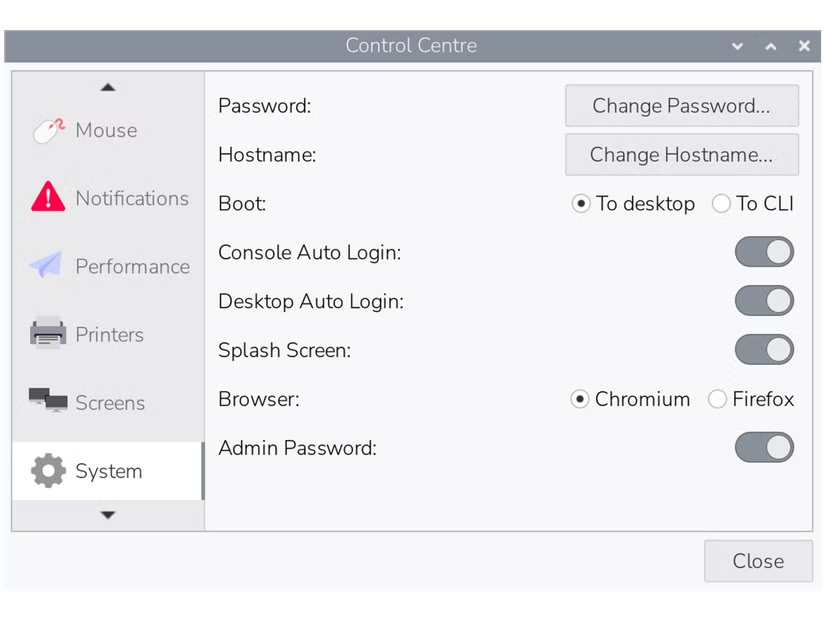
- You can disable this in Control Center under System > Admin Password toggle
- Password prompts have a 5-minute timeout so you won't be asked repeatedly
- This brings Raspberry Pi OS in line with standard Linux security practices
Read in Short
Raspberry Pi OS 6.2 (Trixie) now asks for your password when running sudo commands. This was a long time coming for security reasons. Don't want it? Toggle it off in Control Center under System settings.
So here's the thing. For years, Raspberry Pi has been the go-to device for hobbyists, home servers, and DIY projects. And for years, it's had this quirky default where you could run admin commands without typing a password. Just slap 'sudo' in front of anything and boom, you're basically root. That changes today with version 6.2.
The new update, codenamed Trixie, finally brings the Pi's security model closer to what you'd expect from a standard Linux distribution. Is this a big deal? For security folks, absolutely yes. For tinkerers who just want to mess around on their home network, it might feel like an annoyance. Let's break down what's actually happening here.
What Are Sudo Commands Anyway?
If you're new to Linux, here's a quick primer. Sudo stands for 'superuser do' and it's basically your way of telling the system 'hey, I need admin privileges for this one command.' Think of it like right-clicking and selecting 'Run as administrator' on Windows, except you do it through the terminal.
Why This Matters
Administrator access lets you modify system files, install software, change network settings, and basically do anything on your device. Without password protection, anyone with physical or remote access to your Pi could run these commands freely.
The problem with passwordless sudo is pretty obvious when you think about it. Your Raspberry Pi sitting in the corner running a media server or home automation system? Anyone who gains access to it can immediately do whatever they want. No barriers. No authentication. Just straight to admin privileges.
Why Raspberry Pi Made This Change Now
Simon Long, senior engineer at Raspberry Pi, didn't sugarcoat the reasoning. He acknowledged that better security always comes with some friction for legitimate users. But here's the reality check: cybercrime isn't slowing down, and IoT devices like the Pi are increasingly becoming targets.
“Anything that makes the operating system more secure will invariably inconvenience legitimate users. But it was important to add this layer of security to Raspberry Pi OS due to the ever-increasing threat of cybercrime.”
— Simon Long, Senior Engineer at Raspberry Pi
Look, I get why the Pi team kept passwordless sudo for so long. The device is meant to be accessible, beginner-friendly, and low-friction for learning. But we're in 2026 now. People run everything from NAS systems to VPN servers on these things. The stakes are different than they were when the Pi was just a hobbyist toy.
How the New Password System Works
Alright, let's talk about what actually happens now when you try to run a sudo command. It's pretty straightforward but there are some nice quality-of-life touches.
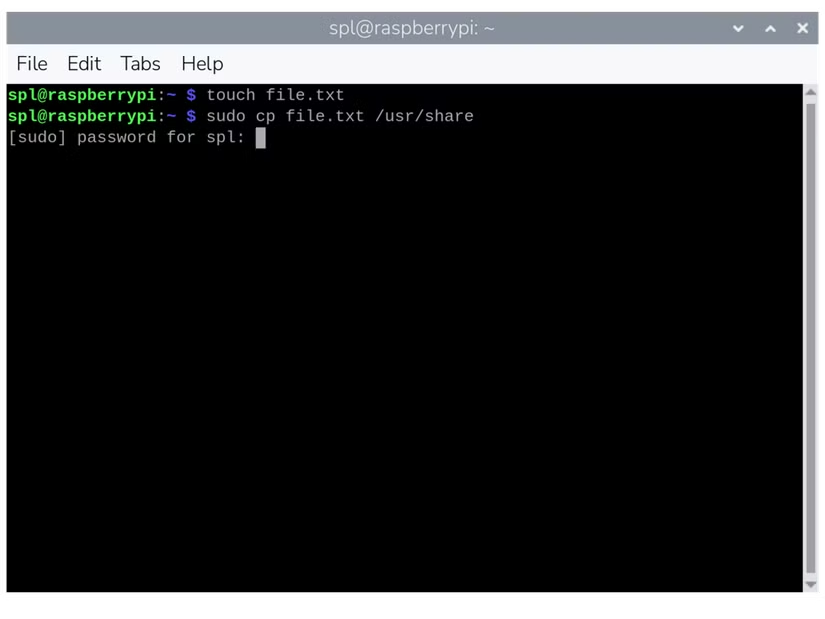
- Every sudo command now prompts for your user password before executing
- Control Center admin actions will show a dialog box asking for password confirmation
- Once authenticated, you get a 5-minute grace period with no additional prompts
- The timeout resets each time you successfully authenticate
That 5-minute window is key. The Pi team clearly thought about usability here. If you're running a bunch of admin commands while setting something up, you won't be typing your password every single time. You authenticate once and then work normally for a few minutes before it asks again.
The Control Center integration is nice too. Before, some graphical admin tasks would just execute without any confirmation. Now you'll see a proper dialog box. It's the kind of thing that should have been there from the start, honestly.
If you're using your Pi for automation projects, this tutorial on building voice-controlled agents could be your next project
How to Disable Sudo Password Requirement
Okay, but what if you actually want the old behavior back? Maybe your Pi sits on an isolated network. Maybe you're the only one with physical access. Maybe you just find passwords annoying. Fair enough. Here's how to turn it off.
- Open Control Center on your Raspberry Pi
- Navigate to the 'System' tab
- Find the 'Admin Password' option
- Toggle it off
- That's literally it. No terminal commands needed.
Before You Disable This
Only turn off password requirements if your Pi is on a trusted network with no remote access, or you fully understand the security implications. For Pi devices exposed to the internet or running on shared networks, keep this enabled.
The toggle also disables those Control Center password dialogs we mentioned earlier. So it's truly an all-or-nothing situation. You either want the security layer or you don't.
Should You Keep Passwords Enabled?
Here's my take on this. If you're running your Pi as any kind of server that touches the internet, keep the password on. Just do it. The slight inconvenience of typing your password occasionally is nothing compared to the headache of dealing with a compromised device.
✅ Pros
- • Prevents unauthorized admin access if someone gets into your Pi
- • Aligns with standard Linux security practices
- • 5-minute timeout makes it minimally annoying for legitimate use
- • Easy to disable if you truly don't need it
❌ Cons
- • Adds friction for quick terminal work
- • Scripts that use sudo will need adjustment
- • Not helpful if your password is weak anyway
- • Might confuse beginners following older tutorials
The script thing is worth mentioning. If you have automated scripts that run sudo commands, they'll break with this change. You'll need to either disable the password requirement or modify your scripts to handle password input. For most home users this won't matter, but it's something to keep in mind.
The Bigger Picture Here
This update is part of a broader trend we're seeing across the tech world. IoT security has been a joke for years. Default passwords, no encryption, wide open admin access. Manufacturers are finally waking up to the fact that these devices need actual security defaults.
The Raspberry Pi Foundation deserves credit for making this change even though they knew it would annoy some users. Security improvements that add friction are always unpopular at first. But they're necessary. And honestly, if typing your password every few minutes is too much to ask, maybe reconsider what you're doing with your Pi.
For everyone updating to Raspberry Pi OS 6.2, the transition should be smooth. Your existing password works. The system just asks for it now. Take the 30 seconds to get used to it and move on with your projects.
New to Linux and want to level up your command line skills? This platform breakdown might help
Frequently Asked Questions
Do I need to set a new password for Raspberry Pi OS 6.2?
No, your existing user password works. The system just asks for it now when running sudo commands.
Will this affect SSH connections to my Pi?
SSH authentication remains the same. This change only affects sudo command execution after you're already logged in.
Can I set a different timeout than 5 minutes?
The default is 5 minutes. Power users can modify the sudoers file to change this, but that's beyond what most people need.
What happens to my cron jobs that use sudo?
They may need adjustment. Consider running cron as root or modifying your sudoers configuration for specific commands.
Source: How-To Geek
Manaal Khan
Tech & Innovation Writer
Produced with AI assistance and reviewed by the Logicity editorial team. Learn more in our Editorial Policy.