Key Takeaways
Quantum Sensing With a Special Synthetic Diamond
- QuantumDiamonds raised €91m total: €15m equity from World Fund and others, plus €76m in non-dilutive government funding
- The startup's quantum sensors detect buried defects in 3D chips that traditional tools miss, potentially saving fabs millions per week
- Nine of the top 10 semiconductor manufacturers already work with QuantumDiamonds, with deployments live in the US and Taiwan
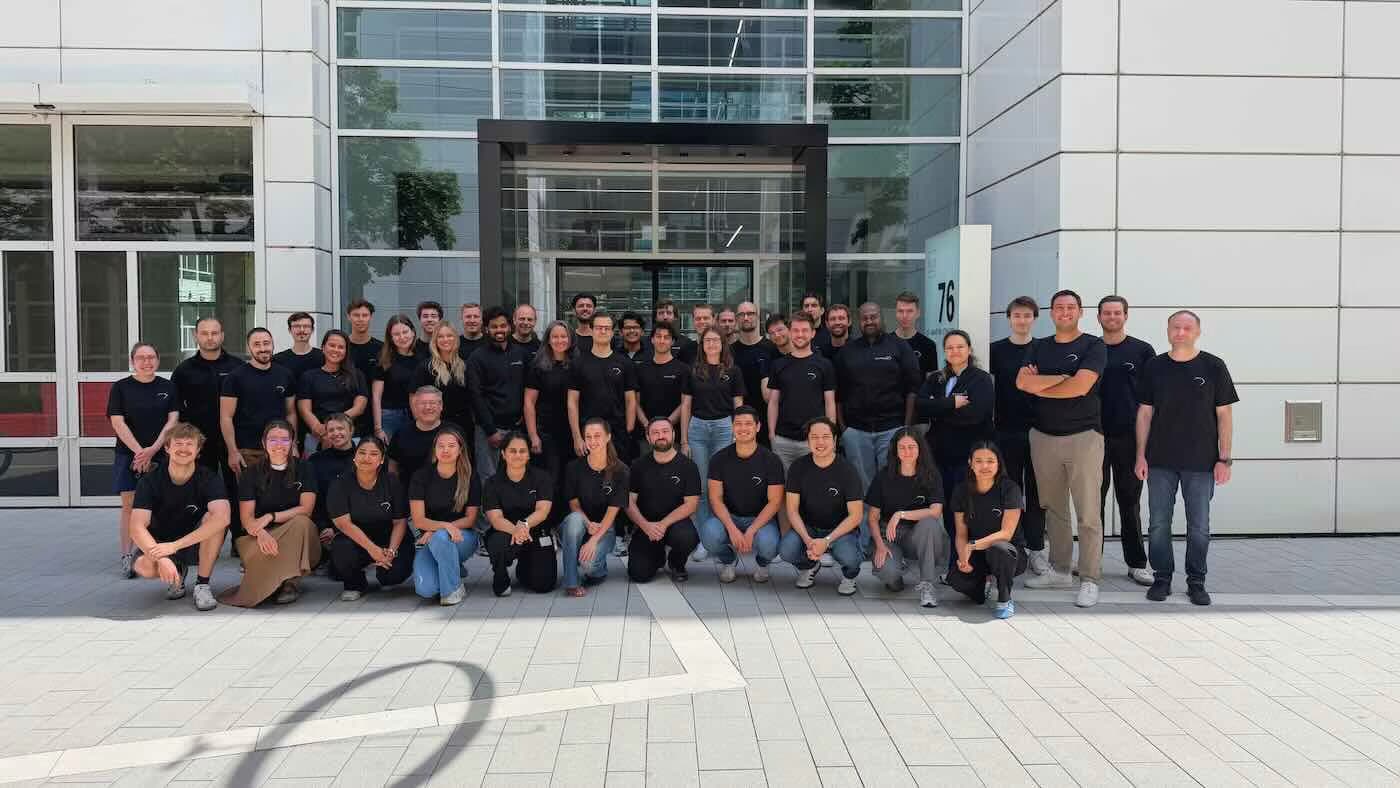
QuantumDiamonds, a Munich spinout making quantum-based chip inspection equipment, has closed €91 million in combined equity and government funding. The round positions the company to scale production of tools that detect defects invisible to traditional inspection systems, a problem that costs chipmakers millions in lost yield every week.
World Fund led the €15 million equity portion, joined by Bayern Kapital, IQ Capital, Earlybird, First Momentum, UnternehmerTUM Funding for Innovators, Creator Fund, and Onsight Ventures. The remaining €76 million comes as non-dilutive funding from Germany's Federal Ministry for Economic Affairs and Energy and the Free State of Bavaria.
What problem does QuantumDiamonds solve?
Modern chips are built in increasingly complex 3D architectures. Transistors stack vertically, interconnects weave through multiple layers, and advanced packaging bundles chiplets together. Traditional optical and electron-beam inspection tools were designed for flatter chip structures. They struggle to see defects buried deep inside today's designs.
That matters because hidden defects kill yield. Every chip that fails testing after fabrication represents wasted silicon, energy, and fab time. Industry analysis cited by the company suggests a single percentage point improvement in yield can be worth millions of dollars per week for a high-volume fab. At that scale, even marginal inspection improvements pay for themselves fast.
QuantumDiamonds uses nitrogen-vacancy (NV) centers in synthetic diamonds to build ultra-sensitive quantum sensors. These sensors detect magnetic fields at the nanoscale, effectively creating a "microscope for electric currents" that can spot anomalies buried within chip architectures. The inspection is non-destructive, so chipmakers can analyze production chips without sacrificing samples.
Who is buying this technology?
Nine of the world's top 10 semiconductor manufacturers already work with QuantumDiamonds. The company has live deployments in the United States and Taiwan, the two most critical geographies for advanced chip production. TSMC, Intel, Samsung, and others operate major fabs in these regions, though QuantumDiamonds hasn't disclosed specific customers.
The company is now ramping production in Munich and building a dedicated facility for quantum-based semiconductor inspection equipment. It currently employs 70 people and plans to more than double its engineering team over the next 12 months.
“This is a major step in bringing quantum sensing into fabs worldwide. The response from leading chipmakers has been clear, they see our technology as essential for solving yield challenges that today's systems can't address.”
— Kevin Berghoff, CEO and cofounder of QuantumDiamonds
Why investors are comparing it to ASML
World Fund's managing partner Daria Saharova made a bold comparison in the announcement: "QD can become Europe's next ASML." That's a high bar. ASML is a €300 billion Dutch company with a near-monopoly on extreme ultraviolet lithography machines. Every advanced chipmaker on Earth depends on its equipment.
The comparison isn't about current scale. It's about category creation. ASML built technology that became indispensable. If quantum sensing proves necessary for sub-3nm chip production, and if QuantumDiamonds maintains its technical lead, it could occupy a similarly critical position in the semiconductor supply chain.
Saharova framed the investment in strategic terms: "Backing companies like QD is how Europe stops buying its technological future from others and starts building the leverage to shape its own." European governments clearly agree. The €76 million in public funding dwarfs the equity round and signals that German policymakers view quantum sensing as a strategic capability.
The competitive landscape for chip inspection
The semiconductor equipment market is worth over $100 billion annually. Established players like KLA Corporation, Applied Materials, and Onto Innovation dominate traditional inspection and metrology. These companies have deep customer relationships, proven tools, and decades of process knowledge.
QuantumDiamonds isn't trying to replace them across the board. It's targeting a specific gap: defects that existing tools can't see. If the technology works at production scale, chipmakers might add quantum sensors alongside their existing inspection equipment rather than swapping out entire toolchains. That's a potentially easier path to adoption.
The risk is execution. Moving from lab demonstrations to high-volume manufacturing is where many deeptech startups fail. Quantum systems can be sensitive, finicky, and expensive to calibrate. Whether QuantumDiamonds can deliver consistent performance in the demanding environment of a production fab remains to be proven at scale.
Logicity's Take
The €76 million in government funding is the real signal here. German authorities don't write checks that large for speculative science projects. They're betting that quantum sensing will matter for semiconductor manufacturing the same way EUV lithography does, and they want the technology built in Europe. For founders in adjacent deeptech spaces, this round illustrates the leverage available when your technology aligns with industrial policy priorities. The equity portion alone wouldn't fund a production facility at this scale. The public money makes it possible.
What comes next
QuantumDiamonds will use the funding to expand its engineering team and build out production capacity in Munich. The goal is bringing quantum sensing tools to more fabs worldwide. CEO Kevin Berghoff founded the company as a spinout from the Technical University of Munich alongside CTO Dr. Fleming Bruckmaier.
The semiconductor industry's trajectory favors inspection innovation. As chip architectures grow more complex and production costs rise, any technology that improves yield becomes more valuable. Whether quantum sensing becomes standard equipment in fabs or remains a niche solution will depend on how well QuantumDiamonds executes over the next few years.
Frequently Asked Questions
What is QuantumDiamonds?
QuantumDiamonds is a Munich-based startup that manufactures quantum-based semiconductor inspection equipment. The company uses nitrogen-vacancy centers in synthetic diamonds to detect hidden defects in advanced chip architectures.
How much funding did QuantumDiamonds raise?
The company raised €91 million total: €15 million in equity funding led by World Fund, and €76 million in non-dilutive funding from the German Federal Ministry for Economic Affairs and Energy and the Free State of Bavaria.
Which semiconductor companies use QuantumDiamonds technology?
QuantumDiamonds works with nine of the world's top 10 semiconductor manufacturers, with deployments live in the US and Taiwan. The company has not disclosed specific customer names.
How does quantum sensing improve chip manufacturing?
Quantum sensors can detect magnetic fields at the nanoscale, revealing defects buried deep inside 3D chip architectures that traditional optical and electron-beam tools miss. Finding these defects improves production yield, potentially saving fabs millions of dollars per week.
Who are the investors in QuantumDiamonds?
World Fund led the equity round, with participation from Bayern Kapital, IQ Capital, Earlybird, First Momentum, UnternehmerTUM Funding for Innovators, Creator Fund, and Onsight Ventures.
More context on recent large funding rounds in chip-related sectors
The semiconductor capital markets context behind chip equipment investments
Need Help Implementing This?
Building a deeptech startup and navigating the funding landscape? Logicity covers the strategies, tools, and trends that matter for technical founders. Subscribe to our newsletter for weekly analysis delivered to your inbox.
Source: Sifted
Manaal Khan
Tech & Innovation Writer
Produced with AI assistance and reviewed by the Logicity editorial team. Learn more in our Editorial Policy.