Key Takeaways
- Assume company-issued devices are monitored and keep personal activity off them
- Research your industry's surveillance practices and request disclosure from HR
- Organize with colleagues to advocate for transparent monitoring policies
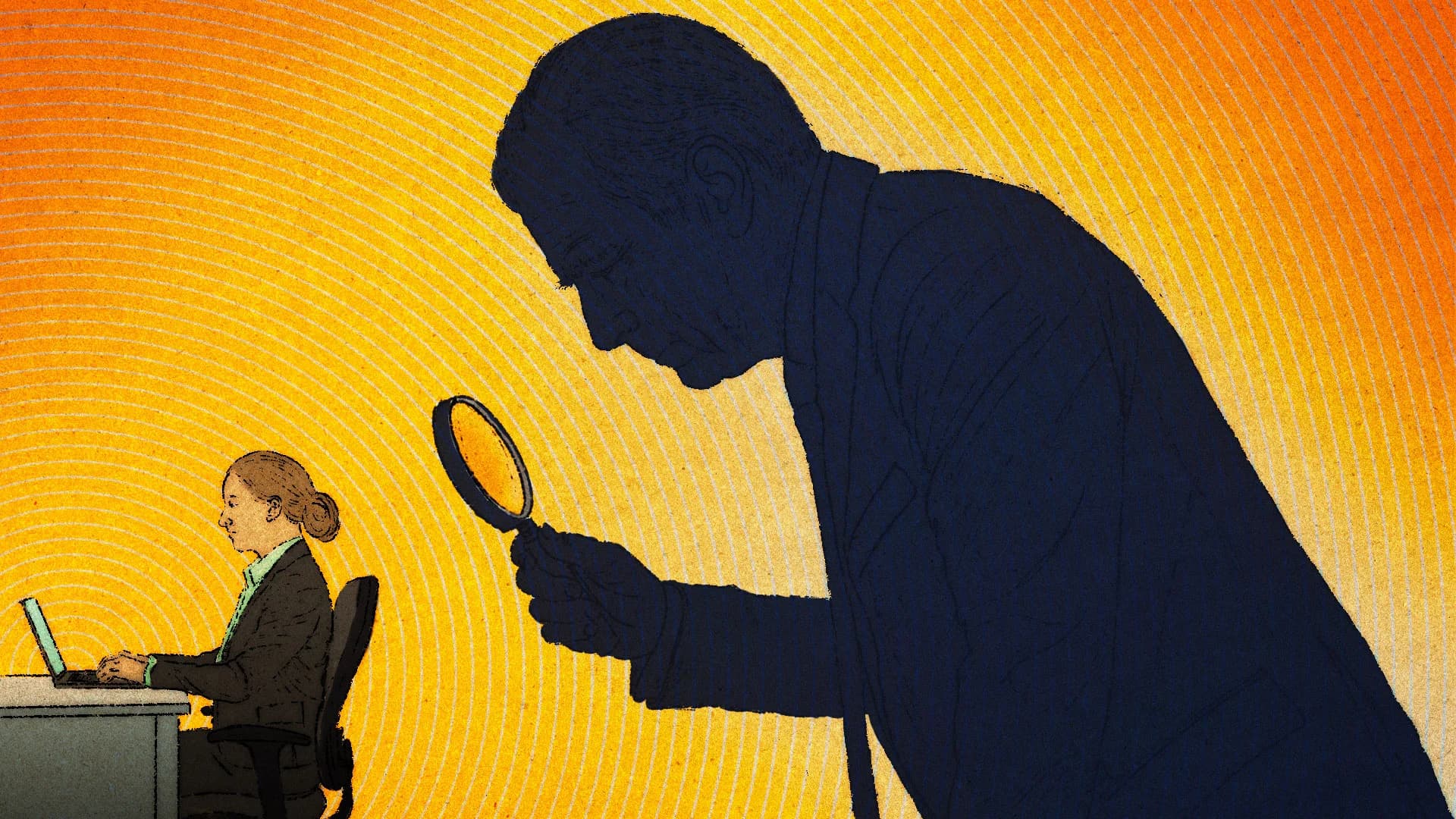
Your employer can read your emails, track your keystrokes, watch through your webcam and log how long each task takes. This surveillance expanded rapidly during the pandemic and has not receded. A recent investigation by Vanderbilt, Northeastern and UC Berkeley found that common workplace monitoring programs share employee names, email addresses and personal data with hundreds of outside data brokers, often without clear disclosure.
For engineers, product managers and founders building AI systems, this cuts both ways. You may be subject to these tools at your day job. You may also be building them. Either way, understanding how workplace surveillance operates, what data it captures and how employees can protect themselves is now part of the job.
What employers are actually tracking
The surveillance toolkit has grown far beyond time clocks. Employers now deploy AI-powered systems that monitor task completion rates, location data, communication metadata and camera feeds from company-issued laptops and phones. Warehouse workers face scanners on conveyor belts that track inspection pace. Pharmacists have call durations logged. College administrators read adjunct professors' comments on student essays.
"Oftentimes, the workers with the least amount of power in the labor markets tend to be testing grounds for some of the more intrusive forms of data collection," said Wilneida Negrón, director of research and policy at Coworker, a nonprofit that helps workers organize.
The difference from older monitoring is scale and permanence. AI and data science enable employers to build extensive dossiers that can predict employee behavior, justify discipline or flag workers for termination. These datasets persist and can be shared with third parties in ways employees never consented to or understood.
Step 1: Assume company devices are compromised
"Unfortunately, if you are on a machine that's been issued by your workplace, you should expect that there's some type of monitoring," said Hayley Tsukayama, director of state affairs at the Electronic Frontier Foundation.
This is the baseline assumption. If your employer gave you a laptop, phone or tablet, treat it as if every keystroke, screenshot and webcam frame is being recorded. It probably is.
- Never use company devices for personal banking, health matters or job searches
- Do not log into personal email or social media accounts on work machines
- Use your personal phone on your personal data plan for private communications
- Cover the webcam on company laptops when not in active video calls
This separation is not paranoia. It is hygiene. The moment you mix personal and work activity on a monitored device, you hand your employer access to information they have no legitimate business interest in.
Step 2: Research what your industry collects
Surveillance practices vary dramatically by sector. Warehouse and logistics workers face the most invasive physical tracking. Knowledge workers may be subject to keystroke logging, idle-time detection and communication scanning. Healthcare workers see appointment durations and patient interaction metrics.
Negrón recommends researching data collection and surveillance trends in your specific industry. Without that knowledge, you may be blindsided when confronted with information your employer gathered during monitoring.
Start with trade publications and labor advocacy groups in your field. The EFF maintains resources on digital workplace rights. Coworker.org tracks employer surveillance practices across industries. Knowing what tools are common in your sector tells you what questions to ask.
Step 3: Request disclosure from your employer
Many employers who use surveillance tools do so transparently and involve employee representatives in reviewing how the tools are deployed. Others do not.
You can ask HR directly: What monitoring software is installed on company devices? What data is collected? How long is it retained? Who has access? Is any of it shared with third parties?
The answers, or the refusal to answer, tell you something important. In some jurisdictions, employers have legal obligations to disclose monitoring. Even where they do not, a company that cannot explain its own surveillance practices is a company that has not thought carefully about employee rights.
Logicity's Take
For AI builders, this is a design problem, not just a policy one. If you are building employee productivity tools, workflow automation or analytics products, the surveillance question is now central to your product's ethics and adoption. Tools like [Slack](https://logicity.in/r/slack) and [ClickUp](https://logicity.in/r/clickup) already face questions about what metadata they expose to administrators. How you handle data retention, admin visibility and third-party sharing will increasingly determine whether your product is seen as useful or predatory.
Disclosure
Some links in this post are affiliate links — Logicity earns a commission if you sign up, at no extra cost to you. We only link products we have used or actively recommend.
Step 4: Organize with colleagues
Lannie Duong, a pharmacist, had her call lengths and appointment durations tracked. Her employer questioned why she took so long with patients, many of whom needed interpreters. "Everything was counted. How many minutes you're on the phone. The minutiae of it was ridiculous," she said. "We're just tasked to do what feels like the impossible."
Under that pressure, Duong felt "not trusted, not appreciated, almost completely hopeless." She went on medical leave and began organizing with other pharmacists to form a union. Her employment was terminated after the leave.
Individual pushback rarely works. The power asymmetry is too large. Collective action, whether through unions, professional associations or informal worker groups, shifts the dynamic. When multiple employees raise concerns about surveillance practices, employers must respond differently than when one person complains.
“Workers are going to have to come together because the forces of centralizing this kind of tracking and monitoring are moving too fast.”
— Wilneida Negrón, Coworker
The case of the surveilled professor
While teaching a college writing class, Arianna Anaya discovered that administrators were reading the papers her students uploaded to the school's learning management software, along with her comments on their work. Students often wrote about intimate topics: abuse, eating disorders, family trauma.
"The school essentially used the online learning system to allow administrators and staff to read student work that was often immensely private and personal, something we were specifically told students should not know about," Anaya said.
This illustrates how surveillance often captures more than its stated target. Systems built to monitor employee productivity end up capturing sensitive third-party data. The pharmacist's call logs contain patient information. The professor's comment tracking exposes student disclosures. The monitoring tool does not distinguish.
If you are building systems that touch employer-employee relationships, this is a design constraint. The blast radius of surveillance extends beyond the monitored worker.
Frequently Asked Questions
Can my employer legally monitor my work computer?
In most US jurisdictions, yes, if it is a company-owned device. Employers generally must disclose monitoring in states like Connecticut, Delaware and New York, but the monitoring itself is legal.
Does using a VPN protect me from employer surveillance?
Not if the monitoring software is installed on the device itself. VPNs encrypt network traffic but do not prevent keystroke loggers, screenshot capture or webcam access on company hardware.
Can my employer see my personal phone if I use it for work email?
If you install a company mobile device management (MDM) profile, the employer may gain access to app lists, location and other data. Avoid installing work profiles on personal devices when possible.
What should I do if I discover undisclosed monitoring?
Document what you found, consult your employee handbook and local labor laws, and consider raising the issue through HR or with colleagues facing the same situation.
Related guide on managing AI tools in your workflow
Need Help Implementing This?
If you're building productivity or workflow tools and need guidance on designing surveillance-aware systems that respect user privacy while meeting enterprise requirements, get in touch with Logicity's consulting team.
Source: Fast Company / Associated Press
Huma Shazia
Senior AI & Tech Writer
Produced with AI assistance and reviewed by the Logicity editorial team. Learn more in our Editorial Policy.