Key Takeaways
- PCIe 4.0 drives offer the best value during Prime Day 2026, with PCIe 5.0 still overpriced for most users
- Expect to pay $140+ for a decent 2TB NVMe drive; sub-$100 deals are increasingly rare due to ongoing chip shortages
- AI data center demand and tariffs are pushing SSD prices higher, making current discounts worth grabbing before further increases
Amazon's Prime Day 2026 has arrived, and SSDs are among the most sought-after deals. Tom's Hardware is tracking discounts across Samsung, Western Digital, Crucial, and other brands at Amazon, Newegg, and competing retailers. But here's the catch: this year's deals aren't as deep as they used to be, and prices are headed in only one direction.
The market has shifted. After hitting historic lows in early 2023 when manufacturers cleared excess inventory, NAND flash prices rebounded sharply. Samsung, SK Hynix, Micron, and Western Digital all cut production to stabilize margins, driving 30-50% price increases through 2024 and into 2025. Tariffs and geopolitical tensions added fuel. Now, AI data centers are consuming storage capacity at rates that analysts say could sustain shortages for a decade.
Which SSDs are actually worth buying?
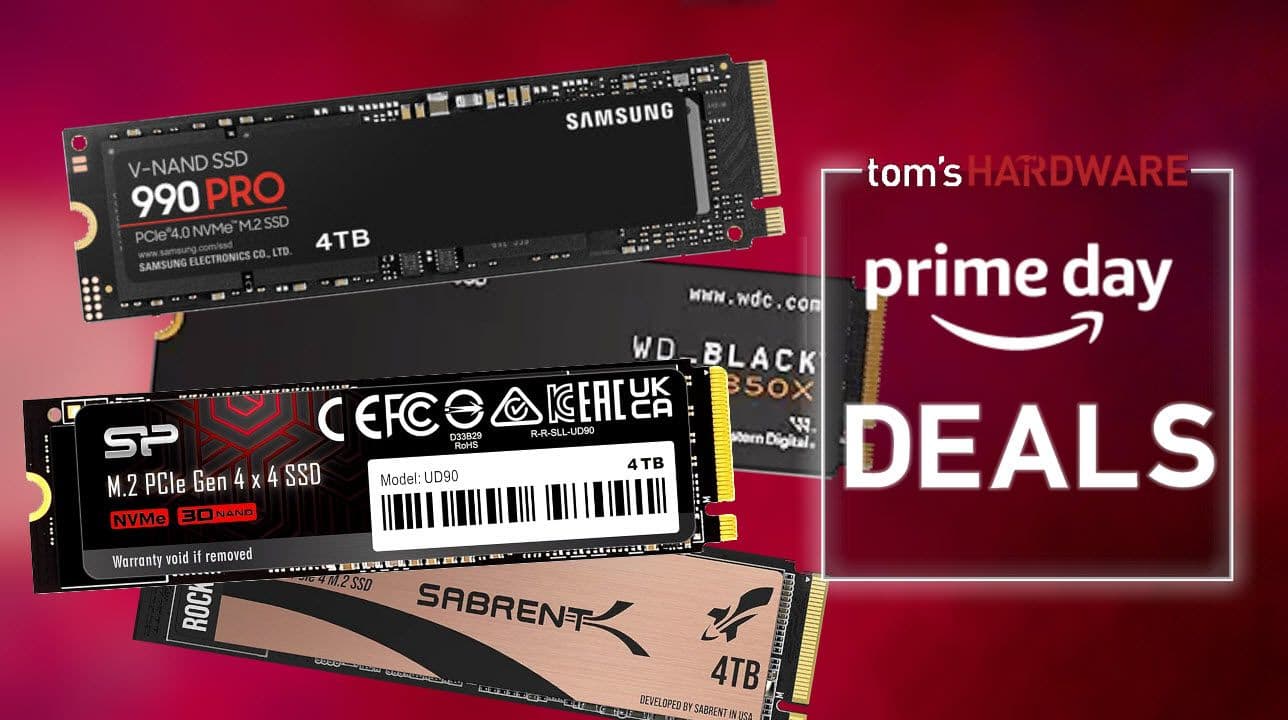
PCIe 4.0 NVMe drives remain the sweet spot. They deliver sequential read speeds up to 8,000 MB/s, work with any motherboard built in the last five years, and cost significantly less than PCIe 5.0 alternatives. The WD Black SN850X, for instance, earned praise for sustained performance and remains one of the more affordable Gen5-class options from an established brand.
PCIe 5.0 drives push past 14,000 MB/s on paper. In practice, they require newer platforms, generate substantial heat, and carry price tags that don't match real-world performance gains for most users. Unless you're doing heavy video editing or running workstation tasks that saturate the bus, skip them.
Capacity matters more than ever. A decent 2TB NVMe drive now costs $140 or more. 4TB models start at $250 and climb past $400 for high-performance options. If budget is tight, 1TB drives can still be found for $70-80, though that's barely enough for a modern game library plus your operating system.
What specs separate good deals from bad ones?
Not all SSDs deserve your money. The controller chip, NAND type, and DRAM buffer all affect real-world performance. Here's what to check before clicking buy:
- NVMe vs SATA: NVMe is up to six times faster. All 2.5-inch drives use SATA; M.2 drives are usually NVMe now, but check the specs.
- TLC vs QLC NAND: TLC offers better endurance and write speeds. QLC packs more capacity per chip but wears faster under heavy use.
- DRAM cache: Drives with DRAM maintain speed under sustained workloads. DRAM-less drives slow down during large file transfers.
- Form factor: M.2 drives plug directly into motherboard slots. 2.5-inch drives use SATA cables, useful if your board has limited M.2 slots.
Where to find the best Prime Day SSD deals
Amazon dominates, but it's not alone. Newegg often matches or beats Amazon's SSD prices, particularly on Crucial and Samsung drives. Best Buy and B&H Photo run parallel sales worth checking. For external SSDs and portable storage, watch for bundled deals that include USB-C enclosures.
Crucial SSDs are seeing discounts up to 34% on Amazon. Samsung's 990 Pro and WD's Black series tend to see smaller cuts, reflecting their premium positioning. Don't dismiss lesser-known brands like Teamgroup or Silicon Power. Many use the same Phison controllers and NAND as name-brand competitors at lower prices.
Should you buy now or wait?
Buy now. The pricing trend is clear: external pressures from chip shortages, AI demand, and tariffs point toward higher prices in coming months. Prime Day 2026 may offer the best discounts you'll see until late in the year, if not longer. Waiting for Black Friday is a gamble that storage prices will hold steady. Based on current trajectory, they won't.
One caveat: if you don't need storage today, you never actually save money buying something you won't use. But if your system is running low on space, or you're still booting from a mechanical hard drive, this is the upgrade that makes the biggest difference per dollar spent.
Logicity's Take
The SSD market has fundamentally changed since 2023's fire-sale pricing. With AI infrastructure eating global NAND supply and no production expansion planned, storage is becoming a genuine constraint again. Businesses stockpiling drives for office refreshes or server builds should treat Prime Day discounts as a hedge against further inflation. For consumers, the math is simpler: a good SSD deal today beats a better deal that may never come.
Frequently Asked Questions
Is PCIe 5.0 worth the extra cost for gaming?
No. Current games don't saturate PCIe 4.0 bandwidth. PCIe 5.0 benefits workstation tasks like large video file editing. For gaming, save the money and buy more capacity instead.
Will SSD prices drop after Prime Day 2026?
Unlikely in the near term. Chip shortages and AI data center demand are pushing prices up, not down. Black Friday may see modest discounts, but the overall trajectory favors higher prices.
Can I use an NVMe SSD in my PS5?
Yes, if it's a PCIe 4.0 M.2 drive with a heatsink. The PS5 requires sequential read speeds of 5,500 MB/s or higher. Most PCIe 4.0 drives meet this spec.
What's the difference between QLC and TLC NAND?
TLC stores 3 bits per cell, offering better endurance and faster sustained writes. QLC stores 4 bits, enabling higher capacities but with shorter lifespan under heavy write workloads.
How much SSD storage do I actually need?
For most users, 2TB hits the sweet spot between price and usability. Gamers with large libraries may need 4TB. Budget builds can start at 1TB, but you'll outgrow it quickly.
Need Help Implementing This?
Planning a storage upgrade for your team or data infrastructure? Logicity's consulting partners can help you spec the right drives for your workload. Contact us for recommendations tailored to your use case.
Source: Latest from Tom's Hardware
Huma Shazia
Senior AI & Tech Writer
Produced with AI assistance and reviewed by the Logicity editorial team. Learn more in our Editorial Policy.