Key Takeaways
- PixVerse raised $439 million in an extended Series C, valuing the company at over $2 billion
- The startup has 150 million registered users and 15 million monthly active users, up from its 2023 founding
- Co-founder Jaden Xie claims competitive advantage from ByteDance-era data labeling expertise, pointing to OpenAI and Meta's struggles
PixVerse, the Singapore-based AI video generation startup, closed an extended Series C round that values the company at over $2 billion. The $439 million raise came from Alibaba, Lollapalooza Capital, and Mirae Asset. For a company founded in 2023, that's unicorn status in roughly three years.
The bet investors are making: AI video generation is still wide open, and the early leaders have stumbled. OpenAI shut down Sora 2. Meta walked away from the space. PixVerse's co-founder Jaden Xie told TechCrunch that "only a handful of companies can deliver the quality needed." Bold claim. But the funding suggests at least some backers agree.
Why PixVerse thinks it has an edge
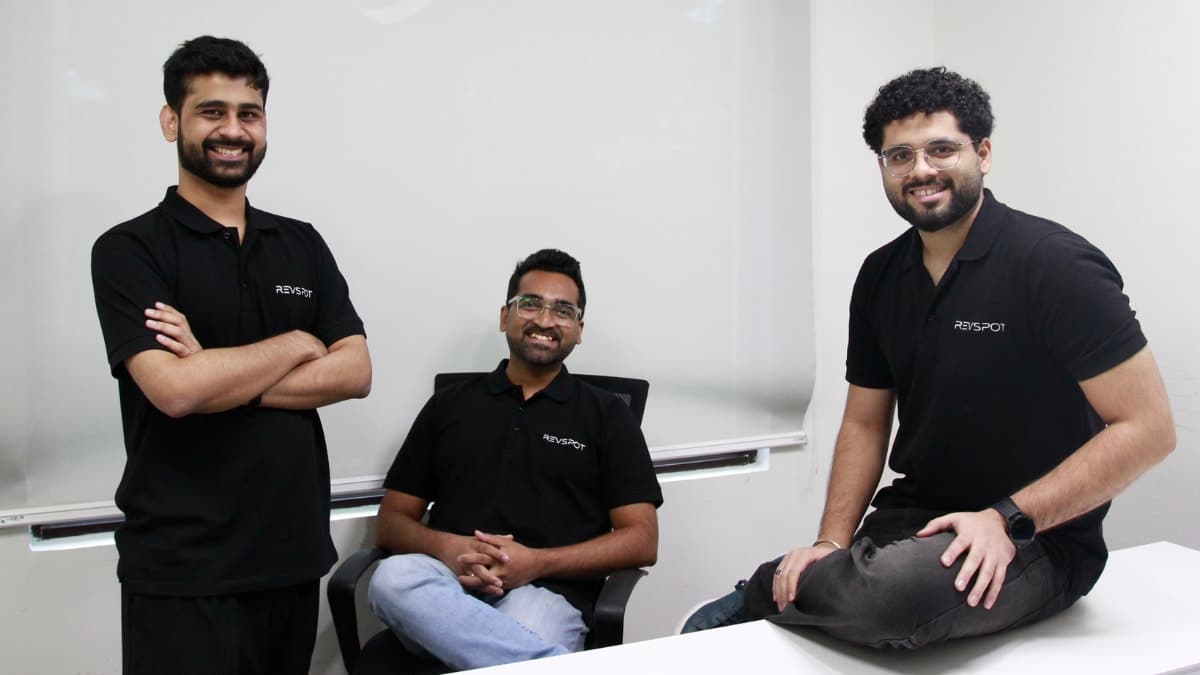
The company was founded by Wang Changhu and Jaden Xie. Changhu's background matters here. At ByteDance, he built the visual AI technology behind TikTok's recommendation system. That work centered on data labeling, the tedious process of tagging training data with enough precision that models learn what you actually want them to learn.
Xie's argument is that the real advantage in AI video isn't raw data volume. It's labeling quality. Train on poorly labeled clips, and your model produces garbage. Train on precisely labeled footage, and it understands motion, physics, continuity. PixVerse claims to carry that ByteDance discipline into video generation.
The numbers suggest traction. PixVerse reports 150 million registered users and 15 million monthly active users. The company operates three product lines: consumer video generation, film production tools, and world models for game development. That last category is where the long-term money might be. Game engines need AI that understands physics and spatial relationships, not just pretty visuals.
The competitive field is brutal
Xie's dismissal of Meta and OpenAI's video efforts is convenient positioning. But the field is hardly empty. ByteDance itself is pushing video models. So are Runway, Luma, Midjourney, and Google. Kuaishou's Kling AI and Shengshu's Vidu compete aggressively in China.
Runway's Gen-3 model has strong traction among creative professionals. Pika Labs continues iterating. Google's Veo represents deep-pocketed competition that can afford to lose money for years. The question for PixVerse isn't whether it can generate good video. It's whether it can generate better video, faster, at lower cost, with enough distribution to matter.
The Alibaba investment signals distribution help in China. But PixVerse is Singapore-based, which positions it for global markets. That's a strategic choice: avoid being locked into a single regulatory regime while maintaining access to Chinese capital and talent.
What this funding means for the AI video market
A $2 billion valuation for a three-year-old video generation company tells us investors believe the category will produce massive winners. Not everyone will survive. But the thinking is that video generation, like image generation before it, will become infrastructure. Someone will own that layer.
The game development angle deserves attention. World models, the AI systems that simulate environments and physics, could become essential middleware for studios. A company that cracks that market gains a moat that's harder to replicate than consumer video tools.
For AI builders watching this space: the technical barrier to entry in video generation is rising fast. You need massive compute, proprietary training data, and specialized labeling pipelines. The era of scrappy startups competing on model quality alone may be closing. What remains is execution, distribution, and capital. PixVerse just showed it can raise the capital.
Logicity's Take
PixVerse's valuation reflects a market belief that AI video generation is following the LLM playbook: consolidate around a few well-funded winners. For product teams, the implication is that building on these APIs is safer than building your own video models. The cost curves favor integration, not competition. Runway offers usage-based pricing starting around $12/month for creators; Pika Labs has free tiers with paid plans for higher resolution. PixVerse's pricing isn't public, but expect enterprise tiers aimed at studios and game developers. If you're building video into a product, evaluate these APIs now. The window to compete at the model layer is closing.
Frequently Asked Questions
Who founded PixVerse and what's their background?
PixVerse was founded in 2023 by Wang Changhu and Jaden Xie. Changhu previously led visual AI development at ByteDance, where he built the technology powering TikTok's recommendation system.
How many users does PixVerse have?
The company reports 150 million registered users and 15 million monthly active users as of the Series C announcement.
Who are PixVerse's main competitors?
Key competitors include Runway, Pika Labs, Luma, Google's Veo, ByteDance, Midjourney, and Chinese players like Kling AI and Vidu.
Why did OpenAI shut down Sora 2?
The source doesn't specify reasons for Sora 2's shutdown. PixVerse's co-founder cited it as evidence that few companies can deliver the quality needed, but detailed reasons remain unclear.
What products does PixVerse offer?
PixVerse operates three product lines: consumer video generation, film production tools, and world models for game development.
Related coverage of OpenAI's enterprise AI strategy and product direction
Need Help Implementing This?
Building AI video into your product? Logicity can help you evaluate APIs, design integration architecture, and navigate vendor selection. Contact our team for a technical consultation.
Source: The Decoder / Jonathan Kemper
Manaal Khan
Tech & Innovation Writer
Produced with AI assistance and reviewed by the Logicity editorial team. Learn more in our Editorial Policy.